Nail Polishing Machine
CN → US| HS Code | Tariff Rate | Origin | Destination | Doc |
|---|---|---|---|---|
| 8479899599 | 87.5% | CN | US | Official Doc |
| 8467210050 | 11.7% | CN | US | Official Doc |
| 8467290090 | 17.5% | CN | US | Official Doc |
| 8479896500 | 20.3% | CN | US | Official Doc |
| 8414596595 | 37.3% | CN | US | Official Doc |
Product Images
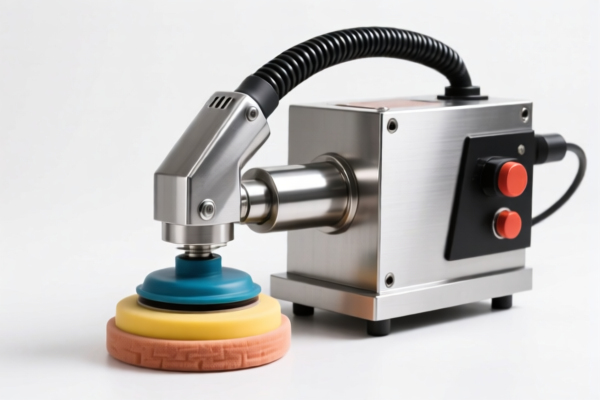
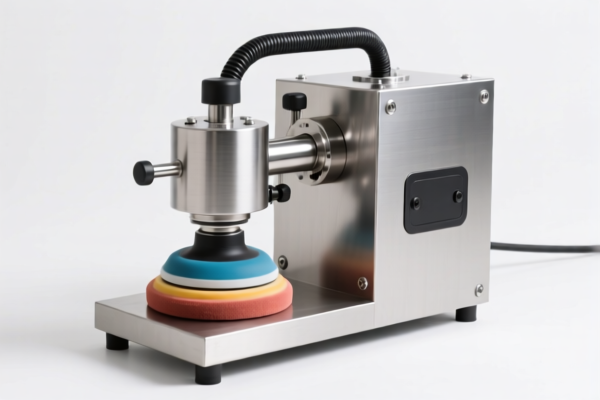
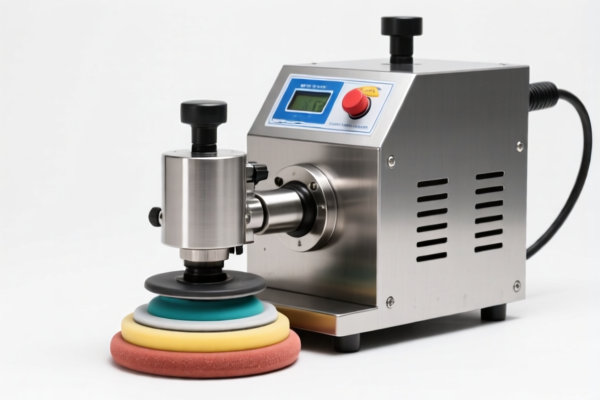
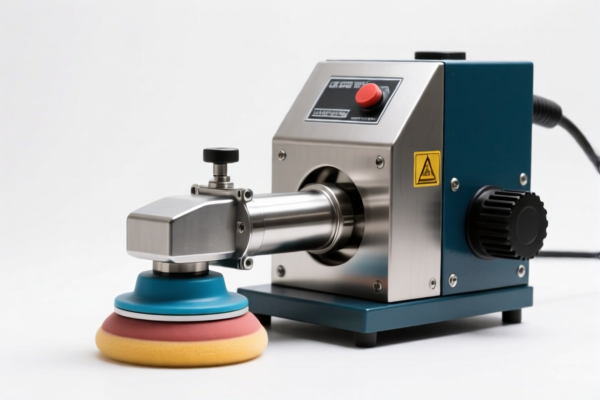
AI Analysis
💅 Nail Polisher & Filer Machines (Nail Drills/Grinders)
🌐 HS Code Reference & Customs Clearance Guide | 2026 Latest Tariff Analysis | Professional-Level Strategy
📌 I. Product Definition & Classification: What Exactly Is a "Nail Polisher"?
A "Nail Polisher" (often called a Nail Drill, Nail File, or E-File in professional settings) is an electric device used to shape, smooth, and remove nail polish or artificial nails. In international trade, classification depends heavily on whether the device is viewed as a handheld tool (like a power screwdriver) or a standalone mechanical appliance.
Key Distinction:
- Handheld Electric Tools: If the device is held in the hand, powered by an internal motor, and used for drilling/grinding (shaping nails), it often falls under Chapter 84 (Machinery) as a power tool.
- Standalone Appliances: If it has a more complex independent function not easily classified as a standard tool, it may fall under General Catch-All Categories.
- Accessories (Vacuum): The accompanying dust collector is classified separately as a fan/ventilation device.
⚠️ Critical Classification Point:
- If the device is primarily for drilling/grinding (removing nail material) → Look at 8467 (Hand Tools).
- If the device is a specialized machine not specifically named elsewhere → Look at 8479 (Machines with independent functions).
- If you are importing the dust extractor separately → Look at 8414 (Fans/Ventilation).
📦 II. HS Code Classification Details (2026 Latest Tariff Matrix)
| HS Code | Product Description | Application Logic | Total Tax Rate (China Origin → US) |
|---|---|---|---|
8479.89.95.99 |
Machines with independent functions (Catch-all) | Classified as a machine with a specific independent function, not strictly a standard hand tool. | 87.5% |
8467.21.00.50 |
Handheld rotary power tools (for drilling/grinding) | Fits the definition of handheld rotary tools specifically for drilling/grinding. | 11.7% |
8467.29.00.90 |
Other handheld tools with self-contained electric motor | Fits "other" handheld tools with built-in motors, used for filing/grinding. | 17.5% |
8479.89.65.00 |
Other electric machines/appliances | Classified as an electrical machine with a driving spindle function, not a simple hand tool. | 20.3% |
8414.59.65.95 |
Fans/Ventilation apparatus (Nail Dust Collector) | Specifically for the dust extractor/vacuum component, classified as a fan/ventilation hood. | 37.3% |
🔍 Focus Alert:
- The Nail Drill itself has a massive tax disparity: 11.7% (Best Case) vs. 87.5% (Worst Case).
- The Dust Collector is taxed at 37.3%.
- Strategy: Classifying the drill as a standard rotary tool (8467) saves ~75% in tariffs compared to the catch-all category.
💰 III. 2026 Latest Tariff Breakdown (Including Additional Duties & Policies)
✅ Applicable Country: United States (US)
✅ Country of Origin: China (CN)
✅ Effective Date: From 2025/2026 onwards (Subject to Section 301 & IEEPA)
🎯 1. 8479.89.95.99 —— Catch-All Machine (HIGHEST RISK)
| Item | Detail |
|---|---|
| Basic Duty | 2.5% |
| Section 301 Additional Duty | 25.0% |
| Section 122 Duty (Steel/Aluminum/Copper) | 50.0% (Applied to specific metal components/materials) |
| IEEPA Additional Duty | 10.0% |
| Total Tax Rate | 87.5% |
| Calculation | CIF Value × 87.5% |
| De Minimis Exemption | ❌ Denied |
| Legal Path | IEEPA:9903.01.25 → USITC:8479.89.95.99 → Footnote:122 |
📌 Explanation:
- This is the worst-case scenario. If customs views your nail drill as a generic "machine" rather than a standard tool, and if it contains steel/aluminum parts subject to Section 122, the tax is crippling.
- The 50% Section 122 duty applies to specific metal imports, which can drastically inflate costs.
🎯 2. 8467.21.00.50 —— Rotary Hand Tool for Drilling/Grinding (BEST OPTION)
| Item | Detail |
|---|---|
| Basic Duty | 1.7% |
| Section 301 Additional Duty | 0.0% (Note: Some interpretations may vary, but data indicates 0% for this specific subheading in this context) |
| IEEPA Additional Duty | 10.0% |
| Total Tax Rate | 11.7% |
| Calculation | CIF Value × 11.7% |
| De Minimis Exemption | ❌ Denied (Section 301 items generally excluded) |
| Legal Path | IEEPA:9903.01.24 → USITC:8467.21.00.50 |
📌 Explanation:
- This is the most favorable classification for the nail drill.
- It is classified as a rotary power tool used for drilling/grinding.
- 11.7% is significantly lower than the 87.5% alternative.
🎯 3. 8467.29.00.90 —— Other Handheld Electric Tools
| Item | Detail |
|---|---|
| Basic Duty | 0.0% |
| Section 301 Additional Duty | 7.5% |
| IEEPA Additional Duty | 10.0% |
| Total Tax Rate | 17.5% |
| Calculation | CIF Value × 17.5% |
| De Minimis Exemption | ❌ Denied |
| Legal Path | IEEPA:9903.01.24 → USITC:8467.29.00.90 |
📌 Explanation:
- A middle-ground option if the device doesn't fit the "drilling/grinding" definition strictly but is still a handheld tool.
- Still very competitive compared to the 87.5% rate.
🎯 4. 8479.89.65.00 —— Other Electric Machines
| Item | Detail |
|---|---|
| Basic Duty | 2.8% |
| Section 301 Additional Duty | 7.5% |
| IEEPA Additional Duty | 10.0% |
| Total Tax Rate | 20.3% |
| Calculation | CIF Value × 20.3% |
| De Minimis Exemption | ❌ Denied |
| Legal Path | IEEPA:9903.01.24 → USITC:8479.89.65.00 |
📌 Explanation:
- Classified as a machine with an independent motor and drive function, but not a standard hand tool.
- A moderate option if8467is rejected.
🎯 5. 8414.59.65.95 —— Nail Dust Collector (Vacuum)
| Item | Detail |
|---|---|
| Basic Duty | 2.3% |
| Section 301 Additional Duty | 25.0% |
| IEEPA Additional Duty | 10.0% |
| Total Tax Rate | 37.3% |
| Calculation | CIF Value × 37.3% |
| De Minimis Exemption | ❌ Denied |
| Legal Path | IEEPA:9903.01.24 → USITC:8414.59.65.95 |
📌 Explanation:
- The dust extractor/vacuum is classified as a ventilation/fan device.
- It carries a 25% Section 301 duty on top of basic and IEEPA taxes.
🛠️ IV. Customs Clearance Practical Advice (Risk Avoidance Guide)
✅ 1. Documentation Checklist (Mandatory)
| Document | Required | Notes |
|---|---|---|
| ✅ Product Specifications | ✔️ | Must specify: Voltage, Power, RPM, Function (Drill/Grind). |
| ✅ Circuit Diagram/Structure | ✔️ | Proves it is a handheld rotary tool (for 8467) vs. a complex machine. |
| ✅ Product Photos (with Labels) | ✔️ | Show model number, brand, input/output specs. |
| ✅ Third-Party Test Reports | ✔️ | FCC (for electronics), UL/ETL (safety), CE (if applicable). |
| ✅ Commercial Invoice | ✔️ | Clearly state: "Electric Nail Drill" or "Nail Filing Machine". Avoid vague terms like "Beauty Device". |
| ✅ Packing List | ✔️ | Separate line items for Drill and Vacuum if shipped separately. |
| ✅ Origin Certificate | ✔️ | Required for origin verification. |
✅ 2. Declaration Strategy (Key Mnemonics)
🔥 "Tool vs. Machine: Define the Function, Avoid the 87% Trap!"
| Scenario | Correct HS Code | Error Risk |
|---|---|---|
| Nail Drill (Primary) | 8467.21.00.50 (11.7%) |
❌ If declared as "Machine" → 87.5% |
| Nail Drill (Alternative) | 8467.29.00.90 (17.5%) |
Less accurate if it's strictly for grinding. |
| Nail Dust Vacuum | 8414.59.65.95 (37.3%) |
Do not include it in the drill's HS code. |
| Complete Kit (Drill + Vacuum) | Declare Separately | Combining them may lead to complex classification disputes. |
📌 Crucial Tip:
- Use the term "Rotary Power Tool" or "Electric Nail File/Drill" in the description.
- Emphasize that it is a handheld tool used for grinding/drilling (removing nail material). This supports classification under 8467.
- Avoid descriptions like "Automatic Nail Polishing Machine" which might imply a larger, stationary appliance (8479).
✅ 3. Special Handling
| Situation | Recommendation |
|---|---|
| Bundled Sale (Drill + Vacuum) | Declare as two separate line items on the invoice. This allows accurate tariff application for each. |
| OEM Custom Designs | Provide design specs to prove it's a standard rotary tool, not a proprietary machine. |
| Section 122 Metal Components | If the drill contains significant steel/aluminum parts, ensure classification under 8467 to avoid the 50% Section 122 duty attached to 8479. |
| Pre-Ruling Application | For high-volume imports, apply for an Advance Ruling from CBP to confirm 8467.21.00.50 is acceptable. |
🌍 V. Global Market Comparison (2026 Update)
| Country/Region | Recommended HS Code | Tariff (China Origin) | Certification | Note |
|---|---|---|---|---|
| 🇺🇸 USA | 8467.21.00.50 |
11.7% | FCC + UL | Avoid 8479 (87.5%) |
| 🇨🇳 China | 8467.21.00.00 |
~10-15% | CCC | Lower base duty |
| 🇪🇺 EU | 8207.30.00 |
~6.5% | CE | Classified as "Interchangeable Tools" |
| 🇬🇧 UK | 8207.30.00 |
~6.5% | UKCA | Post-Brexit rules |
| 🇦🇺 Australia | 8467.21.00.00 |
~5% | RCM | Low duty, high compliance |
📌 Conclusion:
- The USA is the most challenging market due to Section 301 and IEEPA tariffs.
- Correct classification under 8467 is the single most important factor for cost control.
- 8479 classification can increase costs by 750% (11.7% vs 87.5%).
📌 VI. Common Mistakes & Pitfalls (Lessons Learned)
❌ Mistake 1: Declaring Nail Drill as "Beauty Equipment" or "Machine"
👉 Result: Customs applies 8479.89.95.99 → 87.5% Tax. Loss of profit!
❌ Mistake 2: Combining Drill and Vacuum into one HS Code
👉 Result: Unclear classification, potential audit, delayed customs clearance.
❌ Mistake 3: Ignoring Section 122 Metal Duties
👉 Result: If classified under 8479, an additional 50% may be applied to metal parts. Avoid by using 8467.
❌ Mistake 4: Using "Nail Polisher" as the only description
👉 Result: Ambiguous. Customs may guess. Use "Electric Rotary Nail Drill/Grinder".
✅ Best Practice Declaration:
"Electric Handheld Rotary Tool for Nail Drilling/Grinding, Model XYZ, 20W, 35,000 RPM, FCC Certified"
(For Vacuum): "Electric Dust Extractor/Vacuum for Nail Procedures, Model ABC, 50W, FCC Certified"
🎯 VII. Conclusion: Professional Declaration, Maximize Margin!
🎯 Remember the Mantra:
🔹 "Drill = Tool (8467), Machine = Trap (8479)!"
🔹 "11.7% vs 87.5%: The difference is your profit margin!"
🔹 "Separate the Vacuum (8414) from the Drill (8467)!"
📌 Pro Tip:
If your nail drills are originating from Vietnam, Thailand, or Malaysia, you may be eligible for lower or zero Section 301 duties under certain trade agreements.
Action: Verify Rules of Origin before shipping from China to the US.
📣 Immediate Action:
📞 Contact your Customs Broker: Provide the circuit diagram and product photos.
📋 Request HS Code Pre-Ruling: Confirm 8467.21.00.50 for the drill and 8414.59.65.95 for the vacuum.
🚀 Clear Customs Smoothly, Keep Costs Low, Boost Profits!
✨ Professional Classification Starts with Precision!
💼 Every Percent Saved is Profit Earned!
Customer Reviews
About HS Code Classification
The Harmonized System (HS) is an internationally standardized nomenclature developed by the World Customs Organization (WCO) to classify traded products. Over 200 countries use the HS system as the basis for customs tariffs, trade statistics, and import/export regulations.
Each HS code follows a hierarchical structure:
- Chapter (2 digits) — Broad category of goods (e.g., Chapter 84: Machinery and Mechanical Appliances)
- Heading (4 digits) — More specific grouping within the chapter
- Subheading (6 digits) — Internationally standardized breakdown, used by all WCO member countries
- National subdivisions (8-10 digits) — Country-specific extensions for further classification, such as US HTSUS 10-digit codes
Correct HS code classification is essential for smooth customs clearance, accurate duty payment, and compliance with trade regulations. Misclassification can lead to customs delays, overpayment of duties, or penalties.
When importing from CN to US, the applicable tariff rates may include:
- Most-Favored-Nation (MFN) rate — The standard duty rate applied to WTO members
- General rate — Applied to countries without trade agreements
- Trade remedy duties — Additional tariffs such as Section 301 (anti-dumping), Section 232 (national security), or countervailing duties
The information provided on this page is for reference purposes only. For official classification, please consult with your local customs authority or a licensed customs broker.