Nail Stickers
CN → US| HS Code | Tariff Rate | Origin | Destination | Doc |
|---|---|---|---|---|
| 3926909989 | 22.8% | CN | US | Official Doc |
| 3926909905 | 22.8% | CN | US | Official Doc |
| 4823908680 | 35.0% | CN | US | Official Doc |
| 4823906700 | 35.0% | CN | US | Official Doc |
| 3919905060 | 40.8% | CN | US | Official Doc |
| 3919102055 | 40.8% | CN | US | Official Doc |
Product Images
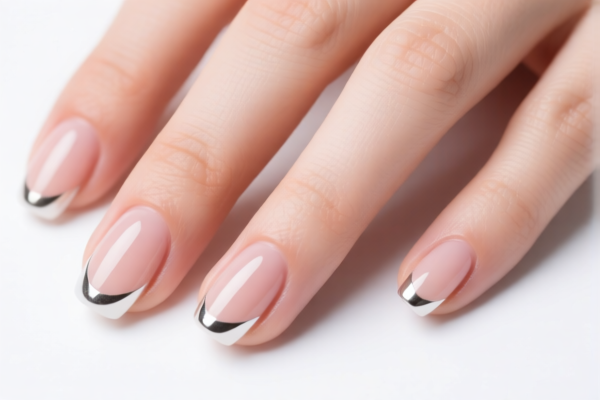
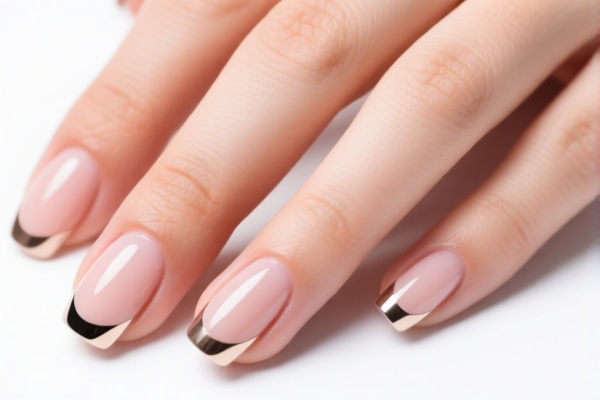


AI Analysis
💅 Nail Stickers (Adhesive Cosmetic Decals)
🌐 HS Code Reference & Customs Clearance Guide | 2026 Latest Tariff Analysis | Professional-Level Strategy
📌 1. Product Definition & Classification: Do You Really Understand "Nail Stickers"?
Nail stickers, also known as nail wraps, nail decals, or adhesive nail art films, are decorative cosmetic products applied directly to the fingernails. In international trade, they are primarily classified under Chapter 39 (Plastics) or Chapter 48 (Paper), depending on their material composition. The critical distinction lies in whether the base material is plastic or paper-based, and whether it is self-adhesive.
Plastic-Based Nail Stickers: Usually made from PVC, PET, or other polymer films with an adhesive layer. These are the most common in the market due to durability and flexibility.
Paper-Based Nail Stickers: Made from thin paper or cardstock with adhesive. Less common for high-end products but still prevalent in craft markets.
⚠️ Key Classification Point:
- If the product is plastic-based, self-adhesive, and flat (rolls, sheets, or cut shapes) → It generally falls under Chapter 39.
- If the product is paper-based, self-adhesive, and flat → It generally falls under Chapter 48.
- Crucial Note: The provided data highlights that paper-based items face a 25% additional tariff (US Section 301), while plastic-based items are generally exempt (0%) for the specific HS codes listed. This makes material identification vital for cost control.
📦 2. HS Code Classification Details (2026 Latest Tariff Authority Comparison)
Based on the provided <DATA>, here is the breakdown of relevant HS codes for nail stickers:
| HS Code | Product Description | Material Type | Tariff Rate (Total) | Key Characteristics |
|---|---|---|---|---|
3919.90.50.60 |
Self-adhesive plates, sheets, film, foil, tape, strip... of plastics; Other | Plastic | 0.0% | General plastic self-adhesive films/sheets; often used for generic plastic wraps. |
3919.10.20.55 |
Self-adhesive... of plastics; In rolls of a width not exceeding 20 cm | Plastic | 0.0% | Narrow rolls of plastic adhesive film; suitable for roll-based nail sticker applications. |
4823.90.86.80 |
Other paper, paperboard... cut to size or shape; Other | Paper | 25.0% | Paper-based adhesive articles; High Risk due to 25% additional tariff. |
4823.90.67.00 |
Other paper...; Of coated paper or paperboard; Other | Paper | 25.0% | Coated paper adhesive articles; High Risk due to 25% additional tariff. |
🔍 Critical Reminder:
- Plastic Base (Chapter 39): Tariff is 0.0%. This is the most cost-effective classification for most commercial nail stickers.
- Paper Base (Chapter 48): Tariff is 25.0% (Additional). This significantly impacts profit margins for US imports.
- Misclassification Risk: Declaring plastic nail stickers as "paper" to avoid complex descriptions may lead to customs audits and penalties. Conversely, declaring paper as plastic will result in immediate rejection and back-tariff charges.
💰 3. 2026 Latest Tariff Rate Detail (Including Additional Taxes & Policies)
✅ Applicable Country: United States (US)
✅ Origin: China (CN)
✅ Effective Time: Current rates apply (Section 301 List 4A)
🎯 1. 3919.90.50.60 & 3919.10.20.55 —— Plastic-Based Nail Stickers
| Item | Content |
|---|---|
| Base Tariff Rate | 0.0% |
| USITC Additional Tariff (Section 301) | 0.0% |
| IEEPA Additional Tariff | 0.0% |
| Total Tax Rate | 0.0% |
| Tax Calculation | CIF Value × 0% = $0 |
| De Minimis Eligibility | ✅ Yes (for shipments < $800 under Section 321) |
| Legal Basis | Standard HTSUS Chapter 39 provisions |
📌 Explanation:
- Plastic self-adhesive products in these subheadings are exempt from the 25% Section 301 tariffs that affect many other Chinese goods.
- Cost Advantage: Importing plastic nail stickers is significantly cheaper than paper-based alternatives or other cosmetic packaging materials.
- Compliance: Ensure the product description explicitly states "Plastic" or "PVC/PET film" to justify the 39xx heading.
🎯 2. 4823.90.86.80 & 4823.90.67.00 —— Paper-Based Nail Stickers
| Item | Content |
|---|---|
| Base Tariff Rate | 0.0% |
| USITC Additional Tariff (Section 301) | 25.0% |
| IEEPA Additional Tariff | 0.0% (for these specific paper codes) |
| Total Tax Rate | 25.0% |
| Tax Calculation | CIF Value × 25% |
| De Minimis Eligibility | ❌ No (If subject to Section 301, de minimis may be denied depending on current enforcement) |
| Legal Basis | HTSUS Chapter 48 + USITC Footnote for Section 301 |
📌 Warning:
- Paper-based nail stickers attract a 25% penalty tariff.
- This makes paper-based products less competitive in the US market compared to plastic-based ones.
- If your product contains any paper backing or is primarily paper, you must budget for this additional cost.
🛠️ 4. Customs Clearance Practical Advice (Real-World Pitfall Avoidance)
✅ 1. Required Documentation Checklist (None of the following can be missing)
| Document | Mandatory | Description |
|---|---|---|
| ✅ Product Specification Sheet | ✔️ | Must specify material (e.g., "100% PVC", "PET Film", "Coated Paper"). |
| ✅ Product Photos (Clear & Detailed) | ✔️ | Show the product on a nail, the roll/sheet format, and the adhesive backing. |
| ✅ Material Declaration | ✔️ | Explicitly state: "Made of [Plastic/Paper]" with weight composition if mixed. |
| ✅ Commercial Invoice | ✔️ | Description must match HS Code logic (e.g., "Plastic Self-Adhesive Nail Decals"). |
| ✅ Packing List | ✔️ | List quantities, weights, and packaging type. |
| ✅ FSC/Cosmetic Compliance | ✔️ | If claiming cosmetic safety, provide ingredient list (though nail stickers are often non-ingestible, US Customs may ask). |
✅ 2. Declaration Tips (Key Mantra)
🔥 "Material Matters: Plastic is Free, Paper is Paid!"
| Scenario | Correct Declaration | Incorrect Practice |
|---|---|---|
| Plastic Nail Stickers | 3919.90.50.60 or 3919.10.20.55 |
Misdeclaring as "Cosmetic Accessories" (ambiguous) |
| Paper Nail Stickers | 4823.90.86.80 |
Trying to hide material → 25% penalty + fine |
| Mixed Material | Analyze principal character → Choose highest risk code | Vague description → Customs Audit |
| Rolls vs. Cut Sheets | Specify "In Rolls" or "Cut to Size" | Ignoring form factor → Potential misclassification |
✅ 3. Special Cases Handling
| Case | Handling Advice |
|---|---|
| OEM Custom Designs | Provide design proofs to confirm they are "self-adhesive plastic/paper articles," not "printed pictures" (which might fall under 4911). |
| Paper-Backed Plastic Stickers | If the adhesive is on plastic but the backing is paper, the principal material (plastic) usually dictates the heading, but consult a broker. |
| De Minimis (Section 321) | If shipping under $800, Plastic (39xx) is safe. Paper (48xx) may be blocked if classified under Section 301 exclusions. |
| Cosmetic Claims | If marketed as "non-toxic," "food-grade," or "ingestible," additional FDA/Cosmetic regulations apply. Stick to "Decorative" to simplify customs. |
🌍 5. Global Main Market Clearance Comparison (2026 Latest)
| Country/Region | Recommended HS Code | Tariff (China Origin) | Certification Requirements | Notes |
|---|---|---|---|---|
| 🇺🇸 USA | 3919.90.50.60 (Plastic) |
0.0% | FTC Labeling (Country of Origin) | Paper = 25%. Plastic is best. |
| 🇨🇳 China | 3919.90.50.60 |
5-10% (Import) | N/A | High export volume, low import tariff. |
| 🇪🇺 EU | 3919.90.90 |
0-4.7% | REACH (Chemicals) | Plastic-based is common. Paper faces higher duties. |
| 🇬🇧 UK | 3919.90.90 |
0-4.7% | UKCA/REACH | Similar to EU post-Brexit. |
| 🇦🇺 Australia | 3919.90.90 |
5% | AICIS (Chemicals) | Moderate tariff, no Section 301 equivalent. |
📌 Conclusion:
- USA is the most sensitive market due to the 25% penalty on paper-based goods.
- Plastic-based nail stickers (3919...) are the optimal choice for US export due to 0% tariff.
- Ensure your supply chain prioritizes PVC/PET/Plastic materials for US-bound shipments.
📌 6. Common Errors & Pitfall Guide (Lessons Learned)
❌ Error 1: Declaring plastic nail stickers as "Cosmetic Adhesives" without specifying material.
👉 Consequence: Customs may classify under generic adhesives or misapply Chapter 33 (Cosmetics), leading to delays.
👉 Fix: Always specify "Self-adhesive plastic film."
❌ Error 2: Using 4823 (Paper) for plastic stickers to avoid "cosmetic" scrutiny.
👉 Consequence: If customs inspect and find plastic, they will impose 25% back-tariff + penalties for misclassification.
👉 Fix: Be honest. Plastic = 39xx = 0% Tax. Paper = 48xx = 25% Tax. Choose the right material/code match.
❌ Error 3: Ignoring the "Width" specification for rolls.
👉 Consequence: If you declare 3919.10 (Narrow rolls) but the roll is >20cm, it may be reclassified.
👉 Fix: Measure roll width accurately. Narrow (<20cm) vs. Wide (>20cm) affects subheading.
❌ Error 4: Not declaring "Self-Adhesive" nature.
👉 Consequence: If it looks like just "printed plastic," it might go to 3920 (Non-adhesive) or 4911 (Pictures).
👉 Fix: Explicitly state "Self-adhesive" in the commercial invoice.
✅ Correct Approach:
"Plastic Self-Adhesive Nail Stickers (PVC Film), Cut to Size, for Cosmetic Decoration, HS 3919.90.50.60"
🎯 7. Conclusion: Professional Declaration, Cost Efficiency!
🎯 Remember the Mantra:
🔹 "Plastic is Zero, Paper is Twenty-Five, Material Truth Wins!"
🔹 "HS Code is King, Tax is Queen, Declaration is the Throne!"
📌 Pro Tip:
If your nail stickers are made of Plastic (PVC/PET), you enjoy 0% US Tariff.
If they are Paper, prepare for 25% US Tariff.
Strategy: Switch to plastic-based materials for US market to maximize profit margins.
📣 Immediate Action:
📞 Contact your customs broker + Provide material specs + Confirm Plastic vs. Paper composition.
🚀 Let your nail stickers pass customs smoothly, save 25% in taxes, and boost your profits!
✨ Professional Customs Clearance Starts with Accurate Classification!
💼 Every Cent Saved is Pure Profit!
Customer Reviews
About HS Code Classification
The Harmonized System (HS) is an internationally standardized nomenclature developed by the World Customs Organization (WCO) to classify traded products. Over 200 countries use the HS system as the basis for customs tariffs, trade statistics, and import/export regulations.
Each HS code follows a hierarchical structure:
- Chapter (2 digits) — Broad category of goods (e.g., Chapter 84: Machinery and Mechanical Appliances)
- Heading (4 digits) — More specific grouping within the chapter
- Subheading (6 digits) — Internationally standardized breakdown, used by all WCO member countries
- National subdivisions (8-10 digits) — Country-specific extensions for further classification, such as US HTSUS 10-digit codes
Correct HS code classification is essential for smooth customs clearance, accurate duty payment, and compliance with trade regulations. Misclassification can lead to customs delays, overpayment of duties, or penalties.
When importing from CN to US, the applicable tariff rates may include:
- Most-Favored-Nation (MFN) rate — The standard duty rate applied to WTO members
- General rate — Applied to countries without trade agreements
- Trade remedy duties — Additional tariffs such as Section 301 (anti-dumping), Section 232 (national security), or countervailing duties
The information provided on this page is for reference purposes only. For official classification, please consult with your local customs authority or a licensed customs broker.