Nano Heat Insulation Mat
CN → US| HS Code | Tariff Rate | Origin | Destination | Doc |
|---|---|---|---|---|
| 6806100040 | 38.9% | CN | US | Official Doc |
| 6806100020 | 38.9% | CN | US | Official Doc |
Product Images
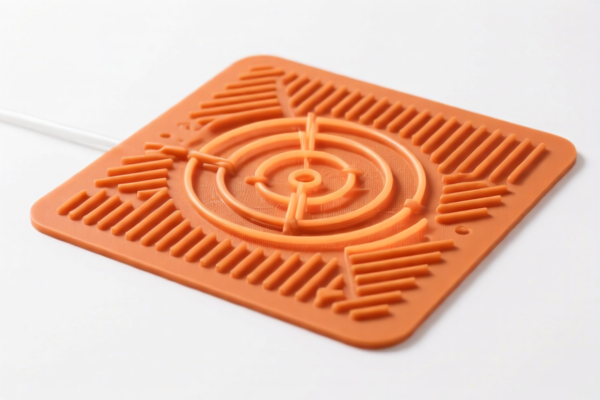
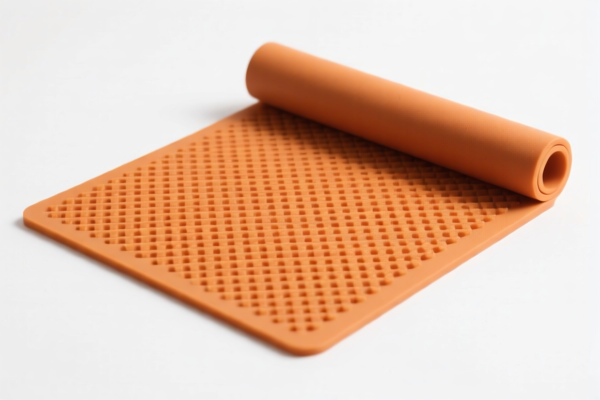
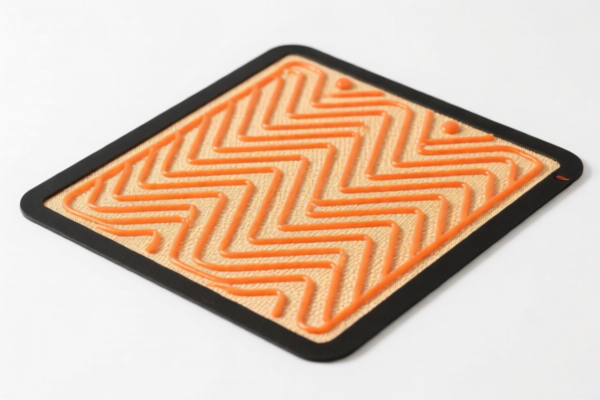

AI Analysis
🌡️ Nano Heat Insulation Mat (Slag/Rock Wool & Expanded Mineral Materials)
🌐 HS Code Reference & Customs Clearance Guide | 2026 Latest Tariff Analysis | Professional Clearance Strategy
📌 I. Product Definition & Classification: Do You Really Understand "Nano Heat Insulation Mat"?
In the global trade of industrial materials, "Nano Heat Insation Mat" is often a marketing term used to describe high-performance thermal insulation products. However, from a customs classification perspective, the term "Nano" does not constitute a separate HS Code category. Instead, the classification depends entirely on the raw material composition and physical form of the mat.
Based on the provided data, these products typically fall under Chapter 68: Articles of Stone or of Similar Mineral Substances, specifically dealing with Slag Wool, Rock Wool, and Expanded Mineral Materials.
Key Distinction: * Mineral Wool (Rock/Slag Wool): Fibrous insulation derived from molten rock or blast furnace slag. Often sold in rolls, batts, or bulk. * Expanded Mineral Materials: Exfoliated vermiculite, expanded clays, foamed slag, etc.
⚠️ Critical Classification Point:
If the product is a "mat" made of mineral wool or expanded minerals, it is classified under 6806.10. The specific sub-code depends on the width of the batts (if in sheet/roll form). * Width > 61 cm: Falls under6806.10.00.40* Width ≤ 61 cm: Falls under6806.10.00.20
📦 II. HS Code Classification Details (Based on Provided Data)
| HS Code | Product Description | Width Specification | Form |
|---|---|---|---|
6806.10.00.40 |
Slag wool, rock wool and similar mineral wools... Batts | Exceeding 61 cm | Rolls/Batts/Sheets |
6806.10.00.20 |
Slag wool, rock wool and similar mineral wools... Batts | Not exceeding 61 cm | Rolls/Batts/Sheets |
🔍 Important Note:
The description explicitly states: "Mixtures and articles of heat-insulating, sound-insulating or sound-absorbing mineral materials, other than those of heading 6811 or 6812, or of chapter 69."
This means if your "Nano Mat" contains significant amounts of other materials (like plastics, binders, or metals) that change its essential character, it might fall under a different chapter (e.g., Chapter 39 for plastics or Chapter 59 for impregnated textiles). However, based strictly on the provided data, we assume the primary component is mineral wool or expanded mineral.
💰 III. 2026 Latest Tariff Rate Details
✅ Applicable Country: United States (US)
✅ Origin: China (CN) (Assumed based on typical trade patterns for mineral wool)
✅ Effective Time: Current regulations apply
🎯 1. 6806.10.00.40 —— Mineral Wool Batts (Width > 61 cm)
| Item | Content |
|---|---|
| Base Tariff Rate | 0.0% |
| Additional Tariffs | 0.0% |
| Total Tariff Rate | 0.0% |
| Tax Detail | Base Tariff: 0.0%, Additional Tariff: 0.0% |
| Legal Basis | HTSUS 6806.10.00.40 |
📌 Explanation:
- Mineral wools and expanded mineral materials are currently subject to zero tariff under the base schedule and specific trade agreements. - No Section 301 (Trade War) or IEEPA surcharges are listed for this specific HS code in the provided data. - This makes mineral wool insulation a low-cost, low-risk category for customs duties compared to electronics or machinery.
🎯 2. 6806.10.00.20 —— Mineral Wool Batts (Width ≤ 61 cm)
| Item | Content |
|---|---|
| Base Tariff Rate | 0.0% |
| Additional Tariffs | 0.0% |
| Total Tariff Rate | 0.0% |
| Tax Detail | Base Tariff: 0.0%, Additional Tariff: 0.0% |
| Legal Basis | HTSUS 6806.10.00.20 |
📌 Note:
- Same tax treatment as the wider batts. - The width distinction is purely for statistical and classification precision, not for tax differentiation.
🛠️ IV. Customs Clearance Practical Advice (Real-World Pitfall Guide)
✅ 1. Required Documentation Checklist (Must-Haves)
| Document | Mandatory | Description |
|---|---|---|
| ✅ Product Specification Sheet | ✔️ | Must clearly state: Material composition (e.g., "100% Basalt Rock Wool"), Density (kg/m³), Dimensions, and Thickness. |
| ✅ Commercial Invoice | ✔️ | Description must match HS Code: "Rock Wool Batts, Insulation Material, Width X cm." Avoid vague terms like "Nano Mat" without technical specs. |
| ✅ Packing List | ✔️ | Detail roll dimensions and widths to prove if they exceed or fall under 61 cm. |
| ✅ Technical Data Sheet (TDS) | ✔️ | Confirm absence of non-mineral binders that might reclassify the product as "composite" or "plastic-based." |
| ✅ Certificate of Origin (CO) | ✔️ | Required to prove origin for any potential future FTZ (Free Trade Zone) benefits, though currently 0% for China too. |
✅ 2. Declaration Tips (Key Mantras)
🔥 “Material First, Width Second, Name Technical, Tariff Zero!”
| Scenario | Correct Declaration | Incorrect Practice |
|---|---|---|
| Rolls of Rock Wool | "Slag Wool Batts, Width 72cm, Thermal Insulation" → 6806.10.00.40 |
"Heat Insulation Mat" → Too vague, leads to inspection delays. |
| Narrow Strips of Wool | "Rock Wool Batts, Width 50cm, for Pipe Insulation" → 6806.10.00.20 |
"Roll of Insulation" → Fails to specify width, risking misclassification. |
| Composite Mat (Wool + Foil) | Caution: May fall under Chapter 39 or 6806.60. Consult expert. | Assume it’s still 6806.10 without checking binder/foil content. |
| Bulk Loose Wool | Different HS Code (6806.10.00.10 or 6806.20). | Declare as "Batts" when it’s loose → Misdeclaration. |
✅ 3. Special Case Handling
| Situation | Handling Suggestion |
|---|---|
| "Nano" Coating | If the wool is coated with a "nano" ceramic layer, ensure the coating doesn’t change the essential character. If it’s just a surface treatment, it still falls under 6806.10. |
| Mixed Materials | If the mat contains >20% synthetic binders or plastics by weight/value, it may be classified as Chapter 39 (Plastics) or Chapter 59 (Impregnated Textiles), which have different tax rates. |
| Pre-cut Shapes | If cut into specific shapes (not rolls/batts), it might fall under 6806.90 (Other articles). Check with customs broker. |
🌍 V. Global Market Comparison (2026)
| Country/Region | Recommended HS Code | Tariff (China Origin) | Certification Requirements | Notes |
|---|---|---|---|---|
| 🇺🇸 USA | 6806.10.00.40 / .20 |
0.0% | No special certs required for insulation itself. | Zero tariff advantage. |
| 🇨🇳 China | 6806.10.00 |
0.0% | CCC (if applicable). | Major producer of rock wool. |
| 🇪🇺 EU | 6806.10 |
0.0% | CE Marking (Construction Products Regulation). | Strict fire safety standards (Euroclass A1/A2). |
| 🇬🇧 UK | 6806.10 |
0.0% | UKCA Marking. | Post-Brexit rules align with EU for materials. |
📌 Conclusion:
- Mineral wool insulation enjoys favorable global tariff treatment (mostly 0%). - The main risk is not tariff-related, but regulatory/compliance-related (fire safety, formaldehyde emissions, etc.).
📌 VI. Common Errors & Pitfalls (Blood & Tears Lessons)
❌ Error 1: Using "Nano Heat Insulation Mat" as the sole product name
👉 Consequence: Customs may classify it as "Other articles of stone/mineral" under 6806.90, which might have higher duties or require more documentation.
👉 Fix: Use precise description: "Basalt Rock Wool Batts for Thermal Insulation."
❌ Error 2: Ignoring the 61 cm Width Rule
👉 Consequence: Wrong HS code (6806.10.00.20 vs .40). While both are 0% now, misclassification can lead to penalties for incorrect declaration.
👉 Fix: Always measure and declare the width of the batts/rolls.
❌ Error 3: Assuming "Nano" implies high-tech chemical product
👉 Consequence: Could be misclassified under 3824 (Prepared binders) or 3921 (Plastic sheets).
👉 Fix: Provide Material Safety Data Sheet (MSDS) and Composition Analysis to prove mineral base.
❌ Error 4: Declaring loose wool as "Batts"
👉 Consequence: Loose wool falls under 6806.10.00.10 (if bulk) or 6806.20 (expanded vermiculite/clay).
👉 Fix: Clearly state form: "In Rolls," "In Batts," or "In Bulk."
✅ Correct Declaration Example:
"Mineral Wool Insulation Batts, Made of Basalt Rock, Width 60cm, Thickness 50mm, Density 100kg/m³, for Building Thermal Insulation. HS Code: 6806.10.00.20."
🎯 VII. Conclusion: Precise Classification, Zero Tariff, Smooth Clearance
🎯 Key Takeaways:
1. "Nano" is a Marketing Term, Not a Customs Term. Focus on Mineral Composition.
2. Width Matters for HS Code, Not Tariff. Choose between .20 (≤61cm) and .40 (>61cm).
3. Tariff is 0.0%. No extra duties for this category in the provided data.
4. Documentation is Key. Provide detailed specs to avoid misclassification as other mineral articles.
📌 Pro Tip:
If your product contains polymer binders or fiberglass (which is silica-based, not rock/slag), verify if it still qualifies as "Slag/Rock Wool." Fiberglass often falls under 6806.90 or 6815. Double-check your raw material source!
📣 Immediate Action:
📞 Contact your freight forwarder with the product dimensions and composition.
📄 Prepare technical datasheets in English.
🚀 Ensure your commercial invoice explicitly states "Rock Wool Batts" and the width to secure the correct 0% tariff classification!
✨ Professional Clearance Starts with Accurate Classification!
💼 Your Cost Savings Depend on Precision!
Customer Reviews
About HS Code Classification
The Harmonized System (HS) is an internationally standardized nomenclature developed by the World Customs Organization (WCO) to classify traded products. Over 200 countries use the HS system as the basis for customs tariffs, trade statistics, and import/export regulations.
Each HS code follows a hierarchical structure:
- Chapter (2 digits) — Broad category of goods (e.g., Chapter 84: Machinery and Mechanical Appliances)
- Heading (4 digits) — More specific grouping within the chapter
- Subheading (6 digits) — Internationally standardized breakdown, used by all WCO member countries
- National subdivisions (8-10 digits) — Country-specific extensions for further classification, such as US HTSUS 10-digit codes
Correct HS code classification is essential for smooth customs clearance, accurate duty payment, and compliance with trade regulations. Misclassification can lead to customs delays, overpayment of duties, or penalties.
When importing from CN to US, the applicable tariff rates may include:
- Most-Favored-Nation (MFN) rate — The standard duty rate applied to WTO members
- General rate — Applied to countries without trade agreements
- Trade remedy duties — Additional tariffs such as Section 301 (anti-dumping), Section 232 (national security), or countervailing duties
The information provided on this page is for reference purposes only. For official classification, please consult with your local customs authority or a licensed customs broker.