Nano Heat Insulation Pad
CN → US| HS Code | Tariff Rate | Origin | Destination | Doc |
|---|---|---|---|---|
| 6307908500 | 23.3% | CN | US | Official Doc |
| 6307909884 | 24.5% | CN | US | Official Doc |
| 6806100010 | 38.9% | CN | US | Official Doc |
| 6806900010 | 35.0% | CN | US | Official Doc |
Product Images
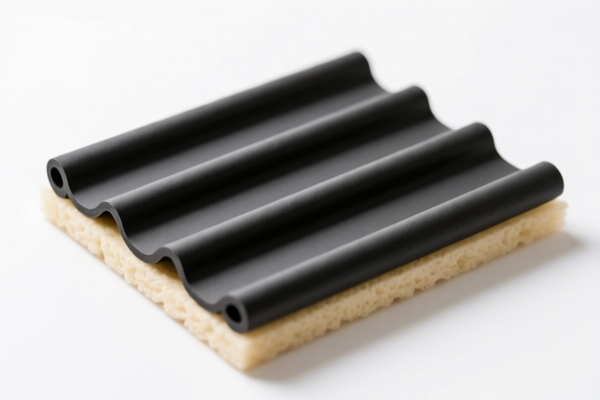
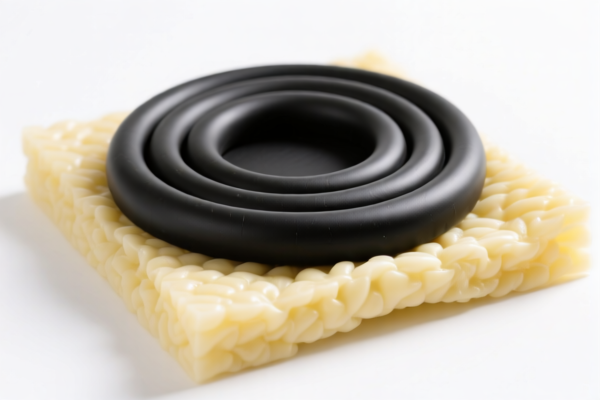
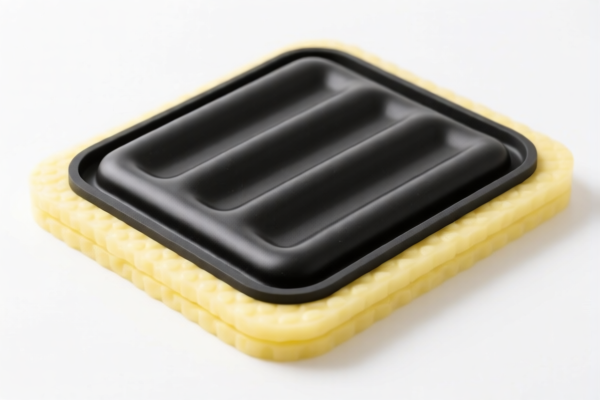
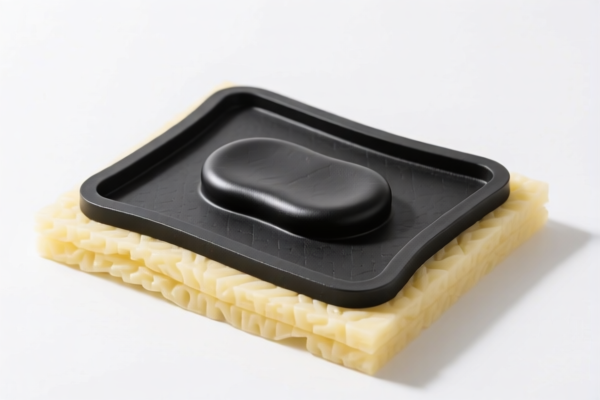
AI Analysis
🛡️ Nano Heat Insulation Pad (纳米隔热垫)
🌐 HS Code Reference & Customs Clearance Guide | 2026 Latest Tariff Analysis | Professional Entry Strategy
📌 I. Product Definition & Classification: What is a "Nano Heat Insulation Pad"?
The Nano Heat Insulation Pad is a specialized thermal management component designed to block or reflect high temperatures. In international trade, its classification depends heavily on its material composition and physical form (pad vs. rigid board).
There are two primary pathways for classification:
1. Textile/Synthetic Pads (6307): If the product is flexible, made of fibers, or synthetic materials, and shaped like a pad/mattress.
2. Mineral/Composite Boards (6806): If the product is rigid, plate-like, and made of mineral wool, ceramic, or composite materials, even if marketed as "nano."
⚠️ Critical Distinction:
- If it is flexible, fabric-like, or synthetic fiber-based → Classify under Chapter 63.
- If it is rigid, plate-like, or mineral-based → Classify under Chapter 68.
- Do not mix these categories. Misclassification leads to severe duties and customs delays.
📦 II. HS Code Classification Details (2026 Latest Tariff Matrix)
| HS Code | Product Description | Material/Form Inference | Key Characteristic |
|---|---|---|---|
6307.90.98.84 |
Other made-up articles (Generic Pad) | Fibers or Synthetic Materials | Flexible pad shape, generic classification |
6307.90.85.00 |
Other made-up articles (Nano Fiber) | Nano-level Synthetic/Fiber Materials | Specifically identified as nano-fiber/synthetic pad |
6806.10.00.10 |
Mineral Wool Plates/Slabs | Mineral or Synthetic Composite | Rigid plate shape, heat insulation function |
6806.90.00.10 |
Other Mineral/Composite Plates | Mineral or Composite Material | Rigid plate shape, heat/sound insulation |
🔍 Key Insight:
- The term "Nano" does not change the Chapter if the base material is mineral (Chapter 68) or textile (Chapter 63).
- "Pad" often implies flexibility (Chapter 63), while "Board/Plate" implies rigidity (Chapter 68).
- Customs Authorities look at the physical evidence: Is it bendable? Is it made of glass/ceramic/mineral fibers?
💰 III. 2026 Latest Tariff Rate Breakdown (Including Surcharges)
✅ Applicable Country: United States (US)
✅ Origin: China (CN)
✅ Effective Date: November 10, 2025 (and subsequent imports)
🎯 1. 6307.90.98.84 — Other Made-Up Articles (Generic Synthetic/Fiber Pad)
| Item | Content |
|---|---|
| Base Duty Rate | 7.0% (ad valorem) |
| Section 301 Surcharge | +7.5% |
| IEEPA Surcharge (122) | +10.0% |
| Total Duty Rate | 24.5% |
| Tax Calculation | CIF Value × 24.5% |
| De Minimis Exemption | ❌ Not Applicable (Denied) |
| Legal Basis Path | Section 301 + IEEPA:9903.01.24 + USITC:6307.90.98.84 |
📌 Explanation:
- This classification applies to generic synthetic or fiber-based insulation pads.
- The total duty of 24.5% is a combination of base MFN rate and US-China trade war surcharges.
🎯 2. 6307.90.85.00 — Other Made-Up Articles (Nano Fiber Pad)
| Item | Content |
|---|---|
| Base Duty Rate | 5.8% (ad valorem) |
| Section 301 Surcharge | +7.5% |
| IEEPA Surcharge (122) | +10.0% |
| Total Duty Rate | 23.3% |
| Tax Calculation | CIF Value × 23.3% |
| De Minimis Exemption | ❌ Not Applicable (Denied) |
| Legal Basis Path | Section 301 + IEEPA:9903.01.24 + USITC:6307.90.85.00 |
📌 Note:
- This is a more specific subheading for nano-fiber or synthetic materials.
- The 0.5% saving on the base rate makes it slightly cheaper than6307.90.98.84, but both carry high total duties.
🎯 3. 6806.10.00.10 — Mineral Wool Plates/Slabs (Rigid Board)
| Item | Content |
|---|---|
| Base Duty Rate | 3.9% (ad valorem) |
| Section 301 Surcharge | +25.0% |
| IEEPA Surcharge (122) | +10.0% |
| Total Duty Rate | 38.9% |
| Tax Calculation | CIF Value × 38.9% |
| De Minimis Exemption | ❌ Not Applicable (Denied) |
| Legal Basis Path | Section 301 + IEEPA:9903.01.24 + USITC:6806.10.00.10 |
📌 Explanation:
- High duty due to 25% Section 301 surcharge on mineral products.
- Applies to rigid, mineral-based insulation boards.
🎯 4. 6806.90.00.10 — Other Mineral/Composite Plates
| Item | Content |
|---|---|
| Base Duty Rate | 0.0% (ad valorem) |
| Section 301 Surcharge | +25.0% |
| IEEPA Surcharge (122) | +10.0% |
| Total Duty Rate | 35.0% |
| Tax Calculation | CIF Value × 35.0% |
| De Minimis Exemption | ❌ Not Applicable (Denied) |
| Legal Basis Path | Section 301 + IEEPA:9903.01.24 + USITC:6806.90.00.10 |
📌 Note:
- Despite a 0% base duty, the 35% total duty remains high due to the 35% combined surcharge (25% + 10%).
- This is often the "best-case" scenario for mineral-based rigid pads among the options provided, but still costly.
🛠️ IV. Customs Clearance Practical Advice (Pitfall Avoidance Guide)
✅ 1. Required Documentation Checklist
| Document | Mandatory? | Explanation |
|---|---|---|
| ✅ Product Specification Sheet | ✔️ | Must detail material composition (e.g., "polyester fiber" vs. "mineral wool"), thickness, and R-value. |
| ✅ Material Certificate | ✔️ | Proof of whether the product is fiber-based (Ch 63) or mineral-based (Ch 68). Crucial for correct HS code. |
| ✅ Photos (Product & Packaging) | ✔️ | Show flexibility (for pads) or rigidity (for boards). Label must match description. |
| ✅ Commercial Invoice | ✔️ | Clearly state "Nano Heat Insulation Pad" or "Board," not generic "Insulation Material." |
| ✅ Packing List | ✔️ | Confirm dimensions and weight to ensure it fits the "pad" or "board" definition. |
✅ 2. Declaration Strategy (Key Mnemonics)
🔥 "Flexibility Defines Chapter 63; Rigidity Defines Chapter 68."
| Scenario | Correct HS Code | Risk if Misclassified |
|---|---|---|
| Soft, bendable, fiber/synthetic pad | 6307.90.98.84 or 6307.90.85.00 |
High risk if declared as "mineral wool" (Ch 68) → Audits & Penalties |
| Hard, rigid, mineral/ceramic board | 6806.10.00.10 or 6806.90.00.10 |
High risk if declared as "textile pad" (Ch 63) → Duty underpayment (38.9% vs 24.5%) |
| Unknown Material | Wait for Lab Test | Do not guess. Provide sample for material analysis. |
✅ 3. Special Circumstances
| Situation | Handling Advice |
|---|---|
| "Nano" Coating on Textile | Still likely Chapter 63 if the base is textile. The coating is minor. |
| "Nano" Coating on Mineral Board | Still Chapter 68. The base mineral structure dominates. |
| Hybrid Products | If it has both textile and mineral layers, consult customs broker for primary material determination. |
| Value Declaration | Ensure CIF value is accurate. With 24%-39% duty, even small errors in value lead to significant underpayment claims. |
🌍 V. Global Market Comparison (2026 Update)
| Country/Region | Recommended HS Code | Duty Rate (China Origin) | Key Certification | Note |
|---|---|---|---|---|
| 🇺🇸 USA | 6307.90.85.00 / 6806.90.00.10 |
23.3% / 35.0% | None specific | Highest global duty burden due to 301 + IEEPA. |
| 🇨🇳 China | 6307.90.98.84 / 6806.90.00.10 |
Varies (Low/Zero) | CCC (if applicable) | Low duty for domestic use. |
| 🇪🇺 EU | 6307.90.98 / 6806.90 |
~6-10% | CE + REACH | No Section 301 surcharges. Much lower cost than US. |
| 🇬🇧 UK | 6307.90.98 / 6806.90 |
~6-10% | UKCA | Post-Brexit rules apply. |
| 🇯🇵 Japan | 6307.90.98 / 6806.90 |
~5-10% | PSE (if electrical) | No major trade surcharges. |
📌 Conclusion:
- The USA is the most expensive market for Nano Heat Insulation Pads due to the layered tariffs (Base + 301 + IEEPA).
- Chapter 63 (Textile/Synthetic) generally has a lower total duty (23.3%-24.5%) than Chapter 68 (Mineral) (35%-38.9%).
- Strategy: If the product allows, using synthetic/nano-fiber materials (Chapter 63) is more cost-effective for US export than mineral-based boards (Chapter 68).
📌 VI. Common Mistakes & Pitfalls (Lessons Learned)
❌ Mistake 1: Using "Insulation Blanket" for a rigid board.
👉 Consequence: Customs may classify under Ch 63 (lower duty) or Ch 68 (higher duty) incorrectly, leading to seizure or re-evaluation.
❌ Mistake 2: Ignoring the "122" IEEPA Surcharge.
👉 Consequence: The 10% IEEPA surcharge is often forgotten. Total duty is never just Base + 301.
❌ Mistake 3: Assuming "Nano" gets a special exemption.
👉 Consequence: No exemptions for nano-materials under current US trade policy. All surcharges apply.
❌ Mistake 4: Declaring as "Raw Material" instead of "Made-Up Article."
👉 Consequence: If it is cut to size or stitched, it is a "made-up article" (Ch 63). Declaring as raw material (Ch 56/68) is fraudulent misclassification.
✅ Correct Approach:
"Nano-Insulation Pad, Synthetic Fiber, Flexible, 10mm Thick, Model X" →
6307.90.85.00
"Nano-Insulation Board, Mineral Wool Composite, Rigid, 20mm Thick, Model Y" →6806.90.00.10
🎯 VII. Conclusion: Precision in Classification Saves Millions
🎯 Key Takeaways:
🔹 "Fiber/Synthetic = Ch 63 (Lower Duty ~24%)"
🔹 "Mineral/Board = Ch 68 (Higher Duty ~35%+)"
🔹 "Nano" is a marketing term, not a tariff category.
🔹 "US Market" = High Duty (23-39%), Plan accordingly.
📌 Pro Tip:
If you are exporting to the US, prioritize synthetic/nano-fiber formulations (6307.90.85.00) if product performance allows, as the 23.3% total duty is significantly lower than the 38.9% for mineral boards. Always provide material certificates to justify the classification and avoid costly audits.
📣 Immediate Action:
📞 Engage a licensed customs broker for a Pre-Ruling (Advance Ruling) before shipment.
🚀 Correct HS Code + Accurate Documentation = Smooth Clearance + Cost Control!
✨ Professional Customs Clearance Starts with Accurate Classification!
💼 Your Bottom Line Depends on the First 8 Digits!
Customer Reviews
About HS Code Classification
The Harmonized System (HS) is an internationally standardized nomenclature developed by the World Customs Organization (WCO) to classify traded products. Over 200 countries use the HS system as the basis for customs tariffs, trade statistics, and import/export regulations.
Each HS code follows a hierarchical structure:
- Chapter (2 digits) — Broad category of goods (e.g., Chapter 84: Machinery and Mechanical Appliances)
- Heading (4 digits) — More specific grouping within the chapter
- Subheading (6 digits) — Internationally standardized breakdown, used by all WCO member countries
- National subdivisions (8-10 digits) — Country-specific extensions for further classification, such as US HTSUS 10-digit codes
Correct HS code classification is essential for smooth customs clearance, accurate duty payment, and compliance with trade regulations. Misclassification can lead to customs delays, overpayment of duties, or penalties.
When importing from CN to US, the applicable tariff rates may include:
- Most-Favored-Nation (MFN) rate — The standard duty rate applied to WTO members
- General rate — Applied to countries without trade agreements
- Trade remedy duties — Additional tariffs such as Section 301 (anti-dumping), Section 232 (national security), or countervailing duties
The information provided on this page is for reference purposes only. For official classification, please consult with your local customs authority or a licensed customs broker.