Naphthalic Acid Modified Asphalt
CN → USProduct Images
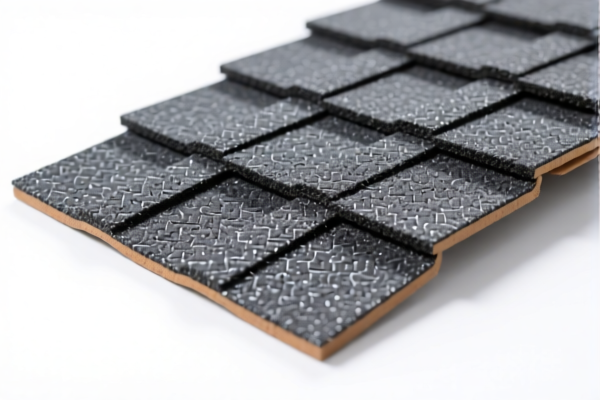
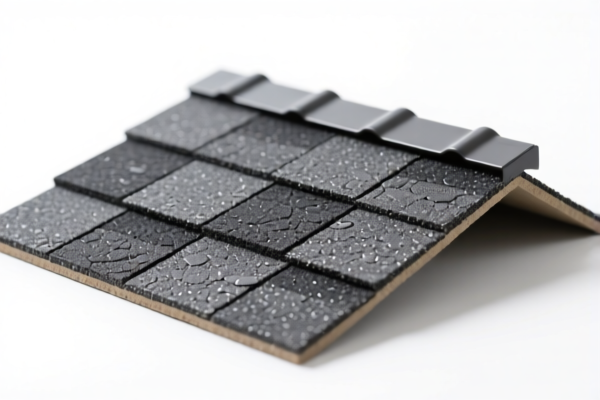
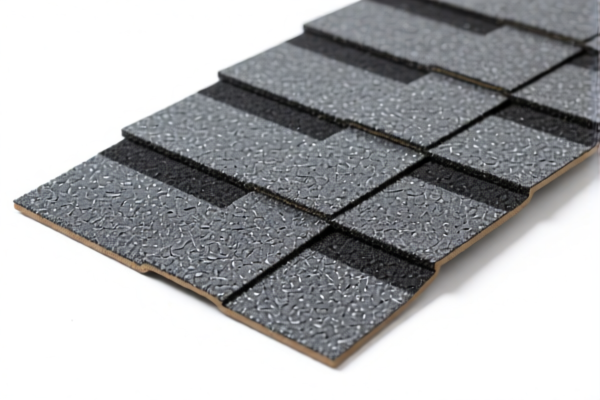
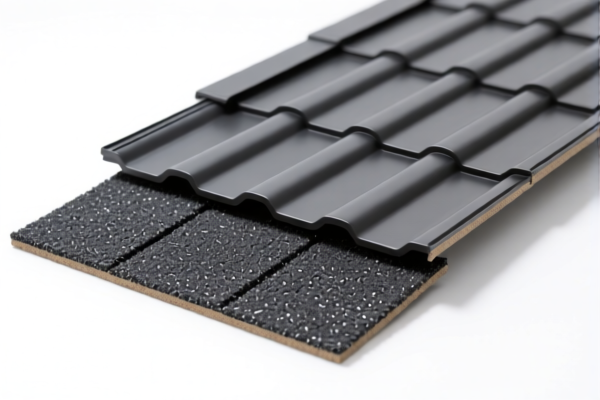
AI Analysis
🛢️ Naphthalic Acid Modified Asphalt (NAMA)
🌐 HS Code Reference & Customs Clearance Guide | 2026 Latest Tariff Analysis | Professional Clearance Strategy
📌 1. Product Definition & Classification: What is "Naphthalic Acid Modified Asphalt"?
Naphthalic Acid Modified Asphalt (often referred to as NAMA or Naphthenic Asphalt modified with Naphthalene derivatives) is a high-performance paving material. It is not a standalone chemical commodity but a compound mixture used primarily in road construction, airport runways, and industrial flooring.
Key Characteristics: * Base Material: Asphalt (Bitumen), which provides the binding and waterproofing properties. * Modifier: Naphthalic acid derivatives (or sulfonated naphthalates) are added to improve viscosity, temperature stability, and adhesion. * Form: Usually solid lumps, flakes, or emulsion (depending on the specific formulation).
⚠️ Critical Classification Distinction:
- If it is a finished paving mixture (asphalt + aggregates + modifiers) intended for immediate laying → It is a Road Construction Material.
- If it is pure Asphalt (bitumen) with minor additives not changing its essential character → It falls under Asphalt.
- If it is a Chemical Product (e.g., sulfonated naphthalate dispersant) used to make modified asphalt → It falls under Chemicals.🔍 Key Point for Customs:
Most commercial "Naphthalic Acid Modified Asphalt" products are classified as Asphalt because the modifier is integrated to enhance the asphalt's physical properties, not to create a new chemical substance distinct from bitumen. The primary essential character remains that of asphalt.
📦 2. HS Code Classification Details (2026 Authoritative Tariff)
| HS Code | Product Description | Applicable Scenario | Essential Character |
|---|---|---|---|
| 2714.90.80.00 | Other asphalt and asphaltite | Pure asphalt, oxidized asphalt, naturally occurring asphalt with minor modifiers | ✅ Asphalt (Primary) |
| 3824.99.94.00 | Other prepared binders for foundry mold-core | Chemical additives, dispersants, or pre-mixed chemical binders | ❌ Chemical (If pure modifier) |
| 3901-3914 | Plastics in primary forms | Incorrect for asphalt products | ❌ N/A |
| 2620.11.00.00 | Slag, ash and residues from bituminous minerals | By-products, not finished modified asphalt | ❌ N/A |
🔍 Priority Note:
- HS Code 2714.90.80.00 is the most common and accurate classification for modified asphalt products where the base is bitumen/asphalt.
- If the product is a liquid chemical additive (e.g., sulfonated naphthalate formaldehyde condensate) sold as a reagent to be mixed with asphalt elsewhere, it may fall under 3824.99.94.00 or 2917.19.00.00 (Dicarboxylic acids).
- However, for "Naphthalic Acid Modified Asphalt" as a ready-to-use paving material, 2714.90.80.00 is the standard global practice.
💰 3. 2026 Latest Tariff Rate Details (US Market Focus)
✅ Applicable Country: United States (US)
✅ Origin: China (CN)
✅ Effective Date: Post-2025 Trade Policies (including Section 301 and IEEPA adjustments)
🎯 1. 2714.90.80.00 —— Asphalt (including Naphthalic Acid Modified Asphalt)
| Item | Content |
|---|---|
| Basic Tariff Rate | 4.9% (ad valorem) |
| Section 301 Surcharge | +7.5% (Current 2025/2026 status for most asphalt-related codes under Category 4) |
| IEEPA Surcharge | +10% (General China surcharge for many industrial goods) |
| Total Effective Rate | 22.4% |
| Tax Calculation | CIF Value × 22.4% |
| De Minimis Eligibility | ❌ Not Eligible (Dangerous/Industrial material) |
| Legal Basis Path | HTSUS:2714.90.80.00 → Section 301: Footnote 9903.88.01 → IEEPA:9903.01.24 |
📌 Explanation:
- Basic Rate (4.9%): Standard MFN rate for asphalt.
- Section 301 (7.5%): Asphalt and bituminous products are subject to USTR Section 301 tariffs due to trade imbalances.
- IEEPA (10%): Applies to most Chinese-origin goods unless specifically exempted.
- Total (22.4%): A significant cost factor. Importers must factor this into landed cost.⚠️ Note on Chemical Additives (if classified separately):
If cleared as 3824.99.94.00 (Prepared Binders):
- Basic Rate: 5.3%
- Section 301: 7.5%
- IEEPA: 10%
- Total: 22.8% (Slightly higher, similar impact)
🛠️ 4. Customs Clearance Practical Advice (Pitfall Avoidance Guide)
✅ 1. Required Documentation Checklist
| Document | Mandatory? | Description |
|---|---|---|
| ✅ Product Specification Sheet | ✔️ | Must clearly state: % of Asphalt, % of Naphthalic Acid Modifier, Melting Point, Viscosity. |
| ✅ MSDS (Material Safety Data Sheet) | ✔️ | Critical for classification. Confirms if it’s hazardous (asphalt fumes, heat hazard). |
| ✅ Certificate of Origin (CO) | ✔️ | Required to prove Chinese origin for accurate tariff calculation. |
| ✅ Bill of Lading / Invoice | ✔️ | Must match product description exactly (e.g., "Modified Asphalt for Road Paving"). |
| ✅ HS Code Pre-Ruling (Optional but Recommended) | ✔️ | Avoids misclassification disputes. |
✅ 2. Declaration Tips (Key Mantra)
🔥 "Base is Asphalt, Modifier is Minor, Declare as Asphalt, Avoid Chemical Trap!"
| Scenario | Correct Declaration | Incorrect Practice |
|---|---|---|
| Ready-to-use modified asphalt lumps | 2714.90.80.00 (Asphalt) |
❌ Declare as "Chemical" → Higher scrutiny, potential penalty |
| Pure naphthalic acid powder | 2917.19.00.00 (Dicarboxylic Acids) |
❌ Declare as "Asphalt" → Misclassification |
| Asphalt + Stone Aggregate Mix | 2714.90.80.00 or 3002 (if ready for concrete) |
❌ Split declaration → Complex clearance |
✅ 3. Special Case Handling
| Scenario | Handling Advice |
|---|---|
| Emulsion Form | If it’s water-based emulsion, it may still fall under 2714.90 but requires different HS sub-heading depending on solvent content. Check MSDS. |
| Hazardous Cargo | Asphalt products are often classified as Class 9 Miscellaneous Dangerous Goods due to heat hazard during transport. Ensure proper packaging and IMDG/IATA compliance. |
| Re-export | If imported as raw material and re-exported, claim Bonded Warehouse status to defer tariffs. |
🌍 5. Global Market Comparison (2026 Latest)
| Country/Region | Recommended HS Code | Tariff Rate (China Origin) | Certification | Notes |
|---|---|---|---|---|
| 🇺🇸 USA | 2714.90.80.00 |
22.4% (4.9% + 7.5% + 10%) | None specific | High tariffs; check for exemptions. |
| 🇨🇳 China | 2714.90.80.00 |
0% (Import Duty) | None | Low entry barrier for domestic use. |
| 🇪🇺 EU | 2714.90.80.00 |
0% | REACH Registration | Chemicals must be REACH-compliant. |
| 🇮🇳 India | 2714.90.90.00 |
10-15% | BIS Certification | Varies by state; check local excise. |
| 🇦🇺 Australia | 2714.90.80.00 |
5% | None | Stable trade policy. |
📌 Conclusion:
- USA has the highest cost burden due to trade policies.
- EU requires strict chemical compliance (REACH) but low tariffs.
- China and Australia offer competitive tariff environments.
📌 6. Common Mistakes & Pitfalls (Lessons Learned)
❌ Mistake 1: Declaring "Naphthalic Acid" as the primary product when it’s actually a mixture.
👉 Consequence: Customs may reclassify as a chemical (2917), leading to different regulations and potential penalties for false declaration.
❌ Mistake 2: Ignoring the Hazardous Material classification.
👉 Consequence: Asphalt is often hot-poured or shipped in heated tanks. Failure to declare as Class 9 DG can lead to shipment rejection, fines, or safety hazards.
❌ Mistake 3: Not providing MSDS.
👉 Consequence: Customs will hold the shipment for classification review, causing delays of 2-4 weeks.
❌ Mistake 4: Assuming "Modified" means "Chemical."
👉 Consequence: Higher tariff rate if misclassified. Stick to 2714 for asphalt-based products.
✅ Correct Practice:
"Asphalt, Modified with Naphthalic Acid Derivatives, Solid Lumps, for Road Paving, HS Code 2714.90.80.00, Class 9 DG."
🎯 7. Conclusion: Professional Clearance, Cost Efficiency!
🎯 Remember the Mantra:
🔹 "Asphalt Base, Chemical Modifier, Stick to 2714, Avoid Chemical Trap!"
🔹 "Tariff is 22.4% in US, Plan Landed Cost Early!"
📌 Pro Tip:
If your product is re-exported from Vietnam or Malaysia (where asphalt modification facilities exist), you may qualify for preferential tariffs under RCEP or USMCA (if applicable).
👉 Action: Get a Certificate of Origin from the re-export country and apply for preferential tariff treatment.
📣 Immediate Action:
📞 Consult with a licensed customs broker.
📄 Prepare MSDS and Product Specification before shipping.
🚀 Smooth Clearance, Cost Savings, Global Reach!
✨ Professional Clearance Starts with Accurate Classification!
💼 Every Percent of Tariff Matters!
Customer Reviews
About HS Code Classification
The Harmonized System (HS) is an internationally standardized nomenclature developed by the World Customs Organization (WCO) to classify traded products. Over 200 countries use the HS system as the basis for customs tariffs, trade statistics, and import/export regulations.
Each HS code follows a hierarchical structure:
- Chapter (2 digits) — Broad category of goods (e.g., Chapter 84: Machinery and Mechanical Appliances)
- Heading (4 digits) — More specific grouping within the chapter
- Subheading (6 digits) — Internationally standardized breakdown, used by all WCO member countries
- National subdivisions (8-10 digits) — Country-specific extensions for further classification, such as US HTSUS 10-digit codes
Correct HS code classification is essential for smooth customs clearance, accurate duty payment, and compliance with trade regulations. Misclassification can lead to customs delays, overpayment of duties, or penalties.
When importing from CN to US, the applicable tariff rates may include:
- Most-Favored-Nation (MFN) rate — The standard duty rate applied to WTO members
- General rate — Applied to countries without trade agreements
- Trade remedy duties — Additional tariffs such as Section 301 (anti-dumping), Section 232 (national security), or countervailing duties
The information provided on this page is for reference purposes only. For official classification, please consult with your local customs authority or a licensed customs broker.