Narrow Perforated Card Paper
CN → US| HS Code | Tariff Rate | Origin | Destination | Doc |
|---|---|---|---|---|
| 4911998000 | 17.5% | CN | US | Official Doc |
| 4911996000 | 17.5% | CN | US | Official Doc |
| 4823903100 | 35.0% | CN | US | Official Doc |
| 4817204000 | 35.0% | CN | US | Official Doc |
| 4823908000 | 35.0% | CN | US | Official Doc |
| 4817202000 | 35.0% | CN | US | Official Doc |
Product Images
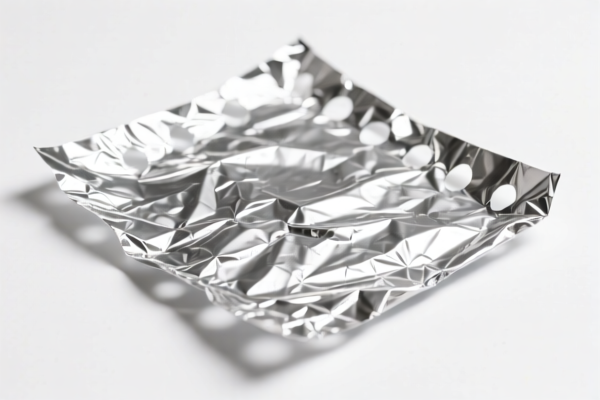
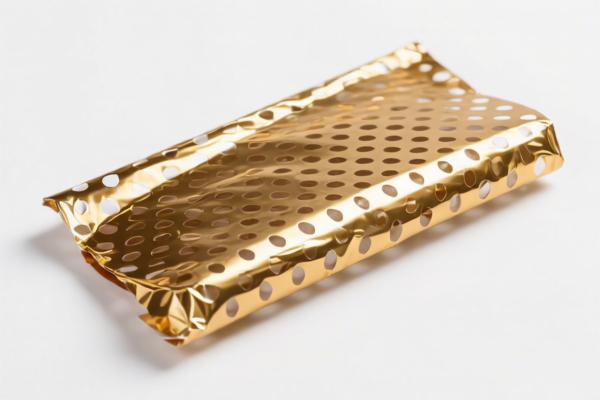


AI Analysis
🎴 Narrow Perforated Card Paper
🌐 HS Code Reference & Customs Clearance Guide | 2026 Latest Tariff Analysis | Professional-Level Entry Strategy
📌 1. Product Definition & Classification: Do You Really Understand "Perforated Cards"?
Narrow Perforated Card Paper, often referred to as Punch Cards or Key Punch Cards, are rectangular pieces of paper or paperboard that have been mechanically punched with holes in specific patterns. Historically used for data storage in early computing, they are still used in specialized industrial controls, lottery machines, voting systems, and educational tools.
In international trade, these items are primarily classified under Chapter 48 (Paper and Paperboard) because their core value lies in the material and the perforation process, rather than being pre-printed informational documents.
⚠️ Key Distinction Point:
- If the card is blank (only perforated, no informational printing) → Classify under 4823 (Other articles of paper pulp, paper, cellulose pulp, paperboard or paper products). - If the card is printed with specific instructions, text, or codes → It may be classified under 4817 (Stationery / Articles of paper for correspondence) or 4911 (Other printed matter), depending on the primary function and content.
📦 2. HS Code Classification Details (2026 Latest Tariff Authority Comparison)
Based on the provided data, here are the four most relevant HS Codes for Narrow Perforated Card Paper:
| HS Code | Product Description | Application Scenario | Classification Logic |
|---|---|---|---|
4823.90.31.00 |
Other articles of paper, perforated cards and cards for punch-reading machines | Standard industrial/perforated cards | Material & Use Match: Paper material; used for punch-reading machines. |
4817.20.40.00 |
Correspondence cards, postcard cards, and other paper cards | Business correspondence / Letter cards | Form Match: Paper form; logic aligns with "communication cards." |
4817.20.20.00 |
Other stationery articles of paper, paperboard, cellulose pulp or paperboard | Specialty paper perforated cards | Feature Match: Specialty paper with perforation features; belongs to paper communication cards. |
4823.90.80.00 |
Other articles of paper or paperboard, not specified elsewhere | General paper products (fallback) | Fallback Category: Fits general paper制品 if no specific sub-heading applies. |
4911.99.80.00 |
Other printed matter | Printed perforated cards | Printed Matter: If heavily printed/informational, fits "other printed matter." |
🔍 Critical Note:
- Blank Perforated Cards strongly favor 4823.90.31.00 as the most accurate classification.
- Printed/Informational Cards may fall under 4817 or 4911, but customs may still classify them as 4823 if the printing is minimal or functional rather than informational.
💰 3. 2026 Latest Tariff Rate Details (Including Surtaxes & Policy Add-ons)
✅ Applicable Country: United States (US)
✅ Origin: China (CN)
✅ Effective Date: From November 10, 2025 onwards (including subsequent imports)
🎯 1. 4823.90.31.00 —— Paper Perforated Cards for Punch-Reading Machines
| Item | Content |
|---|---|
| Base Tariff | 0.0% (ad valorem) |
| USITC Surcharge | +25.0% (from USITC Footnote 9903.88.01) |
| IEEPA Surcharge | +10.0% (Targeting China/HK products, effective from Nov 10, 2025) |
| Total Tariff Rate | 35.0% |
| Tax Calculation | CIF Value × 35% |
| De Minimis Eligibility | ❌ Not Eligible (deny_de_minimis) |
| Legal Authority Path | IEEPA:9903.01.25 → IEEPA:9903.01.24 → USITC:4823.90.31.00 → FOOTNOTE:9903.88.01 |
📌 Explanation:
- The 25% USITC surcharge comes from Section 301 of the US Trade Act (additional tariffs on Chinese goods).
- The 10% IEEPA surcharge is an additional levy under the International Emergency Economic Powers Act specifically targeting Chinese imports.
- Total 35% is a high tariff rate, requiring advance cost planning.
🎯 2. 4817.20.40.00 —— Correspondence Cards / Paper Cards
| Item | Content |
|---|---|
| Base Tariff | 0.0% |
| USITC Surcharge | +25.0% |
| IEEPA Surcharge | +10.0% |
| Total Tariff Rate | 35.0% |
| Tax Calculation | CIF × 35% |
| De Minimis Eligibility | ❌ Not Eligible |
| Legal Authority Path | IEEPA:9901.25 → IEEPA:9903.01.24 → USITC:4817.20.40.00 → FOOTNOTE:9903.88.01 |
📌 Note:
- Same tariff structure as above.
- Even if classified as "stationery" or "correspondence cards," the Section 301 and IEEPA surcharges still apply.
🎯 3. 4817.20.20.00 —— Specialty Perforated Paper Cards
| Item | Content |
|---|---|
| Base Tariff | 0.0% |
| USITC Surcharge | +25.0% |
| IEEPA Surcharge | +10.0% |
| Total Tariff Rate | 35.0% |
| Tax Calculation | CIF × 35% |
| De Minimis Eligibility | ❌ Not Eligible |
| Legal Authority Path | IEEPA:9901.25 → IEEPA:9903.01.24 → USITC:4817.20.20.00 → FOOTNOTE:9903.88.01 |
📌 Note:
- Applies to specialty paper with perforation features.
- No exemption for "specialty" status under current US-China trade policies.
🎯 4. 4823.90.80.00 —— Other Paper Articles (Fallback)
| Item | Content |
|---|---|
| Base Tariff | 0.0% |
| USITC Surcharge | +25.0% |
| IEEPA Surcharge | +10.0% |
| Total Tariff Rate | 35.0% |
| Tax Calculation | CIF × 35% |
| De Minimis Eligibility | ❌ Not Eligible |
| Legal Authority Path | IEEPA:9901.25 → IEEPA:9903.01.24 → USITC:4823.90.80.00 → FOOTNOTE:9903.88.01 |
📌 Note:
- This is a "catch-all" category. If your product doesn't fit 4823.90.31.00, it may fall here, but the tax rate remains identical.
🎯 5. 4911.99.80.00 —— Other Printed Matter
| Item | Content |
|---|---|
| Base Tariff | 0.0% |
| USITC Surcharge | +7.5% |
| IEEPA Surcharge | +10.0% |
| Total Tariff Rate | 17.5% |
| Tax Calculation | CIF × 17.5% |
| De Minimis Eligibility | ❌ Not Eligible |
| Legal Authority Path | IEEPA:9901.25 → IEEPA:9903.01.24 → USITC:4911.99.80.00 → FOOTNOTE:9903.88.01 |
📌 Note:
- This is the lowest tariff rate (17.5%) in the provided data.
- However, classification is strict. You must prove the card is primarily "printed matter" (e.g., instructional, informational, or promotional) rather than just "perforated paper."
- Risk: Customs may reclassify as 4823 (35%) if printing is deemed incidental.
🛠️ 4. Customs Clearance Practical Advice (Battle-Tested Pitfall Avoidance)
✅ 1. Required Documentation Checklist (No Exceptions)
| Document | Must Provide | Description |
|---|---|---|
| ✅ Product Specification Sheet | ✔️ | Dimensions, hole pattern, material type, paper weight |
| ✅ Product Photos | ✔️ | Clear images of front/back, showing perforations and any printing |
| ✅ Commercial Invoice | ✔️ | Accurate description: "Perforated Paper Card for Data Input" or "Printed Instruction Card" |
| ✅ Packing List | ✔️ | Quantity, weight, dimensions |
| ✅ Origin Certificate | ✔️ | If not China-origin, may qualify for lower rates |
✅ 2. Declaration Strategy (Key Rules)
🔥 "Know Your Function: Blank = 4823, Printed = 4911, But 35% is the Norm!"
| Scenario | Correct Declaration | Wrong Approach |
|---|---|---|
| Blank Perforated Cards | 4823.90.31.00 (35%) |
Declare as "Printed Matter" → Audit Risk |
| Printed Instructional Cards | 4911.99.80.00 (17.5%) if justified |
Declare as "Paper Board" → Missed Savings |
| General Perforated Cards | 4823.90.80.00 (35%) |
Split shipment → Higher fees |
| Card Stock Only | 4817.20.xx (35%) |
Mislabel as "Books" → Rejection |
✅ 3. Special Cases
| Scenario | Handling Advice |
|---|---|
| OEM Custom Perforated Cards | Provide customer PO + design specs to prove intended use |
| Pre-Printed Voting/Lottery Cards | Justify classification under 4911.99.80.00 with proof of informational content |
| Mixed Shipments | Do not mix blank and printed cards in one line item; separate for accurate classification |
| Origin Variation | If produced in Vietnam/Malaysia, verify if IEEPA surcharge still applies (usually not, but check latest rules) |
🌍 5. Global Market Customs Comparison (2026 Latest)
| Country/Region | Recommended HS Code | Tariff (China Origin) | Certification | Notes |
|---|---|---|---|---|
| 🇺🇸 United States | 4823.90.31.00 |
35% | None | High tariff due to Section 301 & IEEPA |
| 🇨🇳 China | 4823.90.31.00 |
~5-10% | None | Low import duty for domestic production |
| 🇪🇺 EU | 4823.90 |
0-6.5% | CE (if applicable) | No major surcharges |
| 🇬🇧 UK | 4823.90 |
0-6.5% | UKCA | Post-Brexit rules apply |
| 🇯🇵 Japan | 4823.90 |
0-15% | None | Varies by specific sub-heading |
📌 Conclusion:
- The US market is the most expensive for Chinese-origin perforated cards due to the 35% combined tariff.
- Diversification to non-China origins can significantly reduce costs.
📌 6. Common Errors & Pitfall Avoidance (Lessons Learned)
❌ Error 1: Classifying blank perforated cards as 4911.99.80.00 (17.5%) to save tax
👉 Consequence: Customs audit → Rejection → Pay 35% + Penalties
❌ Error 2: Not disclosing "perforated" in the product description
👉 Consequence: Misdeclaration → Delays or seizure
❌ Error 3: Assuming "paper cards" automatically qualify for de minimis (Section 321)
👉 Consequence: Denied entry → Must file formal entry with 35% tax
❌ Error 4: Mixing printed and unprinted cards in one shipment
👉 Consequence: Complex classification → Higher risk of error
✅ Correct Practice:
"Perforated Paper Cards, Unprinted, 3x5 inches, for Industrial Control Systems, Model XYZ, China Origin"
🎯 7. Conclusion: Precision in Classification Saves Money!
🎯 Remember the Rule:
🔹 "Blank Cards = 4823 (35%), Printed Cards = 4911 (17.5% with Risk)"
🔹 "HS Code Determines Tax, Accuracy Saves Thousands!"
📌 Tips:
- If your product is originating from Vietnam, Mexico, or Malaysia, check if it qualifies for IEEPA exemption (potential savings of 10%).
- Consider Advance Ruling from CBP if your product has mixed features (e.g., semi-printed).
📣 Call to Action:
📞 Consult a Customs Broker + Provide Product Samples + Request Pre-Ruling
🚀 Ensure smooth clearance, minimize tax liability, and maximize profit margins!
✨ Professional Customs Clearance Starts with Accurate Classification!
💼 Every Dollar Saved is a Dollar Earned!
Customer Reviews
About HS Code Classification
The Harmonized System (HS) is an internationally standardized nomenclature developed by the World Customs Organization (WCO) to classify traded products. Over 200 countries use the HS system as the basis for customs tariffs, trade statistics, and import/export regulations.
Each HS code follows a hierarchical structure:
- Chapter (2 digits) — Broad category of goods (e.g., Chapter 84: Machinery and Mechanical Appliances)
- Heading (4 digits) — More specific grouping within the chapter
- Subheading (6 digits) — Internationally standardized breakdown, used by all WCO member countries
- National subdivisions (8-10 digits) — Country-specific extensions for further classification, such as US HTSUS 10-digit codes
Correct HS code classification is essential for smooth customs clearance, accurate duty payment, and compliance with trade regulations. Misclassification can lead to customs delays, overpayment of duties, or penalties.
When importing from CN to US, the applicable tariff rates may include:
- Most-Favored-Nation (MFN) rate — The standard duty rate applied to WTO members
- General rate — Applied to countries without trade agreements
- Trade remedy duties — Additional tariffs such as Section 301 (anti-dumping), Section 232 (national security), or countervailing duties
The information provided on this page is for reference purposes only. For official classification, please consult with your local customs authority or a licensed customs broker.