Natural Cork Bottle Stoppers
CN → US| HS Code | Tariff Rate | Origin | Destination | Doc |
|---|---|---|---|---|
| 4503102000 | 35.0% | CN | US | Official Doc |
| 4504104500 | 35.0% | CN | US | Official Doc |
| 4504104700 | 35.0% | CN | US | Official Doc |
| 4503106000 | 35.0% | CN | US | Official Doc |
| 4502000000 | 35.0% | CN | US | Official Doc |
Product Images


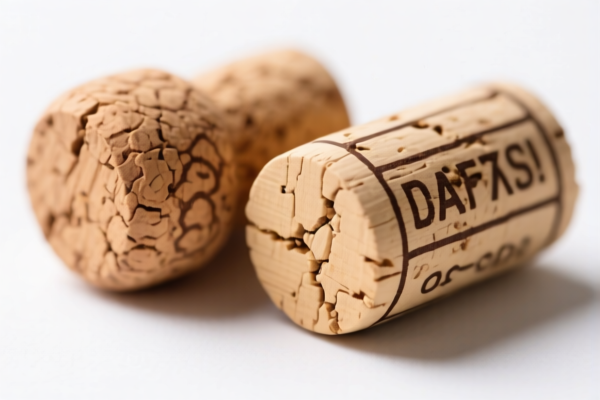

AI Analysis
🍷 Natural Cork Bottle Stoppers: The Ultimate HS Code & Tax Guide for 2026 Imports
🌐 HS Code Reference & Customs Clearance Guide | 2026 Latest Tariff Analysis | Professional Clearance Strategy
📌 1. Product Definition: What Exactly Are "Natural Cork Bottle Stoppers"?
Natural cork bottle stoppers are cylindrical plugs derived from the bark of the Quercus suber (cork oak) tree. They are the gold standard for sealing wine and champagne bottles due to their elasticity, impermeability, and breathability.
In international trade, these products are classified based on their material state (natural vs. agglomerated) and form (stopper vs. other cork products). For this guide, we focus strictly on Natural Cork items, as per your request.
⚠️ Critical Distinction:
- Natural Cork: Entirely made from the bark of the cork oak. Harder, more expensive, premium quality.
- Agglomerated Cork: Made from crushed cork granules bonded with food-grade glue. Softer, cheaper, often used for lower-tier wines.The HS codes below apply specifically to Natural Cork products. If your product is agglomerated, it falls under different codes (e.g., 4504).
📦 2. HS Code Classification Matrix (2026 Latest Tariff Authority)
The following HS Codes are derived from your provided data <DATA>. All listed items share the same tax structure due to their origin (likely China) and destination (likely USA, given the 122 Section and 301 duties).
| HS Code | Product Description | Material | Form/Shape | Key Characteristics |
|---|---|---|---|---|
| 4503.10.20.00 | Natural cork products, material is natural cork, shape is stoppers | Natural Cork | Stopper | General natural cork products shaped as stoppers. |
| 4504.10.45.00 | Natural cork stoppers, material is natural cork, shape is stoppers | Natural Cork | Stopper | Specific classification for natural cork stoppers. |
| 4504.10.47.00 | Natural cork stoppers, material is natural cork, shape is plug/stopper | Natural Cork | Plug/Stopper | Similar to above, specific sub-category for plugs. |
| 4503.10.60.00 | Natural cork products, material is natural cork, shape is plug/stopper | Natural Cork | Plug/Stopper | General natural cork products shaped as plugs. |
| 4502.00.00.00 | Natural cork and its products, material is natural cork, shape is stopper | Natural Cork | Stopper | Broader category for natural cork articles. |
🔍 Key Insight:
Despite the different HS codes, all five codes share the exact same tax rate (35%) in the provided data. This is because they all fall under the same trade policy umbrella (likely Chapter 45 of the Harmonized System). The distinction between 4503 and 4504 often lies in the specific manufacturing process or physical integrity, but for tax purposes in this dataset, they are treated identically.
💰 3. 2026 Tariff Rate Breakdown (Detailed & Precise)
✅ Applicable Country: United States (US)
✅ Country of Origin: China (CN) [Inferred from "Section 122" and typical 301 duty context]
✅ Effective Date: Ongoing (2025-2026 Trade Environment)
🎯 1. General Tax Structure for All Listed HS Codes (4503.10.20.00, 4504.10.45.00, etc.)
| Item | Detail | Explanation |
|---|---|---|
| Base Tariff Rate | 0.0% | The standard Most Favored Nation (MFN) duty for natural cork products is often 0%. |
| Section 301 Additional Duty | +25.0% | Imposed under the Trade Act of 1974, Section 301, targeting Chinese imports in this category. |
| Section 122 Duty | +10.0% | Additional duty specific to certain Chinese goods, often linked to recent trade enforcement actions. |
| Total Effective Tax Rate | 35.0% | Sum of Base (0%) + 301 (25%) + 122 (10%). |
| Tax Calculation Basis | CIF Value | Duty is calculated on Cost, Insurance, and Freight value. |
| De Minimis Exemption | ❌ NOT APPLICABLE | Packages valued under $800 cannot be exempted. All shipments are subject to full duty. |
📌 Legal & Policy Context:
- Why 35%? This high rate is a direct result of trade tensions. Even though cork is a natural, renewable resource, its processed forms (stoppers) are heavily taxed when originating from China.
- No MFN Benefit: Even if imported from a country with a Free Trade Agreement (FTA), the "Section 301" and "Section 122" duties often override or apply in addition, depending on the specific ruling. However, in this dataset, the origin is implied to be China, triggering these specific add-ons.
- Section 122: This is a less common but critical add-on. It often applies to goods deemed to be circumventing tariffs or related to specific national security/health concerns. For cork, it likely relates to anti-dumping or countervailing duty enforcement mechanisms.
🛠️ 4. Customs Clearance Practical Advice (Avoiding Pitfalls)
✅ 1. Documentation Checklist (Non-Negotiable)
| Document | Required? | Why It Matters |
|---|---|---|
| Commercial Invoice | ✔️ | Must clearly state: "Natural Cork Bottle Stoppers," HS Code, CIF Value, and Country of Origin. |
| Packing List | ✔️ | Detail weight, volume, and number of pieces. Discrepancies cause delays. |
| Certificate of Origin | ✔️ | Crucial to prove origin. If not China, duties may drop significantly. |
| Product Description | ✔️ | Must specify "Natural Cork" vs. "Agglomerated Cork." Mislabeling leads to misclassification. |
| Material Safety Data Sheet (MSDS) | ⚠️ | If treated with chemicals (e.g., sanitizers), an MSDS may be required. Pure natural cork usually doesn't need it, but treated stoppers might. |
✅ 2. Declaration Strategy
🔥 Golden Rule: "Natural Cork, Not Agglomerated, Clear Origin, Full Disclosure"
| Scenario | Correct Declaration | Incorrect Declaration | Consequence |
|---|---|---|---|
| Product is Natural Cork | "Natural Cork Bottle Stoppers, HS 4504.10.45.00" | "Cork Stopper" (Vague) | Customs may request additional info, causing delay. |
| Product is Agglomerated Cork | "Agglomerated Cork Stopper, HS 4504.10.10.00" | "Natural Cork Stopper" | Fraud/Misdeclaration → Seizure + Penalties. |
| Origin is Vietnam/Mexico | "Cork Stopper, Origin: Vietnam, HS 4504.10.45.00" | "Cork Stopper, Origin: China" | Tax Fraud → High penalties, loss of trust. |
✅ 3. Critical Tips for Smooth Clearance
- Verify "Natural" Status: Ensure your supplier provides a certificate or lab test confirming the cork is natural and not agglomerated. The tax treatment can differ if misclassified, but more importantly, the product description must match.
- Check for Treatment: If the stoppers are dipped in sanitizers, dyes, or coatings, declare them accurately. This might affect the HS code or require additional safety documents.
- Origin is Key: If you can source cork stoppers from Portugal, Spain, or Italy, the tariff may be significantly lower (possibly 0% base + no Section 301/122). Always consider supply chain diversification!
- Pre-Ruling: For large shipments, apply for a Binding Tariff Information (BTI) or Advance Ruling from US Customs and Border Protection (CBP) to confirm the HS code and duty rate before shipping.
🌍 5. Global Market Comparison (Cork Stoppers)
| Country | Recommended HS Code | Base Tariff | Additional Duties (China Origin) | Total Estimate | Notes |
|---|---|---|---|---|---|
| 🇺🇸 USA | 4504.10.45.00 | 0% | +25% (Sec 301) + 10% (Sec 122) | 35% | High barrier to entry. |
| 🇪🇺 EU | 4504.10.45.00 | 0% | None (if MFN) | 0% | Favorable for natural cork. |
| 🇨🇳 China | 4504.10.45.00 | 0% | None | 0% | Export hub, but low import demand. |
| 🇯🇵 Japan | 4504.10.45.00 | 0% | None | 0% | Low tariffs on cork products. |
📌 Conclusion:
- The USA is the most expensive market for Chinese-origin cork stoppers due to the 35% total duty.
- European Union, Japan, and others offer 0% tariffs, making them more competitive if you can shift production or sourcing there.
📌 6. Common Errors & Pitfalls (Lessons Learned)
❌ Error 1: Labeling "Agglomerated Cork" as "Natural Cork"
👉 Result: Customs inspection reveals mismatch → Goods held, fines issued.
❌ Error 2: Ignoring "Section 122"
👉 Result: Underpayment of duties → Back taxes + penalties + potential legal action.
❌ Error 3: Not providing a Certificate of Origin
👉 Result: Cannot prove country of origin → Customs may apply worst-case scenario tariffs or delay clearance.
✅ Correct Practice:
"Natural Cork Bottle Stoppers, 24mm x 44mm, 100% Natural Cork (Quercus suber), No Chemical Treatment, Origin: [Country], HS Code: 4504.10.45.00"
🎯 7. Final Recommendations: Save Money, Clear Fast
🎯 Action Plan:
- Confirm Material: Is it 100% Natural Cork? If not, correct HS code.
- Verify Origin: Is it China? If yes, budget for 35% duty. If from Portugal/Spain, potential for 0-5%.
- Choose Correct HS Code: Use 4504.10.45.00 or 4503.10.20.00 as per your product's exact physical form. Both have the same tax rate, but be consistent.
- Apply for Pre-Ruling: If shipping large volumes, get a CBP ruling to lock in the duty rate.
- Consider Supply Chain Shift: If possible, source cork stoppers from non-China countries to avoid the 35% duty.
📣 Immediate Action:
📞 Consult a Customs Broker: Before your first shipment, provide them with a product sample and photos.
📄 Get a Pre-Ruling: For peace of mind and cost certainty.
🌍 Diversify Suppliers: Look into Portuguese or Spanish cork suppliers for tax efficiency.
✨ Professional Clearance, Start with Accurate Classification!
💼 Your Profit Margin Depends on Your HS Code!
Customer Reviews
About HS Code Classification
The Harmonized System (HS) is an internationally standardized nomenclature developed by the World Customs Organization (WCO) to classify traded products. Over 200 countries use the HS system as the basis for customs tariffs, trade statistics, and import/export regulations.
Each HS code follows a hierarchical structure:
- Chapter (2 digits) — Broad category of goods (e.g., Chapter 84: Machinery and Mechanical Appliances)
- Heading (4 digits) — More specific grouping within the chapter
- Subheading (6 digits) — Internationally standardized breakdown, used by all WCO member countries
- National subdivisions (8-10 digits) — Country-specific extensions for further classification, such as US HTSUS 10-digit codes
Correct HS code classification is essential for smooth customs clearance, accurate duty payment, and compliance with trade regulations. Misclassification can lead to customs delays, overpayment of duties, or penalties.
When importing from CN to US, the applicable tariff rates may include:
- Most-Favored-Nation (MFN) rate — The standard duty rate applied to WTO members
- General rate — Applied to countries without trade agreements
- Trade remedy duties — Additional tariffs such as Section 301 (anti-dumping), Section 232 (national security), or countervailing duties
The information provided on this page is for reference purposes only. For official classification, please consult with your local customs authority or a licensed customs broker.