Natural Cork Crumbs
CN → US| HS Code | Tariff Rate | Origin | Destination | Doc |
|---|---|---|---|---|
| 4503906000 | 49.0% | CN | US | Official Doc |
| 4501904000 | 35.0% | CN | US | Official Doc |
| 4501100000 | 35.0% | CN | US | Official Doc |
| 4504900000 | 35.0% | CN | US | Official Doc |
| 4503106000 | 35.0% | CN | US | Official Doc |
Product Images

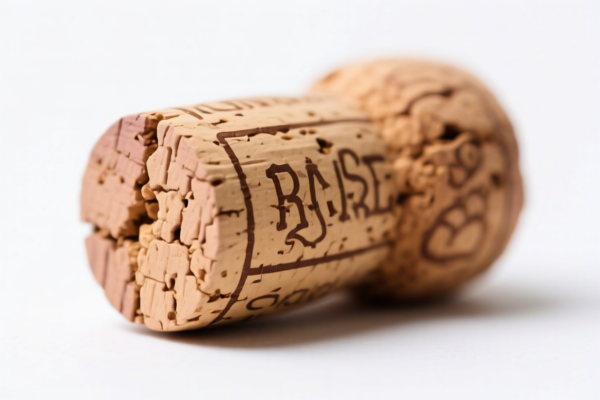
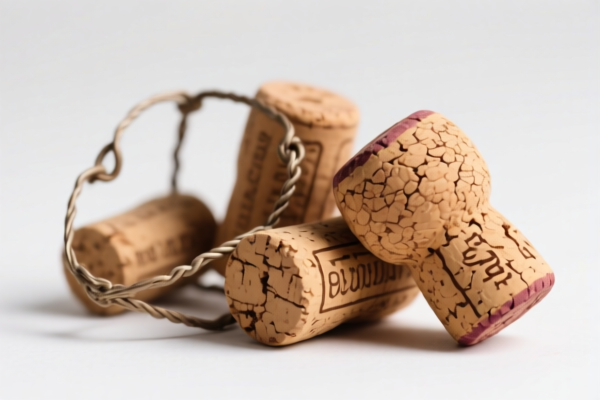
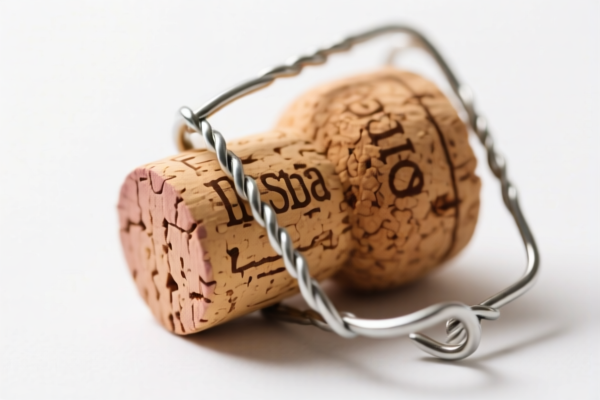
AI Analysis
🍷 Natural Cork Crumbs (Crushed/Granular/Powdered Cork)
🌐 HS Code Reference & Customs Clearance Guide | 2026 Latest Tariff Analysis | Professional-Level Compliance Strategy
📌 I. Product Definition & Classification: Do You Really Understand "Cork Crumbs"?
Natural Cork Crumbs refer to cork that has been mechanically processed into small particles, granules, or powder. Unlike solid cork planks or stoppers, these are secondary raw materials often used for agglomerated cork (reconstituted cork), composite products, or specialized industrial applications.
In international trade, the classification depends heavily on the degree of processing: * Solid/Formal Cork: Raw cork bark, peeled or not. * Cork Crumbs/Powder: Cork that has been crushed, ground, or milled.
⚠️ Key Distinction Point:
- If the cork is intact bark or simple slabs → It falls under 4501.10 (Raw/Prepared Solid Cork).
- If the cork is crushed, granular, or powdered → It falls under 4501.90 or 4503.90 depending on whether it is considered a "primary form" of cork crumbs or a "manufactured article" (though crumbs are often borderline).
- Crucial Note: The provided data distinguishes between "Natural Cork Articles" (4503) and "Natural Cork" (4501). For "Crumbs," the specific physical state (powder/granular) dictates whether it’s 4501.90 (Cork in primary form, i.e., crumbs/powder) or 4503.90 (Articles of cork, i.e., fine磨/powder used in manufacturing).
📦 II. HS Code Classification Details (2026 Latest Tariff Authority对照)
Based on the provided data, here are the specific HS codes for cork products in crushed, granular, or powdered forms, along with their tax implications.
| HS Code | Product Description | Key Characteristics | Tax Rate (Total) |
|---|---|---|---|
4503.90.60.00 |
Natural Cork Articles, fine ground or powdered form | Fine磨/powdered cork; often considered "articles" in powder form for specific uses | 49.0% |
4501.90.40.00 |
Cork, Crushed, Granular, or Powdered | Raw cork processed into crumbs/granules; primary form of waste/crumbs | 35.0% |
4501.10.00.00 |
Natural Cork, Raw or Simple Prepared, Powdered | Cork in powdered form, but still considered raw/simple preparation | 35.0% |
4504.90.00.00 |
Agglomerated Cork, raw cork crumbs/agglomerates | Agglomerated cork (reconstituted) from raw cork crumbs; primary shape | 35.0% |
4503.10.60.00 |
Natural Cork Articles, primary forms like fine磨 | Cork articles in primary forms (e.g., fine磨/crumbs used as components) | 35.0% |
🔍 重点提醒 (Critical Reminder):
-4501vs4503:
- 4501.10/4501.90: Generally covers raw cork in various physical states (bark, crumbs, powder) that haven't been made into specific "articles" like stoppers or tiles.
- 4503.10/4503.90: Covers articles of cork (e.g., stoppers, tiles, granules used as finished components). The entry4503.90.60.00specifically mentions "fine磨 or powdered" with a higher tax rate (49%), likely due to stricter classification as a manufactured article or specific use.
- Agglomerated Cork (4504.90.00.00): If the crumbs are bonded together (e.g., with glue) to form sheets or tiles, it falls here. Still 35% in this dataset.
💰 III. 2026 Latest Tariff Rate Breakdown (Including Surcharge, Policy Surcharges)
✅ Applicable Country: United States (US)
✅ Country of Origin: China (CN)
✅ Effective Date: From November 10, 2025 (and subsequent imports)
🎯 1. 4501.90.40.00 / 4501.10.00.00 / 4503.10.60.00 / 4504.90.00.00 — Cork Crumbs, Powder, Agglomerated Cork
| Item | Detail |
|---|---|
| Base Tariff | 0.0% (Ad Valorem) Note: Most raw cork and basic cork products have 0% base MFN rate. |
| Section 301 Surcharge | +25.0% Applied to Chinese imports under USTR Section 301 List 3/4. |
| Section 122 Surcharge | +10.0% Specific additional duty on Chinese cork/cork products. |
| Total Tariff Rate | 35.0% |
| Tax Calculation | CIF Value × 35% |
| De Minimis Eligible? | ❌ No (deny_de_minimis) Section 301 and 122 tariffs generally do not apply to de minimis shipments. |
| Legal Basis Path | Section 301 → Section 122 → USITC:4501.90.40.00 / 4504.90.00.00 |
📌 Explanation:
- Base Rate 0%: The Harmonized Tariff Schedule (HTSUS) assigns 0% to most natural cork and basic cork products.
- Section 301 (25%): Standard trade war tariff on many Chinese goods, including cork.
- Section 122 (10%): A specific tariff applied to Chinese cork products, adding an extra layer of cost.
- Total 35%: This is the effective landed cost multiplier for raw cork crumbs/powder from China.
🎯 2. 4503.90.60.00 — Natural Cork Articles, Fine Ground or Powdered
| Item | Detail |
|---|---|
| Base Tariff | 14.0% (Ad Valorem) Note: This code has a higher base rate than raw cork. |
| Section 301 Surcharge | +25.0% |
| Section 122 Surcharge | +10.0% |
| Total Tariff Rate | 49.0% |
| Tax Calculation | CIF Value × 49% |
| De Minimis Eligible? | ❌ No (deny_de_minimis) |
| Legal Basis Path | Section 301 → Section 122 → USITC:4503.90.60.00 |
📌 Explanation:
- Base Rate 14%: This code is classified under 4503 (Articles of Cork), not 4501 (Raw Cork). The HTSUS assigns a 14% base duty to certain cork articles.
- Total 49%: This is the highest tariff bracket in the provided data. Misclassifying "cork crumbs" as "articles" (4503.90.60.00) instead of "raw cork crumbs" (4501.90.40.00) will result in a 14% higher tax burden.
🛠️ IV. Customs Clearance Practical Advice (Pitfall Avoidance Guide)
✅ 1. Documentation Checklist (Mandatory)
| Document | Required | Notes |
|---|---|---|
| ✅ Product Specification Sheet | ✔️ | Must detail particle size, moisture content, and origin (Acorn Oak, Quercus suber). |
| ✅ Commercial Invoice | ✔️ | Clearly state: "Natural Cork Crumbs, Crushed/Granular/Powdered, For Agglomeration/Industrial Use." |
| ✅ Packing List | ✔️ | Detail net/gross weight. Ensure consistency with Invoice. |
| ✅ Certificate of Origin (CO) | ✔️ | Essential to prove CN origin (triggers 301/122 tariffs). |
| ✅ Material Safety Data Sheet (MSDS) | ✔️ | If powder form, may require hazardous material classification checks (though cork is generally non-hazardous). |
✅ 2. Declaration Tips (Key Mantra)
🔥 "Crumbs are Raw (4501), Not Articles (4503)! Say 'Crumbs', not 'Powdered Articles'!"
| Scenario | Correct Declaration | Wrong Practice |
|---|---|---|
| Raw cork, crushed into small pieces | 4501.90.40.00 (Crumbs/Granular) |
Declare as "Cork Powder" under 4503.90.60.00 → 49% Tax |
| Cork powder for agglomerated cork sheets | 4501.90.40.00 or 4504.90.00.00 |
Declare as "Finished Cork Tiles" → 35% Tax (if agglomerated) |
| Cork granules for flooring | 4504.90.00.00 (Agglomerated) |
Declare as "Raw Cork Crumbs" → Risk of Misclassification |
⚠️ Critical Warning:
-4501is "Raw Cork" (including crumbs, granules, powder that haven't been formed into specific articles).
-4503is "Cork Articles" (stoppers, tiles, etc.).
-4503.90.60.00has a 14% base rate + 35% surcharge = 49%.
-4501.90.40.00has a 0% base rate + 35% surcharge = 35%.
- Save 14% by correctly classifying crumbs as raw cork (4501) rather than articles (4503).
✅ 3. Special Cases
| Situation | Recommendation |
|---|---|
| Mixed Shipment | If shipment contains both solid cork planks and crumbs, declare separately. Solid planks (4501.10.00.00) are 35%; crumbs (4501.90.40.00) are 35%. |
| Agglomerated Cork | If crumbs are bonded (e.g., with polyurethane), declare as 4504.90.00.00 (Agglomerated Cork). Still 35%. |
| Origin Fraud | Ensure CO is genuine. Misdeclaring origin as Vietnam/Mexico to avoid 301/122 is high-risk and illegal. |
| Sample Shipments | No De Minimis Exemption. Even small samples are subject to the 35% or 49% tariff. |
🌍 V. Global Market Clearance Comparison (2026 Latest)
| Country/Region | Recommended HS Code | Tariff Rate | Certification | Notes |
|---|---|---|---|---|
| 🇺🇸 USA | 4501.90.40.00 |
35% (CN Origin) | None usually | High tariff due to 301/122. |
| 🇨🇳 China | 4501.90.40.00 |
0% ~ 5% | None | Low import duty for raw materials. |
| 🇪🇺 EU | 4501.90.40.00 |
0% (If genuine cork) | FSC/PEFC (Eco-cert) | EU prefers sustainable cork. |
| 🇯🇵 Japan | 4501.90.40.00 |
0% | None | Free trade agreement benefits may apply. |
📌 Conclusion:
- USA is the highest-tariff market for Chinese cork products.
- Correct Classification is Key:4501(Raw) vs4503(Articles) can save 14% of CIF value.
📌 VI. Common Errors & Pitfalls (Lessons Learned)
❌ Error 1: Classifying "Cork Crumbs" as 4503.90.60.00 (Cork Articles)
👉 Consequence: Tax jumps from 35% to 49%.
✅ Fix: Use 4501.90.40.00 for crumbs/granules.
❌ Error 2: Misdeclaring origin to avoid tariffs
👉 Consequence: Heavy fines, seizure, and blacklisting.
✅ Fix: Be transparent about CN origin and budget for 35% tax.
❌ Error 3: Ignoring "Section 122" in calculations
👉 Consequence: Underestimating landed cost by 10%.
✅ Fix: Always include Base (0-14%) + 301 (25%) + 122 (10%).
🎯 VII. Conclusion: Professional Declaration, Save Costs!
🎯 Remember the Mantra:
🔹 "Crumbs are Raw (4501), Not Articles (4503)."
🔹 "0% Base + 35% Surcharges = 35%. 14% Base + 35% Surcharges = 49%."
🔹 "Classify correctly, save 14% instantly!"
📌 Tips:
- If your cork is agglomerated (bonded), use 4504.90.00.00 (35%).
- If it’s raw crumbs, use 4501.90.40.00 (35%).
- Avoid 4503.90.60.00 unless specifically required by US customs for "fine ground powder" in specific articles.
📣 Immediate Action:
📞 Contact your customs broker with particle size details and product photos.
🚀 Declare as4501.90.40.00for raw cork crumbs to minimize tax liability!
✨ Professional clearance starts with accurate classification!
💼 Every 1% of tax saved is pure profit!
Customer Reviews
About HS Code Classification
The Harmonized System (HS) is an internationally standardized nomenclature developed by the World Customs Organization (WCO) to classify traded products. Over 200 countries use the HS system as the basis for customs tariffs, trade statistics, and import/export regulations.
Each HS code follows a hierarchical structure:
- Chapter (2 digits) — Broad category of goods (e.g., Chapter 84: Machinery and Mechanical Appliances)
- Heading (4 digits) — More specific grouping within the chapter
- Subheading (6 digits) — Internationally standardized breakdown, used by all WCO member countries
- National subdivisions (8-10 digits) — Country-specific extensions for further classification, such as US HTSUS 10-digit codes
Correct HS code classification is essential for smooth customs clearance, accurate duty payment, and compliance with trade regulations. Misclassification can lead to customs delays, overpayment of duties, or penalties.
When importing from CN to US, the applicable tariff rates may include:
- Most-Favored-Nation (MFN) rate — The standard duty rate applied to WTO members
- General rate — Applied to countries without trade agreements
- Trade remedy duties — Additional tariffs such as Section 301 (anti-dumping), Section 232 (national security), or countervailing duties
The information provided on this page is for reference purposes only. For official classification, please consult with your local customs authority or a licensed customs broker.