Natural Cork Granules
CN → US| HS Code | Tariff Rate | Origin | Destination | Doc |
|---|---|---|---|---|
| 4501904000 | 35.0% | CN | US | Official Doc |
| 4503906000 | 49.0% | CN | US | Official Doc |
| 4502000000 | 35.0% | CN | US | Official Doc |
| 4501100000 | 35.0% | CN | US | Official Doc |
| 4503906000 | 49.0% | CN | US | Official Doc |
Product Images
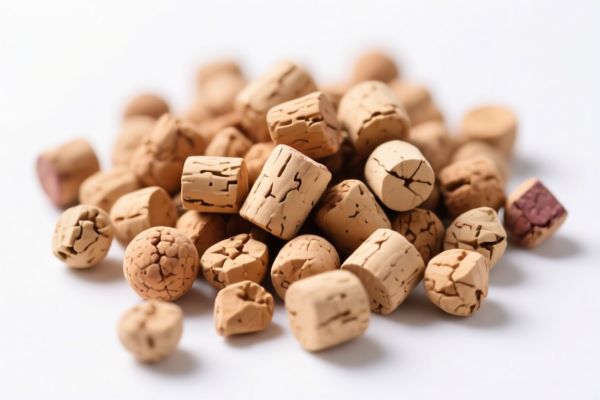
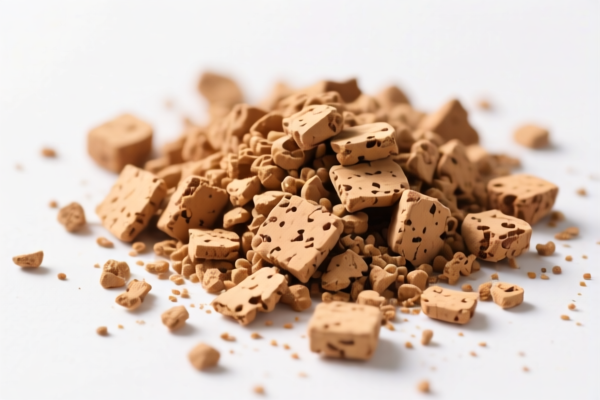
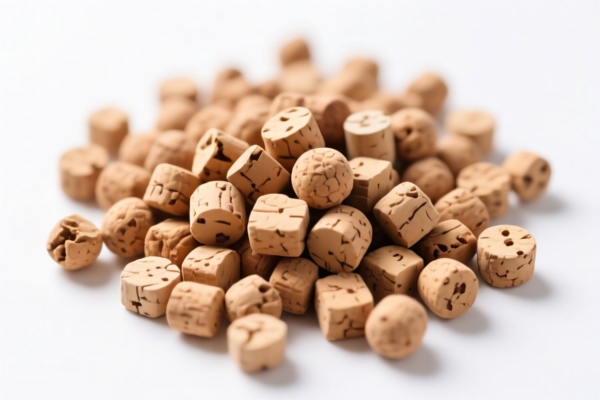
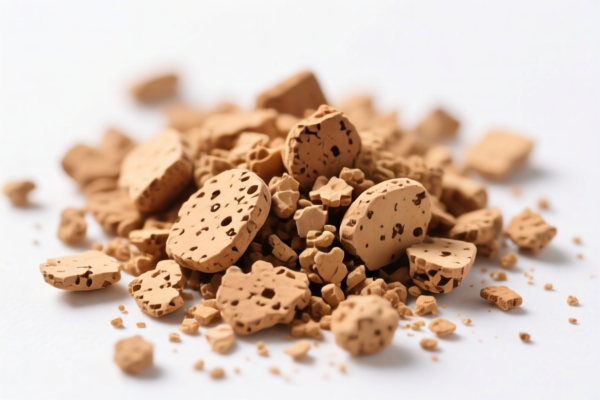
AI Analysis
🛑 Natural Cork Granules: HS Code Classification & Customs Clearance Guide
🌐 HS Code Reference & Customs Strategy | 2024 Latest Tariff Analysis | Professional Clearance Protocol
📌 I. Product Definition & Classification: Are You Sure About "Granules"?
Natural Cork Granules are processed forms of natural cork bark, primarily derived from the Quercus suber tree. In international trade, the classification depends heavily on the degree of processing and the physical form (granular, powdered, or chunky).
Key Distinction:
- Primary Forms (Chapter 45, Heading 4501/4502): Raw, agglomerated, or simply crushed/granulated cork without complex manufacturing.
- Manufactured Goods (Chapter 45, Heading 4503): Cork items that have undergone further processing or are classified as specific articles.
⚠️ Critical Classification Point:
- If the cork is merely crushed, granulated, or powdered without binding agents or complex shaping → Chapter 45 (Raw/Primary)
- If the cork is agglomerated into blocks, sheets, or specific articles → Chapter 45 (Manufactured/Articles)
📦 II. HS Code Classification Details (Based on Provided Data)
| HS Code | Product Description | Applicable Scenario | Tax Rate (Total) | Tax Breakdown |
|---|---|---|---|---|
4501.90.40.00 |
Natural Cork Granules, granular form, defined as crushed/granulated cork | Granular/powdery raw cork, no binding | 35.0% | Base: 0%, Section 301: 25%, 122 Clause: 10% |
4503.90.60.00 |
Natural Cork Granules, primary form of cork articles, no material conflict | Primary cork articles, no conflict | 49.0% | Base: 14%, Section 301: 25%, 122 Clause: 10% |
4502.00.00.00 |
Natural Cork Granules, fit slab/block primary form, use doesn't affect classification | Slab/block form, primary category | 35.0% | Base: 0%, Section 301: 25%, 122 Clause: 10% |
4501.10.00.00 |
Natural Cork Granules, fits simple modulation & granular characteristics | Simplely processed, granular | 35.0% | Base: 0%, Section 301: 25%, 122 Clause: 10% |
4503.90.60.00 |
Natural Cork Granules, primary form of cork products, natural cork article | Primary natural cork article | 49.0% | Base: 14%, Section 301: 25%, 122 Clause: 10% |
🔍 Key Observation:
- There is a significant tax disparity between 35% and 49%.
- HS 4501 codes generally attract 0% Base Tariff.
- HS 4503 codes attract 14% Base Tariff.
- Both categories are subject to 25% Section 301 Tariff and 10% Section 122 Tariff (based on provided data).
💰 III. Tariff Rate Detailed Explanation (2024 Latest)
✅ Applicable Country: China (CN)
✅ Destination: United States (US)
✅ Effective Date: Current rates apply as per provided data
🎯 1. HS Code 4501.90.40.00 / 4501.10.00.00 / 4502.00.00.00
(Natural Cork Granules - Raw/Primary Form)
| Item | Details |
|---|---|
| Base Tariff | 0% (Ad Valorem) |
| Section 301 Tariff | +25% (Trade Act Section 301) |
| Section 122 Tariff | +10% (Specific clause for this product) |
| Total Effective Rate | 35.0% |
| Tax Calculation | CIF Value × 35% |
| De Minimis Eligibility | ❌ Not Eligible (High tariff rate usually excludes de minimis benefits) |
| Legal Basis | Section 301 + Section 122 provisions |
📌 Explanation:
- These codes classify cork as raw or simply processed material.
- The 0% base tariff makes them more favorable than4503codes, but the 35% total rate is still high due to附加 taxes.
- Granular form is key here; if it’s too processed, it may shift to4503.
🎯 2. HS Code 4503.90.60.00
(Natural Cork Granules - Primary Article Form)
| Item | Details |
|---|---|
| Base Tariff | 14% (Ad Valorem) |
| Section 301 Tariff | +25% (Trade Act Section 301) |
| Section 122 Tariff | +10% (Specific clause for this product) |
| Total Effective Rate | 49.0% |
| Tax Calculation | CIF Value × 49% |
| De Minimis Eligibility | ❌ Not Eligible |
| Legal Basis | Section 301 + Section 122 provisions |
📌 Explanation:
- This code classifies cork as a primary article or manufactured good.
- The 14% base tariff significantly increases the total cost.
- Risk: Misclassifying raw granules as "articles" can lead to 14% higher taxes than necessary.
🛠️ IV. Customs Clearance Practical Advice (Battle-Tested Tips)
✅ 1. Documentation Checklist (Essential)
| Document | Required | Notes |
|---|---|---|
| Product Specifications | ✔️ | Detail particle size, moisture content, origin |
| Commercial Invoice | ✔️ | Clearly state "Natural Cork Granules" |
| Packing List | ✔️ | Include gross/net weight, package dimensions |
| Certificate of Origin | ✔️ | To verify country of origin |
| Material Safety Data Sheet (MSDS) | ✔️ | If applicable for hazardous content (usually not for cork) |
| Photos | ✔️ | Show granular form clearly |
✅ 2. Declaration Strategy (Critical Tips)
🔥 "Form Determines Code, Code Determines Tax!"
| Scenario | Correct HS Code | Incorrect HS Code | Consequence |
|---|---|---|---|
| Raw, crushed, granular cork | 4501.90.40.00 / 4501.10.00.00 |
4503.90.60.00 |
Overpay by 14% |
| Agglomerated cork blocks/sheets | 4503.90.60.00 |
4501.10.00.00 |
Under-declare, risk of penalty |
| Cork dust/powder | 4501.90.40.00 |
4502.00.00.00 |
Potential misclassification |
📌 Key Advice:
- If your product is loose, granular, or powdery, argue for HS 4501 (35% tax).
- If it is agglomerated, shaped, or manufactured, it may fall under HS 4503 (49% tax).
- Do not misdeclare to save 14% – customs may inspect and penalize.
✅ 3. Special Cases
| Situation | Recommendation |
|---|---|
| Mixed Shipments | Separate raw granules from manufactured cork products |
| Customs Inspection | Provide photos and samples to prove granular form |
| Dispute | Apply for Advance Ruling from CBP to confirm HS Code |
🌍 V. Global Market Comparison (2024)
| Country | Recommended HS Code | Tariff Rate | Notes |
|---|---|---|---|
| 🇺🇸 USA | 4501.90.40.00 |
35% | High due to Section 301 & 122 |
| 🇺🇸 USA | 4503.90.60.00 |
49% | Higher base tariff |
| 🇨🇳 China | 4501.10.00.00 |
5-10% | Lower base tariff, no Section 301 |
| 🇪🇺 EU | 4501.90.40.00 |
0-5% | No Section 301, lower rates |
| 🇬🇧 UK | 4501.90.40.00 |
0-5% | Post-Brexit, similar to EU |
📌 Conclusion:
- USA is the most expensive market due to附加 tariffs.
- China, EU, and UK have significantly lower tariffs for the same product.
- Consider supply chain diversification if targeting the US market.
📌 VI. Common Mistakes & Pitfalls (Learn from Others)
❌ Mistake 1: Declaring raw granules as "Cork Articles" (4503)
👉 Result: Pay 14% more than necessary.
❌ Mistake 2: Not providing granular form evidence
👉 Result: Customs may reclassify to 4503 (49%) or delay shipment.
❌ Mistake 3: Ignoring Section 122 Tariff
👉 Result: Unexpected 10% charge at customs.
✅ Best Practice:
"Natural Cork Granules, Crushed, 1-5mm Particle Size, No Binders, Raw Material for Manufacturing"
🎯 VII. Conclusion: Strategic Classification for Cost Efficiency
🎯 Remember:
🔹 "Granules = 4501 (35%), Articles = 4503 (49%)"
🔹 "Form is King, Code is Queen, Tax is the Crown!"
📌 Pro Tip:
If your shipment is high-value, consider pre-classification rulings from CBP to avoid surprises.
For small shipments, ensure accurate description to avoid delays.
📣 Act Now:
📞 Consult Customs Broker + Provide Product Samples + Confirm HS Code
🚀 Ensure Smooth Clearance, Minimize Tax, Maximize Profit!
✨ Professional Classification Starts with Accurate Data!
💼 Every Dollar Saved is a Dollar Earned!
Customer Reviews
About HS Code Classification
The Harmonized System (HS) is an internationally standardized nomenclature developed by the World Customs Organization (WCO) to classify traded products. Over 200 countries use the HS system as the basis for customs tariffs, trade statistics, and import/export regulations.
Each HS code follows a hierarchical structure:
- Chapter (2 digits) — Broad category of goods (e.g., Chapter 84: Machinery and Mechanical Appliances)
- Heading (4 digits) — More specific grouping within the chapter
- Subheading (6 digits) — Internationally standardized breakdown, used by all WCO member countries
- National subdivisions (8-10 digits) — Country-specific extensions for further classification, such as US HTSUS 10-digit codes
Correct HS code classification is essential for smooth customs clearance, accurate duty payment, and compliance with trade regulations. Misclassification can lead to customs delays, overpayment of duties, or penalties.
When importing from CN to US, the applicable tariff rates may include:
- Most-Favored-Nation (MFN) rate — The standard duty rate applied to WTO members
- General rate — Applied to countries without trade agreements
- Trade remedy duties — Additional tariffs such as Section 301 (anti-dumping), Section 232 (national security), or countervailing duties
The information provided on this page is for reference purposes only. For official classification, please consult with your local customs authority or a licensed customs broker.