Natural Cork Granules (Desiccant Material)
CN → US| HS Code | Tariff Rate | Origin | Destination | Doc |
|---|---|---|---|---|
| 4501904000 | 35.0% | CN | US | Official Doc |
| 4501100000 | 35.0% | CN | US | Official Doc |
| 4504105000 | 35.0% | CN | US | Official Doc |
| 4504101000 | 35.0% | CN | US | Official Doc |
Product Images
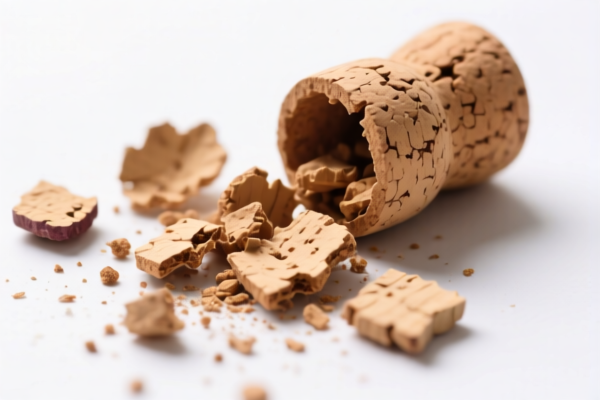
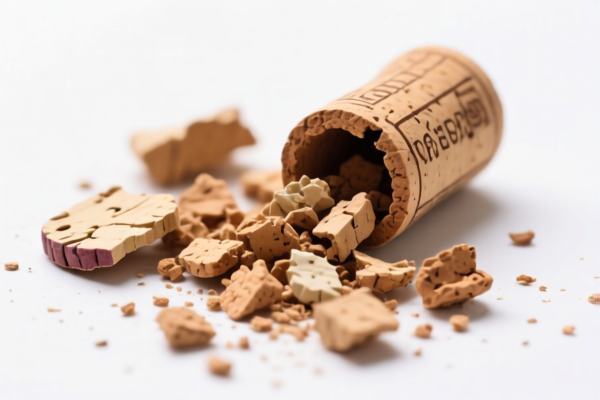
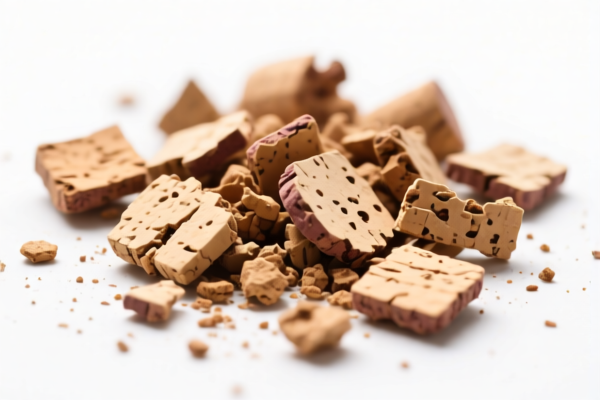
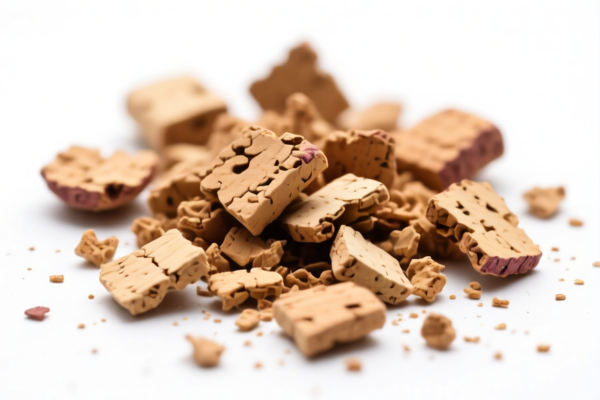
AI Analysis
🌿 Natural Cork Granules (Desiccant Material)
🌐 HS Code Reference & Customs Clearance Guide | 2026 Latest Tariff Analysis | Professional通关 Strategy
📌 I. Product Definition & Classification: Do You Really Understand "Cork"?
Natural Cork Granules, specifically used as desiccant raw materials, fall under the category of Natural Cork in international trade. They are primarily characterized by their primary product status or semi-processed granular form. In the US Harmonized Tariff Schedule (HTS), they are classified under Chapter 45 (Cork and Articles of Cork).
The critical distinction in classification lies in the degree of processing: * Crushed/Granular/Broken Cork (Primary Product): Simple mechanical crushing or granulation without chemical binding. This fits HS Codes 4501.90.40.00 and 4501.10.00.00. * Agglomerated/Combined Cork (Semi-Processed): Cork pieces bound together with adhesives or other materials. This fits HS Code 4504.10.50.00. * Granules/Particles (Specific Form): Natural cork processed into distinct granules. This fits HS Code 4504.10.10.00.
⚠️ Key Distinction Point:
- If the material is simple crushed/granulated natural cork with no binding agents → Go to 4501 series.
- If the material is agglomerated/combined (e.g., cork dust bonded into shapes) → Go to 4504 series.
- All listed codes below carry a total tax rate of 35.0% due to additional tariffs.
📦 II. HS Code Classification Details (2026 Latest Tariff Authority Comparison)
| HS Code | Product Description | Application Scenario | Processing State |
|---|---|---|---|
4501.90.40.00 |
Natural cork, crushed, granulated, or in powders; other than waste of cork (used as desiccant raw material, matches primary product attribute) | Raw desiccant material, bulk packing, simple granular form | ✅ Primary/Unbound |
4501.10.00.00 |
Natural cork, crushed, granulated, or in powders; waste of cork (simplely processed, fits desiccant raw material use) | Bulk desiccant, simple waste reprocessing | ✅ Primary/Unbound |
4504.10.50.00 |
Agglomerated cork, other than those of subheading 4504.10.10 (non-specific shapes, fits granular semi-processed characteristics) | Agglomerated cork blocks/chips, semi-finished | ✅ Combined/Agglomerated |
4504.10.10.00 |
Agglomerated cork, of subheading 4504.10.10 (natural cork granule products, fits primary form characteristics of cork granules and products) | Specific granular products, branded cork granules | ✅ Combined/Agglomerated |
4501.90.40.00 |
Natural cork, crushed, granulated, or in powders; other than waste of cork (natural cork granules, desiccant use, matches primary product attribute) | Bulk desiccant granules, primary form | ✅ Primary/Unbound |
🔍 Important Reminder:
- All listed HS Codes have a Total Tax Rate of 35.0%.
- The breakdown is: Base Duty 0% + Section 301 Duty 25% + Section 122 Duty 10%.
- Whether classified under4501(primary) or4504(agglomerated), the additional tariffs apply equally.
💰 III. 2026 Latest Tariff Rate Detailed Explanation (Including Surcharges & Policy Add-ons)
✅ Applicable Country: United States (US)
✅ Origin: China (CN)
✅ Effective Time: Current applicable tariffs (2025-2026 framework)
🎯 1. 4501.90.40.00 / 4501.10.00.00 —— Natural Cork (Crushed/Granular)
| Item | Content |
|---|---|
| Base Tariff | 0% (Ad Valorem) |
| Section 301 Tariff | +25% (High-tech/Manufacturing related surcharge) |
| Section 122 Tariff | +10% (Specific policy surcharge for certain Chinese goods) |
| Total Tax Rate | 35.0% |
| Tax Calculation | CIF Value × 35% |
| De Minimis Exemption | ❌ Not Applicable (Section 301 and 122 duties generally override de minimis thresholds for China-origin goods in many contexts, or require full duty payment) |
| Legal Basis Path | USITC:4501.90.40.00 → Section 301: Footnote 9903.88.01 → Section 122: Specific Authority |
📌 Explanation:
- "Base Duty 0%": Natural cork, in its basic crushed or granulated form, enjoys a preferential or zero base duty under normal MFN rates.
- "Section 301 Duty 25%": This is the standard additional tariff imposed on many Chinese goods, including certain cork products, under Trade Promotion Authority.
- "Section 122 Duty 10%": This is a specific surcharge applied to certain categories of goods from China.
- Total 35%: This is a significant cost factor for desiccant materials. Importers must calculate landed costs accordingly.
🎯 2. 4504.10.50.00 / 4504.10.10.00 —— Agglomerated Cork (Granules/Blocks)
| Item | Content |
|---|---|
| Base Tariff | 0% |
| Section 301 Tariff | +25% |
| Section 122 Tariff | +10% |
| Total Tax Rate | 35.0% |
| Tax Calculation | CIF Value × 35% |
| De Minimis Exemption | ❌ Not Applicable |
| Legal Basis Path | USITC:4504.10.10.00 / 4504.10.50.00 → Section 301 → Section 122 |
📌 Note:
- Even though4504implies "agglomerated" or "processed," the tariff rate is identical to the primary cork codes.
- This means processing level does not reduce tariff burden for Chinese-origin cork granules in the US market.
🛠️ IV. Customs Clearance Practical Advice (Battlefield Avoidance Guide)
✅ 1. Documentation Checklist (Non-negotiable)
| Document | Mandatory | Description |
|---|---|---|
| ✅ Product Specification Sheet | ✔️ | Must clearly state: "Natural Cork," "Granular/Crushed," "Used for Desiccant." |
| ✅ Material Composition Proof | ✔️ | Declaration that no synthetic binders are used (if claiming 4501), or details of binders (if 4504). |
| ✅ Product Photos | ✔️ | Clear images of the granules, showing natural cork texture. |
| ✅ Commercial Invoice | ✔️ | Must explicitly describe goods as "Natural Cork Granules for Desiccant Use." |
| ✅ Packing List | ✔️ | Net/Gross weight, package dimensions. |
| ✅ Certificate of Origin (CO) | ✔️ | Required to prove China origin (and thus apply/add the tariffs correctly). |
✅ 2. Declaration Strategy (Key Mantras)
🔥 “Name Precisely, State Clearly, Avoid ‘Desiccant’ as Primary Function if it Triggers Other HTS!”
| Scenario | Correct Declaration | Incorrect Practice |
|---|---|---|
| Simple Granules | "Natural Cork Granules, Crushed, for Use as Desiccant Raw Material" |
"Chemical Desiccant" → May trigger incorrect HS Code (e.g., 3824) |
| Agglomerated Chips | "Agglomerated Cork Granules, Natural" |
"Cork Products" → Too vague, may lead to audit |
| Bulk Import | "100% Natural Cork, No Binders" |
"Composite Material" → If false, leads to fraud penalties |
| Small Sample | Verify if De Minimis ($800) applies | Assuming all packages are exempt → Risk of seizure if deemed commercial shipment |
⚠️ Critical Warning:
- Do NOT declare as "Desiccant" alone. If classified under3824.99.98(Prepared Binders, etc.), the tariff structure and regulatory requirements (FDA/EPA) may differ significantly, and Section 301/122 may still apply.
- Best Practice: Classify by material (Cork) first (4501/4504), then state use. This is more defensible for natural materials.
✅ 3. Special Circumstances Handling
| Scenario | Handling Advice |
|---|---|
| Mixed Shipment (Cork + Plastic Desiccant) | Split Declaration. Cork under 4501/4504, Plastic under 3926. Do not mix to avoid "material misdeclaration." |
| Moisture Content Issue | Ensure product is dry. Wet cork may be classified differently or face sanitary restrictions. |
| Pre-shipment Inspection | Recommended for large volumes to verify natural origin and no prohibited pesticides. |
🌍 V. Global Market Comparison (2026 Latest)
| Country/Region | Recommended HS Code | Tariff Rate (China Origin) | Certification/Notes |
|---|---|---|---|
| 🇺🇸 USA | 4501.90.40.00 / 4504.10.10.00 |
35% (0% Base + 25% Sec 301 + 10% Sec 122) | High compliance required. No de minimis for Section 301/122 in most cases. |
| 🇨🇳 China | 4501.90.40.00 |
0% - 5% | Depends on trade agreement. Generally low for raw materials. |
| 🇪🇺 EU | 4501.90 / 4504.10 |
0% - 4% | No Section 301/122. Standard EU tariffs apply. Much cheaper entry. |
| 🇬🇧 UK | 4501.90 / 4504.10 |
0% - 4% | Post-Brexit tariffs. Generally favorable for natural cork. |
| 🇯🇵 Japan | 4501.90 / 4504.10 |
0% - 5% | CPTPP/EPA benefits may apply. Low tariff environment. |
📌 Conclusion:
- USA is the most expensive market for Chinese cork desiccants due to 35% total tariff.
- EU, UK, and Japan offer significantly lower duties (0-5%).
- Strategy: If targeting the US, factor in 35% landed cost increase. Consider sourcing from non-China origins (e.g., Portugal, Spain) for US market if volume is high, to avoid Section 301/122.
📌 VI. Common Errors & Pitfalls (Lessons Learned)
❌ Error 1: Declaring "Desiccant" under 3824 without specifying material.
👉 Consequence: Incorrect HS Code → Potential penalty + different regulatory review (FDA/EPA).
❌ Error 2: Assuming "Granules" means "Plastic" or "Silica Gel."
👉 Consequence: Wrong classification → 35% tariff vs. potentially lower/higher rates + compliance issues.
❌ Error 3: Ignoring Section 122 and 301 surcharges.
👉 Consequence: Underpayment of duties → Back taxes, interest, and penalties upon audit.
❌ Error 4: Using "Natural Cork" for Agglomerated/Combined Cork.
👉 Consequence: Misclassification. If bound with chemicals, it may be 4504, but if misdeclared as 4501, it may raise flags during inspection.
✅ Correct Approach:
"Natural Cork Granules, Crushed, 100% Natural, No Binders, for Use as Desiccant in Packaging. HS Code: 4501.90.40.00."
🎯 VII. Conclusion: Professional Classification Saves Money!
🎯 Remember the Mantra:
🔹 "Cork is Cork, Don't Hide it. 35% is the Price in the US. Split if Mixed, Specify in List."
🔹 "HS Code Defines Cost, 35% is Heavy. Avoid Mislabeling, Keep Documents Ready."
📌 Tips:
- If your cork is sourced from Portugal, Spain, or Morocco, you may avoid Section 301/122 (if eligible under specific rules of origin).
- For US imports, Pre-classification Ruling (Advance Ruling) from CBP is highly recommended to confirm 4501 vs 4504 and tariff application.
📣 Immediate Action:
📞 Contact a licensed US Customs Broker.
📤 Provide clear photos and specification sheets.
🚀 Ensure accurate HS Code declaration to avoid 35% tariff shocks!
✨ Professional Clearance Starts with Accurate Classification!
💼 Every Dollar Saved on Misclassification is Pure Profit!
Customer Reviews
About HS Code Classification
The Harmonized System (HS) is an internationally standardized nomenclature developed by the World Customs Organization (WCO) to classify traded products. Over 200 countries use the HS system as the basis for customs tariffs, trade statistics, and import/export regulations.
Each HS code follows a hierarchical structure:
- Chapter (2 digits) — Broad category of goods (e.g., Chapter 84: Machinery and Mechanical Appliances)
- Heading (4 digits) — More specific grouping within the chapter
- Subheading (6 digits) — Internationally standardized breakdown, used by all WCO member countries
- National subdivisions (8-10 digits) — Country-specific extensions for further classification, such as US HTSUS 10-digit codes
Correct HS code classification is essential for smooth customs clearance, accurate duty payment, and compliance with trade regulations. Misclassification can lead to customs delays, overpayment of duties, or penalties.
When importing from CN to US, the applicable tariff rates may include:
- Most-Favored-Nation (MFN) rate — The standard duty rate applied to WTO members
- General rate — Applied to countries without trade agreements
- Trade remedy duties — Additional tariffs such as Section 301 (anti-dumping), Section 232 (national security), or countervailing duties
The information provided on this page is for reference purposes only. For official classification, please consult with your local customs authority or a licensed customs broker.