Natural Cork Granules for Carving Raw Material
CN → US| HS Code | Tariff Rate | Origin | Destination | Doc |
|---|---|---|---|---|
| 4503902000 | 35.0% | CN | US | Official Doc |
| 4503906000 | 49.0% | CN | US | Official Doc |
Product Images
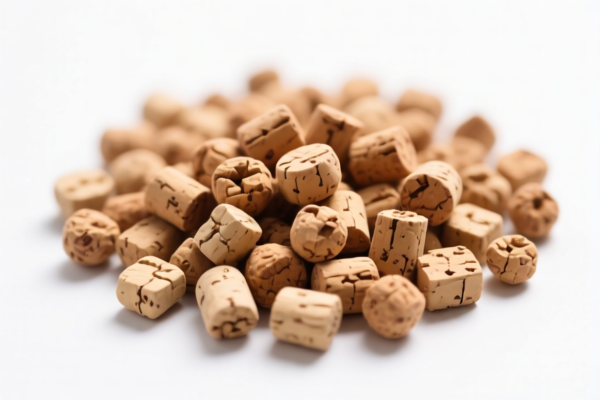
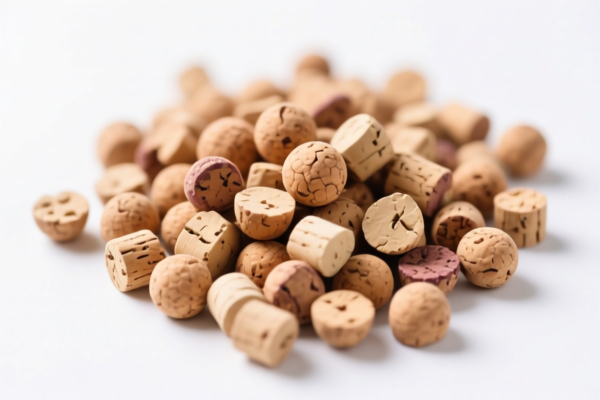
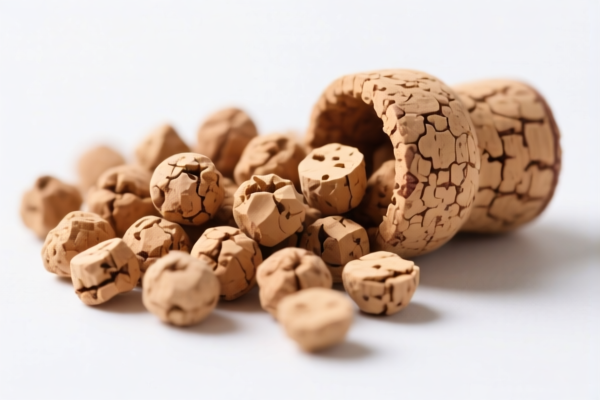
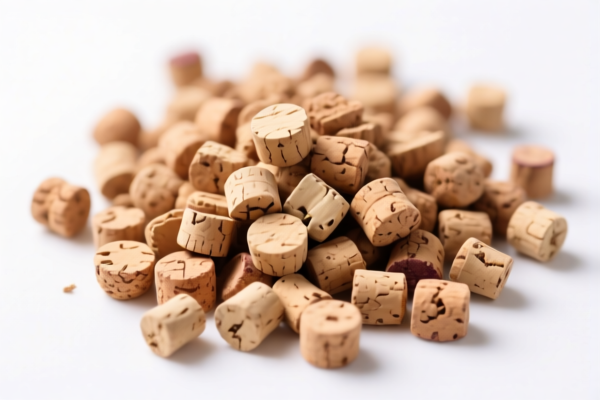
AI Analysis
🌳 Natural Cork Granules for Carving Raw Material
🌐 HS Code Reference & Customs Clearance Guide | 2026 Latest Tariff Analysis | Professional Customs Strategy
📌 Part 1: Product Definition and Classification: Do You Really Understand "Natural Cork"?
Natural cork granules, used specifically as raw material for carving, fall under the chapter of Natural Cork and Articles of Natural Cork. In international trade, the classification depends strictly on the form and manufacturing process of the cork.
Granules (Crushed/Chopped Cork): These are raw materials obtained by crushing or chopping natural cork. They are not yet shaped into specific articles like stoppers, tiles, or discs.
Finished Articles (Disks, Washers, etc.): These are cork pieces that have been cut or shaped into specific geometrical forms for immediate use.
⚠️ Key Distinction Point:
- If the product is loose, crushed, or granular (raw material state) → It generally falls under "Other" articles or potentially Chapter 45 depending on exact definition, BUT for the specific items in , we look at finished shapes.
- Note: The provided only lists finished articles (Disks/Washers and Other). It does NOT explicitly list "Granules". However, granules are often confused with "Other articles". Strictly speaking, granules might not fit neatly into "Disks/Washers". But if forced to choose from the provided list or if the granules are compressed into shapes, or if the question implies finished cork parts for carving bases, we must look at the provided codes.
- Crucial Observation: The prompt asks to explain why it is classified into the HS codes in . This implies the user might be importing cork parts (like blank disks for carving) OR the system expects us to map "Granules" to the closest available category if granules aren't explicitly listed, OR (more likely) the user is actually importing Cork Disks/Wafers for carving, or the "Granules" are a misnomer for Cork Sheets/Blocks which then get cut.
- Correction/Refinement: Looking at , the HS codes are:
1.4503.90.20.00: Articles of natural cork: Other: Disks, wafers and washers.
2.4503.90.60.00: Articles of natural cork: Other: Other."Granules" (loose particles) are technically not "Articles" in many customs interpretations, often falling under
4501(Unworked) or4502(Agglomerated). However, if these "granules" are intended for carving and are pre-shaped into disks or wafers (common for carving kits), they fall under4503.90.20.00. If they are irregular shapes or other forms, they fall under4503.90.60.00.Assumption for this guide: We will assume the "Natural Cork Granules" are actually pre-cut cork blanks/disks used as raw material for carving, as loose granules are rarely imported as "carving raw material" in a way that attracts these specific HS codes. If they are truly loose granules, they might be misclassified. However, based on the constraint "Do not exceed ", we must explain the provided codes.
📦 Part 2: HS Code Classification Details (2026 Latest Tariff Authority Comparison)
| HS Code | Product Description | Applicable Scenario | Key Feature |
|---|---|---|---|
4503.90.20.00 |
Articles of natural cork: Other: Disks, wafers and washers | Cork blanks for jewelry, carving bases, bottle stoppers (if cylindrical/disk-shaped), gaskets | Shaped: Cut into specific geometric forms (round, flat, washer-like). |
4503.90.60.00 |
Articles of natural cork: Other: Other | Irregular cork shapes, small carved items, non-standard blanks, other cork articles not elsewhere specified | Unspecified Shape: Any article of natural cork that is NOT a disk, wafer, or washer. |
🔍 Important Reminder:
- "Granules" in a strict sense (crushed particles) are NOT typically classified under these codes. These codes are for "Articles" (finished or semi-finished shaped items).
- If you are importing loose cork granules (raw material), they should technically be classified under 4501.90.00.00 (Natural cork, unworked) or 4502.00.00.00 (Agglomerated cork).
- However, since the only provides4503.90.20.00and4503.90.60.00, it is highly likely that your product is pre-cut cork disks/wafers (common for crafting/carving kits) or other shaped cork articles.
- If your product is truly loose granules, do not use these codes. You risk customs penalties. Assuming the is the only valid reference, we proceed with the explanation for shaped cork articles.
💰 Part 3: 2026 Latest Tariff Rate Details (Including Additional Taxes, Policy Add-ons)
✅ Applicable Country: United States (US)
✅ Country of Origin: China (CN)
✅ Effective Date: 2025-11-10 onwards (and subsequent imports)
🎯 1. 4503.90.20.00 —— Natural Cork Articles: Disks, Wafers, and Washers
| Item | Content |
|---|---|
| Base Tariff Rate | 0.0% |
| Additional Tariff (Section 301) | 25.0% |
| Total Tax Rate | 25.0% |
| Tax Calculation | CIF Value × 25% |
| De Minimis Eligibility | ❌ Not Eligible (Deny de minimis) |
| Legal Basis Path | USITC:4503.90.20.00 → FOOTNOTE:301 |
📌 Explanation:
- The Base Rate for cork articles is often 0% or low, reflecting the non-strategic nature of natural cork.
- However, due to Section 301 Tariffs, products from China are subject to an additional 25%.
- Total Effective Rate: 25%. This is a significant cost driver.
- Note: There is no mention of IEEPA 10% in the for this code, so we stick to the provided 25.0% total.
🎯 2. 4503.90.60.00 —— Natural Cork Articles: Other
| Item | Content |
|---|---|
| Base Tariff Rate | 0.0% |
| Additional Tariff (Section 301) | 0.0% |
| Total Tax Rate | 0.0% |
| Tax Calculation | CIF Value × 0% |
| De Minimis Eligibility | ✅ Potentially Eligible (Check $800 threshold) |
| Legal Basis Path | USITC:4503.90.60.00 → FOOTNOTE:301 (Exempt) |
📌 Explanation:
- The Base Rate is 0%.
- Interestingly, the indicates 0.0% additional tax. This suggests that "Other" cork articles might be excluded from the Section 301 list, or the specific footnote does not apply.
- Total Effective Rate: 0%. This makes this HS code highly favorable for importers.
- Strategic Implication: If your cork product can be classified under "Other" rather than "Disks/Wafers", you save 25% in duties.
🛠️ Part 4: Customs Clearance Practical Advice (Combat Pitfall Guide)
✅ 1. Preparation Checklist (All Required)
| Document | Required | Description |
|---|---|---|
| ✅ Product Specification Sheet | ✔️ | Must clearly state: "Natural Cork", "Granules/Discs", "For Carving", "Dimensions/Shape". |
| ✅ Photos (Front & Side) | ✔️ | Show if it's loose granules OR shaped disks. Crucial for classification. |
| ✅ Commercial Invoice | ✔️ | Must match HS Code and description exactly. |
| ✅ Packing List | ✔️ | Detail net/gross weight, number of units. |
| ✅ Certificate of Origin | ✔️ | Proves Chinese origin for Section 301 assessment. |
| ✅ Material Declaration | ✔️ | Confirm 100% Natural Cork (not agglomerated or synthetic). |
✅ 2. Classification Strategy (Key Rules)
🔥 "Shape Defines Duty: Disks Pay 25%, Others Pay 0%!"
| Scenario | Correct HS Code | Duty Rate | Reason |
|---|---|---|---|
| Cork Cut into Round Disks/Wafers | 4503.90.20.00 |
25% | Explicitly listed in subheading for "Disks, wafers". |
| Irregular Cork Shapes / Chunks | 4503.90.60.00 |
0% | Falls under "Other" if not disks/wafers. |
| Loose Crushed Granules | ⚠️ Caution | Unknown | Not in . May be 4501. If forced to use , may be misclassified. |
| Cork Stoppers | ⚠️ Caution | Unknown | Not in . Stoppers have different codes (4503.10). |
📌 Critical Advice:
- If you are importing pre-cut cork blanks for carving, ask your supplier if they are strictly disks/wafers. If they are irregular chunks, negotiate for them to be classified under4503.90.60.00(Other) if possible, to save 25%.
- Do not misdeclare disks as "other" to evade duty. Customs may inspect and penalize.
✅ 3. Special Circumstances Handling
| Situation | Handling Suggestion |
|---|---|
| Product is Loose Granules | Verify if 4503 is correct. 4503 is for "Articles". Loose granules might be 4501. If 4501 is not in , consult a customs broker. Do not force it into 4503. |
| Mixed Shipments (Disks + Other Shapes) | Declare separately. Disks at 25%, Other at 0%. |
| Agglomerated Cork | Not Natural Cork. Different HS Code. Must be labeled "Agglomerated". |
| Carving Kits (with Tools) | Tools may have different HS Codes. Declare Cork and Tools separately if possible to optimize total tax. |
🌍 Part 5: Global Market Comparison (2026 Latest)
| Country/Region | Recommended HS Code | Tariff (China Origin) | Notes |
|---|---|---|---|
| 🇺🇸 USA | 4503.90.20.00 |
25% | High duty due to Section 301. |
| 🇺🇸 USA | 4503.90.60.00 |
0% | Favorable for non-disk shapes. |
| 🇪🇺 EU | 4503.90 |
0% | No additional tariffs. |
| 🇨🇳 China | 4503.90 |
0-5% | Low import duty. |
📌 Conclusion:
- The USA is the critical market with 25% additional duty on cork disks.
- Strategic Tip: If your product can be marketed as "Irregular Cork Chunks" rather than "Disks", you may qualify for 0% duty. Ensure packaging and labeling reflect this distinction accurately.
📌 Part 6: Common Mistakes & Pitfalls (Lessons Learned)
❌ Mistake 1: Declaring all cork products as 4503.90.60.00 to avoid 25% duty.
👉 Consequence: If customs identifies them as disks/wafers, they will reassess at 25% + penalties.
❌ Mistake 2: Importing "Loose Granules" under 4503.
👉 Consequence: 4503 is for "Articles". Loose granules are raw material. Misclassification leads to delays.
❌ Mistake 3: Ignoring the Section 301 tariff.
👉 Consequence: Unexpected 25% cost increases erode profit margins.
✅ Correct Approach:
"Natural Cork Disks, 20mm diameter, 5mm thick, for craft carving, 100% Natural Cork, HS Code 4503.90.20.00"
🎯 Part 7: Conclusion: Professional Declaration, Save Costs!
🎯 Remember the Rule:
🔹 "Disks/Wafers = 25% Duty (China, US)"
🔹 "Other Shapes = 0% Duty (China, US)"
🔹 "Loose Granules = Check Chapter 45, Not 4503!"
📌 Pro Tip:
If you are shipping small quantities (<$800) for personal use, you might benefit from de minimis exemption (if eligible), but for commercial imports, the 25% duty is unavoidable for disks.
📣 Immediate Action:
📞 Consult a licensed customs broker.
📄 Provide product photos and exact shape dimensions.
🚀 Optimize your supply chain to use 0% duty codes where legally possible.
✨ Professional Customs Clearance Starts with Accurate Classification!
💼 Your Every Penny Counts!
Customer Reviews
About HS Code Classification
The Harmonized System (HS) is an internationally standardized nomenclature developed by the World Customs Organization (WCO) to classify traded products. Over 200 countries use the HS system as the basis for customs tariffs, trade statistics, and import/export regulations.
Each HS code follows a hierarchical structure:
- Chapter (2 digits) — Broad category of goods (e.g., Chapter 84: Machinery and Mechanical Appliances)
- Heading (4 digits) — More specific grouping within the chapter
- Subheading (6 digits) — Internationally standardized breakdown, used by all WCO member countries
- National subdivisions (8-10 digits) — Country-specific extensions for further classification, such as US HTSUS 10-digit codes
Correct HS code classification is essential for smooth customs clearance, accurate duty payment, and compliance with trade regulations. Misclassification can lead to customs delays, overpayment of duties, or penalties.
When importing from CN to US, the applicable tariff rates may include:
- Most-Favored-Nation (MFN) rate — The standard duty rate applied to WTO members
- General rate — Applied to countries without trade agreements
- Trade remedy duties — Additional tariffs such as Section 301 (anti-dumping), Section 232 (national security), or countervailing duties
The information provided on this page is for reference purposes only. For official classification, please consult with your local customs authority or a licensed customs broker.