Natural Cork Mat
CN → US| HS Code | Tariff Rate | Origin | Destination | Doc |
|---|---|---|---|---|
| 4504105000 | 35.0% | CN | US | Official Doc |
| 4503906000 | 49.0% | CN | US | Official Doc |
| 4503904000 | 35.0% | CN | US | Official Doc |
| 4504900000 | 35.0% | CN | US | Official Doc |
| 4501904000 | 35.0% | CN | US | Official Doc |
Product Images
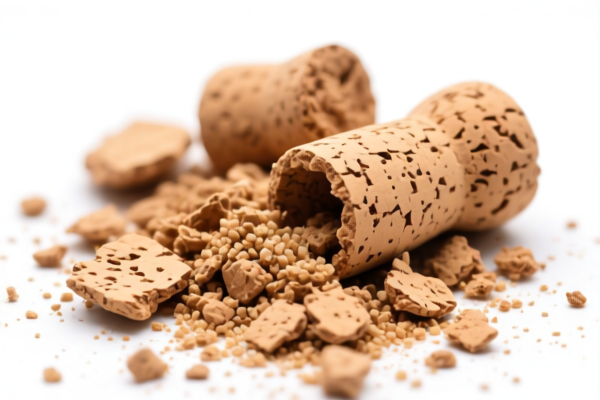
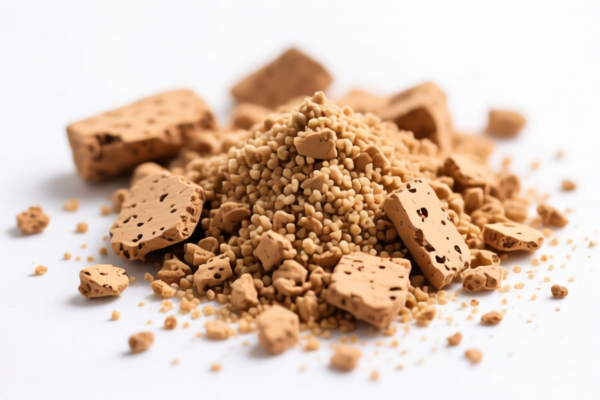
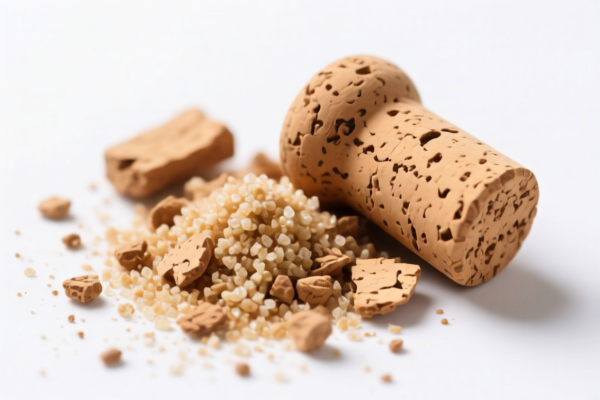
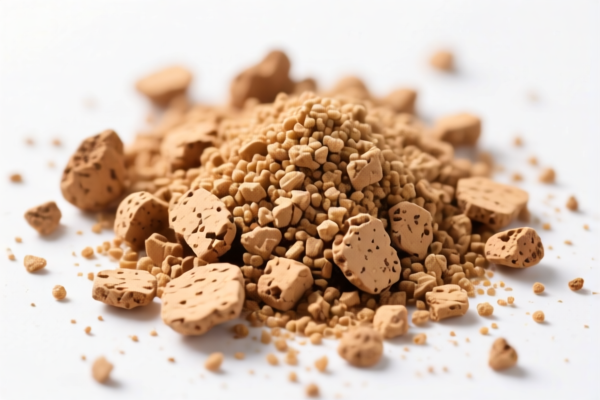
AI Analysis
🍷 Natural Cork Mat (软木餐垫/天然软木垫)
🌐 HS Code Reference & Customs Clearance Guide | 2026 Latest Tariff Analysis | Strategic Logistics Strategy 📌 Part I: Product Definition & Classification – Do You Really Understand "Cork"?
Natural cork mats, typically used as table placemats, coasters, or decorative floor/wall coverings, are derived from the bark of the Quercus suber (cork oak). In international trade, the classification depends heavily on the raw material state and the degree of processing.
The Core Distinction: 1. Processed/Composite Cork Products (Chapter 4504): Cork that has been agglomerated, bound with adhesives, or formed into rigid sheets/plates for specific functional use. These often enjoy 0% Base Duty. 2. Natural/Primary Cork Products (Chapter 4501/4503): Cork in its natural shape, granules, or powder, or simple cuts that haven't undergone complex agglomeration. These are often treated as "other" items with higher base duties or specific "catch-all" classifications.
⚠️ Key Classification Point:
- If the mat is made of agglomerated cork chips/bound with resin (standard commercial placemats) → Often falls under 4504 (0% Base Duty).
- If the mat is solid natural cork or cork powder pressed into shape without standard agglomeration definitions → May fall under 4503 or 4501 (Higher Base Duty).
- Misclassification Risk: Declaring an agglomerated mat as "natural cork" to avoid scrutiny can lead to higher taxes (49%) if the customs officer disagrees with the "natural" claim.
📦 Part II: HS Code Classification Details (2026 Latest Tariff Authority Comparison)
| HS Code | Product Description | Applicable Scenario | Tax Detail Breakdown | Total Tax Rate |
|---|---|---|---|---|
4504.10.50.00 |
Cork mats made of agglomerated/cell cork (board/sheet/bar form) | Standard commercial cork placemats, bound/cell cork products | Base: 0.0% + Add'l: 25.0% + Sec 122: 10% | 35.0% |
4503.90.60.00 |
Natural cork mats or natural cork powder (other articles) | Solid natural cork slices, unbound cork, or catch-all category | Base: 14.0% + Add'l: 25.0% + Sec 122: 10% | 49.0% |
4503.90.40.00 |
Natural cork mats (wallpaper/mat extension) | Natural cork products extending to wall coverings or mats | Base: 0.0% + Add'l: 25.0% + Sec 122: 10% | 35.0% |
4504.90.00.00 |
Other articles of agglomerated cork | Other cork制品 (comprehensive category for processed cork) | Base: 0.0% + Add'l: 25.0% + Sec 122: 10% | 35.0% |
4501.90.40.00 |
Natural cork powder (crushed, granulated, or powdery) | Raw cork dust or powder (if sold as raw material, not finished mat) | Base: 0.0% + Add'l: 25.0% + Sec 122: 10% | 35.0% |
🔍 Key Reminder:
-4504codes generally apply to agglomerated cork (chips bonded together). These have a 0% base duty, resulting in a lower total tax of 35% (Base 0 + 25% 301 Tariff + 10% Sec 122).
-4503.90.60.00applies to natural cork items that don't fit other specific subheadings. This carries a 14% base duty, leading to a total tax of 49% (Base 14 + 25 + 10).
- Why the difference? Customs authorities scrutinize whether the cork is "natural" (higher base) or "manufactured/agglomerated" (lower base). Accurate product description is critical.
💰 Part III: 2026 Latest Tariff Rate Detailed Explanation (Including Surcharges & Policy Additions)
✅ Applicable Country: United States (US)
✅ Country of Origin: China (CN)
✅ Effective Date: November 10, 2025 (and subsequent imports)
🎯 1. 4504.10.50.00 & 4504.90.00.00 & 4503.90.40.00 —— Agglomerated/Processed Cork Mats (35% Total)
| Item | Content |
|---|---|
| Base Duty | 0% (ad valorem) |
| USITC Additional Duty | +25% (Under USITC Footnote 9903.88.01, Section 301 Tariff) |
| IEEPA Additional Duty | +10% (Targeting China/Hong Kong products, effective from Nov 10, 2025) |
| Total Tax Rate | 35.0% |
| Tax Calculation | CIF Value × 35% |
| De Minimis Eligibility | ❌ No (deny_de_minimis) |
| Legal Basis Path | IEEPA:9903.01.25 → IEEPA:9903.01.24 → USITC:4504.10.50.00 → FOOTNOTE:9903.88.01 |
📌 Explanation:
- The 0% base duty makes4504codes attractive for agglomerated cork products.
- However, the 25% Section 301 tariff and 10% IEEPA tariff are unavoidable for Chinese-origin goods.
- Total 35% is high but lower than the 49% alternative.
🎯 2. 4503.90.60.00 —— Natural Cork Mats/Catch-all (49% Total)
| Item | Content |
|---|---|
| Base Duty | 14% (ad valorem) |
| USITC Additional Duty | +25% |
| IEEPA Additional Duty | +10% |
| Total Tax Rate | 49.0% |
| Tax Calculation | CIF Value × 49% |
| De Minimis Eligibility | ❌ No |
| Legal Basis Path | IEEPA:9901.25 → IEEPA:9903.01.24 → USITC:4503.90.60.00 → FOOTNOTE:9903.88.01 |
📌 Warning:
- This classification assumes the product is natural cork or falls into a "other" category with a higher base rate.
- The 14% base duty significantly increases the cost. If your product is agglomerated, declaring it here is a mistake that costs 14% more in base duty.
🛠️ Part IV: Customs Clearance Practical Advice (Battle-Tested Pitfall Avoidance)
✅ 1. Required Documentation Checklist (Non-negotiable)
| Document | Must Provide | Explanation |
|---|---|---|
| ✅ Product Specification Sheet | ✔️ | Must specify: "Agglomerated Cork" vs. "Natural Cork Slices". Include material composition. |
| ✅ Technical Data Sheet | ✔️ | Show if binders/resins are used. If yes, it supports 4504 (0% base). |
| ✅ Product Photos (with Label) | ✔️ | Clear view of texture. Agglomerated cork looks like compressed chips; natural cork is continuous grain. |
| ✅ Commercial Invoice | ✔️ | Explicitly state "Cork Mat (Agglomerated)" or "Natural Cork Mat". Avoid vague terms like "Cork Item". |
| ✅ Packing List | ✔️ | Match invoice details. |
| ✅ Certificate of Origin | ✔️ | To verify China origin (subject to additional tariffs). |
✅ 2. Declaration Tips (Critical Rules)
🔥 “Agglomerated is Key, Natural is Expensive, Describe Precisely!”
| Scenario | Correct Declaration | Wrong Practice |
|---|---|---|
| Standard Placemats (Compressed Chips) | 4504.10.50.00 |
Misdeclare as 4503.90.60.00 → Pay 49% instead of 35%. |
| Solid Natural Cork Slice | 4503.90.40.00 or 4503.90.60.00 |
Misdeclare as 4504 → Customs audit fails, penalty + back taxes. |
| Cork Powder/Granules | 4501.90.40.00 |
Declare as "Mat" → HS Code mismatch, delay. |
| Mixed Materials (Cork + Fabric) | Consult Specialist | If fabric is main feature, it might not be Chapter 45. |
✅ 3. Special Circumstances Handling
| Situation | Handling Advice |
|---|---|
| OEM Custom Mats | Provide design files showing material structure. Proving agglomeration supports 4504. |
| Hybrid Products (Cork + Rubber Base) | If rubber base is structural, it might fall under Chapter 40. Complex case. |
| Gift Sets (Cork Mat + Bottle Opener) | Declare separately if possible. Openers might have different duties. |
| Low Value Shipments | ❌ De Minimis Exemption Does NOT Apply due to Sec 122/301 tariffs. Even small parcels are taxed. |
🌍 Part V: Global Market Customs Comparison (2026 Latest)
| Country/Region | Recommended HS Code | Tariff (China Origin) | Certification Requirements | Notes |
|---|---|---|---|---|
| 🇺🇸 USA | 4504.10.50.00 (Agglomerated) |
35% (0% Base + 25% + 10%) | No specific certification for cork | Highest complexity due to Sec 122/301. |
| 🇪🇺 EU | 4504.10 |
~6.5% (Base) | CE (if consumer safety issue, rare) | No major anti-dumping on cork mats. |
| 🇨🇳 China | 4504.10 |
10% (Import Duty) | None | Export market for cork products. |
| 🇬🇧 UK | 4504.10 |
12% (Post-Brexit) | UKCA (if applicable) | Similar to EU but post-Brexit rules. |
| 🇦🇺 Australia | 4504.10 |
5% | None | Free Trade Agreement may apply with some countries. |
📌 Conclusion:
- The USA is the most challenging market for cork mats due to the 35% effective tariff rate for agglomerated goods and 49% for natural.
- EU/UK have standard MFN duties (~6.5% - 12%) but no additional punitive tariffs.
- Strategy: If exporting to the US, ensure your product documentation clearly supports agglomerated cork (4504) to save 14% in base duties.
📌 Part VI: Common Errors & Pitfall Guide (Lessons from Blood & Tears)
❌ Error 1: Declaring "Agglomerated Cork Mat" as "Natural Cork" to avoid scrutiny
👉 Consequence: Customs may reject the claim if visual inspection shows bonded chips. If they rule it as natural, you pay 49% instead of 35%. Better to declare accurately as 4504.
❌ Error 2: Declaring "Natural Cork Slice" as 4504.10.50.00
👉 Consequence: Customs audit will reveal continuous grain structure. Penalty for misclassification + Back Taxes (14% difference) + Interest.
❌ Error 3: Assuming "De Minimis" (Section 321) applies
👉 Consequence: NO. Since Nov 10, 2025, Section 122 tariffs apply to all Chinese-origin goods, removing de minimis exemption. Even a $50 mat is taxed.
❌ Error 4: Vague Description "Cork Item"
👉 Consequence: Customs may assign the highest possible duty or hold the shipment for inspection. Always specify "Mat" and "Material Form".
✅ Correct Practice:
"Table Mat, Made of Agglomerated Cork Chips Bound with Resin, Circular, 30cm Diameter, Model XYZ, CE/FCC Not Applicable"
🎯 Part VII: Conclusion – Professional Declaration, Cost Savings!
🎯 Remember the Mantra:
🔹 "Agglomerated is 35%, Natural is 49%, De Minimis is Gone!"
🔹 "HS Code Defines Your Cost, 14% Difference is Huge!"
📌 Pro Tip:
- If your cork mats are made in Vietnam, Malaysia, or Thailand, you may qualify for lower tariffs under FTA agreements (e.g., ASEAN-US).
- For US imports, pre-arrival customs rulings are highly recommended to confirm 4504 vs 4503 status before shipment.
📣 Immediate Action:
📞 Contact a Licensed Customs Broker + Provide Product Photos/Specs + Request HS Code Pre-Ruling
🚀 Ensure Smooth Clearance, Maximize Profit Margins, Avoid Surprises!
✨ Professional Customs Clearance Starts with Precise Classification!
💼 Every Penny of Tax Is Worth Calculating Accurately!
Customer Reviews
About HS Code Classification
The Harmonized System (HS) is an internationally standardized nomenclature developed by the World Customs Organization (WCO) to classify traded products. Over 200 countries use the HS system as the basis for customs tariffs, trade statistics, and import/export regulations.
Each HS code follows a hierarchical structure:
- Chapter (2 digits) — Broad category of goods (e.g., Chapter 84: Machinery and Mechanical Appliances)
- Heading (4 digits) — More specific grouping within the chapter
- Subheading (6 digits) — Internationally standardized breakdown, used by all WCO member countries
- National subdivisions (8-10 digits) — Country-specific extensions for further classification, such as US HTSUS 10-digit codes
Correct HS code classification is essential for smooth customs clearance, accurate duty payment, and compliance with trade regulations. Misclassification can lead to customs delays, overpayment of duties, or penalties.
When importing from CN to US, the applicable tariff rates may include:
- Most-Favored-Nation (MFN) rate — The standard duty rate applied to WTO members
- General rate — Applied to countries without trade agreements
- Trade remedy duties — Additional tariffs such as Section 301 (anti-dumping), Section 232 (national security), or countervailing duties
The information provided on this page is for reference purposes only. For official classification, please consult with your local customs authority or a licensed customs broker.