Natural Cork Pattern Wallcovering
CN → US| HS Code | Tariff Rate | Origin | Destination | Doc |
|---|---|---|---|---|
| 4504104000 | 35.0% | CN | US | Official Doc |
| 4503904000 | 35.0% | CN | US | Official Doc |
| 4503906000 | 49.0% | CN | US | Official Doc |
| 4504105000 | 35.0% | CN | US | Official Doc |
| 4504104000 | 35.0% | CN | US | Official Doc |
Product Images
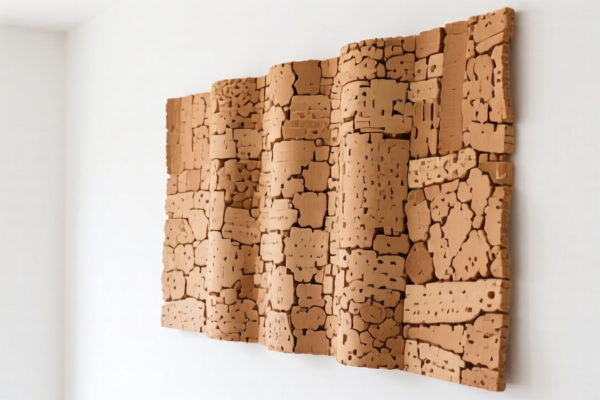
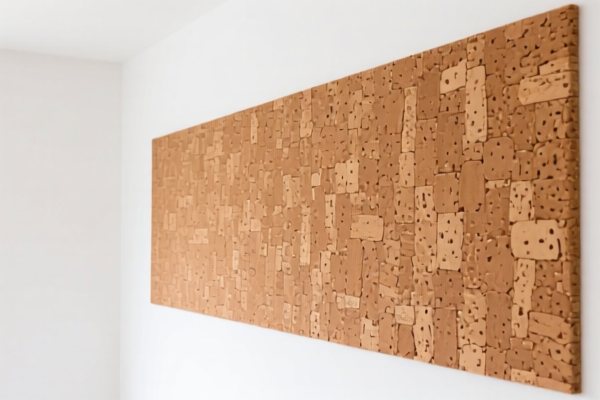
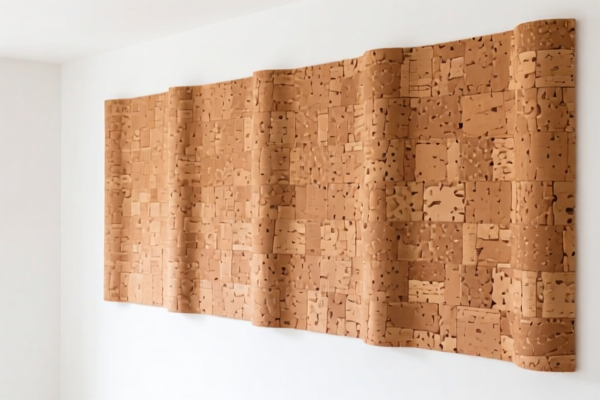
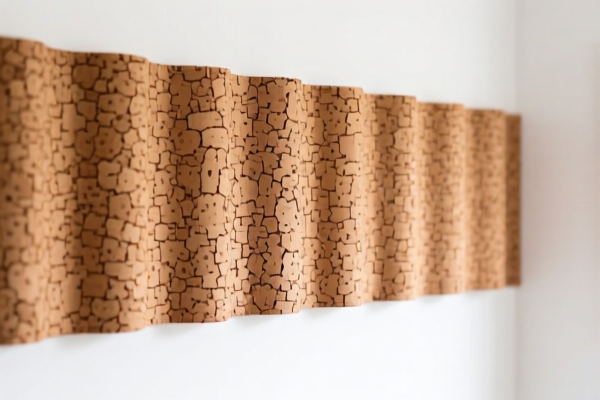
AI Analysis
🌿 Natural Cork Pattern Wallcovering (Wall Panels & Wall Decals)
🌐 HS Code Reference & Clearance Guide | 2026 Latest Tariff Analysis | Professional Customs Strategy
📌 I. Product Definition & Classification: What Exactly is "Cork Wallcovering"?
Natural cork wallcovering is an eco-friendly decorative material made from the bark of the cork oak tree. In international trade, it is strictly categorized based on its material composition and form factor. It falls under Chapter 45 (Cork and Articles of Cork), specifically targeting "boards, sheets, tiles, and similar articles" or "other articles of cork."
⚠️ Critical Distinction:
- Cork Tiles/Slabs (Raw or Minimal Processing): Treated as solid cork articles → HS 4503.
- Wallpaper/Wallcoverings (Cork on Paper/Vinyl Base): Treated as reinforced wallpaper → HS 4504.
- Wall Decals (Thin Adhesive Sheets): Often grouped with wallpaper or other cork articles depending on thickness and backing.📌 Key Insight:
The presence of a paper or non-cork backing often shifts the classification from "Cork Articles" (4503) to "Cork Wallpaper" (4504), which can significantly impact duty rates due to different base tariffs.
📦 II. HS Code Classification Details (2026 Latest Tariff Authority)
| HS Code | Product Description | Application Scenario | Classification Basis |
|---|---|---|---|
| 4504.10.40.00 | Cork Wallpaper: Reinforced with paper, non-woven, etc. | Cork wall decals, thin wallpaper sheets with paper backing | ✅ Paper-backed/Reinforced Wallpaper |
| 4504.10.50.00 | Other Cork Boards/Sheets (Not specifically paper-backed) | Solid cork panels, cork veneers not classified as wallpaper | ✅ Solid/Other Cork Boards |
| 4503.90.40.00 | Other Articles of Natural Cork | Cork tiles, slabs, or blocks used as wall cladding | ✅ Natural Cork Articles (No Paper Base) |
| 4503.90.60.00 | Other Articles of Natural Cork (Different Sub-heading) | Specific natural cork wall panels not covered elsewhere | ✅ Natural Cork Articles (Specific Category) |
🔍 Important Note:
- 4504 vs. 4503: If the cork is glued to a paper or fabric base, it is generally considered wallpaper (4504). If it is a solid piece of cork or glued to a non-paper base (like vinyl or directly as a tile), it may fall under 4503.
- Decals vs. Panels: Thin, flexible wall decals are more likely to be classified under 4504 (wallpaper) if they mimic wallpaper rolls/sheets. Rigid panels are more likely 4504.10.50.00 or 4503.
💰 III. 2026 Latest Tariff Rate Breakdown (Including Surcharges)
✅ Applicable Country: United States (US)
✅ Origin: China (CN)
✅ Effective Date: November 10, 2025 onwards (including subsequent imports)
🎯 1. HS Codes 4504.10.40.00 & 4504.10.50.00 & 4503.90.40.00 (Group A: Lower Base Duty)
| Item | Content |
|---|---|
| Base Duty | 0.0% (Ad Valorem) |
| USITC Surcharge (Section 301) | +25.0% |
| IEEPA Surcharge (Section 122/China) | +10.0% |
| Total Duty Rate | 35.0% |
| Calculation Method | CIF Value × 35% |
| De Minimis Eligibility | ❌ Not Applicable (High duty prevents de minimis exemption for most commercial shipments) |
| Legal Basis Path | USITC:4504.10.40.00 / 4504.10.50.00 / 4503.90.40.00 → FOOTNOTE:301 → IEEPA:9903.01.24 |
📌 Explanation:
- These codes have a 0% base tariff.
- However, due to Section 301 (25%) and IEEPA (10%), the total burden is 35%.
- Applicable to: Cork wallpaper (4504) and some natural cork articles (4503.90.40).
🎯 2. HS Code 4503.90.60.00 (Group B: Higher Base Duty)
| Item | Content |
|---|---|
| Base Duty | 14.0% (Ad Valorem) |
| USITC Surcharge (Section 301) | +25.0% |
| IEEPA Surcharge (Section 122/China) | +10.0% |
| Total Duty Rate | 49.0% |
| Calculation Method | CIF Value × 49% |
| De Minimis Eligibility | ❌ Not Applicable |
| Legal Basis Path | USITC:4503.90.60.00 → FOOTNOTE:301 → IEEPA:9903.01.24 |
📌 Explanation:
- This code carries a 14% base tariff.
- Adding the same surcharges (25% + 10%) results in a 49% total rate.
- Applicable to: Specific natural cork articles classified under 4503.90.60.
- ⚠️ Risk: Misclassifying a 4504.10.40.00 product (35%) as 4503.90.60.00 (49%) could lead to underpayment and penalties.
🛠️ IV. Customs Clearance Practical Advice (Operational Pitfalls)
✅ 1. Required Documentation Checklist
| Document | Mandatory? | Description |
|---|---|---|
| ✅ Product Specification Sheet | ✔️ | Must clearly state material (100% natural cork vs. cork composite), backing (paper/vinyl/no), and form (roll/sheet/panel). |
| ✅ Commercial Invoice | ✔️ | Clearly describe as "Natural Cork Wallcovering" or "Cork Wallpaper," not just "Cork." |
| ✅ Packing List | ✔️ | Detail dimensions and weight. Distinguish between rigid panels and flexible rolls. |
| ✅ Material Declaration | ✔️ | Confirm origin of cork (Quercus suber) and any adhesives/backing materials. |
| ✅ Photos of Product | ✔️ | Show cross-section (to verify backing) and surface texture. |
✅ 2. Classification Strategy (Key Rules)
🔥 "Backbone Determines the Code: Paper = 4504, Solid = 4503"
| Scenario | Correct HS Code | Duty Rate | Wrong Action |
|---|---|---|---|
| Cork glued to paper/fabric (Wallpaper/Decal) | 4504.10.40.00 | 35% | Misclassifying as 4503 → Potential audit risk |
| Solid cork tiles/panels (No paper base) | 4503.90.40.00 | 35% | Misclassifying as 4503.90.60.00 → 49% penalty |
| Cork panels with vinyl backing | 4504.10.50.00 | 35% | Treating as pure cork → 35% vs 49% ambiguity |
| Unclear "Cork Wall Decor" | 4503.90.60.00 | 49% | ⚠️ Avoid! High risk of overpayment. Seek clarification. |
✅ 3. Special Situations
| Situation | Handling Advice |
|---|---|
| Composite Materials | If cork is <50% by weight or value, check if it's classified under Chapter 48 (Paper) or 39 (Plastics). If cork is the essential character, stay in Ch. 45. |
| Mixed Shipments | If shipping both wallpaper (4504) and rigid panels (4503), split the invoice to apply the correct rates separately. Do not lump them under the highest rate. |
| Pre-Ruling | Given the 14% base rate difference between 4503 sub-headings, consider applying for a Binding Ruling from US CBP if your product is on the borderline between 4503.90.40 and 4503.90.60. |
🌍 V. Global Market Clearance Comparison (2026 Latest)
| Country/Region | Recommended HS Code | Duty Rate (China Origin) | Key Certification | Notes |
|---|---|---|---|---|
| 🇺🇸 USA | 4504.10.40.00 / 4503.90.40.00 |
35% (Most) / 49% (Some) | None specific | High surcharges apply |
| 🇪🇺 EU | 4504.00 / 4503.90 |
0% - 6.5% | CE (if applicable), REACH | No Section 301 equivalent |
| 🇨🇦 Canada | 4504.00 / 4503.90 |
0% - 5% | Standard Import | Free Trade Agreements may apply |
| 🇬🇧 UK | 4504.00 / 4503.90 |
0% - 5% | UKCA (if applicable) | Post-Brexit rules |
📌 Conclusion:
- The US market is the most expensive for cork wallcoverings due to the 35-49% effective duty rate.
- EU/Canada/UK offer significantly lower duties (often 0-6%), making them more competitive for Chinese cork products.
- Strategy: If targeting the US, optimize packaging to clearly define the product as "Wallpaper" (4504) to stay at 35% rather than 49%.
📌 VI. Common Mistakes & Pitfalls (Lessons Learned)
❌ Mistake 1: Calling it "Cork Board" for a flexible wallpaper roll
👉 Consequence: CBP may reject 4504 classification if the description doesn't match the physical form → Delay or Retention.
❌ Mistake 2: Misclassifying paper-backed cork as pure cork (4503) to avoid 4504 scrutiny
👉 Consequence: While both are 35% in this specific dataset, if the specific 4503 code selected is 4503.90.60 (49%), you face a 14% underpayment risk.
❌ Mistake 3: Ignoring the "Backing Material"
👉 Consequence: Failure to disclose paper/non-woven backing can lead to fraud allegations if the product is clearly wallpaper.
✅ Best Practice:
"Natural Cork Wallpaper, Paper-Backed, Roll Form, Eco-Friendly, Model XYZ, For Interior Wall Decoration"
🎯 VII. Conclusion: Precision in Classification Saves Money
🎯 Remember the Mantra:
🔹 "Paper Base = 4504 (35%) | Solid Cork = 4503 (35% or 49%)"
🔹 "Check the Sub-heading! 4503.90.60 is the 49% Trap!"
🔹 "Customs Values Every Detail: Backing, Form, and Material."
📌 Pro Tip:
If your cork wallcovering is shipped from Vietnam, Thailand, or Mexico (and meets Rules of Origin), you may be eligible for IEEPA exemptions or lower Section 301 rates. Always verify Country of Origin and Substantial Transformation.
📣 Immediate Action:
📞 Engage a Licensed Customs Broker + Provide Cross-Section Photos + Verify HS Code
🚀 Ensure your Wallcoverings clear customs smoothly, avoiding the 49% penalty and maximizing profit margins!
✨ Professional Clearance Starts with Accurate Classification!
💼 Your Cost Structure Depends on These Four Digits!
Customer Reviews
About HS Code Classification
The Harmonized System (HS) is an internationally standardized nomenclature developed by the World Customs Organization (WCO) to classify traded products. Over 200 countries use the HS system as the basis for customs tariffs, trade statistics, and import/export regulations.
Each HS code follows a hierarchical structure:
- Chapter (2 digits) — Broad category of goods (e.g., Chapter 84: Machinery and Mechanical Appliances)
- Heading (4 digits) — More specific grouping within the chapter
- Subheading (6 digits) — Internationally standardized breakdown, used by all WCO member countries
- National subdivisions (8-10 digits) — Country-specific extensions for further classification, such as US HTSUS 10-digit codes
Correct HS code classification is essential for smooth customs clearance, accurate duty payment, and compliance with trade regulations. Misclassification can lead to customs delays, overpayment of duties, or penalties.
When importing from CN to US, the applicable tariff rates may include:
- Most-Favored-Nation (MFN) rate — The standard duty rate applied to WTO members
- General rate — Applied to countries without trade agreements
- Trade remedy duties — Additional tariffs such as Section 301 (anti-dumping), Section 232 (national security), or countervailing duties
The information provided on this page is for reference purposes only. For official classification, please consult with your local customs authority or a licensed customs broker.