Natural Cork Raw Material
CN → US| HS Code | Tariff Rate | Origin | Destination | Doc |
|---|---|---|---|---|
| 4503906000 | 49.0% | CN | US | Official Doc |
| 4501904000 | 35.0% | CN | US | Official Doc |
| 4501100000 | 35.0% | CN | US | Official Doc |
| 4504900000 | 35.0% | CN | US | Official Doc |
| 4504104000 | 35.0% | CN | US | Official Doc |
Product Images
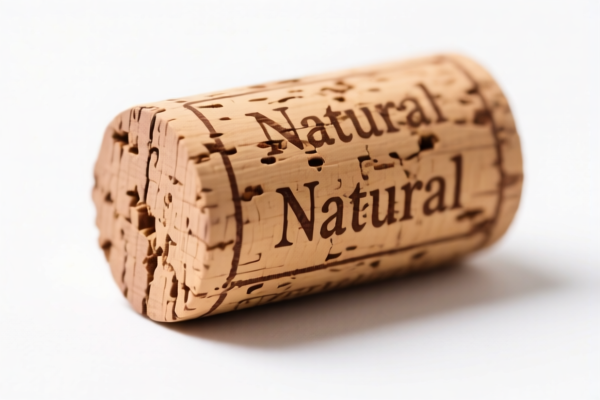

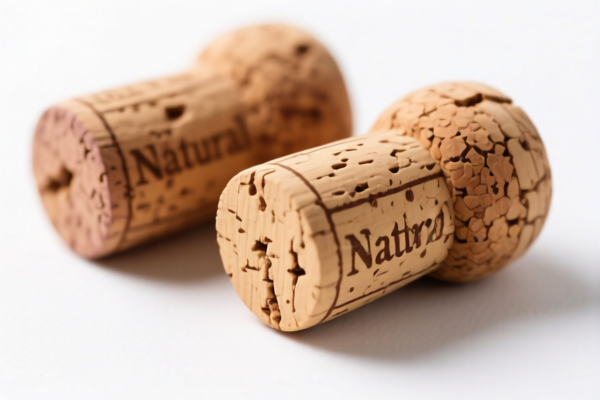

AI Analysis
🌳 Natural Cork Raw Material (Raw/Processed Cork & By-products)
🌐 HS Code Reference & Customs Clearance Guide | 2026 Latest Tariff Analysis | Professional Compliance Strategy
📌 Part I: Product Definition & Classification: Do You Really Know "Cork"?
Natural cork, harvested from the bark of the Quercus suber ( cork oak), is a unique, renewable, and biodegradable natural material. In international trade, it is classified based on its physical state and degree of processing. The key distinction lies in whether the cork is in its primary raw form, processed into blocks/planks, or reduced to powder/pellets.
1. Natural Cork (Raw/Basic Processing):
- Includes natural cork bark, whether raw or simply cleaned/sorted.
- Covers powdered, granulated, or crushed cork derived directly from natural bark without chemical binding.
- Key Feature: No adhesives or binders used.
2. Agglomerated/Reconstituted Cork:
- Cork particles or granules bonded together with natural or synthetic binders.
- Often used for stoppers, flooring, or insulation panels.
- Key Feature: Contains binding agents, structurally reconstituted.
⚠️ Critical Distinction Point:
- If the product is 100% natural cork (even if crushed, granulated, or in powder form) without binders → It falls under Heading 45.01.
- If the product is natural cork powder but defined as a manufactured good or has specific trade definitions in certain jurisdictions, it may be scrutinized under 45.03 (other articles of cork).
- If the cork is bonded/agglomerated → It falls under Heading 45.04.
📦 Part II: HS Code Classification Details (2026 Latest Tariff Authority Comparison)
| HS Code | Product Description | Application Scenario | Binder Content |
|---|---|---|---|
| 4501.10.00.00 | Natural cork, raw or simply prepared (including powdered, granulated, or crushed) | Raw cork bark, natural cork powder, granulated cork from natural bark | ❌ None (100% Natural) |
| 4501.90.40.00 | Other natural cork; powdered, granulated, or crushed cork (specific sub-category for processed natural forms) | Crushed or granulated natural cork, non-bonded | ❌ None (100% Natural) |
| 4503.90.60.00 | Articles of cork (other than stoppers), including natural cork powder if classified as an article or specific trade item | Natural cork powder treated as a manufactured good or specific trade classification | ⚠️ Depends on Trade Definition (Often 100% natural but classified as "article") |
| 4504.10.40.00 | Agglomerated cork in slabs, blocks, or sheets (e.g., cork wall panels, flooring bases) | Agglomerated cork tiles, wall panels, insulation boards | ✅ Yes (Bonded/Agglomerated) |
| 4504.90.00.00 | Other agglomerated cork and articles thereof | Other agglomerated forms, not specifically slabs/blocks | ✅ Yes (Bonded/Agglomerated) |
🔍 Key Reminder:
- 4501 vs. 4503 for Powder: If the powder is purely physical processing (crushing/grinding) of natural cork with no additives, it is generally classified under 4501. However, some customs administrations may classify fine natural cork powder under 4503.90.60.00 if it is considered a "manufactured article" or for specific trade reporting purposes. 4501.10.00.00 is the most accurate for raw/natural powder.
- 4504 is for Agglomerated: If binders are used, it must go to 4504. Misclassifying agglomerated cork as natural (4501) leads to severe penalties.
💰 Part III: 2026 Latest Tariff Rate Breakdown (Including Surtaxes & Policy Add-ons)
✅ Applicable Country: United States (US)
✅ Country of Origin: China (CN)
✅ Effective Date: November 10, 2025 (and onwards)
🎯 1. 4503.90.60.00 — Natural Cork Powder (Classified as "Article" or Specific Trade Item)
| Item | Details |
|---|---|
| Base Tariff | 14.0% (ad valorem) |
| Section 301 Surtax | +25.0% (Additional duty under USITC Footnote 9903.88.01) |
| IEEPA Surtax | +10.0% (China-specific duty effective Nov 10, 2025) |
| Total Tariff | 49.0% |
| Tax Calculation | CIF Value × 49.0% |
| De Minimis Exemption? | ❌ No (deny_de_minimis) |
| Legal Basis Path | IEEPA:9903.01.25 → IEEPA:9903.01.24 → USITC:4503.90.60.00 → FOOTNOTE:9903.88.01 |
📌 Explanation:
- The 14% base tariff is the standard Most Favored Nation (MFN) rate for cork articles.
- The 25% Section 301 tariff applies to most Chinese-origin goods unless exempted.
- The 10% IEEPA tariff is a new layer on top for China.
- Total 49% is a very high tariff. This classification is often used when cork powder is considered a finished good or for specific trade reporting.
🎯 2. 4501.90.40.00 — Crushed/Granulated/Powdered Natural Cork
| Item | Details |
|---|---|
| Base Tariff | 0.0% |
| Section 301 Surtax | +25.0% |
| IEEPA Surtax | +10.0% |
| Total Tariff | 35.0% |
| Tax Calculation | CIF Value × 35.0% |
| De Minimis Exemption? | ❌ No (deny_de_minimis) |
| Legal Basis Path | IEEPA:9901.25 → IEEPA:9903.01.24 → USITC:4501.90.40.00 → FOOTNOTE:9903.88.01 |
📌 Note:
- This is the preferred classification for purely physical natural cork powder/crushed cork.
- The 0% base rate significantly lowers the total tariff compared to 4503.
- Applies to granulated, crushed, or powdered cork that is 100% natural with no binders.
🎯 3. 4501.10.00.00 — Natural Cork (Raw, including Powder)
| Item | Details |
|---|---|
| Base Tariff | 0.0% |
| Section 301 Surtax | +25.0% |
| IEEPA Surtax | +10.0% |
| Total Tariff | 35.0% |
| Tax Calculation | CIF Value × 35.0% |
| De Minimis Exemption? | ❌ No (deny_de_minimis) |
| Legal Basis Path | IEEPA:9901.25 → IEEPA:9903.01.24 → USITC:4501.10.00.00 → FOOTNOTE:9903.88.01 |
📌 Note:
- This is the primary classification for raw natural cork, including cork bark and natural cork powder.
- Same 35% total rate as 4501.90.40.00.
- Crucial: Must prove no binders were used. If binders are present, this classification is invalid.
🎯 4. 4504.90.00.00 — Other Agglomerated Cork
| Item | Details |
|---|---|
| Base Tariff | 0.0% |
| Section 301 Surtax | +25.0% |
| IEEPA Surtax | +10.0% |
| Total Tariff | 35.0% |
| Tax Calculation | CIF Value × 35.0% |
| De Minimis Exemption? | ❌ No (deny_de_minimis) |
| Legal Basis Path | IEEPA:9901.25 → IEEPA:9903.01.24 → USITC:4504.90.00.00 → FOOTNOTE:9903.88.01 |
📌 Note:
- Applies to agglomerated cork (bonded) that does not fall into slabs/blocks (which might have different sub-codes).
- 35% total rate.
- Must have binders.
🎯 5. 4504.10.40.00 — Agglomerated Cork Wall Panels
| Item | Details |
|---|---|
| Base Tariff | 0.0% |
| Section 301 Surtax | +25.0% |
| IEEPA Surtax | +10.0% |
| Total Tariff | 35.0% |
| Tax Calculation | CIF Value × 35.0% |
| De Minimis Exemption? | ❌ No (deny_de_minimis) |
| Legal Basis Path | IEEPA:9901.25 → IEEPA:9903.01.24 → USITC:4504.10.40.00 → FOOTNOTE:9903.88.01 |
📌 Note:
- Specifically for agglomerated cork in slab/block/form such as wall panels.
- 35% total rate.
- Must be agglomerated/bonded.
🛠️ Part IV: Customs Clearance Practical Advice (Battle-Tested Pitfall Guide)
✅ 1. Required Documentation Checklist (None Missing)
| Document | Must Provide | Explanation |
|---|---|---|
| ✅ Product Specification Sheet | ✔️ | Details physical state: powder, granules, blocks, raw bark. Specify dimensions if applicable. |
| ✅ Material Composition Statement | ✔️ | Critical: Explicitly state 100% Natural Cork (no binders) OR Agglomerated Cork with [Type] Binder. |
| ✅ Product Photos | ✔️ | Clear images showing texture, form (powder, granules, panels), and any markings. |
| ✅ Bill of Lading/Packing List | ✔️ | Must match the declared HS Code and description. |
| ✅ Commercial Invoice | ✔️ | Clearly state "Natural Cork" or "Agglomerated Cork" based on classification. |
| ✅ Certificate of Origin (CO) | ✔️ | To verify Country of Origin (e.g., China) and apply correct tariffs. |
✅ 2. Declaration Tips (Key Mnemonics)
🔥 “Natural No Binder, 4501; Agglomerated With Binder, 4504. Powder is 35% if 4501, 49% if 4503. Don’t lie!”
| Scenario | Correct Declaration | Error to Avoid |
|---|---|---|
| Pure Natural Cork Powder | 4501.10.00.00 or 4501.90.40.00 | Misclassify as 4503.90.60.00 → Higher 49% Tax |
| Agglomerated Cork Panels | 4504.10.40.00 | Misclassify as 4501 → Customs Audit + Penalty |
| Raw Cork Bark | 4501.10.00.00 | Over-declare as processed goods |
| Cork Stopper (Natural) | 4503.10.00.00 (Not in list, but for reference) | Don’t use 4501 for shaped stoppers |
📌 Key Strategy:
- If your product is natural cork powder, always aim for 4501 (35% total).
- Only use 4503.90.60.00 (49% total) if specifically required by your trade partner or if customs demands it for "article" classification, but be prepared to pay the higher rate.
- Never declare agglomerated cork as natural cork. The physical difference (binder presence) is easily testable.
✅ 3. Special Cases Handling
| Situation | Handling Advice |
|---|---|
| Mixed Natural & Agglomerated | Split Shipment: Declare separately. Do not mix in one HS Code. |
| Cork Powder with Additives (e.g., Dye, Wax) | If additives are > minor, may lose "natural" status. Consult customs. May still be 4501 if physical only. |
| OEM Custom Cork Panels | Provide design specs. If agglomerated, use 4504. |
| Cork for Medical/Pharma Use | May require additional certifications (FDA, GMP), but HS Code remains the same. |
🌍 Part V: Global Market Clearance Comparison (2026 Latest)
| Country/Region | Recommended HS Code | Tariff (China Origin) | Certification Req. | Notes |
|---|---|---|---|---|
| 🇺🇸 USA | 4501.10.00.00 (Powder) |
35% (4501) / 49% (4503) | None | High Section 301 + IEEPA taxes. |
| 🇨🇳 China | 4501.10.00.00 |
0% | None | Low import duty for raw cork. |
| 🇪🇺 EU | 4501.10.00.00 |
0% | REACH (if chemical processed) | No surtaxes for natural cork. |
| 🇬🇧 UK | 4501.10.00.00 |
0% | UKCA (if applicable) | Post-Brexit trade rules apply. |
| 🇦🇺 Australia | 4501.10.00.00 |
0% | None | No significant surtaxes. |
📌 Conclusion:
- USA is the most expensive market due to Section 301 (25%) + IEEPA (10%) surtaxes.
- Natural cork (4501) is 35% total tax in the US.
- Agglomerated cork (4504) is also 35% total tax in the US.
- Misclassifying natural powder as 4503 costs 49%, which is 14% more unnecessarily.
📌 Part VI: Common Errors & Pitfalls (Blood-Tested Lessons)
❌ Error 1: Declaring natural cork powder as 4503.90.60.00
👉 Consequence: Pay 49% instead of 35%. Waste of 14% per CBM!
❌ Error 2: Declaring agglomerated cork as 4501 (Natural)
👉 Consequence: Customs audit, penalty, and possible seizure. The difference is the binder.
❌ Error 3: Not specifying "No Binder" for natural cork powder
👉 Consequence: Customs may assume agglomeration or classify under higher duty "article" code.
❌ Error 4: Ignoring IEEPA 10% surtax
👉 Consequence: Underpayment of tax. IEEPA applies to all China-origin cork goods since Nov 2025.
✅ Correct Approach:
"Natural Cork Powder, 100% Natural, No Binders, Granulometry: 0-2mm, HS: 4501.10.00.00"
🎯 Part VII: Conclusion: Precise Classification Saves Money!
🎯 Remember the Mnemonic:
🔹 "Natural = 4501 (35% Total)"
🔹 "Agglomerated = 4504 (35% Total)"
🔹 "Powder as Article = 4503 (49% Total) → Avoid!"
🔹 "No Binder = Natural. Binder = Agglomerated."
📌 Pro Tip:
If your cork powder is 100% natural, always insist on 4501.10.00.00 or 4501.90.40.00.
If you are importing agglomerated cork panels, use 4504.10.40.00.
Do not mix them.
Get an Advance Ruling from US Customs (CBP) if you are unsure about the "natural" vs. "article" status of your powder.
📣 Immediate Action:
📞 Contact a customs broker.
📄 Provide material composition certificate.
🚀 Clear your cork shipment efficiently, avoid 49% tax, and protect your margin!
✨ Professional clearance starts with precise classification!
💼 Every percent counts in global trade!
Customer Reviews
About HS Code Classification
The Harmonized System (HS) is an internationally standardized nomenclature developed by the World Customs Organization (WCO) to classify traded products. Over 200 countries use the HS system as the basis for customs tariffs, trade statistics, and import/export regulations.
Each HS code follows a hierarchical structure:
- Chapter (2 digits) — Broad category of goods (e.g., Chapter 84: Machinery and Mechanical Appliances)
- Heading (4 digits) — More specific grouping within the chapter
- Subheading (6 digits) — Internationally standardized breakdown, used by all WCO member countries
- National subdivisions (8-10 digits) — Country-specific extensions for further classification, such as US HTSUS 10-digit codes
Correct HS code classification is essential for smooth customs clearance, accurate duty payment, and compliance with trade regulations. Misclassification can lead to customs delays, overpayment of duties, or penalties.
When importing from CN to US, the applicable tariff rates may include:
- Most-Favored-Nation (MFN) rate — The standard duty rate applied to WTO members
- General rate — Applied to countries without trade agreements
- Trade remedy duties — Additional tariffs such as Section 301 (anti-dumping), Section 232 (national security), or countervailing duties
The information provided on this page is for reference purposes only. For official classification, please consult with your local customs authority or a licensed customs broker.