Natural Cork Sheets
CN → US| HS Code | Tariff Rate | Origin | Destination | Doc |
|---|---|---|---|---|
| 4503906000 | 49.0% | CN | US | Official Doc |
| 4501904000 | 35.0% | CN | US | Official Doc |
| 4501100000 | 35.0% | CN | US | Official Doc |
| 4504900000 | 35.0% | CN | US | Official Doc |
| 4503102000 | 35.0% | CN | US | Official Doc |
Product Images
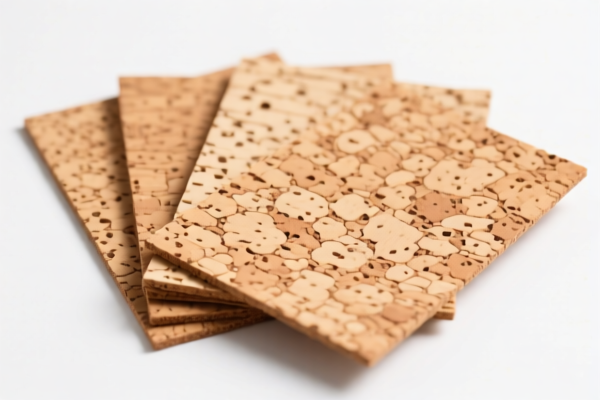
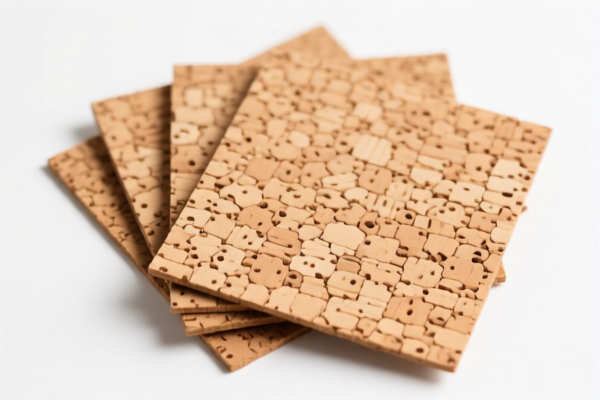
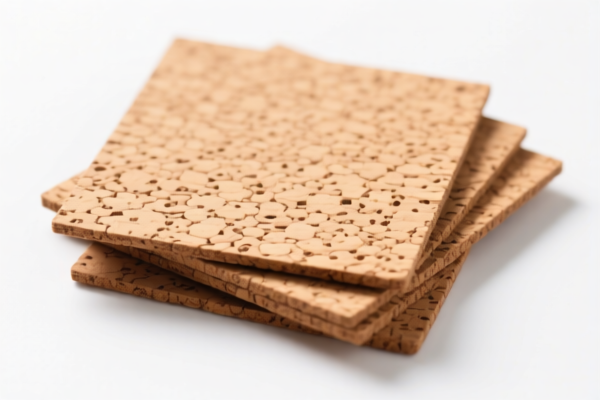
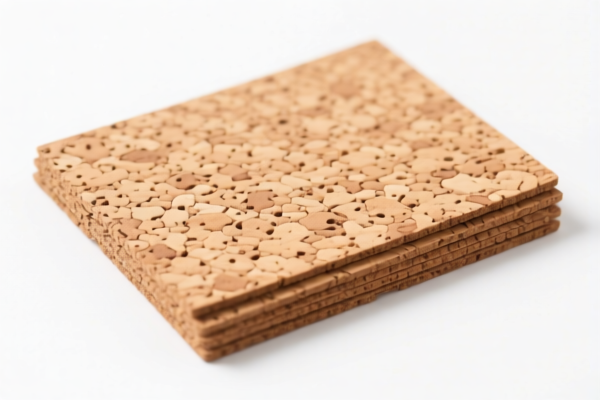
AI Analysis
🌿 Natural Cork Sheets & Products (Natural Cork)
🌐 HS Code Reference & Customs Clearance Guide | 2026 Latest Tariff Analysis | Professional Clearance Strategy
📌 I. Product Definition & Classification: Do You Really Understand "Natural Cork"?
Natural Cork is a revolutionary, sustainable, and lightweight material harvested from the bark of the cork oak tree (Quercus suber). In international trade, it is strictly categorized based on its processing level and physical form. The distinction between raw cork, processed sheets, and granular cork is critical for accurate HS Code classification and tariff determination.
In the context of US imports from China, the material is subject to significant additional tariffs under Section 301 and IEEPA. Misclassification can lead to massive cost discrepancies or customs delays.
⚠️ Key Distinction Point:
- Raw/Unprocessed Cork: Bark that has been debarked and stripped, but not yet manufactured into sheets or shapes → HS 4501
- Finished Goods/Sheets: Cork that has been cut, laminated, or shaped into usable products (e.g., sheets, tiles, stoppers) → HS 4503
- Reconstituted/Agglomerated Cork: Cork dust/granules glued together → HS 4504 (Often misclassified as "natural," but treated differently)
📦 II. HS Code Classification Details (2026 Latest Tariff Authority Comparison)
The following HS Codes are extracted strictly from the provided dataset. All items below are subject to US import duties from China.
| HS Code | Product Description | Application Scenario | Processing Level |
|---|---|---|---|
4501.10.00.00 |
Natural cork, raw or simply prepared (e.g., cleaned, split, or roughly squared) | Raw bark sheets, initial processing stage | ✅ Raw/Simple |
4501.90.40.00 |
Crushed, granulated, or powdered cork | Cork dust, filler material, granules for agglomeration | ✅ Granular |
4503.10.20.00 |
Articles of natural cork | Finished cork products (e.g., sheets, tiles, stoppers) made from natural cork | ✅ Finished |
4503.90.60.00 |
Articles of natural cork (Other) | Other natural cork products not specified elsewhere, high-value finishes | ✅ Finished/Other |
4504.90.00.00 |
Agglomerated cork (reconstituted) | Cork sheets made from bonded granules (Note: Not "pure" natural sheets, but often sold as such) | ⚠️ Agglomerated |
🔍 Critical Reminder:
- "Cork Sheets" typically fall under4503.10.20.00or4503.90.60.00if they are cut from natural cork blocks.
- If the sheets are made from glued cork granules, they must be declared as4504.90.00.00(Agglomerated Cork).
- Do NOT declare agglomerated cork as "natural cork" to avoid lower tariffs; this is considered fraud.
- All items below are subject to US Additional Tariffs.
💰 III. 2026 Latest Tariff Rate Breakdown (Including Additional Duties & Policy Surcharges)
✅ Applicable Country: United States (US)
✅ Origin: China (CN)
✅ Effective Time: Current regime (Section 301 + IEEPA)
🎯 1. 4501.10.00.00 —— Natural Cork, Raw or Simply Prepared
| Item | Content |
|---|---|
| Base Tariff Rate | 0.0% (Ad valorem) |
| USITC Additional Tariff | +25% (Section 301 Tariff) |
| IEEPA Additional Tariff | +10% (China-specific surcharge) |
| Total Tariff Rate | 35.0% |
| Tax Calculation | CIF Value × 35% |
| De Minimis Exemption | ❌ No (Deny de minimis) |
| Legal Basis Path | USITC:4501.10.00.00 → FOOTNOTE:Section301 → IEEPA:ChinaSurcharge |
📌 Explanation:
- Raw cork enjoys a 0% base rate, but the 35% total effective rate makes it expensive.
- This code applies to cork that has been debarked and stripped but not yet cut into final sheets or shapes.
🎯 2. 4501.90.40.00 —— Crushed, Granulated, or Powdered Cork
| Item | Content |
|---|---|
| Base Tariff Rate | 0.0% |
| USITC Additional Tariff | +25% |
| IEEPA Additional Tariff | +10% |
| Total Tariff Rate | 35.0% |
| Tax Calculation | CIF Value × 35% |
| De Minimis Exemption | ❌ No |
| Legal Basis Path | USITC:4501.90.40.00 → FOOTNOTE:Section301 → IEEPA:ChinaSurcharge |
📌 Note:
- Applies to cork dust, granules, or powder.
- If you are importing cork pellets for manufacturing, use this code.
- Base rate is free, but additional duties apply fully.
🎯 3. 4503.10.20.00 —— Articles of Natural Cork (Primary Category)
| Item | Content |
|---|---|
| Base Tariff Rate | 0.0% |
| USITC Additional Tariff | +25% |
| IEEPA Additional Tariff | +10% |
| Total Tariff Rate | 35.0% |
| Tax Calculation | CIF Value × 35% |
| De Minimis Exemption | ❌ No |
| Legal Basis Path | USITC:4503.10.20.00 → FOOTNOTE:Section301 → IEEPA:ChinaSurcharge |
📌 Explanation:
- This is the most common code for "Natural Cork Sheets" if they are cut from solid natural cork blocks.
- Includes cork tiles, sheets, and simple shapes.
- 35% Total Duty must be factored into your landed cost.
🎯 4. 4503.90.60.00 —— Articles of Natural Cork (Other)
| Item | Content |
|---|---|
| Base Tariff Rate | 14.0% |
| USITC Additional Tariff | +25% |
| IEEPA Additional Tariff | +10% |
| Total Tariff Rate | 49.0% |
| Tax Calculation | CIF Value × 49% |
| De Minimis Exemption | ❌ No |
| Legal Basis Path | USITC:4503.90.60.00 → FOOTNOTE:Section301 → IEEPA:ChinaSurcharge |
📌 Explanation:
- This is a catch-all category for natural cork products not specifically listed in 4503.10.
- HIGHEST TARIFF (49%) in the dataset.
- Only use if the product does NOT fit4503.10.20.00. Many specialized cork products may fall here, so verify with a customs broker.
🎯 5. 4504.90.00.00 —— Agglomerated Cork (Reconstituted)
| Item | Content |
|---|---|
| Base Tariff Rate | 0.0% |
| USITC Additional Tariff | +25% |
| IEEPA Additional Tariff | +10% |
| Total Tariff Rate | 35.0% |
| Tax Calculation | CIF Value × 35% |
| De Minimis Exemption | ❌ No |
| Legal Basis Path | USITC:4504.90.00.00 → FOOTNOTE:Section301 → IEEPA:ChinaSurcharge |
📌 Note:
- NOT "Natural Cork Sheets" in the strict sense, but Agglomerated Cork.
- Made from cork granules bonded with adhesive.
- Often used as a cheaper alternative to natural cork sheets.
- Must be clearly declared as "Agglomerated Cork" to avoid misclassification penalties.
🛠️ IV. Customs Clearance Practical Advice (Battle-Tested Pitfall Avoidance Guide)
✅ 1. Preparation Checklist (Non-negotiable)
| Document | Required | Description |
|---|---|---|
| ✅ Product Specification Sheet | ✔️ | Must specify: Material (Natural vs. Agglomerated), Thickness, Dimensions, Use Case |
| ✅ Composition Statement | ✔️ | Detail % of natural cork vs. binder/glue. Critical for distinguishing 4503 from 4504 |
| ✅ Product Photos (Clear) | ✔️ | Show cross-section, surface texture, and packaging. Helps customs identify grain structure |
| ✅ Commercial Invoice | ✔️ | Must clearly state "Natural Cork Sheets" or "Agglomerated Cork Sheets" with HS Code |
| ✅ Packing List | ✔️ | Net/Gross weight, volume, number of packages |
| ✅ Origin Certificate | ✔️ | Required for duty calculation. If non-China origin, may qualify for exemption |
| ✅ Third-Party Test Report | ✔️ | Optional but recommended: Fire resistance, density, durability tests |
✅ 2. Declaration Tips (Key Mnemonic)
🔥 "Natural is 35/49, Agglomerated is 35, Granular is 35, Base is 0/14, Add 35 Total!"
| Scenario | Correct Declaration | Wrong Practice |
|---|---|---|
| Solid Natural Cork Sheets | 4503.10.20.00 (35%) |
Misdeclare as 4504 → Penalty for false origin |
| Cork Sheets made from Glue+Granules | 4504.90.00.00 (35%) |
Call it "Natural Cork" → 49% or penalty |
| Raw Cork Bark Slabs | 4501.10.00.00 (35%) |
Call it "Finished Product" → Delayed clearance |
| Cork Dust/Granules | 4501.90.40.00 (35%) |
Call it "Sheet" → Rejection |
| Unspecified Natural Cork Items | 4503.90.60.00 (49%) |
Guessing wrong code → Highest duty |
✅ 3. Special Handling Cases
| Situation | Handling Advice |
|---|---|
| Mixed Materials | If cork is combined with rubber, plastic, or wood, it may fall under Chapter 40 or 39. Declare separately if possible. |
| Sample Shipments | Even samples are subject to 35-49% duty. Use DDP (Delivered Duty Paid) terms to avoid surprise costs. |
| High-Value Luxury Cork | If used in high-end fashion or design, ensure detailed description to justify 4503.10 over 4503.90. |
| Re-export from Third Country | If shipped from Vietnam/Mexico, provide Certificate of Origin to claim exemption from Section 301/IEEPA tariffs. |
🌍 V. Global Market Comparison (2026 Latest)
| Country/Region | Recommended HS Code | Tariff (China Origin) | Certification | Notes |
|---|---|---|---|---|
| 🇺🇸 USA | 4503.10.20.00 / 4504.90.00.00 |
35% - 49% | No specific import cert | High Tariff Risk. IEEPA+301 applies. |
| 🇨🇳 China | 4503.10.20.00 |
0% - 5% | N/A | Low import duty for domestic processing |
| 🇪🇺 EU | 4503.10.20.00 |
0% - 6.5% | FSC Certification (Sustainability) | No Additional Tariffs. FSC preferred for eco-branding. |
| 🇬🇧 UK | 4503.10.20.00 |
0% - 6.5% | FSC Certification | Post-Brexit rules may vary; check UK GI list. |
| 🇦🇺 Australia | 4503.10.20.00 |
5% | N/A | No Section 301. Low duty. |
| 🇯🇵 Japan | 4503.10.20.00 |
0% - 5% | JAS Certification | Low duty, high quality standards. |
📌 Conclusion:
- USA is the ONLY major market with 35-49% effective tariffs on Chinese cork products.
- EU/UK/AU/JP have low or zero base tariffs.
- Strategy: If targeting the US, consider supply chain diversification (sourcing from Portugal/Morocco) to avoid IEEPA/301 duties.
📌 VI. Common Mistakes & Pitfalls (Lessons Learned)
❌ Mistake 1: Declaring Agglomerated Cork as Natural Cork
👉 Consequence: Customs may classify under 4503.90.60.00 (49%) or penalize for misdeclaration.
👉 Fix: Always specify "Agglomerated" if bonded.
❌ Mistake 2: Ignoring the IEEPA 10% Surcharge
👉 Consequence: Underestimating landed cost by 10%.
👉 Fix: Add 10% to all Chinese-origin cork imports to US.
❌ Mistake 3: Using "Cork" as a generic term on Invoice
👉 Consequence: Customs cannot determine if it's raw (4501), sheet (4503), or agglomerated (4504).
👉 Fix: Be specific: "Natural Cork Sheets, Cut to Size" or "Agglomerated Cork Granules."
❌ Mistake 4: Assuming De Minimis ($800) Exemption Applies
👉 Consequence: Shipments under $800 are NOT exempt from Section 301/IEEPA duties for China.
👉 Fix: Pay duties on all shipments, regardless of value.
✅ Correct Declaration Example:
"NATURAL CORK SHEETS, CUT FROM QUERCUS SUBER BARK, 1200X600MM, THICKNESS 5MM, FOR FLOORING INSTALLATION, HS CODE 4503.10.20.00, ORIGIN: CHINA"
🎯 VII. Conclusion: Professional Declaration, Save Cost, Avoid Delays!
🎯 Remember the Mnemonic:
🔹 "Natural Cork 35/49, Agglomerated 35, Raw 35, Base Free but Add 35!"
🔹 "De Minimis Does Not Apply to China Cork!"
🔹 "FSC Certified Cork Helps Marketing, Not Tariffs in US!"
📌 Pro Tip:
- If your cork products are originally from Portugal, Spain, or Morocco, you can claim Exemption from IEEPA/Section 301 tariffs by providing a Certificate of Origin.
- Consider Advance Ruling from US CBP if you have mixed materials or uncertain processing levels.
📣 Immediate Action:
📞 Contact a licensed Customs Broker
📄 Provide Product Specs + Origin Proof
🚀 Optimize Landed Cost, Ensure Smooth Clearance!
✨ Professional Clearance Starts with Accurate Classification!
💼 Your Every Cent of Cost Deserves Precise Calculation!
Customer Reviews
About HS Code Classification
The Harmonized System (HS) is an internationally standardized nomenclature developed by the World Customs Organization (WCO) to classify traded products. Over 200 countries use the HS system as the basis for customs tariffs, trade statistics, and import/export regulations.
Each HS code follows a hierarchical structure:
- Chapter (2 digits) — Broad category of goods (e.g., Chapter 84: Machinery and Mechanical Appliances)
- Heading (4 digits) — More specific grouping within the chapter
- Subheading (6 digits) — Internationally standardized breakdown, used by all WCO member countries
- National subdivisions (8-10 digits) — Country-specific extensions for further classification, such as US HTSUS 10-digit codes
Correct HS code classification is essential for smooth customs clearance, accurate duty payment, and compliance with trade regulations. Misclassification can lead to customs delays, overpayment of duties, or penalties.
When importing from CN to US, the applicable tariff rates may include:
- Most-Favored-Nation (MFN) rate — The standard duty rate applied to WTO members
- General rate — Applied to countries without trade agreements
- Trade remedy duties — Additional tariffs such as Section 301 (anti-dumping), Section 232 (national security), or countervailing duties
The information provided on this page is for reference purposes only. For official classification, please consult with your local customs authority or a licensed customs broker.