Natural Cork Wall Covering (Mold Resistant)
CN → US| HS Code | Tariff Rate | Origin | Destination | Doc |
|---|---|---|---|---|
| 4504900000 | 35.0% | CN | US | Official Doc |
| 4504104000 | 35.0% | CN | US | Official Doc |
| 4504104000 | 35.0% | CN | US | Official Doc |
| 4504900000 | 35.0% | CN | US | Official Doc |
Product Images
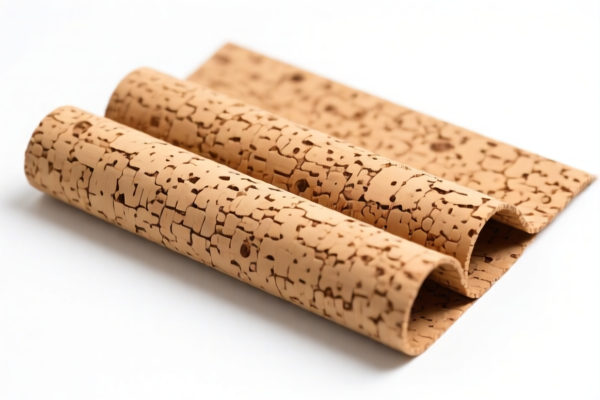
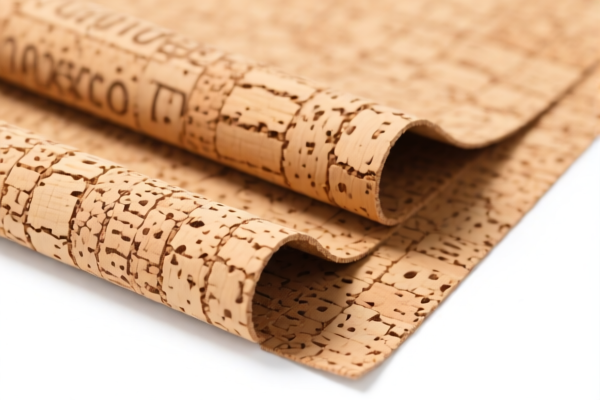
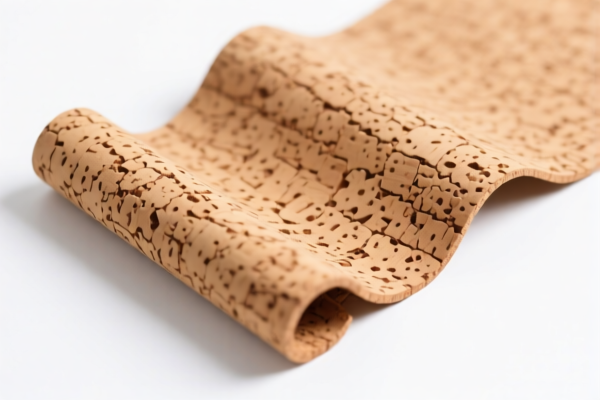
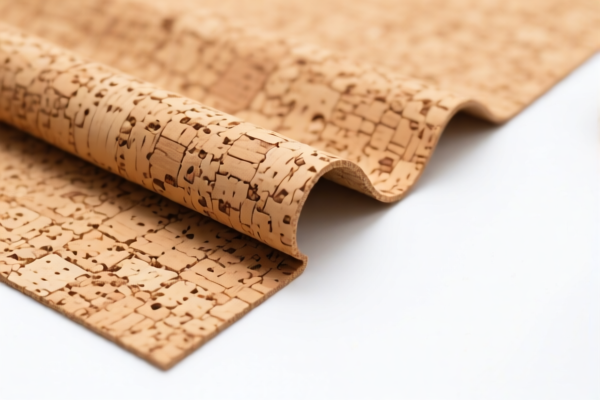
AI Analysis
🌿 Natural Cork Wall Covering (Mold Resistant)
🌐 HS Code Reference & Customs Clearance Guide | 2026 Latest Tariff Analysis | Professional Clearance Strategy
📌 I. Product Definition & Classification: Do You Really Understand "Cork"?
Natural Cork Wall Covering (Mold Resistant) refers to wall decor materials primarily made from agglomerated cork (cork granules bonded together) or natural cork sheets, treated for mold resistance. In international trade, it is strictly classified under Chapter 45 (Cork and Articles of Cork).
It is NOT considered a textile, paper product, or synthetic building material. The key distinction lies in the composition: * Agglomerated Cork: Made from cork granules bound with adhesives (binding substances). * Reinforced/Wallcovering: If backed with paper or otherwise reinforced (e.g., fabric, mesh), it falls under a specific sub-category within Chapter 45.
⚠️ Key Distinction Point:
- If the product is solid agglomerated cork intended for general use (blocks, tiles, raw sheets) → Look at 4504.90.
- If the product is specifically wallcovering, backed with paper or reinforced → Look at 4504.10.
- Note: Even if "mold resistant" (treated with chemicals), the base material remains cork. The treatment does not change the fundamental classification to a chemical product (Chapter 38) unless the cork content is negligible.
📦 II. HS Code Classification Details (2026 Latest Tariff Authority Comparison)
Based on the provided data, here are the applicable HS Codes and their descriptions:
| HS Code | Product Description | Applicable Scenario | Base Tariff | Additional Tariff | Total Tax |
|---|---|---|---|---|---|
4504.10.40.00 |
Agglomerated cork: Wallcoverings, backed with paper or otherwise reinforced | Decorative wall panels, cork wallpaper, cork sheets glued to paper/fabric backing | 0.0% | 25.0% | 25.0% |
4504.90.00.00 |
Agglomerated cork: Other | Raw agglomerated cork blocks, tiles, strips, solid cylinders NOT intended as wallcovering or not reinforced | 0.0% | 25.0% | 25.0% |
🔍 Critical Reminder:
- "Mold Resistant" Treatment: This is a finishing process. It does not change the HS Code. A mold-resistant cork tile is still an article of agglomerated cork.
- "Reinforced" vs. "Other": If your cork wall covering has a paper backing (common for peel-and-stick or adhesive wall panels), it MUST be classified under4504.10.40.00. If it is a solid cork tile with no backing, use4504.90.00.00.
- Tax Rate: Both codes currently face a 25.0% additional tariff (likely Section 301/USITC related) on top of a 0.0% base duty.
💰 III. 2026 Latest Tariff Rate Details (Including Surtaxes)
✅ Applicable Market: United States (US)
✅ Origin: China (CN) (Assumed based on typical "Additional Tariff" context in such data)
✅ Effective Date: Current regulations (Section 301)
🎯 1. 4504.10.40.00 — Agglomerated Cork Wallcoverings (Backed/Reinforced)
| Item | Content |
|---|---|
| Base Duty Rate | 0.0% (ad valorem) |
| Additional Tariff (Section 301/USITC) | +25.0% |
| Total Effective Tax Rate | 25.0% |
| Tax Calculation | CIF Value × 25% |
| De Minimis Exemption | ❌ Not Applicable for B2B commercial imports; strict customs declaration required |
| Legal Basis Path | HTSUS:4504.10.40.00 → USITC Footnote/Section 301 List |
📌 Explanation:
- The 0% base rate reflects the low-duty status of cork products in the Harmonized Tariff Schedule.
- The 25% additional tariff is imposed under U.S. trade actions against specific Chinese goods (Category 4/4A or similar lists for cork articles).
- Total Liability: For every $100,000 CIF value, expect $25,000 in duties.
🎯 2. 4504.90.00.00 — Agglomerated Cork, Other
| Item | Content |
|---|---|
| Base Duty Rate | 0.0% (ad valorem) |
| Additional Tariff (Section 301/USITC) | +25.0% |
| Total Effective Tax Rate | 25.0% |
| Tax Calculation | CIF Value × 25% |
| De Minimis Exemption | ❌ Not Applicable |
| Legal Basis Path | HTSUS:4504.90.00.00 → USITC Footnote/Section 301 List |
📌 Note:
- Despite being "Other" (non-wallcovering), the tax burden is identical to the wallcovering category.
- This includes raw agglomerated cork blocks, tiles, or strips that are not designed as wallcoverings (e.g., industrial gaskets, raw material for furniture).
🛠️ IV. Customs Clearance Practical Advice (Battle-Tested Pitfall Guide)
✅ 1. Essential Documentation Checklist (Non-Negotiable)
| Document | Required? | Purpose |
|---|---|---|
| ✅ Product Specification Sheet | ✔️ | Must detail: Composition (100% agglomerated cork?), Binding substance type, Mold-resistant treatment method |
| ✅ Commercial Invoice | ✔️ | Clearly state: "Agglomerated Cork Wallcovering, Mold Resistant" OR "Agglomerated Cork Tiles" |
| ✅ Packing List | ✔️ | Show net/gross weight, number of rolls/tiles per carton |
| ✅ Labeling/Marking | ✔️ | Must indicate Country of Origin (e.g., "Made in China") on packaging |
| ✅ Test Reports (Optional but Recommended) | ✔️ | Proof of mold resistance (ISO 846) to prevent misclassification as "Chemical Treated Textile" (wrong chapter) |
✅ 2. Declaration Tips (Critical Keywords)
🔥 "Describe the Function, Not Just the Material!"
| Scenario | Correct Declaration | Wrong Declaration | Risk |
|---|---|---|---|
| Cork sheets with paper backing | "Agglomerated Cork Wallcovering, Reinforced" | "Cork Fabric" or "Textile Wallcovering" | Misclassification → Penalty + Delay |
| Solid cork tiles (no backing) | "Agglomerated Cork Tiles, Floor/Wall Use" | "Cork Flooring" (might imply rubber/plastic mix) | Ambiguity → Customs Exam |
| Bulk cork granules | "Agglomerated Cork, Raw Material" | "Cork Dust" | Potential classification as waste |
📌 Key Tip:
- If your product is backed with paper, you MUST use4504.10.40.00. Declaring it as "Other" (4504.90) when it has paper backing is a false declaration and risks seizure.
- "Mold Resistant" is a feature, not a classifier. Do not try to hide it; declare it as part of the product description to show transparency.
✅ 3. Special Cases
| Case | Handling Advice |
|---|---|
| Mixed Materials | If cork is <85% of weight, consult a broker. High % synthetic binders might push it to Chapter 39 (Plastics). |
| Sample Shipments | Even samples are subject to the 25% additional tariff if declared properly. Use "Gift" status carefully (may not apply to commercial samples). |
| Renewable Energy Claims | Cork is sustainable, but does not qualify for green duty exemptions in the US. |
🌍 V. Global Market Comparison (2026 Latest)
| Country/Region | Recommended HS Code | Duty Rate | Notes |
|---|---|---|---|
| 🇺🇸 United States | 4504.10.40.00 or 4504.90.00.00 |
25.0% (Total) | High barrier due to Section 301 |
| 🇨🇳 China (Export) | 4504.10 / 4504.90 |
0% (VAT exempt for export) | Focus on correct HS for buyer |
| 🇪🇺 EU | 4504.00 |
0% | No additional duties; standard EU common customs tariff applies |
| 🇬🇧 UK | 4504.00 |
0% | Post-Brexit tariff remains favorable |
| 🇨🇦 Canada | 4504.00 |
0% | Favorable for agglomerated cork |
📌 Conclusion:
- The US is the only major market imposing a significant 25% surcharge on these goods.
- For EU/UK/Canada, these products are duty-free, making them highly competitive outside the US.
📌 VI. Common Errors & Pitfalls (Blood Lessons)
❌ Error 1: Classifying as "Wallpaper" (HS 4814)
👉 Consequence: Wrong HS Code. Wallpaper is paper-based. Cork is cork. If backed with cork, it stays in Chapter 45. Misclassification leads to 20%+ duty vs. 25%, but more importantly, legal risk for false declaration.
❌ Error 2: Ignoring the "Paper Backing"
👉 Consequence: Declaring a paper-backed cork panel as 4504.90 ("Other") is incorrect. It must be 4504.10. Customs exams may flag this inconsistency.
❌ Error 3: Claiming "Natural Cork" for Agglomerated Product
👉 Consequence: If the product is made of granules + glue, it is "Agglomerated". Calling it "Solid Natural Cork" (4501) is false. 4501 has different duty rules. Use "Agglomerated" accurately.
✅ Correct Practice:
"Agglomerated Cork Wallcovering, Mold Resistant, Paper-Backed, HS 4504.10.40.00, Made in China"
🎯 VII. Conclusion: Precise Classification Saves 25%!
🎯 Remember the Mantra:
🔹 "Cork is Cork, Agglomerated or Solid, Don't Hide the Glue!"
🔹 "Paper Backing? Use .40. Solid Tiles? Use .90. Both Pay 25% in the US!"
📌 Pro Tip:
- If you are exporting to the US, calculate the 25% additional tariff into your FOB price. There is no exemption for "natural" or "eco-friendly" cork.
- For non-US markets, highlight the 0% duty advantage in your marketing materials.
📣 Immediate Action:
📞 Verify Backing Material: Does it have paper? Yes →
4504.10.40.00. No →4504.90.00.00.
🚀 Declare Accurately: "Agglomerated Cork" + "Mold Resistant" + "Wallcovering/Tiles".
💼 Minimize Risk: Avoid terms like "Natural Sheet" if it's agglomerated. Be precise!
✨ Professional Clearance Starts with Accurate HS Codes!
💼 Your Profit Margin Depends on Duty Accuracy!
Customer Reviews
About HS Code Classification
The Harmonized System (HS) is an internationally standardized nomenclature developed by the World Customs Organization (WCO) to classify traded products. Over 200 countries use the HS system as the basis for customs tariffs, trade statistics, and import/export regulations.
Each HS code follows a hierarchical structure:
- Chapter (2 digits) — Broad category of goods (e.g., Chapter 84: Machinery and Mechanical Appliances)
- Heading (4 digits) — More specific grouping within the chapter
- Subheading (6 digits) — Internationally standardized breakdown, used by all WCO member countries
- National subdivisions (8-10 digits) — Country-specific extensions for further classification, such as US HTSUS 10-digit codes
Correct HS code classification is essential for smooth customs clearance, accurate duty payment, and compliance with trade regulations. Misclassification can lead to customs delays, overpayment of duties, or penalties.
When importing from CN to US, the applicable tariff rates may include:
- Most-Favored-Nation (MFN) rate — The standard duty rate applied to WTO members
- General rate — Applied to countries without trade agreements
- Trade remedy duties — Additional tariffs such as Section 301 (anti-dumping), Section 232 (national security), or countervailing duties
The information provided on this page is for reference purposes only. For official classification, please consult with your local customs authority or a licensed customs broker.