Natural Cork Wall Sticker (Paintable)
CN → US| HS Code | Tariff Rate | Origin | Destination | Doc |
|---|---|---|---|---|
| 4504104000 | 35.0% | CN | US | Official Doc |
| 4504104700 | 35.0% | CN | US | Official Doc |
| 4504900000 | 35.0% | CN | US | Official Doc |
Product Images
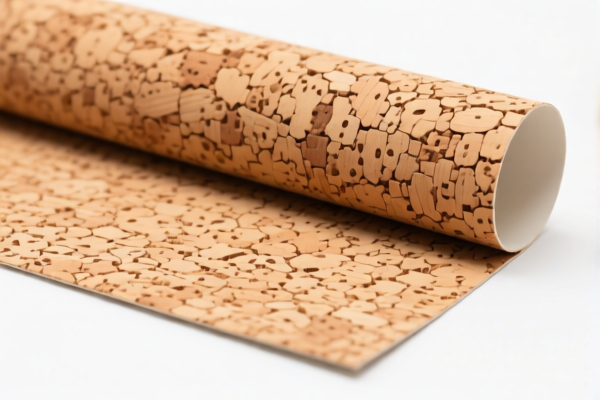
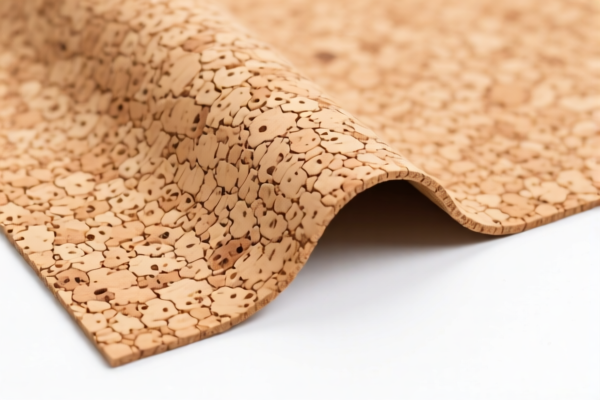
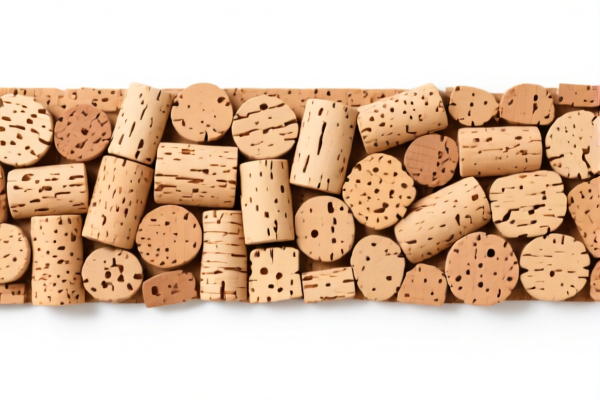
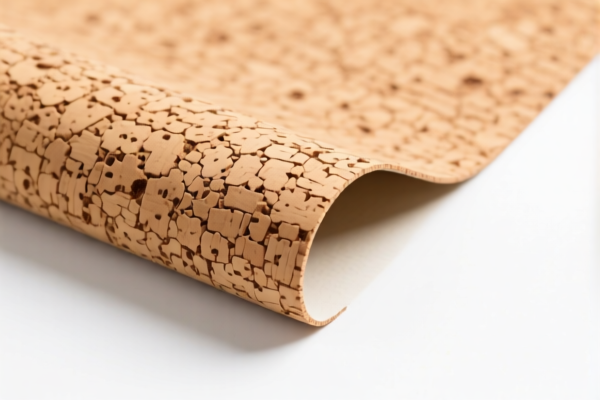
AI Analysis
🧱 Natural Cork Wall Sticker (Paintable)
🌐 HS Code Reference & Clearance Guide | 2026 Latest Tariff Rules | Professional Customs Clearance Strategy
📌 1. Product Definition: What Exactly Is a “Natural Cork Wall Sticker”?
Cork is a natural, eco-friendly material harvested from the bark of the Quercus suber (cork oak) tree, primarily grown in Mediterranean countries like Portugal, Spain, and Italy.
Cork is lightweight, compressible, insulating, water-resistant, and recyclable, making it ideal for decorative, acoustic, and insulation applications.
A Natural Cork Wall Sticker is typically: - A thin sheet or roll of natural cork - May be pre-cut into shapes or patterns - Often backed with adhesive (self-adhesive) - Paintable surface for customization - Used for interior decoration, acoustic dampening, thermal insulation, or DIY wall coverings
🎯 Key Classification Question:
Is it classified as a natural cork product (Chapter 45) or as an adhesive product/other manufacture (Chapter 39, 48, or 63)?
📦 2. HS Code Classification Breakdown (2026)
| HS Code | Product Description | Applicable Use | Adhesive? | Paintable? |
|---|---|---|---|---|
4504.10.40.00 |
Natural cork, unworked, worked, or merely prepared; cork granules, chips, powder | Raw or minimally processed cork sheets/rolls | ❌ No | ✅ Yes |
4504.10.47.00 |
Other natural cork articles, including tiles, panels, sheets, stickers | Decorative cork products, wall stickers, insulation panels | ❌ No (if no adhesive backing) | ✅ Yes |
3919.10.00.00 |
Self-adhesive plates, sheets, film, foil, tape, etc. of plastics | If cork is laminated with plastic backing and self-adhesive | ✅ Yes | ⚠️ Depends |
4823.90.00.00 |
Other paper products, including cork-backed paper | If cork is bonded to paper backing | ❌ No | ✅ Yes |
6307.90.00.00 |
Other made-up articles, including wall coverings | If cork is used as a wall covering in finished form | ❌ No | ✅ Yes |
🔍 Critical Distinction:
- If the product is pure natural cork, even if cut into shapes or stickers, it falls under Chapter 45.
- If it has an adhesive backing, plastic lamination, or paper backing, it may shift to Chapters 39, 48, or 63.
💰 3. 2026 Latest Tariff Rates (US Market)
✅ Applicable Country: United States (US)
✅ Country of Origin: China (CN)
✅ Effective Date: November 10, 2025 (including subsequent imports)
🎯 1. 4504.10.40.00 —— Natural Cork, Unworked or Minimally Processed
| Item | Content |
|---|---|
| Base Tariff Rate | 0% (ad valorem) |
| USITC Additional Tariff | +25% (from USITC Footnote 9903.88.01) |
| IEEPA Additional Tariff | +10% (for China/HK products, effective Nov 10, 2025) |
| Total Tariff Rate | 35% |
| Tax Calculation | CIF Value × 35% |
| De Minimis Exemption Eligible? | ❌ No (deny_de_minimis) |
| Legal Basis Path | IEEPA:9903.01.25 → IEEPA:9903.01.24 → USITC:4504.10.40.00 → FOOTNOTE:9903.88.01 |
📌 Note:
- “25% USITC tariff” comes from the Section 301 tariffs under the US Trade Act; - “10% IEEPA tariff” is the International Emergency Economic Powers Act surcharge on Chinese goods; - Total 35%, which is high, but lower than electronics or machinery.
🎯 2. 4504.10.47.00 —— Other Natural Cork Articles (Including Stickers, Tiles, Panels)
| Item | Content |
|---|---|
| Base Tariff Rate | 0% |
| USITC Additional Tariff | +25% |
| IEEPA Additional Tariff | +10% |
| Total Tariff Rate | 35% |
| Tax Calculation | CIF × 35% |
| De Minimis Exemption Eligible? | ❌ No |
| Legal Basis Path | IEEPA:9901.25 → IEEPA:9903.01.24 → USITC:4504.10.47.00 → FOOTNOTE:9903.88.01 |
📌 Note:
- Same tariff rate as above; - Applies to cork stickers, tiles, panels, rolls, even if pre-cut or patterned; - If no adhesive backing, still classified under Chapter 45.
🎯 3. 3919.10.00.00 —— Self-Adhesive Plastic Products (If Cork is Laminated with Plastic)
| Item | Content |
|---|---|
| Base Tariff Rate | 0% |
| USITC Additional Tariff | +25% |
| IEEPA Additional Tariff | +10% |
| Total Tariff Rate | 35% |
| Tax Calculation | CIF × 35% |
| De Minimis Exemption Eligible? | ❌ No |
| Legal Basis Path | IEEPA:9903.01.25 → IEEPA:9903.01.24 → USITC:3919.10.00.00 → FOOTNOTE:9903.88.01 |
📌 Note:
- If the cork is bonded to plastic backing and is self-adhesive, it may be classified under Chapter 39; - Same tariff rate, but classification changes.
🛠️ 4. Clearance实操建议 (Practical Clearance Tips)
✅ 1. Documentation Checklist (All Required)
| Document | Must Provide | Notes |
|---|---|---|
| ✅ Product Specification Sheet | ✔️ | Include dimensions, thickness, material composition, adhesive type (if any) |
| ✅ Material Composition Certificate | ✔️ | Must confirm ≥90% natural cork for Chapter 45 classification |
| ✅ Product Photos (with label) | ✔️ | Show front, back, packaging, and any adhesive backing |
| ✅ Third-Party Testing Report | ✔️ | ISO 14001, REACH, RoHS (if applicable), fire safety |
| ✅ Commercial Invoice | ✔️ | Clearly state “Natural Cork Wall Sticker, Paintable” |
| ✅ Certificate of Origin (CO) | ✔️ | If non-Chinese origin, claim preferential tariff |
| ✅ Packing List | ✔️ | Detail inner/outer packaging, avoid split shipment claims |
✅ 2. Declaration Tips (Key Rules)
🔥 “Pure Cork → Ch.45, Adhesive Backing → Ch.39/48, Name It Right → Tariff Halved!”
| Scenario | Correct HS Code | Wrong Practice |
|---|---|---|
| Pure natural cork sticker (no adhesive) | 4504.10.47.00 |
Misdeclare as “wall covering” → 45% |
| Cork sticker with self-adhesive backing | 3919.10.00.00 |
Misdeclare as “cork article” → 35% |
| Cork-backed paper sticker | 4823.90.00.00 |
Misdeclare as “natural cork” → 35% |
| Decorative cork panel | 4504.10.47.00 |
Misdeclare as “plastic film” → 45% |
✅ 3. Special Cases
| Scenario | Handling Advice |
|---|---|
| OEM Custom Cork Stickers | Provide client order + design specs, avoid “non-standard” classification |
| Cork with Fabric Backing | May fall under Chapter 63 (textiles), not Chapter 45 |
| Cork Stickers for Acoustic Panels | If part of a larger system, declare as “acoustic insulation material” |
| Cork Stickers for Medical Use | If for medical walls, may require FDA registration or ISO 13485 |
🌍 5. Global Market Comparison (2026)
| Country/Region | Recommended HS Code | Tariff | Certification | Notes |
|---|---|---|---|---|
| 🇺🇸 USA | 4504.10.47.00 |
35% (China origin) | REACH + RoHS | High tariff, but lower than electronics |
| 🇨🇳 China | 4504.10.47.00 |
5% | CCC + RoHS | No additional surcharge |
| 🇪🇺 EU | 4504.10.47.00 |
0% (if CE compliant) | CE + EPR | No surcharge |
| 🇦🇺 Australia | 4504.10.47.00 |
5% | RCM | No surcharge |
| 🇯🇵 Japan | 4504.10.47.00 |
0% | PSE | No surcharge |
📌 Conclusion:
- USA is the only market with high additional tariffs on cork products; - Chinese-origin cork stickers face 35% tariff in the US, but 0–5% in other major markets.
📌 6. Common Mistakes & Pitfalls (Blood Lessons)
❌ Mistake 1: Declaring “cork sticker” as “wall covering”
👉 Consequence: Tariff jumps from 35% to 45% → extra 10% tax!
❌ Mistake 2: Using “plastic film” as declaration name for cork-backed sticker
👉 Consequence: Misclassification → 25% penalty + delay
❌ Mistake 3: Not specifying adhesive backing
👉 Consequence: Customs reclassifies → additional 10% IEEPA tariff
❌ Mistake 4: Using “cork tile” for a thin sticker
👉 Consequence: Classification error → audit + back taxes
✅ Correct Declaration Example:
“Natural Cork Wall Sticker, Paintable, 3mm Thickness, No Adhesive Backing, Model XYZ, REACH & RoHS Compliant”
🎯 7. Final Tips: Save Time, Save Money, Stay Compliant!
🎯 Remember the Golden Rules:
🔹 “Pure Cork → Ch.45, Adhesive → Ch.39/48, Name It Right → Tariff Halved!”
🔹 “HS Code is Life, Tariff Differs by 10 Points, Declaration Saves Thousands!”
📌 Pro Tip:
If your cork stickers are originating from Portugal, Spain, Morocco, or Thailand, you may qualify for IEEPA exemption, with tariffs as low as 0–5%.
Apply for an Advance Ruling (AR) before shipment to avoid clearance delays.
📣 Immediate Action Plan:
📞 Contact a licensed customs broker + Provide product images + Apply for HS Code Pre-Ruling
🚀 Let your cork stickers clear smoothly, boost profits, and expand globally!
✨ Professional clearance starts with accurate classification!
💼 Every penny of cost deserves precise calculation!
Customer Reviews
About HS Code Classification
The Harmonized System (HS) is an internationally standardized nomenclature developed by the World Customs Organization (WCO) to classify traded products. Over 200 countries use the HS system as the basis for customs tariffs, trade statistics, and import/export regulations.
Each HS code follows a hierarchical structure:
- Chapter (2 digits) — Broad category of goods (e.g., Chapter 84: Machinery and Mechanical Appliances)
- Heading (4 digits) — More specific grouping within the chapter
- Subheading (6 digits) — Internationally standardized breakdown, used by all WCO member countries
- National subdivisions (8-10 digits) — Country-specific extensions for further classification, such as US HTSUS 10-digit codes
Correct HS code classification is essential for smooth customs clearance, accurate duty payment, and compliance with trade regulations. Misclassification can lead to customs delays, overpayment of duties, or penalties.
When importing from CN to US, the applicable tariff rates may include:
- Most-Favored-Nation (MFN) rate — The standard duty rate applied to WTO members
- General rate — Applied to countries without trade agreements
- Trade remedy duties — Additional tariffs such as Section 301 (anti-dumping), Section 232 (national security), or countervailing duties
The information provided on this page is for reference purposes only. For official classification, please consult with your local customs authority or a licensed customs broker.