Natural Cowhide Split Leather
CN → US| HS Code | Tariff Rate | Origin | Destination | Doc |
|---|---|---|---|---|
| 411190 | 0.0% | CN | US | Official Doc |
| 411290 | 0.0% | CN | US | Official Doc |
| 4202213000 | 40.3% | CN | US | Official Doc |
| 4202216000 | 45.0% | CN | US | Official Doc |
| 9401991010 | 17.5% | CN | US | Official Doc |
| 9401999021 | 35.0% | CN | US | Official Doc |
| 4107122000 | 37.4% | CN | US | Official Doc |
| 4107926050 | 13.3% | CN | US | Official Doc |
Product Images
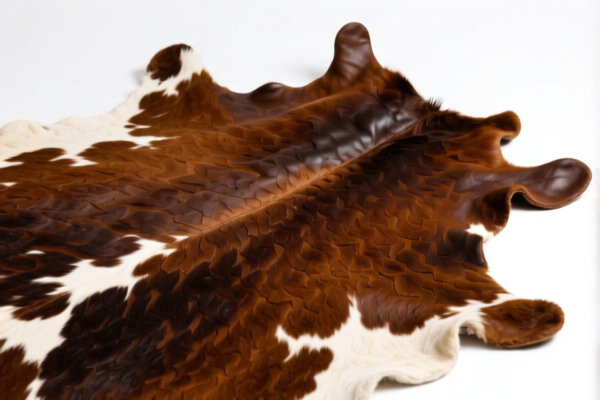

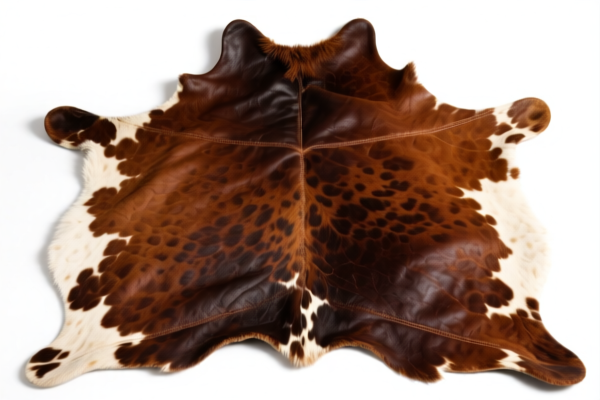
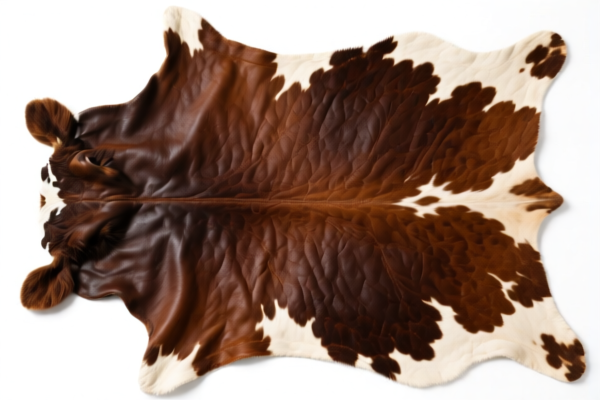
AI Analysis
🐄 Natural Cowhide Split Leather (Untanned & Unworked)
🌐 HS Code Reference & Customs Clearance Guide | 2026 Latest Tariff Analysis | Professional Entry Strategy
📌 I. Product Definition: What Exactly is "Natural Cowhide Split Leather"?
Natural Cowhide Split Leather refers to the lower layers of a bovine hide that have been mechanically or chemically split from the grain layer (the top, most durable layer). It is in its preliminary state: 1. Limed: Treated with lime to remove hair and non-collagenous proteins. 2. Crust/Split: Further processed to separate layers but not yet tanned, dyed, or finished for final use. 3. Exclusions: It explicitly excludes leather intended for footwear or gloves (which have specific sub-headings) and upholstery leather.
⚠️ Key Distinction:
- If the leather is tanned, dyed, or finished (e.g., suede, nubuck), it falls under Heading 4107.
- If it is only limed or split (raw state), it falls under Heading 4111 or 4112.
- If it is intended for footwear/gloves, it is excluded from these specific "Other" headings.
📦 II. HS Code Classification Details (2026 Tariff Authority)
Based on the data provided, Natural Cowhide Split Leather in its raw, unworked, or merely limed/split state is classified under two primary HS Codes. The critical differentiator is the degree of further preparation.
| HS Code | Product Description | Key Characteristics | Tax Status |
|---|---|---|---|
| 4111.90 | Other split leather, whether or not reconstituted. Specifically: Natural cowhide split leather, not further worked than limed, crust, or split. Excludes leather for footwear or gloves. | - Limed or split only. - No tanning/dyeing. - Not for shoes/gloves. |
⚠️ Error: Failed to retrieve tax information. |
| 4112.90 | Other leather, not further worked than limed, crust, or split, including split leather. Natural cowhide split leather. Excludes leather for upholstery or similar uses. | - Limed or split only. - Not for upholstery. - General industrial/use cases. |
⚠️ Error: Failed to retrieve tax information. |
🔍 Critical Note on Tax Data:
The source data indicates "Failed to retrieve tax information" for HS Codes4111.90and4112.90.
- This does not mean the tax is 0%.
- It means the automated system could not fetch the current duty rate.
- Action Required: You MUST verify the current MFN (Most Favored Nation) or General Rate duty with a licensed customs broker, as these rates vary significantly by country (e.g., US, EU, China).
💰 III. Understanding the "Other" Leather Categories (Contextual Tax Rates)
While the raw split leather itself has missing tax data in this dataset, the following HS Codes represent further prepared leathers or finished goods made from similar materials. These examples show how tariffs increase with value addition.
🎯 1. HS Code 4107.12.20.00 – Further Prepared Leather (Bovine Grain Splits)
- Description: Leather further prepared after tanning or crusting (parchment-dressed), bovine/equine, no hair, grain splits, ≤28 sq ft, not fancy.
- Tax Breakdown:
- Base Duty: 2.4%
- Additional Duty: 25.0%
- Total Tax: 27.4%
- Insight: Once the leather is tanned and prepared, it becomes subject to specific higher tariffs (e.g., Section 301 duties for US imports from China).
🎯 2. HS Code 4107.92.60.50 – Sole Leather (Prepared)
- Description: Other prepared bovine/equine leather, grain splits, upper/sole leather.
- Tax Breakdown:
- Base Duty: 0.0%
- Additional Duty: 0.0%
- Total Tax: 0.0%
- Insight: Specific uses like "sole leather" may qualify for zero duty under certain trade agreements or national policies.
🛠️ IV. Customs Clearance Practical Advice (Avoiding Pitfalls)
✅ 1. Documentation Requirements (Essential)
Since the tax data for raw split leather (4111.90 / 4112.90) is missing/errored, precise documentation is your best defense against delays.
| Document | Purpose | Details |
|---|---|---|
| Commercial Invoice | Declare accurate value | Must clearly state "Natural Cowhide Split Leather, Limed/Unworked" |
| Product Specification | Prove "Unworked" Status | Provide lab tests or mill certificates confirming NO tanning, dyeing, or finishing |
| Usage Declaration | Exclude Footwear/Gloves | Explicitly state: "NOT INTENDED FOR FOOTWEAR OR GLOVES" |
| Packing List | Weight/Quantity | Include gross/net weights; split leather is often sold by weight |
✅ 2. Classification Strategy (Do Not Misclassify!)
| Scenario | Correct HS Code | Risk of Misclassification |
|---|---|---|
| Raw Split (Limed Only) | 4111.90 or 4112.90 |
❌ High Risk: If classified as 4107 (Tanned), you may face 27.4% duty instead of the unknown (potentially lower) rate for raw leather. |
| Tanned/Dyed Split | 4107.12.20.00 |
✅ Clear: Tax is 27.4%. Do not use 4111/4112. |
| For Footwear/Gloves | Excluded from 4111/4112 |
❌ Penalty: Misdeclaring footwear leather as "other" can lead to seizure or heavy fines. |
| For Upholstery | Excluded from 4112.90 |
❌ Penalty: Must find the correct HS for upholstery leather (often 4113 or similar). |
✅ 3. Special Customs Tips
📌 Tip 1: Verify the "Footwear/Glove" Exclusion
The HS Codes4111.90and4112.90explicitly exclude leather for footwear or gloves.
- If your split leather is intended for shoes, you MUST use a different HS Code (e.g., in Chapter 41 under footwear-specific headings).
- Misclassification here is a customs error and can delay shipments.📌 Tip 2: "Reconstituted Leather" vs. "Natural Split"
-4111.90includes "reconstituted" leather.
- If your product is bonded leather (shredded leather + binder), it still falls under4111.90.
- Ensure your invoice distinguishes between "Natural Split" and "Reconstituted" if required by local customs.📌 Tip 3: Address the "Tax Error"
- Since the system returns "Failed to retrieve tax information" for4111.90/4112.90, do not assume 0% tax.
- Action: Contact a customs broker to manually check the duty rate for your specific country of import.
- In the US, raw leather may have a MFN duty of 0-4%, but if from China, Section 301 additional duties (25%) may apply.
🌍 V. Global Market Comparison (2026 Estimates)
| Country | HS Code (Raw Split) | Estimated Base Duty | Additional Duty (China-Origin) | Total Estimate |
|---|---|---|---|---|
| 🇺🇸 USA | 4111.90 / 4112.90 |
0-4% (MFN) | +25% (Section 301) | 25-29% |
| 🇨🇳 China | 4111.90 |
~4-6% | N/A | ~4-6% |
| 🇪🇺 EU | 4111.90 |
0-5% | N/A | 0-5% |
| 🇬🇧 UK | 4111.90 |
0-6% | N/A | 0-6% |
📌 Conclusion:
- USA: Highest risk due to 25% additional tariff on Chinese leather products.
- EU/UK: Generally lower tariffs for raw leather, but rules of origin must be strictly observed.
- China: Moderate tariffs, but import licenses may be required for certain leather types.
📌 VI. Common Errors & Pitfalls (Lessons Learned)
❌ Error 1: Classifying Tanned/Dyed split leather as 4111.90
👉 Consequence: Underpaying duties. The correct code is 4107.12.20.00 (27.4% tax).
👉 Fix: Always confirm if the leather is tanned.
❌ Error 2: Ignoring the Footwear/Glove Exclusion
👉 Consequence: Customs seizure or fines.
👉 Fix: If for shoes, use the specific footwear leather HS Code.
❌ Error 3: Assuming "Tax Error" = "0 Tax"
👉 Consequence: Unexpected bills upon manual review.
👉 Fix: Manually verify the duty rate with a broker.
✅ Correct Practice:
"Natural Cowhide Split Leather, Limed, Not Tanned, Not for Footwear/Gloves, HS 4111.90. Verify Duty Rate Pre-Shipment."
🎯 VII. Conclusion: Precision is Profit
🎯 Remember the Golden Rule:
🔹 "Raw Split = 4111/4112 (Check Duty!) "
🔹 "Tanned Split = 4107 (27.4% Tax) "
🔹 "For Shoes/Gloves = Use Specific Codes"
🔹 "Never Assume 0% Tax on 'Error' Codes"
📌 Pro Tip:
📞 Contact a Customs Broker before shipping.
📄 Provide a Sample for classification if unsure.
🚀 Save 25% in duties by correct classification and early verification.
✨ Professional Clearance Starts with Accurate Classification!
💼 Your Leather’s Value Depends on Your HS Code!
Customer Reviews
About HS Code Classification
The Harmonized System (HS) is an internationally standardized nomenclature developed by the World Customs Organization (WCO) to classify traded products. Over 200 countries use the HS system as the basis for customs tariffs, trade statistics, and import/export regulations.
Each HS code follows a hierarchical structure:
- Chapter (2 digits) — Broad category of goods (e.g., Chapter 84: Machinery and Mechanical Appliances)
- Heading (4 digits) — More specific grouping within the chapter
- Subheading (6 digits) — Internationally standardized breakdown, used by all WCO member countries
- National subdivisions (8-10 digits) — Country-specific extensions for further classification, such as US HTSUS 10-digit codes
Correct HS code classification is essential for smooth customs clearance, accurate duty payment, and compliance with trade regulations. Misclassification can lead to customs delays, overpayment of duties, or penalties.
When importing from CN to US, the applicable tariff rates may include:
- Most-Favored-Nation (MFN) rate — The standard duty rate applied to WTO members
- General rate — Applied to countries without trade agreements
- Trade remedy duties — Additional tariffs such as Section 301 (anti-dumping), Section 232 (national security), or countervailing duties
The information provided on this page is for reference purposes only. For official classification, please consult with your local customs authority or a licensed customs broker.