Natural Flake Graphite Ore
CN → US| HS Code | Tariff Rate | Origin | Destination | Doc |
|---|---|---|---|---|
| 2504105000 | 35.0% | CN | US | Official Doc |
| 2504101000 | 35.0% | CN | US | Official Doc |
Product Images
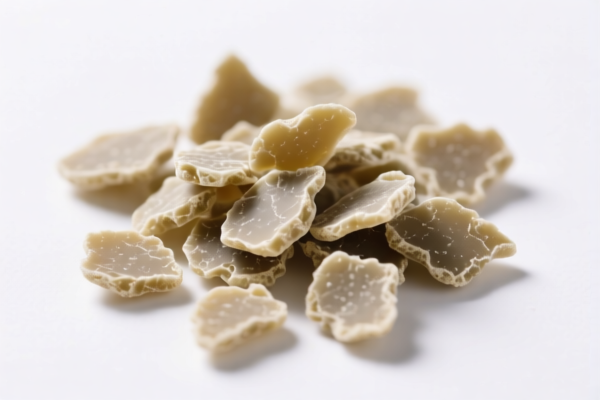
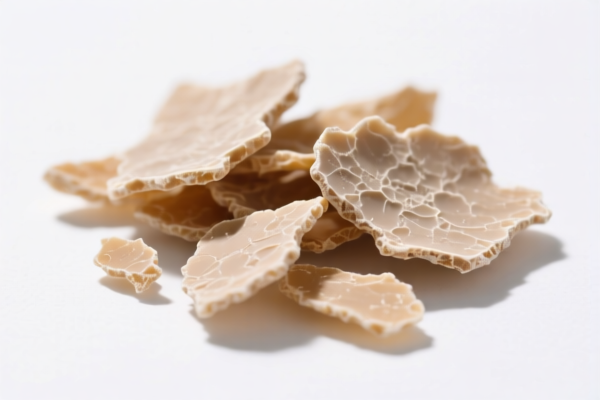
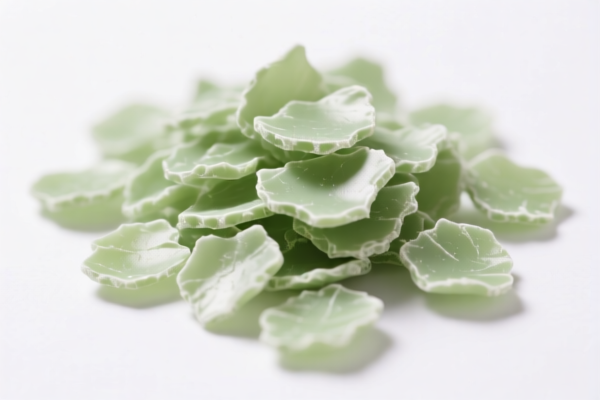
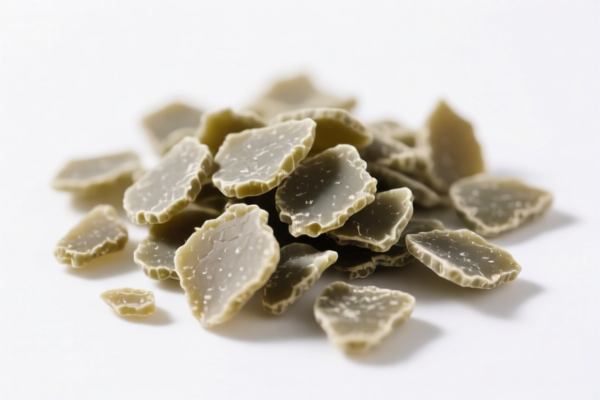
AI Analysis
🏔️ Natural Flake Graphite Ore (Natural Graphite: Crystalline Flake)
🌐 HS Code Reference & Customs Clearance Guide | 2026 Latest Tariff Analysis | Professional Strategy
📌 I. Product Definition & Classification: Do You Really Know "Natural Flake Graphite"?
Natural Graphite is a valuable non-metallic mineral resource, primarily used in lithium-ion batteries, lubricants, refractories, and sealing materials. In international trade, it is strictly categorized by its physical form and crystal structure. For this specific query, we focus on "Crystalline Flake Graphite", which is distinct from powdered graphite or generic flake dust.
Key Distinction:
- Crystalline Flake (Not Dust): Discrete, visible crystalline structures suitable for high-value applications (e.g., battery anodes). → HS Code 2504.10.10.00
- Other (Powder/Dust): Fine particles, often by-products or lower purity. → HS Code 2504.10.50.00
⚠️ Critical Clarification:
- If the product consists of visible, discrete flakes (even if mixed with some fine material, provided the flakes are the primary characteristic and not classified as "dust"), it falls under 2504.10.10.00.
- If the product is largely fine powder or "flake dust" (where the flake structure is negligible or destroyed), it falls under 2504.10.50.00.
- Note: The term "Ore" in common parlance often refers to the raw mined product. However, under HS Chapter 25, natural graphite is classified based on its form (powder/flake), not necessarily its "ore" status if it has been beneficiated/mined. The key is the physical state.
📦 II. HS Code Classification Details (2026 Latest Tariff Authority)
| HS Code | Product Description | Applicable Scenario | Physical State |
|---|---|---|---|
2504.10.10.00 |
Natural graphite: In powder or in flakes: Crystalline flake (not including flake dust) | High-purity battery-grade graphite, lubricant-grade flakes, refractory materials | ✅ Crystalline Flake (Distinct crystals) |
2504.10.50.00 |
Natural graphite: In powder or in flakes: Other | Generic graphite powder, graphite dust, mixed flake/powder where flakes are not dominant | ❌ Powder/Dust (Fine particles) |
🔍 Key Reminder:
- "Crystalline Flake" is a premium category. It commands higher prices and has a specific HS code.
- "Other" is a catch-all for non-flake forms. Misclassifying flakes as "Other" can lead to customs scrutiny or penalties.
- Do not confuse with "Synthetic Graphite" (which falls under Chapter 38 or 3801). This guide is for Natural graphite only.
💰 III. 2026 Latest Tariff Rate Details (Including Additional Taxes)
✅ Applicable Country: United States (US)
✅ Country of Origin: China (CN)
✅ Effective Date: From November 10, 2025 (and subsequent imports)
🎯 1. 2504.10.10.00 —— Natural Graphite: Crystalline Flake (Not Including Flake Dust)
| Item | Details |
|---|---|
| Base Tariff Rate | 0.0% (ad valorem) |
| Additional Tariff (Section 301) | +25.0% |
| Total Tariff Rate | 25.0% |
| Tax Calculation | CIF Value × 25% |
| De Minimis Exemption | ❌ Not Applicable (High-value mineral goods typically excluded or too high value) |
| Legal Basis | HTSUS 2504.10.10.00 + Section 301 List 4C |
📌 Explanation:
- Base Rate: 0% because natural graphite is a raw mineral resource with no base US tariff under normal trade relations.
- Section 301 Tariff: A 25% additional duty is applied to all natural graphite from China under the US Trade Representative’s Section 301 investigation.
- Total Cost: Importers must budget for a 25% total tariff on the CIF value.
- No Base Tax: Do not assume any base duty; the entire cost is driven by the Section 301 surcharge.
🎯 2. 2504.10.50.00 —— Natural Graphite: Other (Powder/Dust)
| Item | Details |
|---|---|
| Base Tariff Rate | 0.0% (ad valorem) |
| Additional Tariff (Section 301) | +25.0% |
| Total Tariff Rate | 25.0% |
| Tax Calculation | CIF Value × 25% |
| De Minimis Exemption | ❌ Not Applicable |
| Legal Basis | HTSUS 2504.10.50.00 + Section 301 List 4C |
📌 Note:
- The tariff rate is identical to crystalline flakes.
- The distinction lies in customs verification of the product form. Customs may require physical inspection or lab tests to confirm whether it is "flake" or "other."
🛠️ IV. Customs Clearance Practical Advice (Battle-Tested Pitfall Guide)
✅ 1. Required Documentation Checklist (Non-Negotiable)
| Document | Must Provide | Details |
|---|---|---|
| ✅ Product Specification Sheet | ✔️ | Must clearly state "Crystalline Flake" vs. "Powder". Include mesh size, C-content, Fe-content, and moisture level. |
| ✅ Product Photos | ✔️ | Clear macro photos showing flake structure. If it looks like sand/powder, it may be classified as "Other." |
| ✅ Commercial Invoice | ✔️ | Description must match HS Code exactly: e.g., "Natural Graphite, Crystalline Flake, 99% C, 200 Mesh" |
| ✅ Packing List | ✔️ | Weight and dimensions. Ensure no contamination from other materials. |
| ✅ Certificate of Origin (CO) | ✔️ | Essential for proving origin (China) to apply the correct 25% Section 301 tariff. |
| ✅ Lab Test Report | ✔️ | Optional but recommended for disputes. Proves the material is natural graphite, not synthetic. |
✅ 2. Declaration Tips (Key Mnemonics)
🔥 “Flake is Flake, Dust is Dust, 25% Tax on Both, Just Choose Right!”
| Scenario | Correct Declaration | Incorrect Practice |
|---|---|---|
| Visible Flakes (Battery Grade) | 2504.10.10.00 "Crystalline Flake" |
Calling it "Other" or "Powder" → Risk of reclassification or audit |
| Fine Powder/Dust (Lubricant Grade) | 2504.10.50.00 "Graphite Powder" |
Calling it "Flake" → Misclassification, potential penalty |
| Mixed Bulk | Disclose Mix | Hiding the presence of dust → Customs may reclassify as "Other" (higher scrutiny) |
| Synthetic Graphite | Not Chapter 25 | Declaring as "Natural" → Fraud, severe penalties |
✅ 3. Special Handling
| Situation | Handling Advice |
|---|---|
| OEM Custom Mesh Size | Specify mesh size in description (e.g., "80-200 Mesh Flake"). Ensure it’s still recognizable as "flakes." |
| High Purity (>99% C) | Still natural graphite. Do not confuse with processed graphite anodes (which may fall under different chapters). |
| Dust Contamination | If flakes contain >5% dust, declare as "Crystalline Flake" but be prepared for customs to test if it’s predominantly "flake." |
| Origin Marking | Clearly mark "Made in China" on packaging. Section 301 tariffs are origin-specific. |
🌍 V. Global Market Comparison (2026 Latest)
| Country/Region | Recommended HS Code | Tariff (China Origin) | Key Certification/Requirement | Notes |
|---|---|---|---|---|
| 🇺🇸 USA | 2504.10.10.00 / 2504.10.50.00 |
25% (Total) | None specific, but Section 301 applies | Highest duty among major markets |
| 🇨🇳 China | 2504.10.10.00 / 2504.10.50.00 |
0% (Export) | N/A | China is a major exporter; no export tax |
| 🇪🇺 EU | 2504.10.10.00 / 2504.10.50.00 |
0% | REACH Registration | No additional tariffs; REACH compliance needed |
| 🇮🇳 India | 2504.10.10.00 / 2504.10.50.00 |
5% - 10% | BIS Certification | Lower tariffs than US |
| 🇯🇵 Japan | 2504.10.10.00 / 2504.10.50.00 |
0% | JIS Standards | No additional tariffs |
📌 Conclusion:
- USA is the most expensive market due to the 25% Section 301 tariff.
- EU and Japan offer tariff-free access (0%), making them more attractive for Chinese graphite exporters.
- Strategic Recommendation: If targeting the US, consider supply chain diversification (e.g., sourcing from Mozambique, Brazil, or Canada) to avoid the 25% duty.
📌 VI. Common Mistakes & Pitfalls (Lessons Learned)
❌ Mistake 1: Calling "Graphite Powder" "Flake" to avoid scrutiny
👉 Consequence: Customs inspection reveals dust → Reclassification + Penalty + Delay.
❌ Mistake 2: Assuming "Natural Graphite" is exempt from tariffs
👉 Consequence: 25% Section 301 tax applies to all natural graphite from China. No exemption for raw minerals.
❌ Mistake 3: Confusing Natural with Synthetic Graphite
👉 Consequence: Synthetic graphite falls under HS 3801.90.00 or other chapters, with different tariffs. Misclassification leads to fraud charges.
❌ Mistake 4: Ignoring Mesh Size in Description
👉 Consequence: Customs cannot verify if it’s "flake" or "dust" → Delay for lab testing.
✅ Correct Declaration Example:
"Natural Graphite, Crystalline Flake, 99% Carbon Content, 200 Mesh, For Lithium Battery Anode, Made in China"
🎯 VII. Conclusion: Precision in Classification Saves Costs!
🎯 Key Takeaway:
🔹 "Flake is 25%, Powder is 25% – But Proof Matters!"
🔹 "Section 301 Hits Hard: 25% on All Chinese Natural Graphite to US"
🔹 "Don’t Misclassify: Flake vs. Powder Can Cost You Delays, Not Money"
📌 Pro Tip:
If your graphite is sourced from non-China countries (e.g., Brazil, Mozambique, Madagascar), the 25% Section 301 tariff does NOT apply.
- Strategy: Consider third-country sourcing or assembly to avoid US duties.
- Action: Get a Certificate of Origin from a non-China source for US shipments.
📣 Immediate Action:
📞 Consult a licensed customs broker.
📄 Prepare detailed product specs (Mesh size, C-content, Flakes vs. Dust).
🚀 Avoid the 25% US Tax by optimizing your supply chain!
✨ Professional Clearance, Start with Accurate Classification!
💼 Every Percent of Tariff Counts in Mineral Trade!
Customer Reviews
About HS Code Classification
The Harmonized System (HS) is an internationally standardized nomenclature developed by the World Customs Organization (WCO) to classify traded products. Over 200 countries use the HS system as the basis for customs tariffs, trade statistics, and import/export regulations.
Each HS code follows a hierarchical structure:
- Chapter (2 digits) — Broad category of goods (e.g., Chapter 84: Machinery and Mechanical Appliances)
- Heading (4 digits) — More specific grouping within the chapter
- Subheading (6 digits) — Internationally standardized breakdown, used by all WCO member countries
- National subdivisions (8-10 digits) — Country-specific extensions for further classification, such as US HTSUS 10-digit codes
Correct HS code classification is essential for smooth customs clearance, accurate duty payment, and compliance with trade regulations. Misclassification can lead to customs delays, overpayment of duties, or penalties.
When importing from CN to US, the applicable tariff rates may include:
- Most-Favored-Nation (MFN) rate — The standard duty rate applied to WTO members
- General rate — Applied to countries without trade agreements
- Trade remedy duties — Additional tariffs such as Section 301 (anti-dumping), Section 232 (national security), or countervailing duties
The information provided on this page is for reference purposes only. For official classification, please consult with your local customs authority or a licensed customs broker.