Natural Gas Based Rapid Curing Adhesive
CN → US| HS Code | Tariff Rate | Origin | Destination | Doc |
|---|---|---|---|---|
| 3506915000 | 37.1% | CN | US | Official Doc |
| 3506990000 | 37.1% | CN | US | Official Doc |
| 3824994900 | 41.5% | CN | US | Official Doc |
| 3824999397 | 40.0% | CN | US | Official Doc |
Product Images
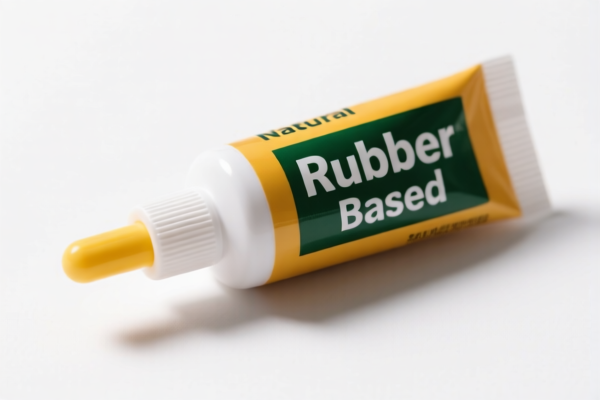
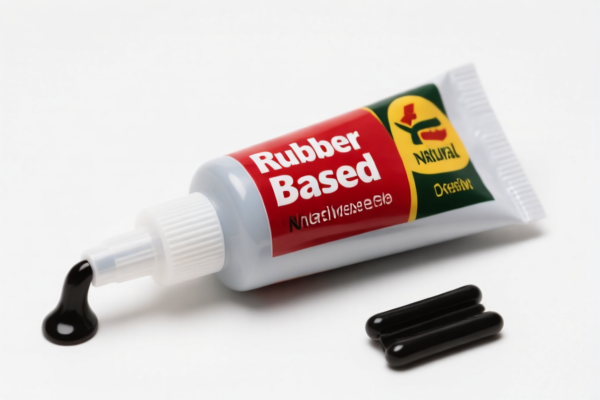
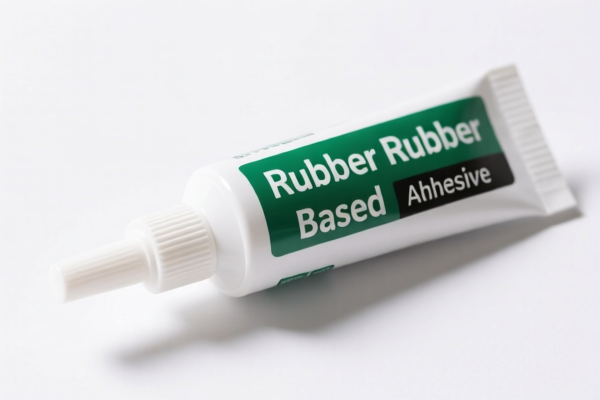
AI Analysis
🧪 Natural Gas Based Rapid Curing Adhesive (天然气基改性胶粘剂)
🌐 HS Code Classification & Customs Clearance Guide | 2026 Latest Tariff Analysis | Professional Strategy for US Imports
Natural Gas Based Rapid Curing Adhesive is a specialized chemical product where the raw material (hydrocarbons) is derived from natural gas, and the formula is modified for rapid curing properties. In international trade, its classification hinges on whether it is primarily defined as a preparatory adhesive (Chapter 35) or a miscellaneous chemical preparation (Chapter 38).
⚠️ Key Distinction Point: - If the product’s core identity is that of an adhesive (bonding agents), it typically falls under Chapter 35 (3506.xx). - If the product is a chemical mixture/preparation not primarily characterized as an adhesive in specific sub-headings, or if it fits the "other" category for chemical preparations, it may fall under Chapter 38 (3824.xx).
📦 1. HS Code Classification Matrix (2026 Latest Tariff Authority)
Based on the provided data, there are four potential HS Codes. The choice depends on the specific chemical composition and primary function declared.
| HS Code | Product Description | Taxonomic Logic | Applicable Scenario |
|---|---|---|---|
3506.91.50.00 |
Natural gas-based modified adhesive | Core material: Hydrocarbon polymer-based adhesive. | Primary use: Bonding. Classified under "Prepared adhesives based on polymers." |
3506.99.00.00 |
Natural gas-based modified adhesive | Core material: Adhesive formulation. | Primary use: Bonding. Classified under "Other prepared adhesives." |
3824.99.49.00 |
Natural gas-based modified adhesive | Source: Hydrocarbons from natural gas. | Primary use: Chemical preparation/adhesive alternative. Classified under "Other chemical preparations." |
3824.99.93.97 |
Natural gas-based modified adhesive | Nature: Unnamed mixture of chemical products. | Primary use: Generic chemical mix. Classified under "Other chemical products and preparations." |
🔍 Critical Insight: - Chapter 35 (3506) is generally preferred if the product is explicitly marketed and functionally an adhesive. - Chapter 38 (3824) is used if the product is a chemical formulation where the adhesive property is secondary or if it doesn't fit specific adhesive sub-categories. - Risk: Misclassification between Chapter 35 and 38 can lead to significant duty differences and customs delays.
💰 2. 2026 Latest Tariff Rate Breakdown (Including Surtaxes & Policy Add-ons)
✅ Applicable Country: United States (US)
✅ Country of Origin: China (CN)
✅ Effective Date: November 10, 2025 (and subsequent imports)
🎯 1. 3506.91.50.00 & 3506.99.00.00 —— Prepared Adhesives (Chapter 35)
| Item | Details |
|---|---|
| Base Tariff Rate | 2.1% (ad valorem) |
| USITC Surtax (Section 301) | +25.0% |
| 122 Clause Tariff | +10.0% |
| Total Effective Rate | 37.1% |
| Tax Calculation | CIF Value × 37.1% |
| De Minimis Exemption | ❌ Not Applicable (High-risk category) |
| Legal Path | Base Duty → Section 301 Tariff → 122 Clause Tariff |
📌 Explanation: - The 2.1% base duty is the standard MFN rate for prepared adhesives. - The 25% Section 301 tariff is the primary US-China trade war surcharge. - The 10% "122 Clause" tariff is an additional specific levy often applied to certain chemical/adhesive products under current trade enforcement policies. - Total: 37.1% is a high-cost classification. Cost planning must account for this burden.
🎯 2. 3824.99.49.00 —— Chemical Preparations (Chapter 38, Specific)
| Item | Details |
|---|---|
| Base Tariff Rate | 6.5% (ad valorem) |
| USITC Surtax (Section 301) | +25.0% |
| 122 Clause Tariff | +10.0% |
| Total Effective Rate | 41.5% |
| Tax Calculation | CIF Value × 41.5% |
| De Minimis Exemption | ❌ Not Applicable |
| Legal Path | Base Duty → Section 301 Tariff → 122 Clause Tariff |
📌 Explanation: - The 6.5% base duty is higher than Chapter 35, reflecting the "miscellaneous chemical preparation" status. - Combined with the same 25% + 10% surcharges, the 41.5% total rate is even higher than Chapter 35. - Recommendation: Avoid this classification if possible, as it increases cost by 4.4% compared to Chapter 35.
🎯 3. 3824.99.93.97 —— Chemical Preparations (Chapter 38, General)
| Item | Details |
|---|---|
| Base Tariff Rate | 5.0% (ad valorem) |
| USITC Surtax (Section 301) | +25.0% |
| 122 Clause Tariff | +10.0% |
| Total Effective Rate | 40.0% |
| Tax Calculation | CIF Value × 40.0% |
| De Minimis Exemption | ❌ Not Applicable |
| Legal Path | Base Duty → Section 301 Tariff → 122 Clause Tariff |
📌 Explanation: - The 5.0% base duty is lower than
3824.99.49.00. - Total rate is 40.0%, which is 2.9% higher than Chapter 35 options. - This classification is for "other chemical products" not specified elsewhere. If the product is clearly an adhesive, using this code may be challenged by customs as misclassification, leading to audits.
🛠️ 3. Customs Clearance Practical Advice (Real-World Pitfall Guide)
✅ 1. Documentation Checklist (Mandatory)
| Document | Required? | Notes |
|---|---|---|
| ✅ Product Specification Sheet | ✔️ | Must detail: Chemical composition, curing time, viscosity, and primary function (adhesion). |
| ✅ Safety Data Sheet (SDS) | ✔️ | Crucial for chemical imports. Must align with GHS standards. |
| ✅ Commercial Invoice | ✔️ | Must clearly state: "Natural Gas Based Rapid Curing Adhesive," HS Code, and Country of Origin (China). |
| ✅ Certificate of Origin (CO) | ✔️ | Needed to verify origin for surtax application. |
| ✅ Formulation Breakdown | ✔️ | If using Chapter 35, provide proof that the primary characteristic is "adhesive" (e.g., lab tests showing bonding strength). |
| ✅ 122 Clause Declaration | ✔️ | Ensure the invoice mentions compliance with any specific 122 clause requirements if applicable. |
✅ 2. Declaration Strategy (Key Tips)
🔥 "Function First, Composition Second, Origin Clear!"
| Scenario | Correct Declaration | Incorrect Practice |
|---|---|---|
| Clear Adhesive Use | 3506.91.50.00 or 3506.99.00.00 |
Using 3824.xx → Higher Duty (40-41.5%) |
| Unclear Function | Provide test reports proving adhesive properties | Vague description "Chemical Mixture" → Customs Rejection |
| Origin: China | Declare Origin as China | Misdeclare Origin → Penalties + Fraud Charges |
| Package: Bulk vs. Retail | Bulk: 3506.91.50.00; Retail: Check sub-codes |
Mixing bulk/retail codes → Valuation Issues |
✅ 3. Special Case Handling
| Scenario | Recommendation |
|---|---|
| OEM Adhesives | Provide customer order + technical specs. Ensure HS Code matches the final product, not just the raw material. |
| Modified Natural Gas Base | Emphasize the "modified" aspect in the description to justify Chapter 35 vs. 38. |
| Rapid Curing | Include curing time data in specs. This supports the "prepared adhesive" classification. |
| Customs Audit | If audited, provide lab tests showing tensile strength and bonding capacity to prove Chapter 35 applicability. |
🌍 4. Global Market Comparison (2026)
| Country/Region | Recommended HS Code | Tariff Rate | Notes |
|---|---|---|---|
| 🇺🇸 USA | 3506.91.50.00 |
37.1% | Highest cost due to 301 + 122 clauses. |
| 🇨🇳 China | 3506.91.50.00 |
~7-10%* | Export from China may have different export duties. |
| 🇪🇺 EU | 3506.91.00 |
6.5% | No 301-style surcharges. Lower cost. |
| 🇯🇵 Japan | 3506.91.00 |
6.0% | FTAA benefits may apply depending on origin. |
📌 Conclusion: - USA is the most expensive market for this product due to layered tariffs. - Chapter 35 (37.1%) is the most cost-effective among the US options provided. - Chapter 38 options (40-41.5%) should only be used if Chapter 35 is technically inapplicable.
📌 5. Common Errors & Pitfalls (Lessons Learned)
❌ Error 1: Classifying adhesive as 3824 to "avoid" Chapter 35 complexity
👉 Result: 41.5% duty vs. 37.1%. Unnecessary cost increase + audit risk.
❌ Error 2: Declaring "Chemical Mix" without adhesive proof
👉 Result: Customs may force reclassification or reject shipment due to lack of clear function.
❌ Error 3: Ignoring the 122 Clause
👉 Result: Underpayment of duty → Penalties + Back Taxes + Interest.
❌ Error 4: Vague Description "Adhesive"
👉 Result: Customs asks for clarification → Clearance Delays.
✅ Correct Practice:
"Rapid-Curing Adhesive, Natural Gas-Derived Hydrocarbon Base, Modified Formulation, For Industrial Bonding, Model XYZ, SDS Provided"
🎯 6. Final Recommendations: Professional Clearance, Cost Optimization!
🎯 Key Takeaway:
🔹 "Adhesive Function = Chapter 35 (37.1%).
🔹 "Chemical Mix = Chapter 38 (40-41.5%).
🔹 "Choose Chapter 35 to Save 3-4%!"
📌 Pro Tip: - If your product is exported from China, ensure the Certificate of Origin is accurate. - Consider applying for a Pre-Ruling from CBP (U.S. Customs) if the classification is ambiguous. This provides legal certainty. - Cost-Benefit Analysis: If possible, explore if any components can be sourced from non-China origins to mitigate Section 301 tariffs (though 122 Clause may still apply).
📣 Immediate Action:
📞 Consult a Customs Broker with chemical expertise.
📄 Prepare SDS + Technical Specs before shipping.
💡 Apply for CBP Pre-Ruling to lock in HS Code3506.91.50.00.
✨ Professional clearance starts with precise classification!
💼 Every percentage point of duty is a point of profit! Protect your margins!
Customer Reviews
About HS Code Classification
The Harmonized System (HS) is an internationally standardized nomenclature developed by the World Customs Organization (WCO) to classify traded products. Over 200 countries use the HS system as the basis for customs tariffs, trade statistics, and import/export regulations.
Each HS code follows a hierarchical structure:
- Chapter (2 digits) — Broad category of goods (e.g., Chapter 84: Machinery and Mechanical Appliances)
- Heading (4 digits) — More specific grouping within the chapter
- Subheading (6 digits) — Internationally standardized breakdown, used by all WCO member countries
- National subdivisions (8-10 digits) — Country-specific extensions for further classification, such as US HTSUS 10-digit codes
Correct HS code classification is essential for smooth customs clearance, accurate duty payment, and compliance with trade regulations. Misclassification can lead to customs delays, overpayment of duties, or penalties.
When importing from CN to US, the applicable tariff rates may include:
- Most-Favored-Nation (MFN) rate — The standard duty rate applied to WTO members
- General rate — Applied to countries without trade agreements
- Trade remedy duties — Additional tariffs such as Section 301 (anti-dumping), Section 232 (national security), or countervailing duties
The information provided on this page is for reference purposes only. For official classification, please consult with your local customs authority or a licensed customs broker.