Natural Grass Kitchen Mat
CN → US| HS Code | Tariff Rate | Origin | Destination | Doc |
|---|---|---|---|---|
| 4602198000 | 37.3% | CN | US | Official Doc |
| 4602191200 | 40.8% | CN | US | Official Doc |
| 5702991500 | 41.8% | CN | US | Official Doc |
| 4602191800 | 39.5% | CN | US | Official Doc |
| 4602198000 | 37.3% | CN | US | Official Doc |
Product Images
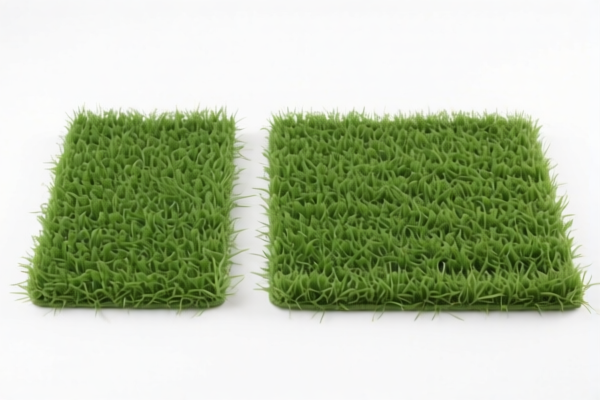
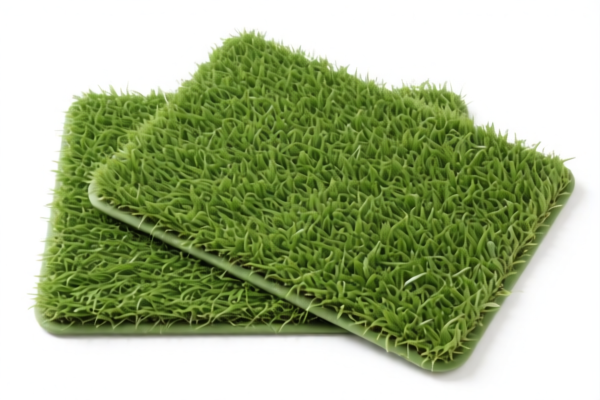
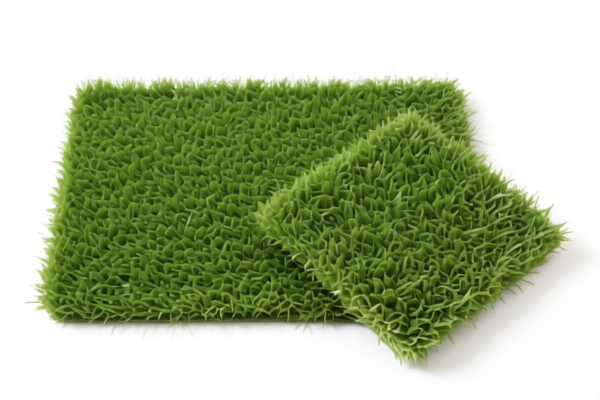
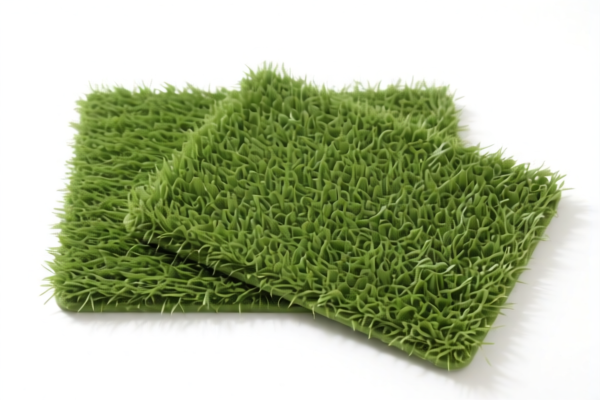
AI Analysis
🌿 Natural Grass Kitchen Mat (天然草厨房垫)
🌐 HS Code Reference & Customs Clearance Guide | 2026 Latest Tariff Analysis | Professional Entry Strategy
📌 I. Product Definition & Classification: Do You Truly Understand "Natural Grass"?
Natural grass kitchen mats are woven articles made from vegetable materials (such as straw, reeds, palm leaves, etc.). In international trade, the classification depends heavily on material composition (vegetable fiber) and form/function (mat, matting, or basket-like article). Misclassification often leads to significant tariff discrepancies due to the complex trade war tariffs (Section 301 and Section 122).
⚠️ Key Distinction Point:
- If viewed as a "Basket-like article" or "Woven vegetable material product" → Classified under Chapter 46.
- If viewed as a "Floor Covering" or "Textile-like mat" → Classified under Chapter 57.
📦 II. HS Code Classification Details (2026 Latest Tariff Authority Cross-Reference)
| HS Code | Product Description | Application Scenario | Taxation Logic |
|---|---|---|---|
4602.19.80.00 |
Other articles of vegetable plaiting materials (Natural Grass Kitchen Mat) | Mats viewed as woven vegetable products, not primarily as floor coverings | ✅ Base 2.3% |
4602.19.12.00 |
Other woven articles of vegetable materials (Natural Grass Kitchen Mat) | Specific classification for other vegetable material mats/baskets | ✅ Base 5.8% |
5702.99.15.00 |
Woven floor coverings of vegetable materials (Natural Grass Kitchen Mat) | Mats classified strictly as "floor coverings" or "textile-like mats" | ✅ Base 6.8% |
4602.19.18.00 |
Other basketry and wickerwork (Natural Grass Mat) | Mats viewed as general basketry/wickerware categories | ✅ Base 4.5% |
4602.19.80.00 |
Other articles of vegetable plaiting materials (Grass Mat) | General category for grass/plant material woven items | ✅ Base 2.3% |
🔍 Critical Reminder:
- The "Floor Covering" (Chapter 57) classification usually attracts a higher base duty (6.8%) compared to "Woven Vegetable Products" (Chapter 46), which can be as low as 2.3%.
- However, all these categories are subject to significant additional US tariffs (Section 301 + Section 122), making the total tax burden heavy across all codes.
💰 III. 2026 Latest Tariff Rate Breakdown (Including Add-ons & Policy Surcharges)
✅ Applicable Country: United States (US)
✅ Country of Origin: China (CN)
✅ Effective Time: Current active tariffs for Chinese goods.
🎯 1. 4602.19.80.00 —— Vegetable Plaiting Materials (Best Base Rate Option)
| Item | Content |
|---|---|
| Base Duty Rate | 2.3% (ad valorem) |
| Section 301 Additional Duty | +25.0% (Trade War Tariff) |
| Section 122 Duty | +10.0% (Specific surcharge for certain goods) |
| Total Effective Rate | 37.3% |
| Tax Calculation | CIF Value × 37.3% |
| De Minimis Exemption | ❌ Not Eligible (Deny de minimis for Chinese goods under these sections) |
| Legal Basis Path | HTSUS:4602.19.80.00 → Section 301 Footnote → Section 122 Directive |
📌 Explanation:
- This code offers the lowest base duty (2.3%) among the options.
- Despite the low base, the 37.3% total rate is still substantial.
- The logic: It is classified as a "woven article" rather than a "floor covering," avoiding the higher Chapter 57 base rates.
🎯 2. 4602.19.12.00 —— Other Woven Vegetable Articles
| Item | Content |
|---|---|
| Base Duty Rate | 5.8% |
| Section 301 Additional Duty | +25.0% |
| Section 122 Duty | +10.0% |
| Total Effective Rate | 40.8% |
| Tax Calculation | CIF Value × 40.8% |
| De Minimis Exemption | ❌ Not Eligible |
| Legal Basis Path | HTSUS:4602.19.12.00 → Section 301 → Section 122 |
📌 Note:
- Higher base rate than4602.19.80.00.
- Usually applies if the product fits a more specific sub-category of woven vegetable goods that isn't the general "other" category.
🎯 3. 5702.99.15.00 —— Woven Floor Coverings (Highest Base Rate)
| Item | Content |
|---|---|
| Base Duty Rate | 6.8% |
| Section 301 Additional Duty | +25.0% |
| Section 122 Duty | +10.0% |
| Total Effective Rate | 41.8% |
| Tax Calculation | CIF Value × 41.8% |
| De Minimis Exemption | ❌ Not Eligible |
| Legal Basis Path | HTSUS:5702.99.15.00 → Section 301 → Section 122 |
📌 Warning:
- If Customs classifies your mat as a "Floor Covering" (Chapter 57) instead of a "Woven Article" (Chapter 46), you pay the highest total tax (41.8%).
- This is because Chapter 57 often has higher base duties for non-textile floor coverings.
🎯 4. 4602.19.18.00 —— Other Basketry and Wickerwork
| Item | Content |
|---|---|
| Base Duty Rate | 4.5% |
| Section 301 Additional Duty | +25.0% |
| Section 122 Duty | +10.0% |
| Total Effective Rate | 39.5% |
| Tax Calculation | CIF Value × 39.5% |
| De Minimis Exemption | ❌ Not Eligible |
| Legal Basis Path | HTSUS:4602.19.18.00 → Section 301 → Section 122 |
📌 Note:
- A middle-ground option.
- Often used if the mat is rigid or basket-like in structure, rather than soft and textile-like.
🛠️ IV. Customs Clearance Practical Advice (Battle-Tested Pitfall Avoidance)
✅ 1. Required Documentation List (Non-Negotiable)
| Document | Mandatory? | Description |
|---|---|---|
| ✅ Product Specification Sheet | ✔️ | Must detail: Material (e.g., "100% Natural Straw"), Weaving Method, Dimensions. |
| ✅ Product Photos | ✔️ | Clear images showing texture, weave, and lack of textile backing (to argue against Chapter 57). |
| ✅ Commercial Invoice | ✔️ | Description should emphasize "Woven Vegetable Article" not just "Floor Mat." |
| ✅ Packing List | ✔️ | Item count and weight. |
| ✅ Bill of Lading/Air Waybill | ✔️ | Standard shipping docs. |
✅ 2. Declaration Strategy (Key Mantra)
🔥 “Emphasize ‘Vegetable Material’ and ‘Woven Article,’ Avoid ‘Textile Floor Covering’!”
| Situation | Correct Declaration Approach | Incorrect Approach |
|---|---|---|
| Soft, flexible grass mat | Declare as Chapter 46 (Woven Vegetable Product). Use terms like "Plaited Mat," "Woven Grass Article." | Calling it "Rug," "Carpet," or "Textile Floor Covering." |
| Rigid, basket-like mat | Declare as Chapter 46 (Basketry). | Claiming it is a "Flooring" product. |
| Mat with rubber backing | ⚠️ High Risk. May be pulled to Chapter 57 or 59. Provide material composition ratio. | Ignoring the backing material. |
✅ 3. Special Case Handling
| Situation | Handling Advice |
|---|---|
| Mat with Non-Grass Backing | If the backing (e.g., latex, foam) is significant, Customs may reclassify as a composite good. Ensure the grass layer is the essential character. |
| Sample vs. Bulk | Ensure samples match bulk exactly. Mismatches lead to audits and re-classification. |
| Value Declaration | Do not undervalue. With 37%+ tax, accurate CIF value is critical to avoid penalties. |
🌍 V. Global Market Clearance Comparison (2026 Latest)
| Country/Region | Recommended HS Code | Tariff Estimate | Certification Requirements | Notes |
|---|---|---|---|---|
| 🇺🇸 USA | 4602.19.80.00 |
37.3% | None specific (General) | Section 122 & 301 apply. Highest burden. |
| 🇨🇳 China | 4602.19.80.00 |
~9-10% | None | Import duty into China. |
| 🇪🇺 EU | 4602.19 |
6.5% | None | No Section 301 equivalent. |
| 🇬🇧 UK | 4602.19 |
6.5% | None | Post-Brexit tariff. |
| 🇨🇦 Canada | 4602.19 |
5-10% | None | MFN rate. |
📌 Conclusion:
- The US is the most difficult market for natural grass products due to the 37.3% - 41.8% effective tariff.
- Chapter 46 is generally more favorable than Chapter 57 for grass mats in the US.
📌 VI. Common Errors & Pitfall Guide (Blood & Tears Lessons)
❌ Error 1: Classifying as "Carpet" (Chapter 57)
👉 Consequence: Base duty jumps to 6.8% → Total tax rises to 41.8%.
👉 Why? "Carpet" implies textile or floor-covering intent, triggering higher base rates.
❌ Error 2: Using De Minimis (Section 321) for < $800 shipments
👉 Consequence: Seizure! Section 122 and Section 301 tariffs explicitly deny de minimis exemptions for Chinese goods.
❌ Error 3: Ignoring "Section 122"
👉 Consequence: Missing the 10% surcharge. Customs will audit and demand back payment + penalties.
❌ Error 4: Vague Description "Grass Mat"
👉 Consequence: Customs officer may choose the worst-case code (e.g., 5702.99.15.00) for safety.
✅ Correct Declaration Example:
"Natural Grass Woven Kitchen Mat, Made of 100% Dried Straw, Plaited, No Textile Backing, For Decorative/Kitchen Use, HTSUS: 4602.19.80.00"
🎯 VII. Conclusion: Precise Classification Saves Money!
🎯 Remember the Mantra:
🔹 "Woven Vegetable (Ch 46) < Floor Covering (Ch 57)"
🔹 "Base 2.3% vs 6.8% saves $0.045 per $1, but Tariffs kill both!"
🔹 "Total Tax 37.3% is the target; avoid 41.8%!"
📌 Pro Tip:
- If possible, request a Pre-Ruling (Binding Tariff Information) from US Customs and Border Protection (CBP) before large shipments.
- Ensure your supplier confirms the material composition (100% vegetable) to support Chapter 46 classification.
📣 Immediate Action:
📞 Consult a licensed customs broker.
🚀 Declare accurately, pay the correct 37.3%, and avoid seizures!
✨ Professional clearance starts with precise classification!
💼 Your profit margin depends on getting the HS Code right!
Customer Reviews
About HS Code Classification
The Harmonized System (HS) is an internationally standardized nomenclature developed by the World Customs Organization (WCO) to classify traded products. Over 200 countries use the HS system as the basis for customs tariffs, trade statistics, and import/export regulations.
Each HS code follows a hierarchical structure:
- Chapter (2 digits) — Broad category of goods (e.g., Chapter 84: Machinery and Mechanical Appliances)
- Heading (4 digits) — More specific grouping within the chapter
- Subheading (6 digits) — Internationally standardized breakdown, used by all WCO member countries
- National subdivisions (8-10 digits) — Country-specific extensions for further classification, such as US HTSUS 10-digit codes
Correct HS code classification is essential for smooth customs clearance, accurate duty payment, and compliance with trade regulations. Misclassification can lead to customs delays, overpayment of duties, or penalties.
When importing from CN to US, the applicable tariff rates may include:
- Most-Favored-Nation (MFN) rate — The standard duty rate applied to WTO members
- General rate — Applied to countries without trade agreements
- Trade remedy duties — Additional tariffs such as Section 301 (anti-dumping), Section 232 (national security), or countervailing duties
The information provided on this page is for reference purposes only. For official classification, please consult with your local customs authority or a licensed customs broker.