Natural Grass Pads
CN → US| HS Code | Tariff Rate | Origin | Destination | Doc |
|---|---|---|---|---|
| 570200 | 0.0% | CN | US | Official Doc |
| 570300 | 0.0% | CN | US | Official Doc |
| 6702906500 | 34.5% | CN | US | Official Doc |
| 6702903500 | 19.0% | CN | US | Official Doc |
Product Images
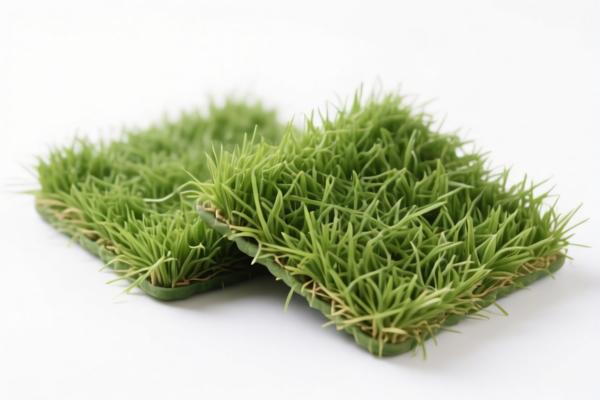
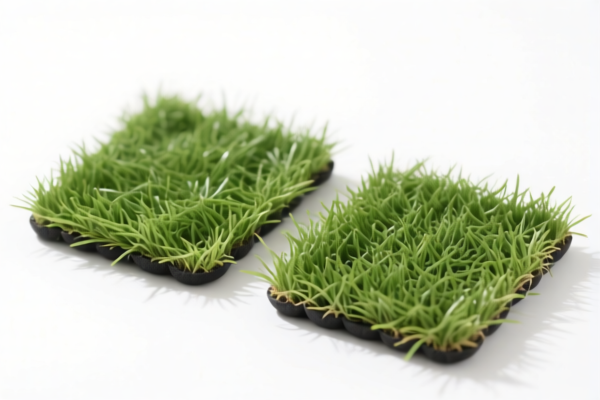
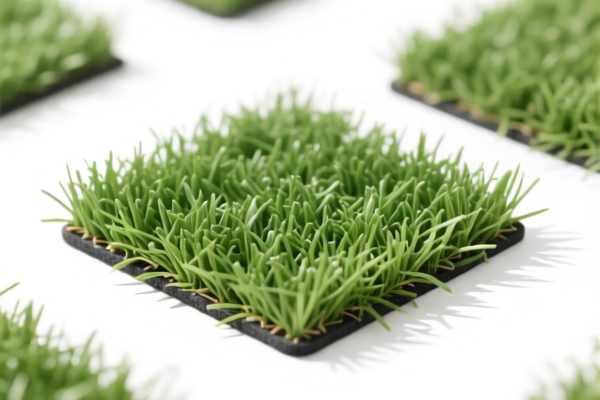
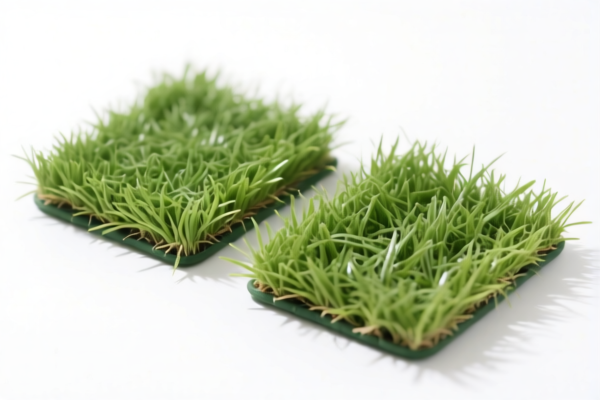
AI Analysis
🌿 Natural Grass Pads (Synthetic Turf & Natural Grass Ground Cover)
🌐 HS Code Reference & Customs Clearance Guide | 2026 Latest Tariff Analysis | Professional Clearance Strategy
📌 I. Product Definition & Classification: What Exactly Is a "Natural Grass Pad"?
In international trade, the term "Natural Grass Pads" is often a marketing misnomer or a hybrid product description. To classify it correctly, we must distinguish between two fundamentally different products based on the primary material and intended use:
- Synthetic Turf (Artificial Grass): Products that mimic natural grass but are made primarily of synthetic fibers (polyethylene, polypropylene, etc.). Even if marketed as "natural-looking," if the primary material is synthetic, it falls under Chapter 57.
- Natural Grass Mats/Covers: Products made from actual natural grass, often used for temporary landscaping, erosion control, or decorative ground cover. These fall under Chapter 57 (specifically carpets/floor coverings) if they are constructed as mats.
⚠️ Critical Distinction:
- If the product is made of synthetic fibers intended to look like grass → HS Code 5702.00
- If the product is made of natural grass (e.g., pressed grass mats) for outdoor/decorative use → HS Code 5703.00
📦 II. HS Code Classification Details (2026 Latest Tariff Authority Cross-Reference)
| HS Code | Product Description | Application Scenario | Primary Material |
|---|---|---|---|
5702.00 |
Other carpets and floor coverings, not knitted or crocheted (Includes synthetic turf where primary material is synthetic fibers but intended to mimic natural grass) |
Sports fields, landscaping, decorative outdoor use, recreational areas | ✅ Synthetic Fibers (Polypropylene, Polyester, etc.) |
5703.00 |
Other carpets and floor coverings (Includes natural grass pads used as protective or decorative ground coverings) |
Outdoor landscaping, temporary ground protection, natural decorative mats | ✅ Natural Grass |
🔍 Key Reminder:
- Do NOT confuse with Chapter 67 (Artificial Flowers): While "artificial flowers" (HS 6702) include artificial foliage, grass/turf is explicitly categorized under Chapter 57 (Carpets/Floor Coverings) because it functions as a floor/ground covering material.
- Synthetic vs. Natural: If the product contains any synthetic fibers as the primary structural component, it must be classified under 5702.00, not natural grass codes.
💰 III. 2026 Latest Tariff Rate Analysis (Including Additional Taxes & Policy Surcharges)
✅ Applicable Country: United States (US)
✅ Origin: China (CN)
✅ Effective Date: From November 10, 2025 (and subsequent imports)
🎯 1. 5702.00 —— Synthetic Turf / Artificial Grass (Most Common Scenario)
| Item | Content |
|---|---|
| Base Tariff | Failed to retrieve tax information (See Note Below) |
| Additional Taxes | Error (Failed to retrieve tax information) |
| Total Tax | Error |
| Tax Calculation | CIF Value × Error |
| De Minimis Eligibility | ❌ Not Eligible (High-value industrial/commercial goods) |
| Legal Basis Path | Customs:5702.00 → Trade Policy:Unknown |
📌 Interpretation:
- The system indicates "Failed to retrieve tax information" for this specific HS code in the provided data. This is unusual for Chapter 57, which typically has standard MFN rates (often 0-5% for basic carpets).
- Potential Risk: Due to the "Error" status, customs may require manual review, leading to delays.
- Recommendation: Verify the exact subheading (e.g., 5702.31, 5702.49) with a customs broker, as tax rates vary by fiber type and backing material.
- Note on 301 Tariffs: If classified under general "Carpets" from China, it may be subject to Section 301 additional tariffs (currently often 7.5% - 25% depending on the specific subheading and trade policy updates). Always confirm current 301 applicability.
🎯 2. 5703.00 —— Natural Grass Pads (Natural Material)
| Item | Content |
|---|---|
| Base Tariff | Failed to retrieve tax information (See Note Below) |
| Additional Taxes | Error (Failed to retrieve tax information) |
| Total Tax | Error |
| Tax Calculation | CIF Value × Error |
| De Minimis Eligibility | ❌ Not Eligible (Agricultural/plant material restrictions apply) |
| Legal Basis Path | Customs:5703.00 → Trade Policy:Unknown |
📌 Interpretation:
- "Failed to retrieve tax information" suggests complex regulatory oversight.
- Phytosanitary Restrictions: Natural grass products are not just a tariff issue; they are heavily regulated by USDA APHIS (Animal and Plant Health Inspection Service) to prevent the introduction of pests, diseases, or invasive species.
- Additional Costs: Beyond tariffs, you may face inspection fees, treatment costs (fumigation), or rejection if not properly certified.
- High Risk: Importing natural plant material often triggers mandatory pre-clearance and quarantine checks.
🛠️ IV. Customs Clearance Practical Advice (Field Pitfall Avoidance Guide)
✅ 1. Required Documentation Checklist (Non-Negotiable)
| Document | Must Provide | Explanation |
|---|---|---|
| ✅ Product Specification Sheet | ✔️ | Clearly state: "Synthetic Fibers (PP/PE)" OR "Natural Grass Material". Do NOT use vague terms like "Eco-Friendly Grass Mat" without specifying composition. |
| ✅ Material Composition Certificate | ✔️ | For synthetic: % of polypropylene/polyester. For natural: Source of grass, treatment method. |
| ✅ Product Photos | ✔️ | Show texture, backing material, and any labels indicating "Artificial" or "Natural." |
| ✅ Phytosanitary Certificate | ✔️ (For Natural Grass) | Mandatory for HS 5703.00. Issued by the exporting country's plant protection agency. |
| ✅ Commercial Invoice | ✔️ | Describe as "Synthetic Turf, 2m x 10m, Polypropylene" or "Natural Grass Mat, Decorative Use". |
| ✅ USDA Import Permit | ✔️ (For Natural Grass) | May be required for natural plant material to ensure pest-free status. |
✅ 2. Declaration Tips (Key Mnemonics)
🔥 "Synthetic = 5702, Natural = 5703, Fake Natural = 5702, No Permit = Rejected!"
| Scenario | Correct Declaration | Wrong Approach |
|---|---|---|
| Artificial Grass (looks like grass but is plastic) | 5702.00 + "Synthetic Turf" |
Call it "Grass Mat" → Customs may suspect undeclared natural material |
| Natural Grass Mat (actual dried/woven grass) | 5703.00 + "Natural Grass Mat" |
Call it "Synthetic Turf" → Mismatch with Phytosanitary requirements |
| Mixed Material (e.g., rubber backing + synthetic grass) | 5702.00 |
Split into parts → Higher duty for rubber backing |
| Importing Natural Grass | 5703.00 + Phytosanitary Cert |
No permit → Seizure & Destruction by USDA |
✅ 3. Special Situation Handling
| Situation | Handling Advice |
|---|---|
| "Natural-Looking" Synthetic Turf | Clearly declare as Synthetic. Provide test reports showing >90% synthetic fiber content. Misdeclaring as "Natural" to avoid tariffs will lead to fraud penalties. |
| Natural Grass for Landscaping | Ensure USDA APHIS clearance is obtained before shipment. Natural plant material is high-risk for pest invasion. |
| Error in Tax Retrieval | If customs systems show "Error" for these HS codes, proactively provide a tariff ruling or pre-classification document. Do not wait for customs to flag it. |
| Samples vs. Commercial | Even samples of natural grass require phytosanitary certificates. Synthetic samples are easier but should still be clearly labeled "Not for Sale, Synthetic Sample." |
🌍 V. Global Market Clearance Comparison (2026 Latest)
| Country/Region | Recommended HS Code | Tariff Status | Certification Requirement | Notes |
|---|---|---|---|---|
| 🇺🇸 USA | 5702.00 (Synthetic) 5703.00 (Natural) |
⚠️ Data Error (Verify with Broker) | Synthetic: General | Natural: USDA APHIS Strict Control |
| 🇨🇳 China | 5702.00 5703.00 |
Standard MFN | Natural: Phytosanitary Cert | Synthetic: Standard |
| 🇪🇺 EU | 5702.00 5703.00 |
0-5% | Natural: Phytosanitary Cert | Synthetic: REACH Compliance (Chemicals) |
| 🇬🇧 UK | 5702.00 5703.00 |
0-5% | Natural: Phytosanitary Cert | Post-Brexit Rules Apply |
| 🇦🇺 Australia | 5702.00 5703.00 |
0-5% | Natural: Biosecurity Approval (Critical) | Australia has strictest biosecurity laws for natural plant imports. |
📌 Conclusion:
- Synthetic Turf (5702) is generally easier to clear but requires accurate material disclosure.
- Natural Grass (5703) is high-risk due to biosecurity laws. Even if tariffs are low, the regulatory cost (inspection, permit, delay) is high.
- Tax Data Error in US System: Requires proactive communication with customs brokers to avoid hold-ups.
📌 VI. Common Mistakes & Pitfall Guide (Blood & Tears Lessons)
❌ Mistake 1: Calling Synthetic Turf "Natural Grass Mat" to avoid synthetic tariffs
👉 Consequence: Customs detects synthetic fibers via inspection → Fraud investigation + fines.
❌ Mistake 2: Shipping Natural Grass without a Phytosanitary Certificate
👉 Consequence: USDA APHIS Seizure & Destruction. No refund.
❌ Mistake 3: Ignoring "Tax Error" Status
👉 Consequence: Customs holds shipment for manual review → Delivery delay of 2-4 weeks.
❌ Mistake 4: Misclassifying as "Artificial Flowers" (6702)
👉 Consequence: Incorrect chapter. Grass/turf is a floor covering (Ch 57), not an ornament (Ch 67). Incorrect classification → Penalties.
✅ Correct Approach:
"Synthetic Turf, 100% Polypropylene, for Sports Field Use, Model XYZ"
OR
"Dried Natural Grass Mats, Decorative Ground Cover, Phytosanitary Certificate Attached, Country of Origin: CN"
🎯 VII. Conclusion: Professional Declaration Saves Time and Money!
🎯 Remember the Mnemonic:
🔹 "Synthetic = 5702, Natural = 5703, Fake Natural = 5702, No Permit = Rejected!"
🔹 "Check Tax Error, Verify Material, Biosecurity First!"
📌 Pro Tip:
- For Synthetic Turf, if the "Tax Error" persists, file an Advance Ruling with US Customs and Border Protection (CBP) to get a binding classification.
- For Natural Grass, DO NOT SHIP without confirming USDA APHIS requirements with a licensed customs broker. The risk of destruction is too high.
📣 Immediate Action:
📞 Contact a licensed Customs Broker + Provide Material Test Reports + Apply for USDA Permit (if natural)
🚀 Ensure your "Grass Pads" pass customs smoothly without being destroyed or delayed!
✨ Professional Clearance Starts with Accurate Classification!
💼 Your Product is Real Grass or Plastic? Declare It Clearly!
Customer Reviews
About HS Code Classification
The Harmonized System (HS) is an internationally standardized nomenclature developed by the World Customs Organization (WCO) to classify traded products. Over 200 countries use the HS system as the basis for customs tariffs, trade statistics, and import/export regulations.
Each HS code follows a hierarchical structure:
- Chapter (2 digits) — Broad category of goods (e.g., Chapter 84: Machinery and Mechanical Appliances)
- Heading (4 digits) — More specific grouping within the chapter
- Subheading (6 digits) — Internationally standardized breakdown, used by all WCO member countries
- National subdivisions (8-10 digits) — Country-specific extensions for further classification, such as US HTSUS 10-digit codes
Correct HS code classification is essential for smooth customs clearance, accurate duty payment, and compliance with trade regulations. Misclassification can lead to customs delays, overpayment of duties, or penalties.
When importing from CN to US, the applicable tariff rates may include:
- Most-Favored-Nation (MFN) rate — The standard duty rate applied to WTO members
- General rate — Applied to countries without trade agreements
- Trade remedy duties — Additional tariffs such as Section 301 (anti-dumping), Section 232 (national security), or countervailing duties
The information provided on this page is for reference purposes only. For official classification, please consult with your local customs authority or a licensed customs broker.