Natural Grass Pet Mats
CN → US| HS Code | Tariff Rate | Origin | Destination | Doc |
|---|---|---|---|---|
| 4601298000 | 35.0% | CN | US | Official Doc |
| 4601299000 | 43.0% | CN | US | Official Doc |
| 3926909989 | 22.8% | CN | US | Official Doc |
| 3926907500 | 14.2% | CN | US | Official Doc |
Product Images
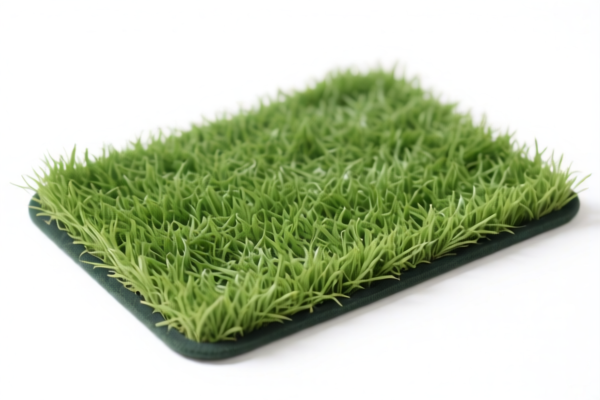
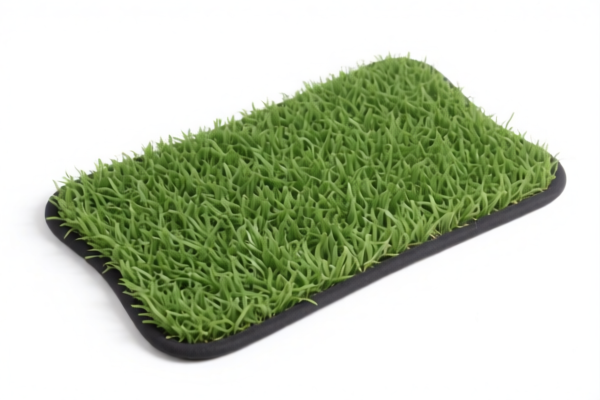
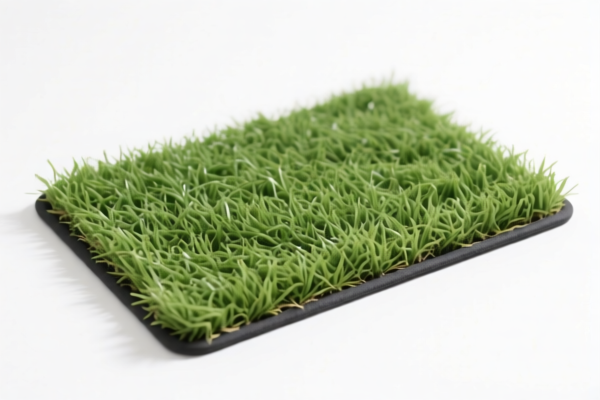
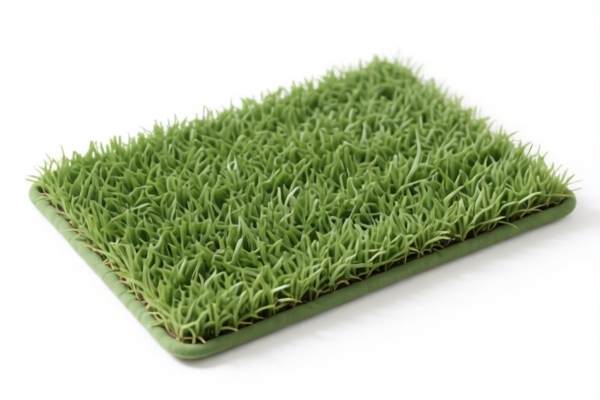
AI Analysis
🐾 Natural Grass Pet Mats (Indoor Artificial/Natural Turf for Pets)
🌐 HS Code Reference & Clearance Guide | 2026 Latest Tariff Analysis | Professional Customs Strategy
📌 I. Product Definition & Classification: Do You Really Understand "Pet Mats"?
Natural Grass Pet Mats (often marketed as "Potty Training Mats," "Indoor Grass Pads," or "Fake Turf") are designed to provide a naturalistic urination/defecation surface for dogs and cats. In international trade, classification depends heavily on the material composition and construction method:
1. Vegetable Fiber Mats (True "Natural" or Blend):
Made from woven or plaited vegetable materials (e.g., jute, sisal, coir, straw). If finished as a mat/screen.
2. Plastic/Textile Composite Mats (Most Common):
Usually a plastic backing (polyethylene/polypropylene) with synthetic grass fibers (nylon/polyester) glued or tufted on top. These fall under Chapter 39 (Plastics) or Chapter 57 (Carpeting), depending on specific construction.
⚠️ Critical Distinction:
- If the product is woven/plaited vegetable fiber forming a mat → Chapter 46.
- If the product is plastic-based (synthetic turf on plastic backing) → Chapter 39 (usually as other plastic articles).
- Note: Most commercial "Natural Grass Pet Mats" sold online are actually synthetic turf with plastic backing, mislabeled as "natural." Check the actual material!
📦 II. HS Code Classification Details (2026 Latest Tariff Reference)
Based strictly on the provided <DATA>, here are the relevant HS Codes and descriptions for Pet Mats:
| HS Code | Product Description | Material Type | Application |
|---|---|---|---|
4601.29.80.00 |
Mats, matting and screens of vegetable materials: Floor coverings | Vegetable fibers (e.g., jute, coir, straw mats) | Eco-friendly, biodegradable pet potty mats |
4601.29.90.00 |
Mats, matting and screens of vegetable materials: Other | Vegetable fibers (Non-floor, e.g., small tray liners) | Non-floor pet accessories |
3926.90.99.89 |
Other articles of plastics: Other Other Other | Synthetic plastic (Synthetic turf, plastic backing) | Most common "fake grass" pet pads |
3926.90.75.00 |
Other articles of plastics: Pneumatic mattresses and other inflatable articles | Inflatable plastic | Rarely applicable unless it's a water-filled pet bed |
🔍 Key Insight:
- Do not assume all "grass" mats are HS 4601!
- If the mat is made of synthetic plastic fibers (nylon/polyester) on a plastic backing, it must go to 3926.90.99.89, not 4601.
- HS 4601 is strictly for vegetable materials (jute, sisal, coconut coir, etc.).
💰 III. 2026 Latest Tariff Rate Breakdown (Including Surcharges & Policy Add-ons)
✅ Applicable Country: United States (US)
✅ Origin: China (CN) (Based on provided tax data)
✅ Effective Date: 2025/2026 (Current Trade War Context)
🎯 1. 4601.29.80.00 —— Vegetable Fiber Floor Mats (Eco-Friendly)
| Item | Details |
|---|---|
| Base Tariff | 0.0% (ad valorem) |
| Section 301 Surcharge | +25.0% |
| Total Tariff | 25.0% |
| Calculation | CIF Value × 25% |
| De Minimis Exemption | ❌ Not Eligible (Section 301 goods generally excluded from 801.36a exemption) |
| Legal Path | 301:4601.29.80.00 → Footnote 9903.88.01 |
📌 Explanation:
- Although the base tariff is 0%, the 25% Section 301 surcharge applies because these are Chinese-made textile/vegetable fiber goods.
- Total Cost Increase: 25% on top of CIF value.
- Risk: High. If misclassified as plastic (3926), you might pay 12.8%, but if audited, you’ll face back-tariffs + penalties.
🎯 2. 4601.29.90.00 —— Other Vegetable Fiber Mats (Non-Floor)
| Item | Details |
|---|---|
| Base Tariff | 0.0% |
| Section 301 Surcharge | +0.0% |
| Total Tariff | 0.0% |
| Calculation | CIF Value × 0% |
| De Minimis Exemption | ✅ Eligible (If value < $800) |
| Legal Path | 301:4601.29.90.00 → Exempt |
📌 Explanation:
- This sub-heading has a 0% total tariff, making it highly competitive.
- However: You must prove the product is not a "floor covering" but a smaller accessory (e.g., a tray liner, not a large rug).
- Strategy: If the mat is small (< 1m²) and used as a tray liner, argue for4601.29.90.00to save 25%.
🎯 3. 3926.90.99.89 —— Plastic-Based Artificial Grass Mats (Most Common)
| Item | Details |
|---|---|
| Base Tariff | 5.3% |
| Section 301 Surcharge | +7.5% |
| Total Tariff | 12.8% |
| Calculation | CIF Value × 12.8% |
| De Minimis Exemption | ❌ Not Eligible (Plastic goods often subject to 301) |
| Legal Path | 301:3926.90.99.89 → Footnote 9903.05.01 |
📌 Explanation:
- This is the most common classification for synthetic turf pet pads.
- Total tax is 12.8%, significantly lower than the 25% for vegetable floor mats.
- Critical: You must declare it as "Synthetic Plastic Grass Mat," not "Natural Grass."
🎯 4. 3926.90.75.00 —— Inflatable Plastic Articles
| Item | Details |
|---|---|
| Base Tariff | 4.2% |
| Section 301 Surcharge | +0.0% |
| Total Tariff | 4.2% |
| Calculation | CIF Value × 4.2% |
| De Minimis Exemption | ❌ Check Specific Footnote |
📌 Note:
- Only apply if the pet mat is inflatable (e.g., water-filled cooling pad).
- Not applicable to standard turf mats.
🛠️ IV. Clearance Practical Advice (Pitfall Avoidance Guide)
✅ 1. Documentation Checklist (Must-Have)
| Document | Required? | Notes |
|---|---|---|
| ✅ Product Composition Report | ✔️ | Must specify % of Vegetable Fiber vs. Synthetic Plastic |
| ✅ Material Safety Data Sheet (MSDS) | ✔️ | If treated with chemicals/pesticides |
| ✅ Product Photos (Clear Label) | ✔️ | Show brand, model, and material label (e.g., "100% Polypropylene") |
| ✅ Commercial Invoice | ✔️ | Describe as "Synthetic Turf Mat for Pets" or "Jute Pet Mat", NOT just "Grass Mat" |
| ✅ Origin Certificate (CO) | ✔️ | To prove China origin (for 301 applicability) |
✅ 2. Classification Strategy (Key Tips)
🔥 “Material is King, Size is Queen!”
| Scenario | Recommended HS Code | Tariff | Why? |
|---|---|---|---|
| Synthetic Turf on Plastic Backing (90% of market) | 3926.90.99.89 |
12.8% | It’s plastic, not vegetable fiber. |
| Jute/Sisal Woven Mat (Eco-friendly) | 4601.29.80.00 |
25.0% | Vegetable fiber floor covering. |
| Small Jute Tray Liner (< 1m²) | 4601.29.90.00 |
0.0% | Not a floor covering; argue as accessory. |
| Water-Filled Cooling Pad | 3926.90.75.00 |
4.2% | Inflatable plastic article. |
📌 Warning:
- Never declare a synthetic plastic mat as "Vegetable Fiber" to get 0% tax. Customs uses X-ray and material tests.
- Never declare a vegetable mat as "Plastic" if it contains significant natural fibers. Misclassification leads to fines.
✅ 3. Special Cases
| Case | Handling Advice |
|---|---|
| "Biodegradable" Claims | Provide certificate of biodegradability. If > 50% plastic, still 3926.90.99.89. |
| Imported via De Minimis (<$800) | 4601.29.90.00 (0% tax) is eligible for 801.36a exemption. 3926 and 4601.29.80 are NOT. |
| Composite Mats (Plastic + Vegetable) | If vegetable fibers are merely decorative (< 5%), classify as plastic (3926). If structural, classify as vegetable (4601). |
🌍 V. Global Market Comparison (2026)
| Country/Region | Recommended HS Code | Tariff | Notes |
|---|---|---|---|
| 🇺🇸 USA | 3926.90.99.89 |
12.8% | Highest risk due to 301 tariffs. |
| 🇨🇳 China | 3926.90.99.89 |
5.3% | Base tariff only (no 301). |
| 🇪🇺 EU | 3926.90.99 |
4.7% | No major surcharges for plastics. |
| 🇯🇵 Japan | 3926.90.99 |
3.5% | Low tariff, strict labeling laws. |
📌 Conclusion:
- The US market is the most expensive due to 301 tariffs.
- For De Minimis shipments (e-commerce), structure products to fall under4601.29.90.00(0% tax) if possible, but only if material matches.
📌 VI. Common Mistakes & Pitfalls (Lessons Learned)
❌ Mistake 1: Calling "Synthetic Turf" mats "Natural Grass"
👉 Result: Customs detains goods for false description. Fine + Back Tariff!
❌ Mistake 2: Declaring large jute mats as "Accessories" to avoid 25% tax
👉 Result: Audited as "Floor Coverings" (4601.29.80.00) → 25% penalty + interest.
❌ Mistake 3: Ignoring the plastic backing
👉 Result: If > 50% plastic by weight, it’s 3926, not 4601.
✅ Correct Declaration Example:
"Synthetic Polypropylene Turf Mat for Dogs, Plastic Backing, 2x3ft, Model XYZ, Made in China"
🎯 VII. Conclusion: Smart Classification Saves Money!
🎯 Remember the Golden Rule:
🔹 "Plastic = 12.8%, Jute Floor = 25%, Jute Accessory = 0%!"
🔹 "Material defines Code, Size defines Sub-Code!"
📌 Pro Tip:
If you sell De Minimis (under $800) to the US, structure your jute-based mats to be small tray liners (4601.29.90.00) to enjoy 0% duty. But ensure the material is truly vegetable fiber!
📣 Immediate Action:
📞 Confirm material composition with supplier
📦 Label correctly: "Synthetic" vs. "Natural"
🚀 Avoid costly customs delays with accurate HS Codes!
✨ Precision in Classification, Profit in Clearance!
💼 Your Product, Your Advantage!
Customer Reviews
About HS Code Classification
The Harmonized System (HS) is an internationally standardized nomenclature developed by the World Customs Organization (WCO) to classify traded products. Over 200 countries use the HS system as the basis for customs tariffs, trade statistics, and import/export regulations.
Each HS code follows a hierarchical structure:
- Chapter (2 digits) — Broad category of goods (e.g., Chapter 84: Machinery and Mechanical Appliances)
- Heading (4 digits) — More specific grouping within the chapter
- Subheading (6 digits) — Internationally standardized breakdown, used by all WCO member countries
- National subdivisions (8-10 digits) — Country-specific extensions for further classification, such as US HTSUS 10-digit codes
Correct HS code classification is essential for smooth customs clearance, accurate duty payment, and compliance with trade regulations. Misclassification can lead to customs delays, overpayment of duties, or penalties.
When importing from CN to US, the applicable tariff rates may include:
- Most-Favored-Nation (MFN) rate — The standard duty rate applied to WTO members
- General rate — Applied to countries without trade agreements
- Trade remedy duties — Additional tariffs such as Section 301 (anti-dumping), Section 232 (national security), or countervailing duties
The information provided on this page is for reference purposes only. For official classification, please consult with your local customs authority or a licensed customs broker.