Natural Grass Woven Floor Mats
CN → US| HS Code | Tariff Rate | Origin | Destination | Doc |
|---|---|---|---|---|
| 5705002090 | 38.3% | CN | US | Official Doc |
| 4602198000 | 37.3% | CN | US | Official Doc |
| 5705001000 | 35.0% | CN | US | Official Doc |
| 4602191800 | 39.5% | CN | US | Official Doc |
| 5705001000 | 35.0% | CN | US | Official Doc |
Product Images
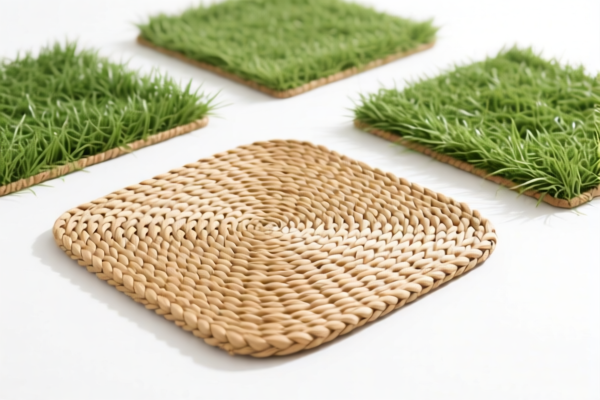
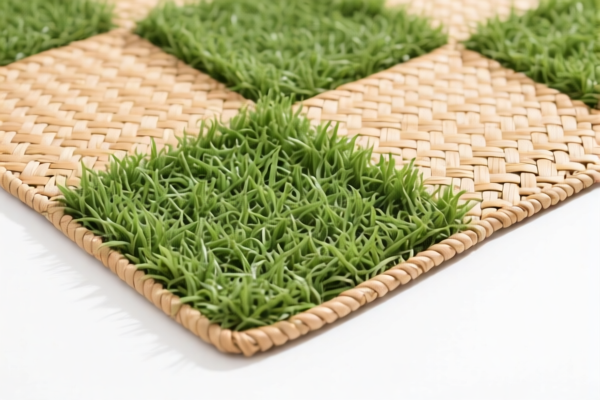
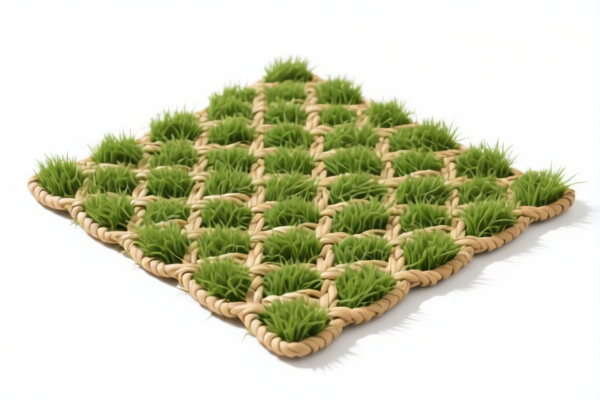
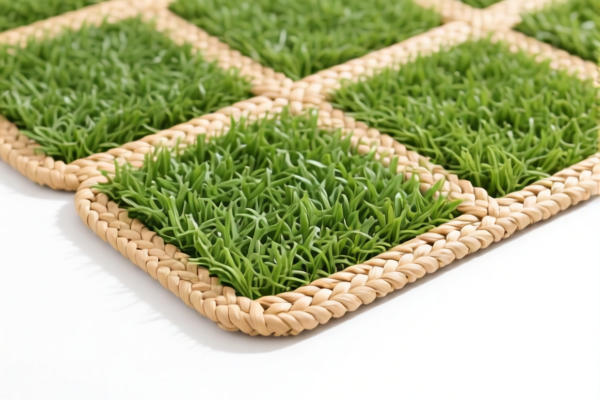
AI Analysis
🌿 Natural Grass Woven Floor Mats (草编地垫)
🌐 HS Code Reference & Customs Clearance Guide | 2026 Latest Tariff Analysis | Professional Clearance Strategy
📌 I. Product Definition & Classification: Do You Really Understand "Grass Floor Mats"?
Natural Grass Woven Floor Mats are decorative or functional floor coverings made from plant fibers (such as seagrass, jute, sisal, or water hyacinth). In international trade, the classification depends heavily on the processing method and intended use:
Category A: Textile Floor Coverings (Carpet-like)
If the grass is processed into strips, tufts, or woven into a fabric-like structure specifically for flooring, it is classified as a textile floor covering.
→ Typical HS Codes: 5705 series.
Category B: Woven Products of Vegetable Plaiting Materials (Basket-like)
If the grass is woven directly in its natural or slightly processed state, resembling baskets, mats, or coiled items, it is classified as woven products of vegetable plaiting materials.
→ Typical HS Codes: 4602 series.
⚠️ Key Distinction Point:
- If it looks and feels like a carpet (flat, textile weave) → 5705
- If it looks like a woven mat/basket (coiled, braided, rigid structure) → 4602
- Misclassification Risk: Declaring a carpet-like mat as a "woven product" may lead to disputes over whether it qualifies as a "floor covering."
📦 II. HS Code Classification Details (2026 Latest Tariff Authority Comparison)
| HS Code | Product Description | Application Scenario | Key Characteristic |
|---|---|---|---|
5705.00.20.90 |
Other Carpets and Textile Floor Coverings | Grass mats processed as textile flooring | ✅ Textile-like structure |
4602.19.80.00 |
Other Woven Products of Plaiting Materials | Coiled or braided grass mats | ✅ Vegetable plaiting material |
5705.00.10.00 |
Carpets and Textile Floor Coverings of Coir | Coconut coir or similar fiber mats | ✅ Coconut/Plant fiber textile |
4602.19.18.00 |
Other Woven Baskets, Bags & Similar Articles | Mats shaped like baskets or rigid weaves | ✅ Basket/Bag-like form |
5705.00.10.00 |
Carpets of Coir (Plant Fibers) | Plant-fiber based textile floor coverings | ✅ Plant fiber textile |
🔍 Important Note:
- The same physical product can fall under different HS codes depending on the manufacturer's processing description and customs officer's interpretation. -5705.00.10.00is often the most favorable for coconut coir due to 0% base duty. -4602categories are considered "woven goods," not "floor coverings," which affects duty rates.
💰 III. 2026 Latest Tariff Rate Breakdown (Including Additional Taxes, Policy Surcharges)
✅ Applicable Country: United States (US)
✅ Origin: China (CN)
✅ Effective Date: November 10, 2025 onwards (including subsequent imports)
🎯 1. 5705.00.20.90 – Other Carpets and Textile Floor Coverings
| Item | Content |
|---|---|
| Base Tariff | 3.3% (ad valorem) |
| Section 301 Additional Tariff | +25.0% (China-specific) |
| 122 Clause Tariff | +10.0% (Trade remedy measure) |
| Total Tariff | 38.3% |
| Tax Calculation | CIF Value × 38.3% |
| De Minimis Eligible? | ❌ No (deny_de_minimis) |
| Legal Path | Section 301 → 122 Clause → USITC:5705.00.20.90 |
📌 Explanation:
- This is the standard "carpet" classification.
- High tax burden (38.3%) due to multiple surcharges.
- Must declare clearly as "Textile Floor Covering."
🎯 2. 4602.19.80.00 – Other Woven Products of Plaiting Materials
| Item | Content |
|---|---|
| Base Tariff | 2.3% (ad valorem) |
| Section 301 Additional Tariff | +25.0% |
| 122 Clause Tariff | +10.0% |
| Total Tariff | 37.3% |
| Tax Calculation | CIF × 37.3% |
| De Minimis Eligible? | ❌ No |
| Legal Path | Section 301 → 122 Clause → USITC:4602.19.80.00 |
📌 Note:
- Slightly lower than5705.00.20.90due to 1.0% lower base duty.
- Suitable for braided, coiled, or basket-style mats.
🎯 3. 5705.00.10.00 – Carpets of Coir (Plant Fiber Textile)
| Item | Content |
|---|---|
| Base Tariff | 0.0% (ad valorem) |
| Section 301 Additional Tariff | +25.0% |
| 122 Clause Tariff | +10.0% |
| Total Tariff | 35.0% |
| Tax Calculation | CIF × 35.0% |
| De Minimis Eligible? | ❌ No |
| Legal Path | Section 301 → 122 Clause → USITC:5705.00.10.00 |
📌 Key Advantage:
- Lowest total tax rate (35.0%) among textile classifications.
- Applicable if the mat is made from coconut coir or similar plant fibers processed as textile.
🎯 4. 4602.19.18.00 – Woven Baskets, Bags & Similar Articles
| Item | Content |
|---|---|
| Base Tariff | 4.5% (ad valorem) |
| Section 301 Additional Tariff | +25.0% |
| 122 Clause Tariff | +10.0% |
| Total Tariff | 39.5% |
| Tax Calculation | CIF × 39.5% |
| De Minimis Eligible? | ❌ No |
| Legal Path | Section 301 → 122 Clause → USITC:4602.19.18.00 |
📌 Caution:
- Highest total tax rate (39.5%).
- Only use if the product is structurally a basket or bag, not a flat floor mat.
🛠️ IV. Customs Clearance Practical Advice (Real-World Pitfall Guide)
✅ 1. Required Documentation List (All Essential)
| Document | Must Provide? | Explanation |
|---|---|---|
| ✅ Product Specification Sheet | ✔️ | Material composition (e.g., 100% Seagrass, Jute, Coir), dimensions, weight |
| ✅ Product Photos (With Label) | ✔️ | Show weaving style (coiled, braided, textile weave) |
| ✅ Commercial Invoice | ✔️ | Must describe item as "Grass Woven Floor Mat" or "Plant Fiber Textile Floor Covering" |
| ✅ Packing List | ✔️ | Detail quantity, net/gross weight, dimensions |
| ✅ Certificate of Origin (CO) | ✔️ | Required for origin verification and potential preference claims |
| ✅ Third-Party Test Report | ✔️ | If claimed as "natural," provide fiber analysis if requested |
✅ 2. Declaration Tips (Key Mantras)
🔥 “Structure Determines Code, Material Dictates Rate, Name Must Be Precise!”
| Scenario | Correct Declaration | Wrong Practice |
|---|---|---|
| Flat, carpet-like mat | 5705.00.10.00 or 5705.00.20.90 |
Misdeclare as 4602 → 37.3%-39.5% |
| Coiled/Braided mat | 4602.19.80.00 or 4602.19.18.00 |
Misdeclare as 5705 → May be accepted but risky |
| Coconut Coir mat | 5705.00.10.00 |
Misdeclare as general grass → Lose 0% base benefit |
| Mixed Material Mat | Check dominant fiber | Declare all materials → May lead to complex classification |
✅ 3. Special Case Handling
| Situation | Handling Advice |
|---|---|
| OEM Custom Mats | Provide design drawings + material list to justify 5705.00.10.00 if coir |
| Mat with Rubber Backing | Still classify as 5705 if rubber is secondary; declare clearly |
| "Natural" vs. "Synthetic" Blend | If >50% natural fiber, may qualify for 5705 or 4602; if >50% synthetic, may change classification entirely |
| Import for Personal Use (De Minimis) | ❌ Not eligible – All these codes are subject to high tariffs and deny de minimis exemption |
🌍 V. Global Main Market Clearance Comparison (2026 Latest)
| Country/Region | Recommended HS Code | Tariff Rate | Certification | Notes |
|---|---|---|---|---|
| 🇺🇸 USA | 5705.00.10.00 |
35.0% | None specific | Lowest rate for coir; 38.3% for others |
| 🇨🇳 China | 5705.00.10.00 |
5%-10% | None | No Section 301/122 surcharges |
| 🇪🇺 EU | 5705.00.10.00 |
0%-10% | CE (if applicable) | No additional punitive tariffs |
| 🇬🇧 UK | 5705.00.10.00 |
0%-10% | UKCA | Post-Brexit standards apply |
| 🇦🇺 Australia | 5705.00.10.00 |
5% | RCM | No US-style surcharges |
📌 Conclusion:
- USA is the most expensive market due to Section 301 + 122 Clause surcharges.
- China/EU/Australia have significantly lower tariffs for the same product.
- Optimize by choosing5705.00.10.00if the product is coir-based.
📌 VI. Common Errors & Pitfall Guide (Lessons Learned)
❌ Error 1: Declaring a carpet-like mat as a basket (4602.19.18.00)
👉 Consequence: If customs rejects, reclassification to 5705 may still apply, but delays occur. If accepted, higher tax (39.5%) may apply unnecessarily.
❌ Error 2: Not specifying material type (e.g., just "Grass Mat")
👉 Consequence: Customs may default to higher base duty (5705.00.20.90 at 3.3%) instead of 5705.00.10.00 (0%).
❌ Error 3: Claiming De Minimis for grass mats
👉 Consequence: Rejected – All listed HS codes are subject to high tariffs and explicitly deny de minimis exemption.
✅ Correct Practice:
“Coconut Coir Woven Floor Mat, 2x3 ft, Natural Color, 100% Plant Fiber, Textile Construction, Model XYZ”
🎯 VII. Conclusion: Professional Declaration, Save Time, Cut Costs!
🎯 Remember the Mantra:
🔹 “Coir is King: 0% Base Duty, Total 35%!”
🔹 “Carpet Structure = 5705, Basket Structure = 4602, Name Must Match!”
🔹 “HS Code Decides Destiny, Tax Difference 4.5%, One Wrong Step, Thousands Lost!”
📌 Pro Tip:
If your grass mats are originating from Vietnam, India, or Thailand, you may apply for preferential tariffs or exemptions from US punitive duties.
Recommendation: Apply for an Advance Ruling from US Customs and Border Protection (CBP) to confirm classification and minimize risk.
📣 Take Action Now:
📞 Contact a Professional Broker + Provide Product Photos + Apply for HS Code Advance Ruling
🚀 Let your grass mats clear smoothly, export efficiently, and maximize profits!
✨ Professional Clearance Starts with Precise Classification!
💼 Every Cent of Your Cost Deserves to Be Precisely Calculated!
Customer Reviews
About HS Code Classification
The Harmonized System (HS) is an internationally standardized nomenclature developed by the World Customs Organization (WCO) to classify traded products. Over 200 countries use the HS system as the basis for customs tariffs, trade statistics, and import/export regulations.
Each HS code follows a hierarchical structure:
- Chapter (2 digits) — Broad category of goods (e.g., Chapter 84: Machinery and Mechanical Appliances)
- Heading (4 digits) — More specific grouping within the chapter
- Subheading (6 digits) — Internationally standardized breakdown, used by all WCO member countries
- National subdivisions (8-10 digits) — Country-specific extensions for further classification, such as US HTSUS 10-digit codes
Correct HS code classification is essential for smooth customs clearance, accurate duty payment, and compliance with trade regulations. Misclassification can lead to customs delays, overpayment of duties, or penalties.
When importing from CN to US, the applicable tariff rates may include:
- Most-Favored-Nation (MFN) rate — The standard duty rate applied to WTO members
- General rate — Applied to countries without trade agreements
- Trade remedy duties — Additional tariffs such as Section 301 (anti-dumping), Section 232 (national security), or countervailing duties
The information provided on this page is for reference purposes only. For official classification, please consult with your local customs authority or a licensed customs broker.