Natural Polymer Crosslinking Agents
CN → US| HS Code | Tariff Rate | Origin | Destination | Doc |
|---|---|---|---|---|
| 3505100020 | 0.0% | CN | US | Official Doc |
| 3913905000 | 41.5% | CN | US | Official Doc |
| 3913902090 | 40.8% | CN | US | Official Doc |
| 3505100015 | 0.0% | CN | US | Official Doc |
| 3505100015 | 0.0% | CN | US | Official Doc |
Product Images
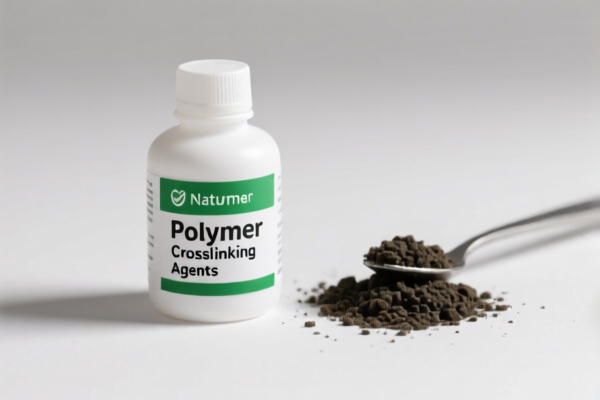



AI Analysis
🧪 Natural Polymer Crosslinking Agents (化学试剂/添加剂)
🌐 HS Code Reference & Customs Clearance Guide | 2026 Latest Tariff Analysis | Professional Compliance Strategy
📌 Part 1: Product Definition & Classification: Do You Really Understand "Natural Polymer Crosslinkers"?
Natural Polymer Crosslinking Agents are specialized chemical reagents or additives used to create bonds between polymer chains. In international trade, their classification depends on whether they are viewed as modified starches/dextrins or as other natural polymer derivatives.
Key Distinction Criteria: * Modified Starches/Dextrins (Chapter 35): If the agent is primarily derived from starch modification (e.g., dextrin-based, granular primary form), it falls under 3505.10. * Other Natural Polymers/Derivatives (Chapter 39): If the agent is a general-purpose chemical crosslinker not specifically identified as a modified starch, it may fall under 3913.90.
⚠️ Critical Classification Point:
- If the product is explicitly a modified starch derivative (like Dextrin) in granular/primary form →归入 3505.10.00.15 / 3505.10.00.20
- If it is a generic crosslinking agent for natural polymers without specific starch identity →归入 3913.90.20.90 / 3913.90.50.00
📦 Part 2: HS Code Classification Details (2026 Latest Tariff Authority Comparison)
| HS Code | Product Description | Application Scenario | Material Attribute |
|---|---|---|---|
3505.10.00.15 |
Dextrins and other modified starches (e.g., pregelatinized); glues based on these substances | Granular natural polymer crosslinkers, primary forms, starch-derived | ✅ Modified Starch/Dextrin |
3505.10.00.20 |
Dextrins and other modified starches (e.g., pregelatinized); glues based on these substances | General modified starch derivatives, non-specific granular forms | ✅ Modified Starch/Dextrin |
3913.90.20.90 |
Natural polymers (e.g., alginic acid, agar-agar, guar gum) and their derivatives, not elsewhere specified or included | Chemical crosslinking agents for natural polymers, unspecified derivatives | ✅ Other Natural Polymer Derivative |
3913.90.50.00 |
Natural polymers (e.g., alginic acid, agar-agar, guar gum) and their derivatives, not elsewhere specified or included | Chemical reagents/additives in primary form, generic natural polymer derivatives | ✅ Other Natural Polymer Derivative |
🔍 Key Reminder:
- "Granular" form does not automatically mean Chapter 39; if the base material is starch, Chapter 35 takes precedence. - "Crosslinking Agent" is a functional description. The material composition (Starch vs. Other Natural Polymer) determines the chapter. - Misclassification as "Other" (Chapter 39) when it is a Modified Starch (Chapter 35) can lead to significant tax discrepancies due to the different tariff structures.
💰 Part 3: 2026 Latest Tariff Rate Breakdown (Including Surtaxes & Policy Add-ons)
✅ Applicable Country: United States (US)
✅ Country of Origin: China (CN)
✅ Effective Date: From November 10, 2025 (including subsequent imports)
🎯 1. 3505.10.00.15 & 3505.10.00.20 —— Modified Starches / Dextrins
| Item | Content |
|---|---|
| Basic Tariff | 0.7¢/kg (Specific Duty) |
| Section 301 Surcharge | +7.5% (Ad Valorem) |
| IEEPA Surcharge | +10% (针对中国/香港产品, 自2025年11月10日起) |
| Total Effective Rate | 0.7¢/kg + 17.5% |
| Tax Calculation | (CIF Value × 17.5%) + (Weight in kg × 0.007) |
| De Minimis Eligibility | ❌ Not Eligible (deny_de_minimis for Section 301/IEEPA goods) |
| Legal Basis Path | IEEPA:9903.01.25 → IEEPA:9903.01.24 → USITC:3505.10.00.15/20 → FOOTNOTE:301.9903.88.01 |
📌 Explanation:
- "Section 301 Surcharge 7.5%" is applied to most Chinese-origin goods under Section 301. - "IEEPA 10%" is an additional surcharge under the International Emergency Economic Powers Act. - Total: A specific duty (0.7¢/kg) plus an ad valorem rate of 17.5%. This is significantly lower than the Chapter 39 rates.
🎯 2. 3913.90.50.00 & 3913.90.20.90 —— Other Natural Polymers & Derivatives
| Item | Content |
|---|---|
| Basic Tariff | 5.8% - 6.5% (Ad Valorem) |
| Section 301 Surcharge | +25.0% (Ad Valorem) |
| IEEPA Surcharge | +10.0% (Ad Valorem) |
| Total Effective Rate | 40.8% - 41.5% |
| Tax Calculation | CIF Value × (40.8% to 41.5%) |
| De Minimis Eligibility | ❌ Not Eligible (deny_de_minimis) |
| Legal Basis Path | IEEPA:9903.01.25 → IEEPA:9903.01.24 → USITC:3913.90.50.00/20.90 → FOOTNOTE:301.9903.88.01 |
📌 Explanation:
- "Section 301 Surcharge 25%" applies broadly to many chemical products and polymers from China. - "IEEPA 10%" applies additionally. - Total: A high ad valorem rate of 40.8% to 41.5%. This is nearly 2.5x higher than the Chapter 35 rates.
🛠️ Part 4: Customs Clearance Practical Advice (Practical Pitfall Avoidance Guide)
✅ 1. Required Documentation Checklist (All Essential)
| Document | Must Provide | Description |
|---|---|---|
| ✅ Product Specification Sheet | ✔️ | Must detail the base material (e.g., "Modified Corn Starch" vs. "Guar Gum Derivative") |
| ✅ Structure/Chemical Formula | ✔️ | To prove if it is a dextrin/starch derivative or a generic polymer derivative |
| ✅ Product Photos (with Label) | ✔️ | Clear visibility of "Granular" form, chemical name, and HS Code if pre-printed |
| ✅ Safety Data Sheet (SDS) | ✔️ | Critical for chemical products; helps Customs verify substance class |
| ✅ Commercial Invoice | ✔️ | Must describe as "Natural Polymer Crosslinking Agent, Type: [Starch/Non-Starch]" |
| ✅ Certificate of Origin (CO) | ✔️ | Required for Section 301/IEEPA applicability determination |
| ✅ Packing List | ✔️ | Net weight in kg (essential for 0.7¢/kg calculation) |
✅ 2. Declaration Techniques (Key Mnemonic)
🔥 "Material First, Function Second; Starch is Cheap, Other is Expensive!"
| Scenario | Correct Declaration | Wrong Practice |
|---|---|---|
| Starch-derived crosslinker (Granular) | 3505.10.00.15/20 (17.5% + 0.7¢/kg) |
Misdeclare as 3913 → 41.5% Tax! |
| Non-starch natural polymer crosslinker | 3913.90.20.90/50.00 (40.8-41.5%) |
Misdeclare as 3505 → Underpayment Penalty |
| "Chemical Reagent" vague description | Specify Material Base | Vague "Additive" → Customs Detention |
| Mixed shipments | Separate Batches | Mixed HS Codes in one line → Inspection Delay |
✅ 3. Special Situation Handling
| Situation | Handling Advice |
|---|---|
| OEM Custom Crosslinker | Provide client order + technical data sheet to prove material origin (Starch vs. Other) |
| Product Labeled "Dextrin" | Must use 3505.10 codes. Do not use 3913. |
| Product Labeled "Crosslinker" with No Base Material | Customs may classify under 3913 by default. Provide technical proof if claiming 3505. |
| Small Sample Shipments (< $800) | ❌ Do Not Use De Minimis. Section 301/IEEPA goods are explicitly excluded from $800 exemption. |
🌍 Part 5: Global Main Market Customs Comparison (2026 Latest)
| Country/Region | Recommended HS Code | Tariff Rate | Certification Requirement | Note |
|---|---|---|---|---|
| 🇺🇸 USA | 3505.10 or 3913 |
17.5% (3505) or ~41% (3913) | SDS, CO | High Tariff Risk for Ch.39 |
| 🇨🇳 China | 3505.10 or 3913 |
5-6% | None | No additional surcharges |
| 🇪🇺 EU | 3505.10 or 3913 |
0-6.5% | REACH Registration | No Section 301/IEEPA |
| 🇬🇧 UK | 3505.10 or 3913 |
0-6.5% | UKCA | Post-Brexit rules apply |
| 🇦🇺 Australia | 3505.10 or 3913 |
5% | None | No additional surcharges |
📌 Conclusion:
- The USA is the only major market with high additional tariffs (301+IEEPA) for these products. - Chapter 35 (Starch-based) is highly tax-efficient compared to Chapter 39. - If the product is truly starch-based, insist on 3505 classification to save ~24% in duties.
📌 Part 6: Common Errors & Pitfall Avoidance (Lessons from Tears)
❌ Error 1: Declaring a Starch-based Crosslinker as 3913.90 because it's a "Chemical"
👉 Consequence: Overpaying ~24% in tariffs.
👉 Solution: Prove it is a "Modified Starch/Dextrin" using SDS and technical specs.
❌ Error 2: Using De Minimis ($800) for small shipments from China
👉 Consequence: Package seized, back taxes, and fines. IEEPA/301 goods are excluded from de minimis.
👉 Solution: Always declare properly, even for samples.
❌ Error 3: Vague Description: "Chemical Additive"
👉 Consequence: Customs flags for manual inspection, delays clearance by 1-2 weeks.
👉 Solution: Use precise chemical names: "Crosslinked Starch Granules" or "Guar Gum Derivative Crosslinker".
❌ Error 4: Ignoring Weight-Based Duty for Chapter 35
👉 Consequence: Underpayment of the 0.7¢/kg specific duty.
👉 Solution: Ensure net weight is accurately declared on the invoice and packing list.
✅ Correct Practice:
"Natural Polymer Crosslinking Agent, Modified Starch Based, Granular Form, Net Weight XX kg, No. XX Bags, Made in China, SDS Attached."
🎯 Part 7: Conclusion: Professional Declaration Saves Money!
🎯 Remember the Mantra:
🔹 "Starch is King (Ch.35), Others are Expensive (Ch.39)"
🔹 "17.5% vs 41.5%, Choose Correctly"
🔹 "No De Minimis for China, Declare Properly"
📌 Tips:
- If you are unsure about the material base, request a technical clarification letter from your manufacturer specifying "Starch-Derived" vs. "Other Natural Polymer-Derived".
- Consider applying for an Advance Ruling (Pre-classification) with CBP if importing high volumes, to lock in the HS Code and tariff rate.
📣 Immediate Action:
📞 Contact your customs broker with the SDS and Technical Data Sheet
🚀 Avoid the 41.5% trap! Optimize your supply chain tax efficiency today!
✨ Professional Customs Clearance Starts with Accurate Classification!
💼 Every Percentage Point of Tax Saved is Pure Profit!
Customer Reviews
About HS Code Classification
The Harmonized System (HS) is an internationally standardized nomenclature developed by the World Customs Organization (WCO) to classify traded products. Over 200 countries use the HS system as the basis for customs tariffs, trade statistics, and import/export regulations.
Each HS code follows a hierarchical structure:
- Chapter (2 digits) — Broad category of goods (e.g., Chapter 84: Machinery and Mechanical Appliances)
- Heading (4 digits) — More specific grouping within the chapter
- Subheading (6 digits) — Internationally standardized breakdown, used by all WCO member countries
- National subdivisions (8-10 digits) — Country-specific extensions for further classification, such as US HTSUS 10-digit codes
Correct HS code classification is essential for smooth customs clearance, accurate duty payment, and compliance with trade regulations. Misclassification can lead to customs delays, overpayment of duties, or penalties.
When importing from CN to US, the applicable tariff rates may include:
- Most-Favored-Nation (MFN) rate — The standard duty rate applied to WTO members
- General rate — Applied to countries without trade agreements
- Trade remedy duties — Additional tariffs such as Section 301 (anti-dumping), Section 232 (national security), or countervailing duties
The information provided on this page is for reference purposes only. For official classification, please consult with your local customs authority or a licensed customs broker.