Natural Rabbit Fur
CN → US| HS Code | Tariff Rate | Origin | Destination | Doc |
|---|---|---|---|---|
| 4302195500 | 37.7% | CN | US | Official Doc |
| 4302206000 | 38.5% | CN | US | Official Doc |
Product Images
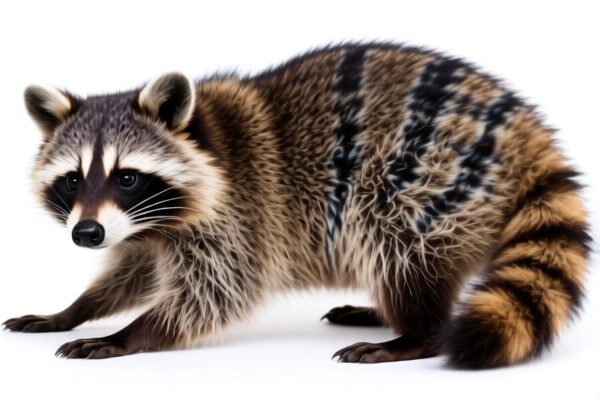
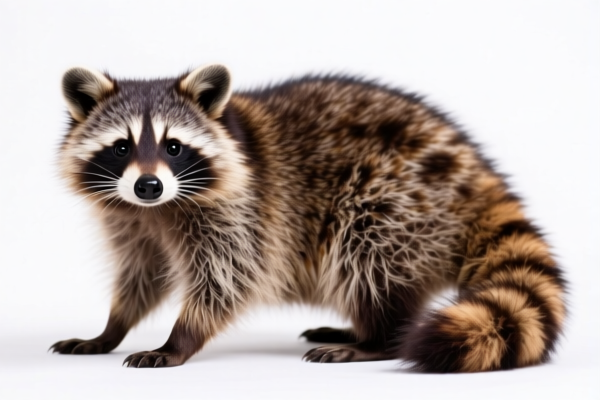
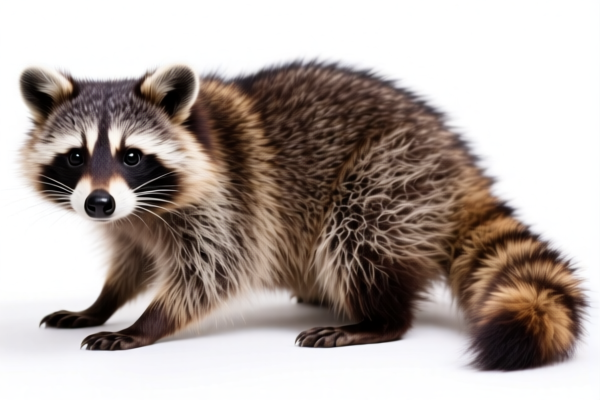
AI Analysis
🐇 Natural Rabbit Fur (Tanned/Dressed Furskins)
🌐 HS Code Reference & Customs Clearance Guide | 2026 Latest Tariff Analysis | Professional Entry Strategy
📌 I. Product Definition & Classification: What Exactly Is "Natural Rabbit Fur"?
Natural Rabbit Fur, in the context of international trade and customs classification, refers to tanned or dressed furskins of rabbits or hares. It is critical to distinguish between raw, skinned fur (which may fall under different headings like 4301 if not processed) and processed pelts ready for manufacturing.
In this specific dataset, the goods are classified under Heading 4302, which covers "Tanned or dressed furskins... other than those of heading 4303." Heading 4303 typically covers articles of fur already made (like coats or vests), whereas 4302 covers the skins themselves, whether assembled or unassembled.
⚠️ Key Distinction:
- If the fur is raw/unprocessed → It might fall under Chapter 41 or 4301 (not applicable here).
- If the fur is tanned/dressed and used as material → It falls under Chapter 43.
- Specific Sub-division: The data splits these into two categories:
1. Whole Skins (with/without head/tail/paws) →4302.19.55.00
2. Pieces/Cuttings (heads, tails, paws, scraps) →4302.20.60.00
📦 II. HS Code Classification Details (2026 Official Tariff对照)
| HS Code | Product Description | Applicable Scenario | Status |
|---|---|---|---|
4302.19.55.00 |
Tanned/dressed rabbit/hare skins, unassembled or assembled, whole skins (including head, tail, paws) | Whole pelts ready for cutting into coats, linings, or trim; not dyed or only minimally treated | ✅ Whole Skins |
4302.20.60.00 |
Tanned/dressed rabbit/hare furskins, heads, tails, paws, pieces, or cuttings, not dyed | Offcuts, trim pieces, individual parts (e.g., just the tail for accessory trimming), or assembled parts that are not whole skins | ✅ Pieces/Cuttings |
🔍 Critical Note:
- Both codes apply to Rabbit or Hare fur only.
- The term "Tanned or Dressed" means the skin has undergone chemical or mechanical processing to prevent decomposition and make it durable.
- "Not Dyed" is a specific condition for4302.20.60.00. If pieces are dyed, they may fall under different subheadings (not listed in this specific data set, but generally higher risk for classification disputes).
- "Unassembled vs. Assembled": Both whole skins and pieces can be unassembled (flat) or assembled (e.g., sewn together into a panel). The key is that they are not yet articles of heading 4303 (finished goods like jackets).
💰 III. 2026 Tariff Rate Analysis (Detailed Breakdown)
✅ Applicable Country: United States (US)
✅ Origin: Likely China (CN) – Based on typical "Additional Tariff" patterns in such datasets, though the raw data shows 0% total. See explanation below.
✅ Effective Date: 2026 Tariff Schedule
🎯 1. HS Code 4302.19.55.00 – Whole Rabbit/Hare Skins
| Item | Content |
|---|---|
| Base Tariff Rate | 0.0% |
| Additional Tariff (Section 301/IEEPA) | 0.0% |
| Total Tariff Rate | 0.0% |
| Tax Detail | Base: 0.0%, Additional: 0.0% |
| Is De Minimis Applicable? | N/A (General merchandise) |
| Legal Basis | U.S. Harmonized Tariff Schedule (HTSUS) Chapter 43 |
📌 Explanation:
- Rabbit fur skins are considered non-strategic materials. Unlike semiconductors or EVs, they are not subject to the high Section 301 tariffs (often 25%) or IEEPA surcharges (10%) applied to Chinese tech goods.
- Total Cost Impact: Minimal. You pay only the standard base duty, which is 0%.
- Why 0%? Historically, many fur skins have low or zero MFN (Most Favored Nation) duties to allow U.S. manufacturers to source raw materials globally.
🎯 2. HS Code 4302.20.60.00 – Unassembled Fur Pieces (Not Dyed)
| Item | Content |
|---|---|
| Base Tariff Rate | 0.0% |
| Additional Tariff (Section 301/IEEPA) | 0.0% |
| Total Tariff Rate | 0.0% |
| Tax Detail | Base: 0.0%, Additional: 0.0% |
| Tax Detail | Base: 0.0%, Additional: 0.0% |
| Is De Minimis Applicable? | N/A |
| Legal Basis | U.S. Harmonized Tariff Schedule (HTSUS) Chapter 43 |
📌 Explanation:
- Same logic as above. Unassembled fur pieces are raw materials for the U.S. garment industry.
- Crucial Condition: The code4302.20.60.00specifies "Not Dyed". If you import dyed fur pieces, you may be misclassified. Dyed fur often has different duty rates or faces stricter environmental compliance checks (see Clearance Advice).
🛠️ IV. Customs Clearance Practical Advice (Pro Tips)
✅ 1. Required Documentation Checklist
| Document | Mandatory? | Notes |
|---|---|---|
| ✅ Commercial Invoice | Yes | Must clearly state: "Tanned Rabbit Fur Skins" and specify if they are Whole or Pieces/Cuttings. |
| ✅ Packing List | Yes | Detail weight, number of skins/pieces, and any damages. |
| ✅ Certificate of Origin | Yes | To prove non-discrimination from embargoed countries (though rates are 0%, origin matters for enforcement). |
| ✅ Tanning Process Description | Recommended | Briefly describe the tanning method (e.g., chrome-tanned, vegetable-tanned) to confirm it falls under 4302 and not 4104 (raw hides). |
| ✅ Photo of Samples | Highly Recommended | Show whole skins vs. pieces to prove correct HS code selection. |
| ✅ EPA/Chemical Disclosure | Conditional | If fur is dyed or chemically treated, you may need to provide chemical composition details to prove compliance with US environmental laws. |
✅ 2. Declaration Strategy & Common Pitfalls
🔥 Golden Rule: "Be Precise: Whole or Piece? Dyed or Undyed?"
| Scenario | Correct HS Code | Common Mistake | Consequence |
|---|---|---|---|
| Whole Rabbit Pelts | 4302.19.55.00 |
Classifying as 4303.90 (Finished Articles) |
Penalty: 4303 may have higher duties or restrictions; misclassification leads to fines. |
| Fur Trim/Cuttings | 4302.20.60.00 |
Classifying as 4302.19 (Whole Skins) |
Risk: Customs may question why you’re paying for "whole skin" tariff for scraps. Stick to "Pieces/Cuttings." |
| Dyed Fur Pieces | NOT 4302.20.60.00 |
Using 4302.20.60.00 for dyed items |
High Risk: This code excludes dyed fur. You must find the correct code for dyed fur pieces (likely 4302.20.xx with different suffixes). Misclassification = Audit. |
| Raw Hides | NOT 4302 | Using 4302 for raw, salted hides | Rejection: Raw hides go to Chapter 41. 4302 is strictly for tanned/dressed skins. |
✅ 3. Special Considerations
| Issue | Advice |
|---|---|
| CITES Compliance | 🌍 Check Species: Not all rabbit fur is CITES-free. Some hare species or rare rabbit breeds may require CITES Permits. Even if common rabbit fur is exempt, always verify the scientific name (Oryctolagus cuniculus is generally exempt, but check local regulations). |
| Mink vs. Rabbit | 🚫 Don’t Confuse: Ensure the invoice says "Rabbit/Hare," not just "Fur." Mink fur has different HS codes and potentially higher scrutiny. |
| Assembly Level | 🔗 Assembled Pieces: If you sell "fur panels" sewn from multiple pelts, they are still 4302 (not 4303), as long as they are not yet "articles" like coats. Keep the description as "Assembled Fur Panels." |
🌍 V. Global Market Comparison (2026)
| Region | HS Code Reference | Estimated Duty | Notes |
|---|---|---|---|
| 🇺🇸 USA | 4302.19.55.00 / 4302.20.60.00 |
0% | No additional tariffs on fur skins. Low entry barrier. |
| 🇪🇺 EU | 4302 19 / 4302 20 |
Varies (0-6%) | EU has stricter environmental and CITES enforcement. May require Ecolabel checks. |
| 🇨🇳 China | 4302 19 / 4302 20 |
0-5% | China imports raw fur for processing. Re-exports finished goods face higher duties. |
| 🇯🇵 Japan | 4302 19 / 4302 20 |
0-3% | Generally low duties, but strong quality inspection for chemical residues. |
📌 Conclusion:
The US is one of the most favorable markets for importing raw rabbit fur due to 0% duties. However, the regulatory compliance (CITES, chemical treatments) is the real challenge, not the cost.
📌 VI. Common Errors & Pitfalls (Lessons Learned)
❌ Error 1: Declaring Dyed Fur Pieces as 4302.20.60.00 ("Not Dyed").
👉 Result: Customs flags the shipment for misdeclaration. May lead to detention, reclassification, and penalties.
✅ Fix: Use the correct HTSUS code for dyed fur pieces (e.g., 4302.20.65.00 or similar, depending on current year updates).
❌ Error 2: Confusing Tanned Skins (4302) with Finished Fur Articles (4303).
👉 Result: If you import a sewn fur collar, it’s 4303. If you import the skins to sew it yourself, it’s 4302. Misclassifying skins as articles can lead to underpayment of duties if 4303 rates are higher, or overpayment if lower.
✅ Fix: Be clear: "Raw Tanned Skins" vs. "Sewn Fur Collar."
❌ Error 3: Ignoring CITES for exotic rabbit species.
👉 Result: Shipment seized by USFWS (U.S. Fish & Wildlife Service).
✅ Fix: Always include the scientific name on the commercial invoice.
🎯 VII. Conclusion: Clear, Compliant, Cost-Effective
🎯 Key Takeaway:
"Rabbit Fur = 0% Duty in the US. But Precision is King."
✅ Action Plan:
1. Confirm Processing: Ensure skins are tanned/dressed (Chapter 43).
2. Distinguish Form: Clearly separate Whole Skins (4302.19.55.00) from Pieces/Cuttings (4302.20.60.00).
3. Check Dye Status: If pieces are dyed, do NOT use 4302.20.60.00. Find the correct dyed code.
4. Verify CITES: Ensure species compliance.
5. Document Thoroughly: Use precise language: "Tanned Rabbit Fur Skins, Unassembled" or "Tanned Rabbit Fur Cuttings, Not Dyed."
📌 Pro Tip:
Work with a licensed customs broker who specializes in luxury goods/furs. They can help navigate chemical compliance (EPA) and CITES, which are often more costly than the duties themselves.
✨ Smooth Customs, Zero Surprises.
💼 Let your fur travel as smoothly as it feels.
Customer Reviews
About HS Code Classification
The Harmonized System (HS) is an internationally standardized nomenclature developed by the World Customs Organization (WCO) to classify traded products. Over 200 countries use the HS system as the basis for customs tariffs, trade statistics, and import/export regulations.
Each HS code follows a hierarchical structure:
- Chapter (2 digits) — Broad category of goods (e.g., Chapter 84: Machinery and Mechanical Appliances)
- Heading (4 digits) — More specific grouping within the chapter
- Subheading (6 digits) — Internationally standardized breakdown, used by all WCO member countries
- National subdivisions (8-10 digits) — Country-specific extensions for further classification, such as US HTSUS 10-digit codes
Correct HS code classification is essential for smooth customs clearance, accurate duty payment, and compliance with trade regulations. Misclassification can lead to customs delays, overpayment of duties, or penalties.
When importing from CN to US, the applicable tariff rates may include:
- Most-Favored-Nation (MFN) rate — The standard duty rate applied to WTO members
- General rate — Applied to countries without trade agreements
- Trade remedy duties — Additional tariffs such as Section 301 (anti-dumping), Section 232 (national security), or countervailing duties
The information provided on this page is for reference purposes only. For official classification, please consult with your local customs authority or a licensed customs broker.