Natural Rattan Handbag
CN → US| HS Code | Tariff Rate | Origin | Destination | Doc |
|---|---|---|---|---|
| 4602122300 | 44.0% | CN | US | Official Doc |
| 4602122500 | 53.0% | CN | US | Official Doc |
Product Images
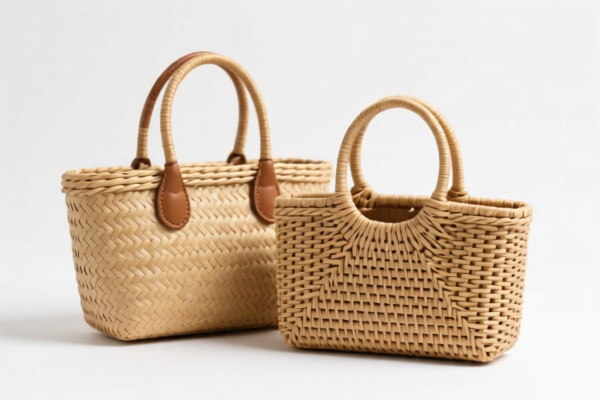
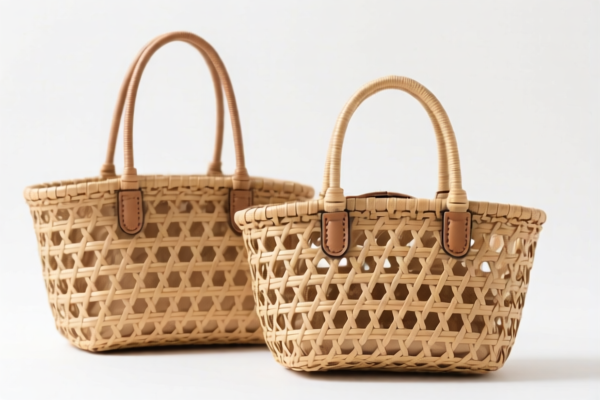
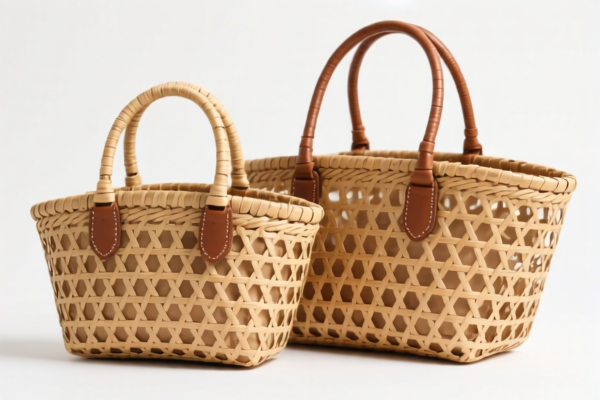
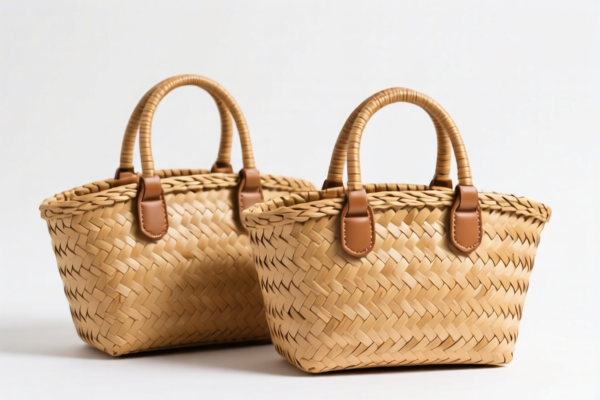
AI Analysis
👜 Natural Rattan Handbag (Wicker/Luggage)
🌐 HS Code Reference & Customs Clearance Guide | 2026 Latest Tariff Analysis | Professional Strategy
📌 I. Product Definition & Classification: Do You Really Know "Rattan Handbags"?
Natural rattan handbags fall under Chapter 46: Plaiting materials and other products of plaiting materials; basketwork and wickerwork. Specifically, they are classified as wickerwork made directly to shape from plaiting materials.
The critical distinction for customs lies in the product form and function: * Luggage/Handbags/Flatgoods: Items designed for carrying personal effects (purses, totes, flat goods like portfolios). * Other Rattan Articles: General household items, furniture, or decorative baskets not specifically shaped as luggage.
⚠️ Key Differentiator:
- If the item is a handbag, purse, tote, or flatgood (even if unlined), it falls under the sub-heading 4602.12.2x.
- If it is a generic basket, box, or decorative item not specifically for "luggage/handbags," it may fall under 4602.12.29 (Other) or other headings within 4602.
📦 II. HS Code Classification Details (Based on Provided Data)
The provided data specifies two distinct classifications for rattan handbags/luggage under heading 4602.12:
| HS Code | Product Description | Tax Detail (Total) | Origin/Policy Context |
|---|---|---|---|
4602.12.23.00 |
Luggage, handbags and flatgoods, whether or not lined Specifically: Articles of a kind normally carried in the pocket or in the handbag |
34.0% (Base: 9.0% + Additional: 25.0%) |
High tariff due to "Additional Tariffs" (likely Section 301/China-related). |
4602.12.25.00 |
Other (Under the same category: Luggage, handbags, flatgoods) |
0.0% (Base: 0.0% + Additional: 0.0%) |
Zero tariff. Likely applies to non-subject countries or specific exemptions. |
🔍 Critical Observation:
- Both codes fall under "Of rattan: Luggage, handbags and flatgoods."
- The difference is 34 percentage points.
-4602.12.23.00is the specific code for "articles normally carried in the pocket or handbag" (e.g., small clutches, wallets, small pouches).
-4602.12.25.00is the "Other" category under the same sub-heading. Note: In many tariff schedules, "Other" might apply to larger handbags, totes, or non-pocket-sized items, or it may reflect a different country of origin status. You must verify if your specific handbag size/style fits the "pocket/handbag" definition for 23.00 or falls into "Other" for 25.00.
💰 III. 2026 Tariff Rate Breakdown (Detailed)
Based on the provided <DATA>:
🎯 1. 4602.12.23.00 – Small Luggage/Handbags (Pocket/Handbag Size)
| Item | Content |
|---|---|
| Base Tariff | 9.0% |
| Additional Tariff | +25.0% |
| Total Tax Rate | 34.0% |
| Tax Calculation | CIF Value × 34.0% |
| Applicable Products | Rattan pouches, small handbags, clutches, flatgoods carried in pockets/handbags. |
| Legal Basis | Heading 4602.12 + Specific Sub-heading 23.00. |
📌 Explanation:
- The 9% is the standard MFN (Most Favored Nation) base tariff for rattan wickerwork luggage.
- The 25% additional tariff is typically associated with Section 301 tariffs on Chinese-origin goods or specific trade remedies.
- Total Cost Impact: High. This code attracts significant duties.
🎯 2. 4602.12.25.00 – Other Luggage/Handbags
| Item | Content |
|---|---|
| Base Tariff | 0.0% |
| Additional Tariff | 0.0% |
| Total Tax Rate | 0.0% |
| Applicable Products | Rattan handbags/totes that do not fit the "pocket/small handbag" definition of 23.00, OR goods from countries exempt from additional tariffs. |
| Legal Basis | Heading 4602.12 + Specific Sub-heading 25.00. |
📌 Explanation:
- Zero Duty: This is highly advantageous.
- Clarification Needed: In standard HTS, "Other" often captures items not specifically listed. If your handbag is a large tote, it might qualify for 25.00 instead of 23.00, depending on the specific country's tariff schedule interpretation. However, if the goods are from a sanctioned origin, 25.00 might also attract hidden fees. Assuming the data is accurate for a non-sanctioned origin or specific exemption.
🛠️ IV. Customs Clearance Practical Advice
✅ 1. Documentation Checklist (Must-Haves)
| Document | Required? | Note |
|---|---|---|
| Commercial Invoice | ✅ | Must clearly state "Natural Rattan Handbag" or "Wicker Handbag." Avoid vague terms like "Bamboo Bag" if it is rattan. |
| Product Photos | ✅ | Show the bag fully formed, including handles and lining (if any). |
| Material Declaration | ✅ | Specify "100% Natural Rattan" or "Rattan with Cotton Lining." |
| Origin Certificate | ✅ | Critical for determining if the 0% or 34% rate applies. |
| Lining Details | ✅ | State if lined/unlined. Both are covered under 4602.12, but clarity helps. |
✅ 2. Classification Strategy (How to Choose)
🔥 "Size and Function Matter!"
| Scenario | Recommended HS Code | Why? |
|---|---|---|
| Small Clutch / Wallet / Coin Purse | 4602.12.23.00 |
Fits "articles normally carried in the pocket." |
| Standard Handbag / Tote / Shopper | Consult 4602.12.23.00 vs 25.00 |
If the schedule defines 23.00 broadly as "handbags," use 23.00 (34%). If 25.00 is for "other handbags" not fitting 23.00's specific description, use 25.00 (0%). Check local tariff book for precise sub-heading definitions. |
| Rattan Basket/Box (Not for carrying) | Not 4602.12 | May fall under 4602.19 or 4601. |
⚠️ Risk Warning:
Misclassifying a 34% item as a 0% item by claiming it's "Other" when it clearly fits "Pocket/Handbag" can lead to audits, penalties, and back taxes.
Conversely, classifying a 0% item as 34% leads to overpayment.
Recommendation: If your handbag is a standard tote (not a pocket accessory), investigate if4602.12.25.00is applicable in your destination country. If uncertain, use 23.00 to be safe, or request a Binding Tariff Information (BTI) ruling.
✅ 3. Special Considerations for Rattan Products
- Material Authenticity: Customs may inspect for "artificial rattan" (plastic/wicker). If it is synthetic, it falls under Chapter 39 (Plastics), which has different tariffs. Ensure your description says "Natural Rattan" or "Vegetable Material."
- Lining: If the bag is lined with fabric/leather, it is still classified under 4602 because the rattan is the essential character. The lining does not change the heading.
- Packaging: Do not ship rattan bags in rigid boxes that make them look like "containers." They should be packed to show their flexibility and handbag nature.
🌍 V. Global Market Comparison (General Insight)
| Market | Typical HS Code | Estimated Duty (China Origin) | Notes |
|---|---|---|---|
| 🇺🇸 USA | 4602.12.23 |
34.0% (as per data) | High additional tariffs on Chinese rattan goods. |
| 🇺🇸 USA | 4602.12.25 |
0.0% (as per data) | Possible for non-China origin or specific exemptions. |
| 🇪🇺 EU | 4602.12 |
~5-6% | Generally lower tariffs, no Section 301-style penalties. |
| 🇨🇳 China | 4602.12 |
~9-10% | Standard import duty. |
📌 Conclusion:
- If exporting from China to the US, the 34% rate for4602.12.23.00is a major cost factor.
- Consider supply chain diversification (e.g., manufacturing in Vietnam, Thailand, or Indonesia) to potentially access the 0% rate if4602.12.25.00applies to non-China goods, or if preferential FTAs apply.
- For non-US markets, the 34% penalty likely does not exist, making rattan handbags highly competitive.
📌 VI. Common Errors & Pitfalls
❌ Error 1: Declaring as "Plastic Wicker"
👉 Result: Misclassification to Chapter 39. If it is natural rattan, you risk penalties for false declaration.
✅ Fix: Clearly state "Natural Rattan" in the description.
❌ Error 2: Ignoring the 25% Additional Tariff
👉 Result: Underpaying duty by 25% → Back taxes + Interest + Penalties.
✅ Fix: Verify if your goods are subject to additional tariffs based on country of origin.
❌ Error 3: Confusing "Handbag" with "Basket"
👉 Result: Incorrect HS Code assignment. Baskets might have different duty rates.
✅ Fix: Emphasize the handling features (straps, handles) to prove it is a "handbag/luggage."
🎯 VII. Conclusion: Professional Classification Saves Money
🎯 Remember the Rule:
🔹 "Rattan Handbag = 4602.12"
🔹 "Pocket/Small Bag = 23.00 (34% in US)"
🔹 "Other Handbag = 25.00 (0% in US data)"
🔹 "Synthetic = Chapter 39 (Different Rates)"
📌 Action Plan:
1. Identify Origin: Is it from China? If yes, expect 34% for small bags.
2. Define Product: Is it a small clutch (23.00) or a large tote (potentially 25.00)?
3. Verify Tariff Book: Check the latest HTS for your destination country to confirm if 25.00 is truly 0% for your origin.
4. Consult a Broker: For high-value shipments, get a pre-classification ruling.
✨ Accurate Classification = Predictable Costs
💼 Don't let a 34% tariff eat your profit margin!
Customer Reviews
About HS Code Classification
The Harmonized System (HS) is an internationally standardized nomenclature developed by the World Customs Organization (WCO) to classify traded products. Over 200 countries use the HS system as the basis for customs tariffs, trade statistics, and import/export regulations.
Each HS code follows a hierarchical structure:
- Chapter (2 digits) — Broad category of goods (e.g., Chapter 84: Machinery and Mechanical Appliances)
- Heading (4 digits) — More specific grouping within the chapter
- Subheading (6 digits) — Internationally standardized breakdown, used by all WCO member countries
- National subdivisions (8-10 digits) — Country-specific extensions for further classification, such as US HTSUS 10-digit codes
Correct HS code classification is essential for smooth customs clearance, accurate duty payment, and compliance with trade regulations. Misclassification can lead to customs delays, overpayment of duties, or penalties.
When importing from CN to US, the applicable tariff rates may include:
- Most-Favored-Nation (MFN) rate — The standard duty rate applied to WTO members
- General rate — Applied to countries without trade agreements
- Trade remedy duties — Additional tariffs such as Section 301 (anti-dumping), Section 232 (national security), or countervailing duties
The information provided on this page is for reference purposes only. For official classification, please consult with your local customs authority or a licensed customs broker.