Natural Rattan Seat Cushion
CN → US| HS Code | Tariff Rate | Origin | Destination | Doc |
|---|---|---|---|---|
| 4602123500 | 35.0% | CN | US | Official Doc |
| 5705002090 | 38.3% | CN | US | Official Doc |
| 5705001000 | 35.0% | CN | US | Official Doc |
| 4602124500 | 41.6% | CN | US | Official Doc |
Product Images
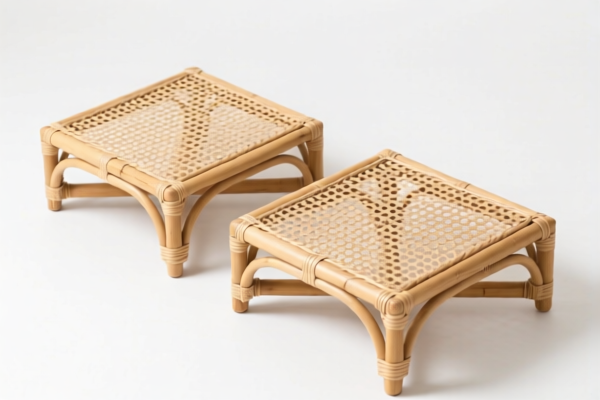
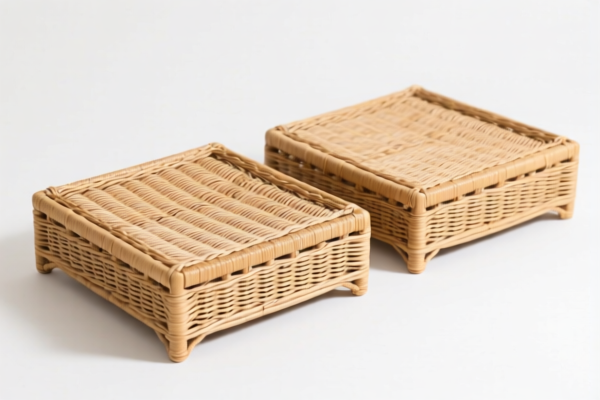
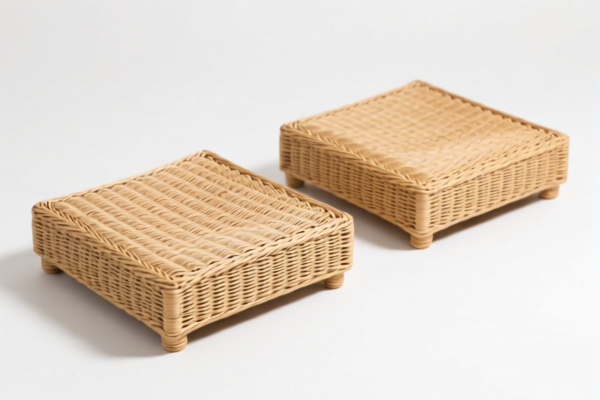
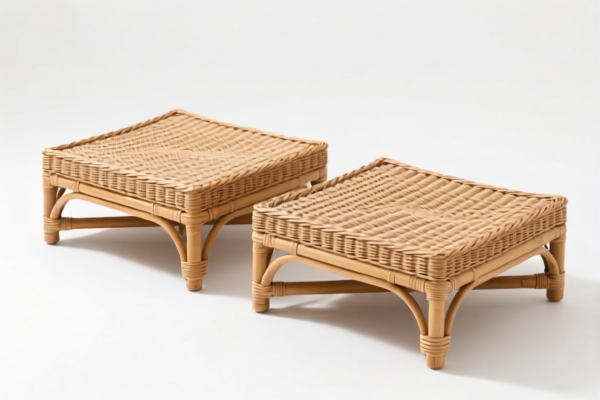
AI Analysis
🌿 Natural Rattan Seat Cushion
🌐 HS Code Reference & Customs Clearance Guide | 2026 Latest Tariff Analysis | Professional Strategy for US-China Trade
📌 I. Product Definition & Classification: Do You Really Understand "Natural Rattan Cushions"?
Natural rattan seat cushions are eco-friendly, woven seating accessories. In international trade, they are often misunderstood. They are neither simple "mattresses" nor standard "furniture parts." Their classification depends on material composition (natural fiber vs. textile-like weaving) and form (floor covering vs. upright cushion).
⚠️ Key Distinction Point:
- If classified under Chapter 46 (Wickerwork, Rattan, Bamboo, etc.) → It is treated as a Woven Article.
- If classified under Chapter 57 (Carpets, Rugs, Other Floor Coverings) → It is treated as a Textile/Fiber Floor Covering.
This distinction is critical because the USITC 301 Tariffs and IEEPA Section 122 Tariffs apply differently or interact differently based on the base duty rate.
📦 II. HS Code Classification Details (2026 Latest Tariff Authority Comparison)
| HS Code | Product Description | Application Scenario | Material/Form Basis |
|---|---|---|---|
4602.12.35.00 |
Wickerwork products of rattan, woven; seat mats/cushions | Rattan woven mats, upright seat cushions, decorative rattan pads | ✅ Natural Rattan (Ch. 46 Wickerwork) |
4602.12.45.00 |
Wickerwork products of rattan, woven; other seat mats/cushions | Similar to above, but different sub-category for specific rattan weaving techniques or finishes | ✅ Natural Rattan (Ch. 46 Wickerwork) |
5705.00.20.90 |
Other textile floor coverings, containing >50% plant fibers (rattan/straw) | Flat rattan mats used as floor coverings, rugs, or large cushion pads | ✅ Plant Fiber/Textile (Ch. 57 Floor Covering) |
5705.00.10.00 |
Other textile floor coverings, containing ≤50% textile materials, of plant fibers | Flat mats made from natural plant fibers, treated as textile floor coverings | ✅ Plant Fiber/Textile (Ch. 57 Floor Covering) |
🔍 Important Reminder:
- Chapter 46 (4602.xxxx) treats the product as "Wickerwork". This is often the preferred classification for high-quality, rigid, or semi-rigid rattan items.
- Chapter 57 (5705.xxxx) treats the product as a "Floor Covering" (even if used as a seat cushion, if it is flat and mat-like).
- Base Tariff Difference: Chapter 46 codes often have 0% base duty, while Chapter 57 codes may have 0% or 3.3% base duty. This changes the absolute value of the additive tariffs.
💰 III. 2026 Latest Tariff Rate Breakdown (Including Additional Duties & Policy Surcharges)
✅ Applicable Country: United States (US)
✅ Origin: China (CN)
✅ Effective Time: Including imports after November 10, 2025 (current applicable rates)
🎯 1. 4602.12.35.00 – Wickerwork of Rattan (Woven Mat/Cushion)
| Item | Content |
|---|---|
| Base Tariff | 0% (ad valorem) |
| USITC Additional Duty (Section 301) | +25.0% |
| IEEPA Additional Duty (Section 122) | +10.0% |
| Total Tax Rate | 35.0% |
| Tax Calculation | CIF Value × 35% |
| De Minimis Exemption Available? | ❌ No (deny_de_minimis) |
| Legal Basis Path | USITC:4602.12.35.00 → FOOTNOTE:301 → IEEPA:122 |
📌 Explanation:
- Base 0%: Wickerwork under HS 4602 typically has low base duties.
- +25% (Section 301): Standard Trump-era/continued tariff on Chinese goods.
- +10% (IEEPA 122): Specific surcharge applicable to many Chinese consumer goods.
- Total 35%: This is a moderate-high tariff for a woven good.
🎯 2. 5705.00.20.90 – Other Textile Floor Coverings (>50% Plant Fiber)
| Item | Content |
|---|---|
| Base Tariff | 3.3% (ad valorem) |
| USITC Additional Duty (Section 301) | +25.0% |
| IEEPA Additional Duty (Section 122) | +10.0% |
| Total Tax Rate | 38.3% |
| Tax Calculation | CIF Value × 38.3% |
| De Minimis Exemption Available? | ❌ No (deny_de_minimis) |
| Legal Basis Path | USITC:5705.00.20.90 → FOOTNOTE:301 → IEEPA:122 |
📌 Note:
- This classification applies if the rattan mat is considered a floor covering (textile floor covering).
- The 3.3% base duty adds to the total, making it 3.3% more expensive than the4602.12.35.00classification.
- Total 38.3% is the highest option in this dataset.
🎯 3. 5705.00.10.00 – Other Textile Floor Coverings (Plant Fibers)
| Item | Content |
|---|---|
| Base Tariff | 0.0% (ad valorem) |
| USITC Additional Duty (Section 301) | +25.0% |
| IEEPA Additional Duty (Section 122) | +10.0% |
| Total Tax Rate | 35.0% |
| Tax Calculation | CIF Value × 35.0% |
| De Minimis Exemption Available? | ❌ No (deny_de_minimis) |
| Legal Basis Path | USITC:5705.00.10.00 → FOOTNOTE:301 → IEEPA:122 |
📌 Note:
- If classified as a floor covering but with a base duty of 0%, the total matches4602.12.35.00.
- This is a compromise classification: it acknowledges the textile/floor nature but retains the low base duty.
🎯 4. 4602.12.45.00 – Wickerwork of Rattan (Woven Mat/Cushion, Other)
| Item | Content |
|---|---|
| Base Tariff | 6.6% (ad valorem) |
| USITC Additional Duty (Section 301) | +25.0% |
| IEEPA Additional Duty (Section 122) | +10.0% |
| Total Tax Rate | 41.6% |
| Tax Calculation | CIF Value × 41.6% |
| De Minimis Exemption Available? | ❌ No (deny_de_minimis) |
| Legal Basis Path | USITC:4602.12.45.00 → FOOTNOTE:301 → IEEPA:122 |
📌 Note:
- This is a less common sub-category within Chapter 46.
- It carries a 6.6% base duty, leading to the highest total rate of 41.6%.
- Avoid this classification unless your product strictly fits this specific sub-heading description, as it is the most expensive option.
🛠️ IV. Customs Clearance Practical Advice (Battle-Tested Pitfall Guide)
✅ 1. Preparation Checklist (Non-negotiable)
| Document | Required | Explanation |
|---|---|---|
| ✅ Product Specifications | ✔️ | Detail: Natural rattan? Artificial? Woven pattern? Dimensions? |
| ✅ Material Composition Declaration | ✔️ | Must specify "100% Natural Rattan" or "Plant Fiber." |
| ✅ Product Photos | ✔️ | Clear images of the item in use (as a seat cushion) and flat (as a mat) to justify classification choice. |
| ✅ Commercial Invoice | ✔️ | Describe as "Natural Rattan Woven Seat Cushion" or "Rattan Mat." Avoid vague terms like "Wicker Item." |
| ✅ Packing List | ✔️ | Include packaging details. |
| ✅ Origin Certificate | ✔️ | Proof of Origin (China) to confirm applicability of USITC/IEEPA tariffs. |
✅ 2. Classification Strategy (Key Rules)
🔥 “Rattan is Wicker, Not Textile – Unless It’s a Flat Mat!”
| Scenario | Recommended HS Code | Total Tax | Reasoning |
|---|---|---|---|
| Upright Rattan Seat Cushion | 4602.12.35.00 |
35.0% | Best for rigid/semi-rigid woven rattan seats. Low base duty (0%). |
| Flat Rattan Mat (Used as Cushion/Floor) | 5705.00.10.00 |
35.0% | If flexible and mat-like, but qualifies for 0% base duty in Ch 57. |
| Large Rattan Floor Rug/Mat | 5705.00.20.90 |
38.3% | If explicitly sold as a floor covering with >50% plant fiber content. |
| Specific Wicker Sub-category | 4602.12.45.00 |
41.6% | Only use if product specifically matches this sub-heading. Most Expensive. |
📌 Critical Advice:
- Aim for4602.12.35.00or5705.00.10.00to minimize taxes to 35%.
- Avoid4602.12.45.00due to its 6.6% base duty.
- Be Consistent: Do not declare as "Floor Mat" in one shipment and "Seat Cushion" in another without justification.
✅ 3. Special Circumstances
| Situation | Handling Advice |
|---|---|
| Rattan + Fabric Insert | If the cushion has significant fabric padding, customs may lean toward Chapter 57 or even Chapter 63 (Other Made-up Textile Articles). Ensure rattan is the dominant feature for Ch 46. |
| Packaged with Fabric Cover | If the rattan base is removable from a fabric cover, declare the Rattan Base separately if possible to leverage Ch 46. Otherwise, classify as a composite good (likely Ch 57 or Ch 94). |
| Samples | Even samples are subject to 35-41.6% tariff. No de minimis exemption. |
| Pre-Ruling | Strongly recommended to apply for a Customs Ruling to confirm if 4602.12.35.00 applies to your specific weave/structure. |
🌍 V. Global Market Comparison (2026 Latest)
| Country/Region | Recommended HS Code | Tariff Rate | Notes |
|---|---|---|---|
| 🇺🇸 USA | 4602.12.35.00 |
35.0% | High tariffs due to 301/122. |
| 🇨🇳 China | 4602.12.35.00 |
~5-10% | Lower import duty, no 301/122. |
| 🇪🇺 EU | 4602.12.00 |
0-5% | No additional punitive tariffs. |
| 🇬🇧 UK | 4602.12.00 |
0-5% | Post-Brexit rates favorable. |
| 🇨🇦 Canada | 4602.12.00 |
0% | CUSMA/USMCA benefits not applicable for CN origin, but base rates are low. |
📌 Conclusion:
- The US market is significantly more expensive for natural rattan products due to Section 301 and IEEPA 122 tariffs.
- Competitiveness Strategy: Factor in 35-41.6% landed cost when pricing for the US market. Consider marketing "eco-friendly" and "hand-woven" to justify premium pricing.
📌 VI. Common Mistakes & Pitfalls (Lessons Learned)
❌ Mistake 1: Declaring as "Furniture Part" (e.g., 9403.xxxx)
👉 Consequence: Misclassification. Rattan cushions are not "parts" of furniture unless permanently attached. Risk of penalties and retroactive duties.
❌ Mistake 2: Using "Mat" in description but declaring 4602.12.35.00
👉 Consequence: If the item is flat and large, customs may reclassify to 5705.00.20.90 (38.3%). Ensure description matches physical form.
❌ Mistake 3: Ignoring the "10% IEEPA"
👉 Consequence: Many importers only see the 25% 301 tariff and underestimate total cost. Always include the 10% surcharge.
❌ Mistake 4: Assuming De Minimis ($800) Applies
👉 Consequence: It does NOT. Section 301 goods from China are excluded from de minimis. Every shipment is taxed.
✅ Correct Approach:
"Natural Rattan Woven Seat Cushion, Handcrafted, 100% Natural Plant Fiber, Wickerwork Article, for Household Use"
🎯 VII. Conclusion: Precision Saves Profit!
🎯 Remember the Golden Rules:
🔹 “Wicker is 0% Base, Textile is 0-3.3% Base. Watch the 301/122 Add-ons!”
🔹 “Rattan Cushion = 35% Total (Best Case). Floor Mat = 38.3% (Worst Case for Ch 57).”
🔹 “No De Minimis. No Exceptions. Pay Full Duty.”
📌 Pro Tip:
If your rattan cushions are sourced from Vietnam, Indonesia, or Malaysia, you may avoid the 25% Section 301 and 10% IEEPA tariffs entirely, reducing the total duty to 0-5%.
Recommendation: Evaluate supply chain diversification to Vietnam or Indonesia for US-bound rattan goods to achieve massive cost savings.
📣 Immediate Action:
📞 Consult a licensed Customs Broker for a Pre-Ruling on HS 4602.12.35.00.
🚀 Optimize your product description and packaging to align with Chapter 46 (Wickerwork).
📉 Profit Protection: Build the 35-38.3% tariff into your US pricing model from Day 1.
✨ Professional Customs Clearance Starts with Accurate Classification!
💼 Your Bottom Line Depends on These Percentages!
Customer Reviews
About HS Code Classification
The Harmonized System (HS) is an internationally standardized nomenclature developed by the World Customs Organization (WCO) to classify traded products. Over 200 countries use the HS system as the basis for customs tariffs, trade statistics, and import/export regulations.
Each HS code follows a hierarchical structure:
- Chapter (2 digits) — Broad category of goods (e.g., Chapter 84: Machinery and Mechanical Appliances)
- Heading (4 digits) — More specific grouping within the chapter
- Subheading (6 digits) — Internationally standardized breakdown, used by all WCO member countries
- National subdivisions (8-10 digits) — Country-specific extensions for further classification, such as US HTSUS 10-digit codes
Correct HS code classification is essential for smooth customs clearance, accurate duty payment, and compliance with trade regulations. Misclassification can lead to customs delays, overpayment of duties, or penalties.
When importing from CN to US, the applicable tariff rates may include:
- Most-Favored-Nation (MFN) rate — The standard duty rate applied to WTO members
- General rate — Applied to countries without trade agreements
- Trade remedy duties — Additional tariffs such as Section 301 (anti-dumping), Section 232 (national security), or countervailing duties
The information provided on this page is for reference purposes only. For official classification, please consult with your local customs authority or a licensed customs broker.