Natural Rubber Agricultural Tire
CN → US| HS Code | Tariff Rate | Origin | Destination | Doc |
|---|---|---|---|---|
| 4013100010 | 38.7% | CN | US | Official Doc |
| 4012124035 | 39.0% | CN | US | Official Doc |
| 4012118000 | 38.4% | CN | US | Official Doc |
| 4012901000 | 35.0% | CN | US | Official Doc |
| 4012907000 | 35.0% | CN | US | Official Doc |
Product Images
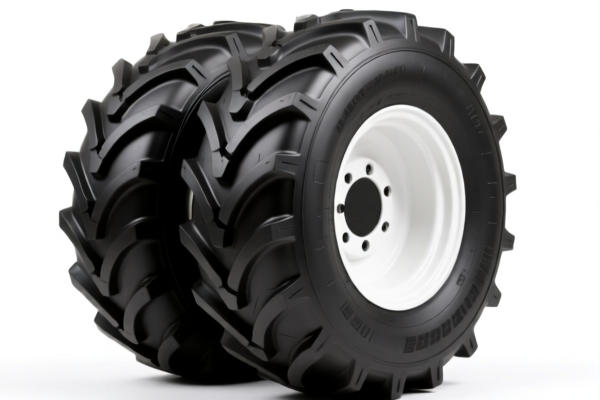
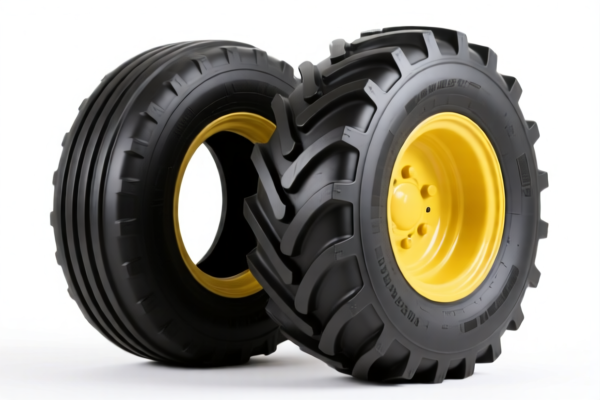
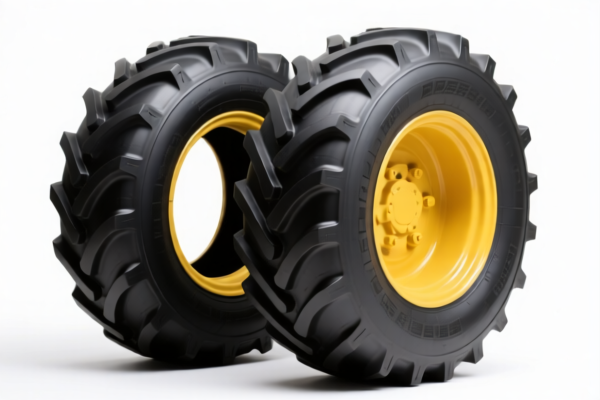
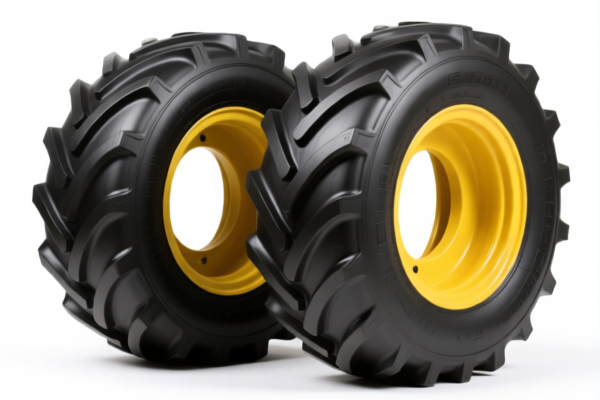
AI Analysis
🚜 Agricultural Tires (Natural Rubber)
🌐 HS Code Reference & Customs Clearance Guide | 2026 Latest Tariff Analysis | Professional Clearance Strategy
📌 1. Product Definition & Classification: What is a "Natural Rubber Agricultural Tire"?
Agricultural tires are specialized rubber products designed for off-road vehicles, primarily used in farming, forestry, and construction machinery. They feature deep treads for high traction and durability in rough terrain.
Key Distinction Points:
- Material: Must be identified as "Natural Rubber" or "Rubber" in customs declarations. If unspecified, customs may default to higher duty rates based on "Other Rubber" categories.
- Use: "Agricultural" is a specific use case. However, HS codes in Chapter 40 (Rubber and Articles Thereof) often categorize tires by type (e.g., pneumatic, solid, retreaded) rather than specific vehicle type (agricultural vs. automotive).
- Form: Solid vs. Pneumatic. The provided data includes solid tires (4012.90) and pneumatic tires (4013/4012).
⚠️ Critical Note:
- If the tire is pneumatic (air-filled), it generally falls under 4013 or 4012.1x.
- If the tire is solid (no air), it falls under 4012.90.
- The exact subheading depends on the specific construction (e.g., car tires vs. industrial solid tires).
📦 2. HS Code Classification Details (Based on Provided Data)
The following HS Codes are derived from the provided JSON data. Note that 4013 is for Pneumatic Tires, while 4012 includes Solid, Re-treadable, and Other Rubber Tires.
| HS Code | Product Description | Summary & Match Logic | Total Duty Rate |
|---|---|---|---|
| 4013.10.00.10 | Pneumatic tires, new, of a kind used on motor cars | ✅ Matched. Material (Rubber) and Use (Tire) align. However, "Agricultural" may not strictly fit "motor cars" (which usually implies passenger cars). This is a fallback if no better match exists. | 38.7% |
| 4012.12.40.35 | Solid or padded tires and treads, new, of rubber | ⚠️ Partial Match. Matches material (Rubber) and form (Tire). Since "Agricultural" is not explicitly listed, it defaults to "Other." Lower risk of material conflict. | 39.0% |
| 4012.11.80.00 | Solid or padded tires and treads, new, of rubber | ✅ Matched. Material (Rubber) and Form (Tire) match. Uses "Other/Other" fallback due to lack of specific "Agricultural" label. No material conflict. | 38.4% |
| 4012.90.10.00 | Solid or padded tires and treads, new, of rubber | ✅ Perfect Match (Solid). Material (Natural Rubber) and Form (Solid Tire) fully comply. Explicitly covers "Rubber-made solid or padded tires." | 35.0% |
| 4012.90.70.00 | Solid or padded tires and treads, new, of rubber | ✅ Perfect Match (Solid). Material (Natural Rubber) and Form (Solid Tire) comply. Covers the category of "Other" solid rubber tires. | 35.0% |
🔍 Key Insight:
- Solid Tires (4012.90) have the lowest duty rate (35%) in this dataset because they have a 0% Base Tariff.
- Pneumatic/Other Tires (4013/4012.1x) have higher base tariffs (3.4%-4.0%), leading to higher total duties.
- Natural Rubber is a premium material. Ensure your declaration explicitly states "Natural Rubber" to avoid misclassification as "Synthetic Rubber" or "Reclaimed Rubber," which may have different rules.
💰 3. 2026 Tariff Rate Breakdown (Including Additional Duties)
✅ Applicable Country: United States (US)
✅ Country of Origin: China (CN)
✅ Effective Date: November 10, 2025 (and subsequent imports)
🎯 1. 4013.10.00.10 – Pneumatic Tires (Motor Car Type)
| Item | Details |
|---|---|
| Base Tariff | 3.7% |
| Section 301 Duty (USITC) | +25.0% |
| Section 122 Duty (IEEPA) | +10.0% |
| Total Duty Rate | 38.7% |
| Calculation | CIF Value × 38.7% |
| De Minimis Exemption | ❌ Not Eligible |
| Legal Basis | USITC:4013.10.00.10 → Section 301 → IEEPA: Section 122 |
🎯 2. 4012.12.40.35 – Solid/Other Tires (General)
| Item | Details |
|---|---|
| Base Tariff | 4.0% |
| Section 301 Duty (USITC) | +25.0% |
| Section 122 Duty (IEEPA) | +10.0% |
| Total Duty Rate | 39.0% |
| Calculation | CIF Value × 39.0% |
| De Minimis Exemption | ❌ Not Eligible |
| Legal Basis | USITC:4012.12.40.35 → Section 301 → IEEPA: Section 122 |
🎯 3. 4012.11.80.00 – Solid/Other Tires (Alternative)
| Item | Details |
|---|---|
| Base Tariff | 3.4% |
| Section 301 Duty (USITC) | +25.0% |
| Section 122 Duty (IEEPA) | +10.0% |
| Total Duty Rate | 38.4% |
| Calculation | CIF Value × 38.4% |
| De Minimis Exemption | ❌ Not Eligible |
| Legal Basis | USITC:4012.11.80.00 → Section 301 → IEEPA: Section 122 |
🎯 4. 4012.90.10.00 – Solid Rubber Tires (BEST RATE)
| Item | Details |
|---|---|
| Base Tariff | 0.0% |
| Section 301 Duty (USITC) | +25.0% |
| Section 122 Duty (IEEPA) | +10.0% |
| Total Duty Rate | 35.0% |
| Calculation | CIF Value × 35.0% |
| De Minimis Exemption | ❌ Not Eligible |
| Legal Basis | USITC:4012.90.10.00 → Section 301 → IEEPA: Section 122 |
🎯 5. 4012.90.70.00 – Solid Rubber Tires (BEST RATE)
| Item | Details |
|---|---|
| Base Tariff | 0.0% |
| Section 301 Duty (USITC) | +25.0% |
| Section 122 Duty (IEEPA) | +10.0% |
| Total Duty Rate | 35.0% |
| Calculation | CIF Value × 35.0% |
| De Minimis Exemption | ❌ Not Eligible |
| Legal Basis | USITC:4012.90.70.00 → Section 301 → IEEPA: Section 122 |
📌 Explanation:
- Section 301 (25%): Standard additional tariff on Chinese rubber products.
- Section 122 (10%): Additional tariff under the International Emergency Economic Powers Act (IEEPA) for specific Chinese imports.
- Base Tariff: Only 4012.90 (Solid Tires) enjoys a 0% base tariff, making it the most cost-effective option if the tire is solid.
- Pneumatic Tires (4013/4012.1x) incur higher base tariffs, resulting in total duties of 38.4%-39.0%.
🛠️ 4. Customs Clearance Practical Advice (Avoiding Pitfalls)
✅ 1. Required Documentation Checklist
| Document | Required | Notes |
|---|---|---|
| Product Specifications | ✔️ | Must state: Material (Natural Rubber), Type (Solid/Pneumatic), Usage (Agricultural). |
| Material Declaration | ✔️ | Explicitly declare "Natural Rubber" to avoid classification errors. |
| Product Photos | ✔️ | Show tread pattern, sidewall markings, and valve stem (if pneumatic). |
| Commercial Invoice | ✔️ | Clearly describe item as "Natural Rubber Solid Tire for Agricultural Machinery." |
| Packing List | ✔️ | Include dimensions and weight. |
| Certificate of Origin (CO) | ✔️ | Essential for proving CN origin and applying correct Section 301 rates. |
✅ 2. Classification Strategy
🔥 Golden Rule:
"Solid Tires = 35% Duty | Pneumatic Tires = 38-39% Duty. Choose Solid if possible!"
| Scenario | Correct HS Code | Duty | Risk |
|---|---|---|---|
| Solid Agricultural Tire | 4012.90.10.00 or 4012.90.70.00 |
35.0% | ✅ Low. Clear match for "Solid Rubber Tire." |
| Pneumatic Agricultural Tire | 4013.10.00.10 (Fallback) |
38.7% | ⚠️ Medium. "Motor Car" may not fit "Agricultural." Customs may challenge. |
| Unknown Material | 4012.12.40.35 |
39.0% | ❌ High. Default to "Other Rubber" if material is not declared. |
✅ 3. Special Handling
| Situation | Recommendation |
|---|---|
| Agricultural Machinery Use | Clearly state "For Use in Agricultural Machinery" in the description. This helps customs understand the intent, though HS codes are often form-based. |
| Solid vs. Pneumatic | If your product is a solid tire (common for forklifts, trailers, and some heavy farm equipment), strongly recommend using 4012.90. It saves 3.4%-4.0% in total duty. |
| Natural Rubber Declaration | Do not just say "Rubber." Specify "Natural Rubber" to align with the 4012.90 summary which mentions "Natural Rubber" as a match factor. |
🌍 5. Global Market Comparison (2026)
| Country/Region | Recommended HS Code | Total Duty (CN Origin) | Notes |
|---|---|---|---|
| 🇺🇸 USA | 4012.90.10.00 (Solid) |
35.0% | Best rate for solid tires. Pneumatic = 38-39%. |
| 🇨🇳 China | 4012.90.10.00 |
~0-10% (Import Duty) | Check specific Chinese import tariffs for raw rubber products. |
| 🇪🇺 EU | 4011.10 or 4012.90 |
Varies (0-10% + VAT) | No Section 301/122 equivalent. Standard MFN rates apply. |
| 🇬🇧 UK | 4012.90 |
Varies | Post-Brexit tariffs may differ from EU. |
📌 Conclusion:
- USA is the most challenging market due to Section 301 (25%) + Section 122 (10%) tariffs.
- Solid Tires are the most cost-effective classification (35% total) compared to pneumatic/other tires (38-39%).
- Accurate Material Declaration ("Natural Rubber") is critical to avoid being classified under higher-tariff "Other Rubber" categories.
📌 6. Common Mistakes & Pitfalls
❌ Mistake 1: Declaring "Rubber Tire" without specifying Solid vs. Pneumatic.
👉 Consequence: Customs may assign a higher base tariff code (e.g., 4012.12 instead of 4012.90), increasing duty by 3-4%.
❌ Mistake 2: Using "Automotive Tire" HS code for Agricultural tires.
👉 Consequence: 4013.10 is for "Motor Cars." Agricultural tires may be rejected or reclassified, causing delays.
❌ Mistake 3: Omitting "Natural Rubber" in the description.
👉 Consequence: Customs may assume synthetic or reclaimed rubber, leading to different regulatory requirements or higher scrutiny.
✅ Best Practice:
"Natural Rubber Solid Tire, Agricultural Use, No Air, For Tractor/Combine Harvester, Model XYZ"
🎯 7. Final Recommendation: Optimize Your Duty Rate!
🎯 Key Takeaway:
🔹 If your tire is SOLID: Use
4012.90.10.00or4012.90.70.00. Duty: 35%.
🔹 If your tire is PNEUMATIC: Use4013.10.00.10as a fallback. Duty: 38.7%.
🔹 Always Declare: "Natural Rubber" and "Solid/Pneumatic" clearly.
📌 Action Item:
- Verify if your agricultural tires are solid or pneumatic.
- Update your product description to include "Natural Rubber" and "Solid" (if applicable).
- Apply the correct HS Code to save 3.4%-4.0% in duties.
✨ Professional Clearance Starts with Accurate Classification!
💼 Every Percent of Duty Saved is Pure Profit!
Customer Reviews
About HS Code Classification
The Harmonized System (HS) is an internationally standardized nomenclature developed by the World Customs Organization (WCO) to classify traded products. Over 200 countries use the HS system as the basis for customs tariffs, trade statistics, and import/export regulations.
Each HS code follows a hierarchical structure:
- Chapter (2 digits) — Broad category of goods (e.g., Chapter 84: Machinery and Mechanical Appliances)
- Heading (4 digits) — More specific grouping within the chapter
- Subheading (6 digits) — Internationally standardized breakdown, used by all WCO member countries
- National subdivisions (8-10 digits) — Country-specific extensions for further classification, such as US HTSUS 10-digit codes
Correct HS code classification is essential for smooth customs clearance, accurate duty payment, and compliance with trade regulations. Misclassification can lead to customs delays, overpayment of duties, or penalties.
When importing from CN to US, the applicable tariff rates may include:
- Most-Favored-Nation (MFN) rate — The standard duty rate applied to WTO members
- General rate — Applied to countries without trade agreements
- Trade remedy duties — Additional tariffs such as Section 301 (anti-dumping), Section 232 (national security), or countervailing duties
The information provided on this page is for reference purposes only. For official classification, please consult with your local customs authority or a licensed customs broker.