Natural Rubber Bands
CN → US| HS Code | Tariff Rate | Origin | Destination | Doc |
|---|---|---|---|---|
| 4008111000 | 35.0% | CN | US | Official Doc |
| 4008210000 | 35.0% | CN | US | Official Doc |
| 3926904510 | 38.5% | CN | US | Official Doc |
| 4005910000 | 35.0% | CN | US | Official Doc |
| 4016993510 | 35.0% | CN | US | Official Doc |
Product Images
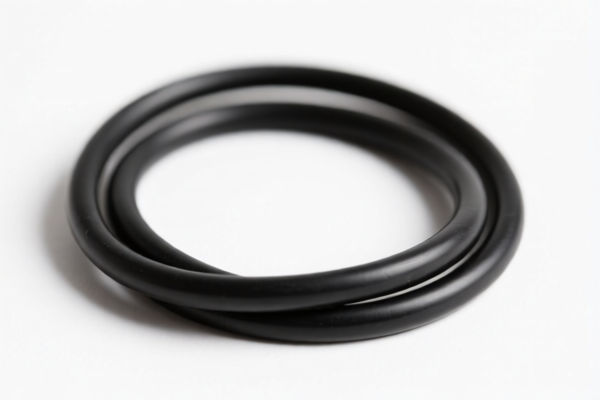
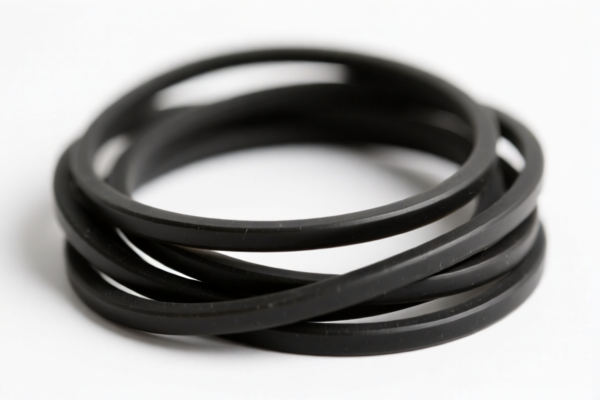
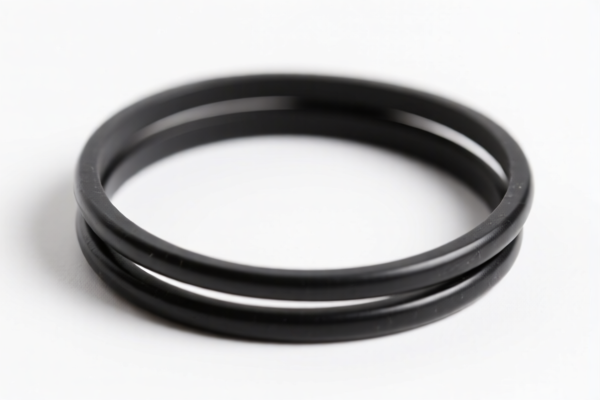
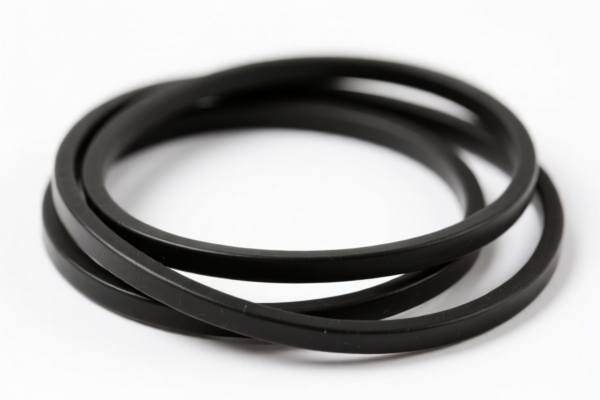
AI Analysis
🛡️ Natural Rubber Bands (Strips/Tape)
🌐 HS Code Classification & Clearance Guide | 2026 Latest Tariff Analysis | Professional US Customs Strategy
📌 I. Product Definition & Classification: What Exactly Are "Natural Rubber Bands"?
In international trade, "Natural Rubber Bands" generally refers to long, thin strips or sheets of natural rubber, often used for sealing, packaging, insulation, or industrial cushioning. Unlike small elastic hair ties (which are finished articles), these are often semi-finished products or specific shaped articles depending on their vulcanization state and dimensions.
The classification depends heavily on: 1. Material: Must be confirmed as Natural Rubber (not synthetic). 2. Form: "Bands" (strips/tape) vs. "Sheets" vs. "Finished Articles." 3. Processing State: Unvulcanized (raw) vs. Vulcanized (finished/semi-finished).
⚠️ Key Distinction Point:
- If the item is unvulcanized and in primary forms (strips/bars) → Likely 4005.91.00.00
- If the item is vulcanized and shaped into strips/bands (not further worked than cut/shaped) → Likely 4008.11.10.00 or 4008.21.00.00
- If it serves a specific functional purpose (e.g., seals, gaskets) → Could be 4016.99.35.10
📦 II. HS Code Classification Details (2026 Latest Tariff Authority Reference)
| HS Code | Product Description | Application Scenario | Material/State Match |
|---|---|---|---|
4008.11.10.00 |
Vulcanized natural rubber bands/strips (non-foam) | Industrial sealing strips, rubber tapes, non-foam bands | ✅ Match: "Band" shape + "Natural Rubber" material |
4008.21.00.00 |
Vulcanized natural rubber articles (non-foam) | General non-foam rubber strips/bands where "band" is a generic term | ✅ Match: "Rubber" + "Band" shape; assumes non-foam by default |
4005.91.00.00 |
Unvulcanized natural rubber in primary forms (strips) | Raw rubber strips, pre-vulcanization stock | ⚠️ Inference: Assumes unvulcanized "strip" form based on common usage |
4016.99.35.10 |
Other vulcanized rubber articles (non-hard rubber) | Rubber seals, gaskets, pads, or specialized bands | ⚠️ Inference: Matches "Natural Rubber" material; assumes functional "seal/gasket" attribute |
3926.90.45.10 |
Other plastic articles (misc.) | Erroneous Match: Sometimes flagged if material is misidentified as plastic | ❌ Conflict: Material should be rubber, not plastic/synthetic |
🔍 Critical Reminder:
- 4008 Series is the most accurate for "Natural Rubber Bands/Strips" that are vulcanized.
- 4005.91.00.00 applies only if the rubber is unvulcanized (raw state).
- 4016.99.35.10 is for specific articles (like seals); if the "band" is a simple strip, 4008 is preferred.
- 3926.90.45.10 is incorrect for natural rubber; do not use unless the material is actually plastic.
💰 III. 2026 Latest Tariff Rate Breakdown (Including Additional Duties & Policy Surcharges)
✅ Applicable Country: United States (US)
✅ Country of Origin: China (CN)
✅ Effective Date: November 10, 2025 (and subsequent imports)
🎯 1. 4008.11.10.00 —— Vulcanized Natural Rubber Bands (Non-Foam)
| Item | Content |
|---|---|
| Basic Duty Rate | 0% (ad valorem) |
| USITC Additional Duty | +25% (under USITC Footnote 9903.88.01) |
| IEEPA Additional Duty | +10% (targeting China/HK products, effective from Nov 10, 2025) |
| Total Duty Rate | 35.0% |
| Duty Calculation | CIF Value × 35% |
| De Minimis Eligibility | ❌ No (deny_de_minimis) |
| Legal Basis Path | IEEPA:9903.01.25 → IEEPA:9903.01.24 → USITC:4008.11.10.00 → FOOTNOTE:9903.88.01 |
📌 Explanation:
- "USITC Additional Duty 25%": Under Section 301 of the Trade Act (Section 301 Tariffs).
- "IEEPA 10%": Under the International Emergency Economic Powers Act, additional surcharge on Chinese goods.
- Total 35%: This is a significant tariff burden. Must be factored into pricing strategies.
🎯 2. 4008.21.00.00 —— Other Vulcanized Natural Rubber Articles (Non-Foam)
| Item | Content |
|---|---|
| Basic Duty Rate | 0% |
| USITC Additional Duty | +25% |
| IEEPA Additional Duty | +10% |
| Total Duty Rate | 35.0% |
| Duty Calculation | CIF × 35% |
| De Minimis Eligibility | ❌ No |
| Legal Basis Path | IEEPA:9901.25 → IEEPA:9903.01.24 → USITC:4008.21.00.00 → FOOTNOTE:9903.88.01 |
📌 Note:
- Same tariff rate as4008.11.10.00.
- Applies if the specific "band" description doesn't fit the precise "strip" definition of 4008.11 but is still a non-foam natural rubber article.
🎯 3. 4005.91.00.00 —— Unvulcanized Natural Rubber (Strips/Bars)
| Item | Content |
|---|---|
| Basic Duty Rate | 0% |
| USITC Additional Duty | +25% |
| IEEPA Additional Duty | +10% |
| Total Duty Rate | 35.0% |
| Duty Calculation | CIF × 35% |
| De Minimis Eligibility | ❌ No |
| Legal Basis Path | IEEPA:9903.01.25 → IEEPA:9903.01.24 → USITC:4005.91.00.00 → FOOTNOTE:9903.88.01 |
📌 Note:
- Only applies if the rubber is unvulcanized (raw).
- If the product is vulcanized (finished), this code is incorrect.
🎯 4. 4016.99.35.10 —— Other Vulcanized Rubber Articles (Seals/Gaskets)
| Item | Content |
|---|---|
| Basic Duty Rate | 3.5% |
| USITC Additional Duty | +25% |
| IEEPA Additional Duty | +10% |
| Total Duty Rate | 38.5% |
| Duty Calculation | CIF × 38.5% |
| De Minimis Eligibility | ❌ No |
| Legal Basis Path | IEEPA:9903.01.25 → IEEPA:9903.01.24 → USITC:4016.99.35.10 → FOOTNOTE:9903.88.01 |
📌 Note:
- Higher base duty (3.5%) makes this less favorable than 4008 series.
- Only use if the product is clearly a functional article (e.g., a specific seal) and not a general-purpose strip.
🎯 5. 3926.90.45.10 —— Other Plastic Articles (Misc.)
| Item | Content |
|---|---|
| Basic Duty Rate | 3.5% |
| USITC Additional Duty | +25% |
| IEEPA Additional Duty | +10% |
| Total Duty Rate | 38.5% |
| Duty Calculation | CIF × 38.5% |
| De Minimis Eligibility | ❌ No |
| Legal Basis Path | IEEPA:9903.01.25 → IEEPA:9903.01.24 → USITC:3926.90.45.10 → FOOTNOTE:9903.88.01 |
📌 Warning:
- This code is for Plastic/Synthetic articles.
- Do NOT use for Natural Rubber. Misclassification can lead to penalties, seizure, or forced re-classification.
- Only relevant if the "rubber band" is actually a synthetic polymer product mislabeled.
🛠️ IV. Customs Clearance Practical Advice (Real-World Pitfall Guide)
✅ 1. Required Documentation Checklist (No Exception)
| Document | Required | Description |
|---|---|---|
| ✅ Product Specification Sheet | ✔️ | Must specify: Natural Rubber content %, vulcanization status, dimensions, hardness (Shore A) |
| ✅ Material Certificate (COA) | ✔️ | Proof of Natural Rubber origin (not synthetic) |
| ✅ Product Photos (Clear) | ✔️ | Show cross-section, texture, and any markings |
| ✅ Commercial Invoice | ✔️ | Clearly state "Natural Rubber Bands/Strips," not generic "Rubber Parts" |
| ✅ Packing List | ✔️ | Detail quantity, weight, and packaging method |
| ✅ Origin Certificate (CO) | ✔️ | For origin proof; if not China, may avoid USITC tariffs |
| ✅ Third-Party Test Report | ✔️ | RoHS, REACH (if EU involved), or material composition analysis |
✅ 2. Declaration Tips (Key Mnemonics)
🔥 “Natural Rubber is Key, Vulcanized is King, 4008 is Best, 3926 is Mistake!”
| Situation | Correct Declaration | Wrong Practice |
|---|---|---|
| Vulcanized natural rubber strips | 4008.11.10.00 |
Misdeclare as 3926 (Plastic) → Penalty |
| Unvulcanized raw rubber strips | 4005.91.00.00 |
Declare as finished product → Delay |
| Functional rubber seals (gaskets) | 4016.99.35.10 |
Declare as simple strip → Higher tax (3.5% base) |
| Synthetic rubber bands | 3926.90.45.10 or 4016 |
Declare as "Natural Rubber" → Fraud/Seizure |
✅ 3. Special Circumstances Handling
| Situation | Handling Advice |
|---|---|
| OEM Custom Rubber Bands | Provide design drawings + material specs. Avoid generic names. |
| Mixed Material Products | If rubber is coated on plastic, declare based on essential character (usually rubber if >50%). |
| Foam Rubber Bands | Do NOT use 4008.11/4008.21 (Non-foam). Use 4008.11.10.00 (if non-foam) or find foam-specific code. Note: Data assumes non-foam. |
| Small Quantity Samples | Still subject to 35-38.5% duty. De Minimis ($800) does NOT apply for China-origin rubber goods under Section 301. |
🌍 V. Global Market Comparison (2026 Latest)
| Country/Region | Recommended HS Code | Tariff (China Origin) | Certification | Remarks |
|---|---|---|---|---|
| 🇺🇸 USA | 4008.11.10.00 |
35% (25% + 10%) | None specific | Highest tariff due to Section 301 & IEEPA |
| 🇨🇳 China | 4008.11.10.00 |
~5-10% | CCC (if applicable) | No additional surcharges |
| 🇪🇺 EU | 4008.11.00 |
0-4% | REACH + RoHS | No Section 301 equivalent |
| 🇦🇺 Australia | 4008.11.10 |
5% | ACMA | No major surcharges |
| 🇯🇵 Japan | 4008.11.00 |
0-2.5% | PSE (if electrical) | Low tariff burden |
📌 Conclusion:
- USA has the highest entry barrier for natural rubber bands from China.
- EU, Japan, Australia are more tariff-friendly.
- Consider supply chain diversification (e.g., rubber sourced from Vietnam/Thailand) to mitigate US tariffs.
📌 VI. Common Errors & Pitfall Guide (Lessons Learned)
❌ Error 1: Declaring "Natural Rubber Bands" as 3926.90.45.10 (Plastic)
👉 Consequence: Customs may reject due to material mismatch, leading to seizure or heavy fines.
👉 Correction: Provide material test report proving natural rubber content.
❌ Error 2: Confusing "Unvulcanized" vs. "Vulcanized"
👉 Consequence: Wrong HS code (4005 vs. 4008). While both are 35% total, accuracy is critical for statistical and regulatory purposes.
👉 Correction: Clearly state vulcanization status in specs.
❌ Error 3: Ignoring "De Minimis" Exemption
👉 Consequence: Assuming small shipments (<$800) are duty-free. False! Section 301 goods from China are denied de minimis.
👉 Correction: Pay duties even for samples.
❌ Error 4: Vague Product Name "Rubber Band"
👉 Consequence: Ambiguity leads to manual review, delays, and potential misclassification.
👉 Correction: Use "Vulcanized Natural Rubber Strip, 10mm x 2m, Shore A 60".
✅ Best Practice:
“Vulcanized Natural Rubber Strip, Non-Foam, 10mm Width, for Industrial Sealing, Model RB-100, Material: 100% Natural Rubber”
🎯 VII. Conclusion: Precision Classification, Cost Optimization!
🎯 Remember the Mantra:
🔹 “Natural Rubber is King, 4008 is the Way, 35% is the Price, Plastic is a Lie!”
🔹 “No De Minimis for China, Plan Ahead or Pay More!”
📌 Pro Tip:
If your rubber bands are sourced from Vietnam, Malaysia, or Thailand, you may qualify for lower or zero USITC tariffs (depending on FTAs).
Recommendation: Obtain a Full Package Origin Certificate and apply for Pre-CLS (Prior Cargo Labeling) or Advance Ruling to confirm HS Code and duty liability.
📣 Immediate Action:
📞 Consult a licensed customs broker + Provide Material SDS + Verify Origin Rules
🚀 Clear Customs Smoothly, Avoid Surprises, Protect Your Margins!
✨ Professional Clearance Starts with Accurate Classification!
💼 Every Percent of Duty Saved is Pure Profit!
Customer Reviews
About HS Code Classification
The Harmonized System (HS) is an internationally standardized nomenclature developed by the World Customs Organization (WCO) to classify traded products. Over 200 countries use the HS system as the basis for customs tariffs, trade statistics, and import/export regulations.
Each HS code follows a hierarchical structure:
- Chapter (2 digits) — Broad category of goods (e.g., Chapter 84: Machinery and Mechanical Appliances)
- Heading (4 digits) — More specific grouping within the chapter
- Subheading (6 digits) — Internationally standardized breakdown, used by all WCO member countries
- National subdivisions (8-10 digits) — Country-specific extensions for further classification, such as US HTSUS 10-digit codes
Correct HS code classification is essential for smooth customs clearance, accurate duty payment, and compliance with trade regulations. Misclassification can lead to customs delays, overpayment of duties, or penalties.
When importing from CN to US, the applicable tariff rates may include:
- Most-Favored-Nation (MFN) rate — The standard duty rate applied to WTO members
- General rate — Applied to countries without trade agreements
- Trade remedy duties — Additional tariffs such as Section 301 (anti-dumping), Section 232 (national security), or countervailing duties
The information provided on this page is for reference purposes only. For official classification, please consult with your local customs authority or a licensed customs broker.