Natural Rubber Buffer Tube
CN → US| HS Code | Tariff Rate | Origin | Destination | Doc |
|---|---|---|---|---|
| 4008210000 | 35.0% | CN | US | Official Doc |
| 4016995500 | 37.5% | CN | US | Official Doc |
| 4008111000 | 35.0% | CN | US | Official Doc |
| 4016993000 | 35.0% | CN | US | Official Doc |
Product Images
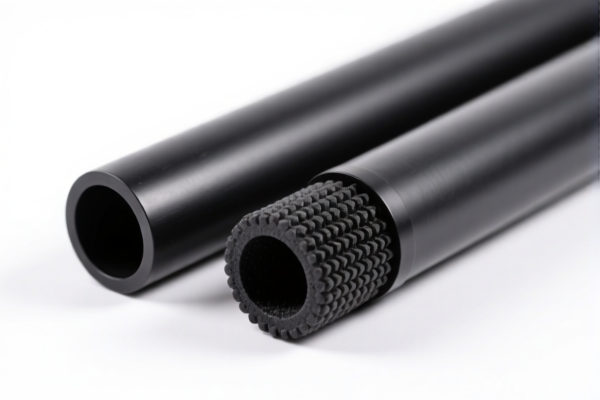
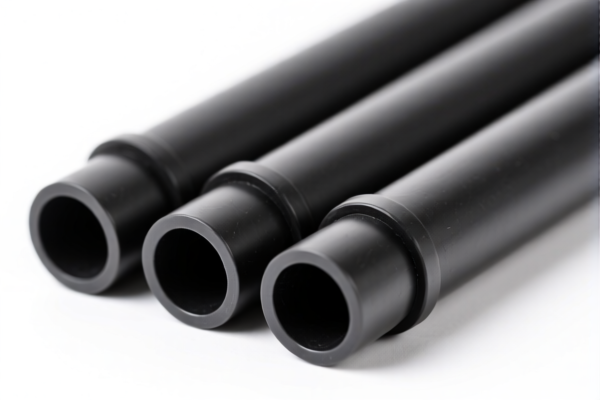
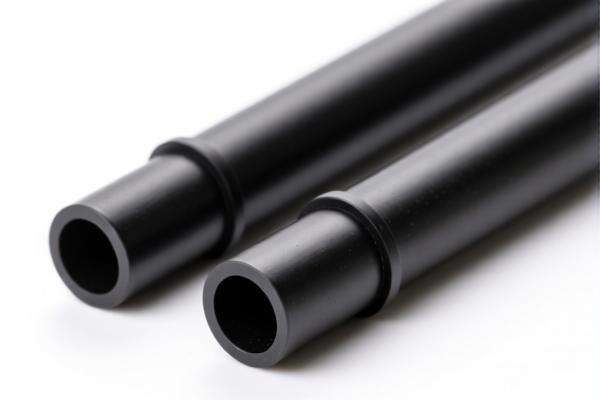
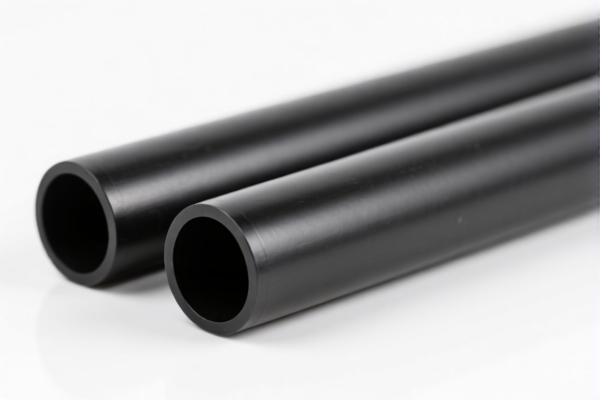
AI Analysis
🛡️ Natural Rubber Buffer Tube (Isolation Joints / Expansion Joints)
🌐 HS Code Reference & Customs Clearance Guide | 2026 Latest Tariff Analysis | Professional Clearance Strategy
📌 I. Product Definition & Classification: Do You Really Understand "Rubber Buffer Tubes"?
Natural Rubber Buffer Tubes (often referred to as rubber expansion joints, isolation joints, or flexible connectors) are critical components used in piping systems to absorb vibration, dampen noise, and accommodate thermal expansion. In international trade, they are primarily classified under Chapter 40 (Rubber and Articles Thereof).
Key Distinctions: 1. Pure Rubber Shapes (Headings 4008/4009): If the product is a simple tube/profile made of natural rubber, regardless of whether it has a fabric or metal reinforcement (unless the reinforcement gives it the essential character of a pipe/hose under 4009), it is often classified as a "prepared rubber article" or "shape." 2. Specific Use Cases (Headings 4016): If the product is specifically designed and identified as a "buffer," "gasket," or "shock absorber" for machinery or vehicles, it may fall under 4016.99. 3. Natural Rubber Content: The tariff implications differ significantly based on whether the rubber is Natural (NR) or Synthetic (SR). The data provided below specifically addresses Natural Rubber products.
⚠️ Critical Classification Point:
- If the tube is a simple extruded profile or shape → 4008.xxxx
- If the tube is specifically a "buffer" or "shock absorber" component → 4016.99.xxxx
- Note: Misclassification between 4008 and 4016 can lead to significant duty differences and customs delays.
📦 II. HS Code Classification Details (2026 Latest Tariff Authority Comparison)
Based on the provided data, here are the valid HS Codes for Natural Rubber Buffer Tubes/Sheets. Although the input says "Tube," the data primarily lists "Buffer Sheets/Pieces." In customs practice, tubular buffers are often classified under the same headings if they are considered "prepared articles" or "shapes."
| HS Code | Product Description | Key Characteristics | Duty Category |
|---|---|---|---|
4008.21.00.00 |
Natural Rubber Sheets/Strips | Shape: Sheets/Pieces. Purpose: Buffering. Material: Natural Rubber. | 35.0% Total |
4016.99.55.00 |
Other rubber articles | Shape: Buffer Piece. Purpose: Shock Absorption/Control. Material: Natural Rubber. | 37.5% Total |
4008.11.10.00 |
Natural Rubber Profiles/Shapes | Shape: Sheet/Form. Material: Natural Rubber. (No specific buffer use stated in summary). | 35.0% Total |
4016.99.30.00 |
Other rubber articles | Shape: Buffer Piece. Purpose: Shock Absorption/Buffering. Material: Natural Rubber. | 35.0% Total |
🔍 Key Observation:
- 4008 Series: Covers rubber in slabs, sheets, strips (not cells), and simple shapes. These are generally cheaper in duty (35%) if classified as raw materials or simple shapes.
- 4016 Series: Covers "Other articles of rubber." Code4016.99.55carries a higher total duty (37.5%) due to a higher base rate (2.5%). Code4016.99.30has a 0% base rate, resulting in a 35% total.
- Why the difference? Customs officers may classify tubular buffers as "articles" (4016) rather than "shapes/sheets" (4008). The specific use (shock absorption vs. general buffering) and form (complex shape vs. simple tube) drive this distinction.
💰 III. 2026 Latest Tariff Rate Breakdown (Including Surcharges)
✅ Applicable Country: United States (US)
✅ Origin: China (CN)
✅ Effective Date: 2025/2026 (Based on 122 Section & 301 Terms)
🎯 1. 4008.21.00.00 & 4016.99.30.00 & 4008.11.10.00
Total Tariff: 35.0%
| Item | Detail |
|---|---|
| Base Tariff (MFN) | 0.0% (for 4008) or 0.0% (for 4016.99.30) |
| Section 301 Surcharge | +25.0% |
| Section 122 Surcharge | +10.0% |
| Total Effective Rate | 35.0% |
| De Minimis Exemption | ❌ NOT Eligible (Denied under current USITC rulings for these codes from China) |
| Legal Basis Path | USITC:4008.21.00.00 → Section 301: Footnote 9903.88.01 → Section 122: IEEPA Authority |
📌 Explanation:
- These codes benefit from a 0% base duty, but the 35% combined surcharge makes them expensive. - The 10% "Section 122" tariff applies to specific rubber articles from China, added on top of the 301 tariffs. - Cost Impact: For every $10,000 CIF value, you pay $3,500 in duties.
🎯 2. 4016.99.55.00
Total Tariff: 37.5%
| Item | Detail |
|---|---|
| Base Tariff (MFN) | 2.5% |
| Section 301 Surcharge | +25.0% |
| Section 122 Surcharge | +10.0% |
| Total Effective Rate | 37.5% |
| De Minimis Exemption | ❌ NOT Eligible |
| Legal Basis Path | USITC:4016.99.55.00 → Section 301: Footnote 9903.88.01 → Section 122: IEEPA Authority |
📌 Note:
- This code has a higher base duty (2.5%), making the total 2.5% higher than the 4008/4016.99.30 codes. - This is often the "default" classification for complex rubber shock absorbers that don't fit into other specific rubber article headings.
🛠️ IV. Customs Clearance Practical Advice (Real-World Pitfall Guide)
✅ 1. Preparation Checklist (Non-Negotiable)
| Document | Required? | Explanation |
|---|---|---|
| ✅ Product Specification Sheet | ✔️ | Must detail: Material (100% Natural Rubber), Shape (Tube/Bulb/Sheet), Hardness (Shore A), Reinforcement (None/Textile/Metal). |
| ✅ Photos (Labeled) | ✔️ | Show the cross-section, length, and connection ends. Proves it is a "buffer" and not just a hose. |
| ✅ Commercial Invoice | ✔️ | Must clearly state: "Natural Rubber Buffer Tube for Industrial Vibration Dampening." Do not use vague terms like "Rubber Part." |
| ✅ Letter of Explanation | ✔️ | Explain why it is classified under 4008 vs. 4016. If it is a simple tube, argue for 4008. If it is a complex shaped mount, 4016 may be more appropriate. |
| ✅ HS Code Pre-Ruling | ✔️ | Highly Recommended. The difference between 35% and 37.5% is small, but the risk of detention for "incorrect classification" is high. |
✅ 2. Classification Strategy (Pro Tips)
🔥 Golden Rule:
"Simple Shapes Go to 4008, Complex Buffers Go to 4016!"
| Scenario | Recommended HS Code | Reason |
|---|---|---|
| Simple Rubber Tubes (Uniform cross-section, no complex mounting flanges) | 4008.21.00.00 |
Classified as "Rubber in slabs, sheets, strips... not cellular." |
| Buffer Pieces with Specific Shock Absorption Function | 4016.99.30.00 |
Classified as "Other articles of rubber... for shock absorption." |
| Complex Rubber Mounts/Bushings (e.g., Engine mounts) | 4016.99.55.00 |
Classified as "Other rubber articles," often carrying a base duty. |
| Reinforced Hoses (With internal/external textile/metal reinforcement) | 4009 | Not in your data list. If your "tube" is a reinforced hose, it may need to be reclassified to 4009, which has different tariffs. |
⚠️ Warning:
Do not attempt to declare a complex, molded rubber mount as a "Sheet" (4008) to save duty. If the shape is complex and clearly used for isolation, Customs will reclassify it to 4016, potentially adding penalties and back taxes.
✅ 3. Special Cases
| Situation | Handling Advice |
|---|---|
| Mixed Materials (Rubber + Metal Flanges) | If the metal flanges are merely connectors and do not give the essential character, it may still be 4008/4016. If the metal is structural, it might be 7307 (Metal Fittings). Get a pre-ruling. |
| Natural vs. Synthetic | Your data specifies Natural Rubber. If the product contains Synthetic Rubber (SBR, NBR), these codes DO NOT APPLY. Synthetic rubber buffers usually have different 4016 codes and potentially different surcharges. |
| Small Quantity Samples | Even for samples, the 122/301 surcharges apply. Do not use de minimis (Section 321) for these HS codes from China. |
🌍 V. Global Market Comparison (2026 Snapshot)
| Market | Recommended HS Code | Base Tariff | Surcharge (China) | Total Est. Rate | Notes |
|---|---|---|---|---|---|
| 🇺🇸 USA | 4008.21.00.00 / 4016.99.30.00 |
0% | 35% (301+122) | 35% | High compliance risk. |
| 🇺🇸 USA | 4016.99.55.00 |
2.5% | 35% (301+122) | 37.5% | Higher base rate. |
| 🇪🇺 EU | 4008.21 / 4016.99 |
0% - 1.7% | 0% (No 301/122) | ~0-2% | No retaliatory tariffs. |
| 🇨🇳 China | 4008.21 / 4016.99 |
5% - 8% | 0% | ~5-8% | Import duties into China. |
| 🇨🇦 Canada | 4008.21 / 4016.99 |
0% | 0% (USMCA) | 0% | If originating in US/NAFTA. |
📌 Conclusion:
- The USA is the most challenging market for these goods due to the 122 Section + 301 Tariff. - EU and Canada offer significantly lower duty burdens, but you must prove Origin. If the natural rubber is sourced from Africa/Asia and processed in China, it may not qualify for preferential treatment in the EU/Canada.
📌 VI. Common Mistakes & Pitfalls (Lessons Learned)
❌ Mistake 1: Declaring "Rubber Hose" when it is a "Buffer Tube"
👉 Consequence: If it's a hose, it goes to 4009 (often 2.5% base + 301). If it's a buffer, it goes to 4008/4016. Misclassification leads to duty underpayment audits.
❌ Mistake 2: Ignoring the "Natural" vs. "Synthetic" Distinction
👉 Consequence: HS Code 4008.21 is for Natural Rubber. If your product is 50% Natural/50% Synthetic, you may need a different code or may still qualify, but you MUST declare the material composition clearly.
❌ Mistake 3: Assuming De Minimis Applies
👉 Consequence: Even for small shipments, Section 122 and 301 tariffs apply to these specific HS codes from China. No exemption.
✅ Correct Practice:
"Natural Rubber Buffer Tube, 2-inch Diameter, 6-inch Length, No Reinforcement, Used for Pipe Vibration Dampening, Model XYZ, 100% Natural Rubber"
🎯 VII. Conclusion: Professional Clearance Saves Costs!
🎯 Remember This:
🔹 "Simple Tubes = 4008 (35%) | Complex Mounts = 4016 (35-37.5%)"
🔹 "No De Minimis for China Rubber Articles!"
🔹 "Pre-Ruling is Your Best Friend for Rubber Products!"
📌 Pro Tip:
If you are shipping less than $800 to the US, you STILL owe the 35% tariff on these goods. Do not rely on Section 321. For larger shipments, consider Supply Chain Diversification (e.g., sourcing from Malaysia or Thailand) if the rubber content allows, to potentially reduce or avoid 122/301 surcharges (depending on current FTAs).
📣 Immediate Action:
📞 Consult a licensed customs broker BEFORE shipping.
📄 Submit a Binding Ruling Request to CBP for your specific product dimensions and usage.
🚀 Accurate Classification = Predictable Costs = Happy Customers!
✨ Expert Customs Clearance Starts with Precision!
💼 Your Profit Margin Depends on the First Decimal Point of the HS Code!
Customer Reviews
About HS Code Classification
The Harmonized System (HS) is an internationally standardized nomenclature developed by the World Customs Organization (WCO) to classify traded products. Over 200 countries use the HS system as the basis for customs tariffs, trade statistics, and import/export regulations.
Each HS code follows a hierarchical structure:
- Chapter (2 digits) — Broad category of goods (e.g., Chapter 84: Machinery and Mechanical Appliances)
- Heading (4 digits) — More specific grouping within the chapter
- Subheading (6 digits) — Internationally standardized breakdown, used by all WCO member countries
- National subdivisions (8-10 digits) — Country-specific extensions for further classification, such as US HTSUS 10-digit codes
Correct HS code classification is essential for smooth customs clearance, accurate duty payment, and compliance with trade regulations. Misclassification can lead to customs delays, overpayment of duties, or penalties.
When importing from CN to US, the applicable tariff rates may include:
- Most-Favored-Nation (MFN) rate — The standard duty rate applied to WTO members
- General rate — Applied to countries without trade agreements
- Trade remedy duties — Additional tariffs such as Section 301 (anti-dumping), Section 232 (national security), or countervailing duties
The information provided on this page is for reference purposes only. For official classification, please consult with your local customs authority or a licensed customs broker.