Natural Rubber Buffer Tubes
CN → US| HS Code | Tariff Rate | Origin | Destination | Doc |
|---|---|---|---|---|
| 4008210000 | 35.0% | CN | US | Official Doc |
| 4016995500 | 37.5% | CN | US | Official Doc |
| 4008111000 | 35.0% | CN | US | Official Doc |
| 4016993000 | 35.0% | CN | US | Official Doc |
Product Images
AI Analysis
🚀 Natural Rubber Buffer Tubes: The Ultimate Clearance Guide (2026 Tax Rules)
🌐 HS Code Reference & Clearance Strategy | 2026 Latest Tariff Analysis | Professional Transit Protocol
📌 I. Product Definition & Classification: What Exactly is a "Buffer Tube"?
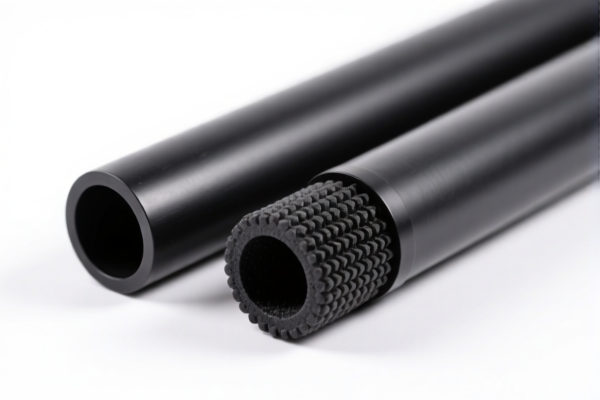
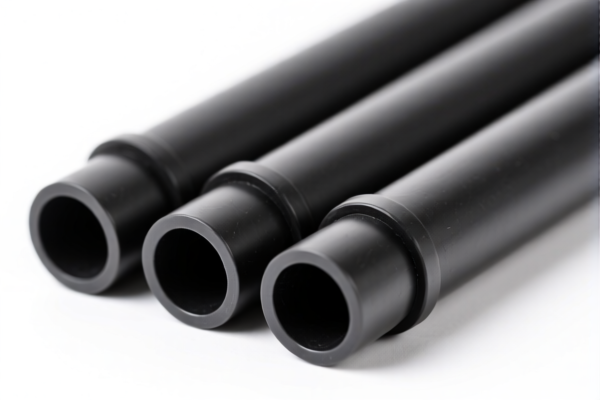
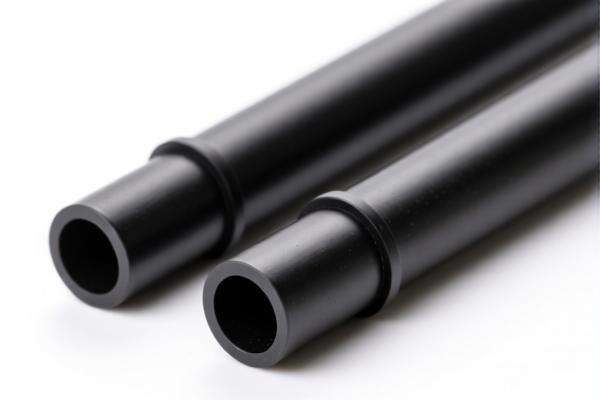
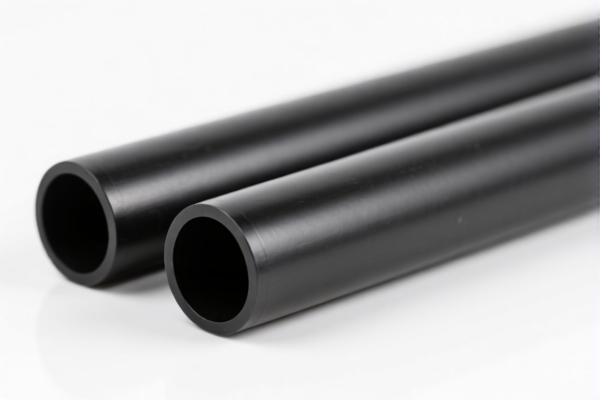
Natural Rubber Buffer Tubes are elastomeric components designed for shock absorption, vibration control, and load bearing in industrial, automotive, and construction applications. Unlike solid cylinders, "tubes" or "shims/sheets" (as described in the data) imply a specific geometric form used for cushioning.
In international trade, the classification hinges on physical form and specific usage:
- Raw Rubber Sheets/Slabs/Plates (4008 Series): If the product is processed into flat or semi-finished forms (shims, sheets) specifically for buffering, it often falls under Chapter 40.08.
- Other Rubber Articles (4016 Series): If the product is considered a distinct finished article for "damped controls" or specialized buffering equipment, it may fall under Chapter 40.16.
⚠️ Critical Distinction:
- If the item is essentially a sheet, plate, or shim made of natural rubber →归类 to 4008.21.00.00 or 4008.11.10.00.
- If the item is a finished buffering component/article for vibration control →归类 to 4016.99.55.00 or 4016.99.30.00.
📦 II. HS Code Classification Matrix (2026 Latest Tariff Data)
| HS Code | Product Description | Form & Usage | Total Tax Rate (China Origin) | Key Tax Components |
|---|---|---|---|---|
4008.21.00.00 |
Natural Rubber Buffer Sheets/Plates | Form: Sheet; Use: Buffering | 35.0% | Base: 0%, Section 301: 25%, Section 122: 10% |
4008.11.10.00 |
Natural Rubber Sheets/Slabs | Form: Sheet; Generic | 35.0% | Base: 0%, Section 301: 25%, Section 122: 10% |
4016.99.30.00 |
Other Rubber Articles (Buffering) | Form: Buffering Article; Use: Shock/Vibration Absorption | 35.0% | Base: 0%, Section 301: 25%, Section 122: 10% |
4016.99.55.00 |
Other Rubber Articles (Damped Controls) | Form: Buffering Sheet; Use: Vibration Control Category | 37.5% | Base: 2.5%, Section 301: 25%, Section 122: 10% |
🔍 Key Insight:
- The majority of "Natural Rubber Buffer" items face a 35.0% total tariff burden.
- One specific sub-category (4016.99.55.00) carries a higher rate of 37.5% due to a 2.5% base tariff, in addition to the punitive tariffs.
- All entries include Section 301 (25%) and Section 122 (10%) surcharges, totaling 35-37.5% for Chinese origin goods.
💰 III. 2026 Tariff Rate Breakdown (Detailed Policy Analysis)
✅ Applicable Country: United States (US)
✅ Origin: China (CN)
✅ Effective Date: Current 2026 Tariff Regime
🎯 1. The "35% Bracket" (HS Codes: 4008.21.00.00, 4008.11.10.00, 4016.99.30.00)
| Item | Detail |
|---|---|
| Base MFN Rate | 0.0% (Most items in these subheadings have a 0% base duty) |
| Section 301 Tariff | +25.0% (Trade War Tariff on Chinese Goods) |
| Section 122 Tariff | +10.0% (Specific surcharge on certain rubber/articles) |
| Total Effective Rate | 35.0% |
| Calculation Basis | CIF Value × 35% |
| De Minimis Exemption | ❌ NOT APPLICABLE (High tariff items are generally excluded from Section 321 de minimis benefits) |
| Legal Authority | USITC:4008.21.00.00 / 4016.99.30.00 → Section 301 Footnote → Section 122 Provision |
📌 Explanation:
- The 0% base rate is misleading; the punitive tariffs dominate the cost structure.
- Section 301 (25%) is applied to all natural rubber articles from China under these HTS codes.
- Section 122 (10%) is an additional surcharge specifically targeting this category, ensuring the total hits 35%.
🎯 2. The "37.5% Bracket" (HS Code: 4016.99.55.00)
| Item | Detail |
|---|---|
| Base MFN Rate | 2.5% (Specific base duty applies here) |
| Section 301 Tariff | +25.0% |
| Section 122 Tariff | +10.0% |
| Total Effective Rate | 37.5% |
| Calculation Basis | CIF Value × 37.5% |
| De Minimis Exemption | ❌ NOT APPLICABLE |
| Legal Authority | USITC:4016.99.55.00 → Section 301 Footnote → Section 122 Provision |
📌 Note:
- This is the most expensive classification for natural rubber buffers.
- The 2.5% base rate makes this category strictly more costly than the 0% base categories.
- Avoid this code if your product can be reasonably classified under4016.99.30.00or4008series to save 2.5% on the CIF value.
🛠️ IV. Clearance Practical Advice (Real-World Pitfall Avoidance)
✅ 1. Documentation Checklist (Non-Negotiable)
| Document | Requirement | Reason |
|---|---|---|
| ✅ Product Specification | ✔️ Must specify "Natural Rubber," form (Tube/Sheet), hardness (Shore A), and dimensions. | To prove material composition (Natural vs. Synthetic). Synthetic rubber has different duties. |
| ✅ Composition Certificate | ✔️ 100% Natural Rubber confirmation. | Distinguish from 4016.99.99 (Synthetic) which may have different base rates. |
| ✅ Commercial Invoice | ✔️ Clear description: "Natural Rubber Buffering Component/Shim." | Vague terms like "Rubber Parts" lead to customs delays and misclassification. |
| ✅ Packing List | ✔️ Item-by-item weight and value. | Required for CIF calculation. |
| ✅ Origin Certificate | ✔️ If claiming non-China origin (e.g., Vietnam), provide COO. | Critical for avoiding Section 301/122 tariffs. |
✅ 2. Classification Strategy (The "35% vs 37.5%" Dilemma)
| Scenario | Recommended HS Code | Total Tax | Why? |
|---|---|---|---|
| Flat Buffer Shims/Sheets | 4008.21.00.00 |
35.0% | Lowest risk, clear "Sheet" form, 0% base. |
| Tube-shaped Buffers (General) | 4016.99.30.00 |
35.0% | "Other rubber articles" for buffering. Avoid "Damped Control" language if possible. |
| Specific Vibration Control Units | 4016.99.55.00 |
37.5% | Only use if explicitly designed for "Damped Controls" per HTS notes. Higher tax risk. |
| Synthetic Rubber Buffers | Not in Data | Varies | Do not use these codes if the rubber is SBR/Neoprene. Misdeclaration leads to penalties. |
🔥 Golden Rule:
"Don't call it 'Damped Control' unless you must!"
Using4016.99.55.00triggers the 2.5% base tax. Classifying as general buffering (4016.99.30.00) or sheets (4008) saves you 2.5% on the entire shipment value.
✅ 3. Special Circumstances
| Situation | Handling Advice |
|---|---|
| Mixed Materials | If the buffer has a metal core, it may be classified under Chapter 73 or 76, not rubber. Check if the rubber is essential character. |
| OEM Parts | Provide buyer's design drawings to prove "Buffering" purpose, avoiding generic "Rubber Articles" scrutiny. |
| Samples | Even samples are subject to these duties if declared as commercial samples. De minimis does NOT apply due to >10% tax rate. |
| Transshipment | Shipping from Vietnam or Malaysia with proper transformation rules can bypass Section 301/122. Verify Country of Origin carefully. |
🌍 V. Global Market Comparison (2026 Overview)
| Market | Recommended HS Code | Est. Tariff (China Origin) | Notes |
|---|---|---|---|
| 🇺🇸 USA | 4008.21.00.00 / 4016.99.30.00 |
35.0% | High punitive tariffs. No de minimis. |
| 🇺🇸 USA | 4016.99.55.00 |
37.5% | Avoid if possible due to higher base. |
| 🇨🇳 China | 4008.11.10.00 |
5-10% | Import into China is cheap. |
| 🇪🇺 EU | 4008.21.00 / 4016.99 |
0-6.5% | No Section 301/122. Standard MFN applies. |
| 🇨🇦 Canada | 4008.21.00 |
0% | CUSMA preferential rates may apply if Canadian origin. |
📌 Conclusion:
The US market is the most hostile for Natural Rubber Buffers from China due to the 35-37.5% effective tariff.
EU and China markets are significantly cheaper for imports.
📌 VI. Common Errors & Pitfalls (Blood Lessons)
❌ Error 1: Declaring as "Synthetic Rubber" when it is Natural.
👉 Consequence: Customs Seizure + Fraud Penalties. Natural Rubber has different base rates and policy treatments.
❌ Error 2: Using "Rubber Hose" classification (4009).
👉 Consequence: Buffer tubes are not hoses for fluid transport. Misclassification leads to 35%+ audit risks.
❌ Error 3: Ignoring Section 122.
👉 Consequence: Underpaying 10% on CIF value. Back taxes + Interest + Penalties.
✅ Correct Declaration Example:
"Natural Rubber Buffering Shims, Flat Plate Form, 100% Natural Rubber, Not Containing Plastic, For Industrial Shock Absorption, Model BR-100"
🎯 VII. Conclusion: Professional Clearance for Cost Efficiency
🎯 Remember the Strategy:
🔹 "Base 0% is your friend, Base 2.5% is your enemy."
🔹 "35% is the floor, 37.5% is the trap."
🔹 "De Minimis is DEAD for rubber buffers from China."
📌 Pro Tip:
If your buffer tubes can be described as "Sheets" or "Shims" (4008.21.00.00 or 4008.11.10.00), they carry the same 35% rate as 4016.99.30.00 but are often easier to justify as raw/semi-finished goods. Avoid 4016.99.55.00 unless explicitly required by technical specs.
📣 Immediate Action:
📞 Verify Material Composition (Natural vs. Synthetic)
📄 Confirm Form (Tube vs. Sheet vs. Article)
🧮 Calculate 35% vs 37.5% Impact on your CIF price
🚀 Optimize Supply Chain if US tariffs make the product uncompetitive!
✨ Precision in Classification, Profit in Clearance!
💼 Your 2.5% savings could be your entire margin!
Customer Reviews
About HS Code Classification
The Harmonized System (HS) is an internationally standardized nomenclature developed by the World Customs Organization (WCO) to classify traded products. Over 200 countries use the HS system as the basis for customs tariffs, trade statistics, and import/export regulations.
Each HS code follows a hierarchical structure:
- Chapter (2 digits) — Broad category of goods (e.g., Chapter 84: Machinery and Mechanical Appliances)
- Heading (4 digits) — More specific grouping within the chapter
- Subheading (6 digits) — Internationally standardized breakdown, used by all WCO member countries
- National subdivisions (8-10 digits) — Country-specific extensions for further classification, such as US HTSUS 10-digit codes
Correct HS code classification is essential for smooth customs clearance, accurate duty payment, and compliance with trade regulations. Misclassification can lead to customs delays, overpayment of duties, or penalties.
When importing from CN to US, the applicable tariff rates may include:
- Most-Favored-Nation (MFN) rate — The standard duty rate applied to WTO members
- General rate — Applied to countries without trade agreements
- Trade remedy duties — Additional tariffs such as Section 301 (anti-dumping), Section 232 (national security), or countervailing duties
The information provided on this page is for reference purposes only. For official classification, please consult with your local customs authority or a licensed customs broker.