Natural Rubber Cap
CN → US| HS Code | Tariff Rate | Origin | Destination | Doc |
|---|---|---|---|---|
| 4016991500 | 20.2% | CN | US | Official Doc |
| 4016990300 | 38.0% | CN | US | Official Doc |
| 4016993510 | 35.0% | CN | US | Official Doc |
| 4016935010 | 37.5% | CN | US | Official Doc |
| 4016991500 | 20.2% | CN | US | Official Doc |
Product Images



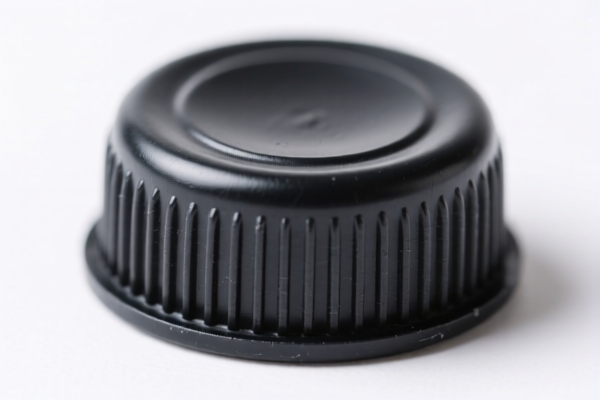
AI Analysis
🚫 Natural Rubber Cap: The "High-Tax Trap" for US Imports
🌐 HS Code Reference & Customs Clearance Guide | 2026 Latest Tariff Analysis | Critical Warning for Rubber Goods
📌 Part 1: Product Definition & Classification – What Exactly Is a "Natural Rubber Cap"?
A "Natural Rubber Cap" is a generic term that often leads to misclassification, resulting in severe financial penalties. In international trade, it is not a single commodity. It must be distinguished by:
- Material Composition: Is it Natural Rubber (NR) or Vulcanized/Synthetic Rubber?
- Natural Rubber falls under specific subheadings (4016.93, 4016.99 with NR specifics).
- Vulcanized Rubber (general) falls under 4016.99.
- Function/Usage: Is it a Container Lid/Cover (4016.99.15) or a Seal/Gasket/O-Ring (4016.99.35/4016.93.50)?
- Lids/Covers: Designed to seal the opening of a bottle or container.
- Seals: Designed to prevent leakage between two mating surfaces.
⚠️ Critical Distinction:
- If it is a lid/cover for a liquid container → Likely 4016.99.15.00 (Lower Tax).
- If it is a seal/O-ring → Likely 4016.99.35.10 or 4016.93.50.10 (Higher Tax).
- If it is Vulcanized Rubber (not explicitly Natural) used as a lid → 4016.99.03.00 (Highest Tax).
📦 Part 2: HS Code Classification Matrix (2026 Data Source Only)
Based strictly on the provided data, here are the only four valid classifications for "Natural Rubber Caps/Seals" entering the US.
| HS Code | Product Description (Summary) | Material | Key Feature | Total Tax Rate |
|---|---|---|---|---|
4016.99.15.00 |
Rubber Liquid Container Lid | Rubber | Used as a lid/closure for liquid containers | 20.2% |
4016.99.03.00 |
Rubber Liquid Container Lid | Vulcanized Rubber | Used as a container accessory (lid) | 38.0% |
4016.99.35.10 |
Natural Rubber Seal Ring | Natural Rubber | Form: Seal Ring/Gasket | 35.0% |
4016.93.50.10 |
Natural Rubber Seal | Rubber (Natural) | Form: Seal/O-Ring | 37.5% |
🔍 Important Note:
- The data explicitly lists "Natural Rubber" for codes ending in.10(Seals).
- The data lists "Rubber" (generic) for code4016.99.15.00(Lids), which typically implies Vulcanized Rubber in HS Nomenclature, but the summary just says "Rubber."
- Code4016.99.03.00is explicitly "Vulcanized Rubber" and has the highest tax.
- Do NOT assume "Natural Rubber Cap" automatically goes to one code. The shape and function (Lid vs. Seal) determine the code.
💰 Part 3: 2026 Tariff Breakdown (Detailed Tax Analysis)
✅ Applicable Country: United States (US)
✅ Origin: China (CN) (Implied by the "122 Section" and specific surtax structure)
✅ Effective Date: Current 2026 Rates
🎯 1. 4016.99.15.00 – Rubber Liquid Container Lid
Best Case Scenario for Lids
| Item | Detail |
|---|---|
| Base Duty | 2.7% |
| Section 301 Surcharge | 7.5% |
| Section 122 Surcharge | 10.0% |
| Total Tax | 20.2% |
| Calculation | CIF Value × 20.2% |
| Key Feature | Must be identified as a "Lid" or "Closure" for a liquid container. |
📌 Explanation:
- This is the lowest tax rate for rubber lids/caps.
- To qualify, your product must be a lid/cover, not a seal.
- The "Rubber" material here is likely Vulcanized Rubber, but the function lowers the burden.
🎯 2. 4016.99.03.00 – Vulcanized Rubber Container Accessory
Worst Case Scenario for Lids
| Item | Detail |
|---|---|
| Base Duty | 3.0% |
| Section 301 Surcharge | 25.0% |
| Section 122 Surcharge | 10.0% |
| Total Tax | 38.0% |
| Calculation | CIF Value × 38.0% |
| Key Feature | Explicitly Vulcanized Rubber. Used as a container accessory. |
📌 Explanation:
- If your product is Vulcanized Rubber (not Natural) and used as a lid, but is not classified under4016.99.15, it may fall here.
- 25% Section 301 is a massive burden.
- Avoid this code if possible by correctly classifying as4016.99.15.00(if eligible).
🎯 3. 4016.99.35.10 – Natural Rubber Seal Ring
For Seals, Not Lids
| Item | Detail |
|---|---|
| Base Duty | 0.0% |
| Section 301 Surcharge | 25.0% |
| Section 122 Surcharge | 10.0% |
| Total Tax | 35.0% |
| Calculation | CIF Value × 35.0% |
| Key Feature | Natural Rubber. Form: Seal Ring. |
📌 Explanation:
- Even though Base Duty is 0%, the 25% Section 301 makes it expensive.
- Only use if the product is a Seal Ring/Gasket made of Natural Rubber.
🎯 4. 4016.93.50.10 – Natural Rubber Seal/O-Ring
For O-Rings
| Item | Detail |
|---|---|
| Base Duty | 2.5% |
| Section 301 Surcharge | 25.0% |
| Section 122 Surcharge | 10.0% |
| Total Tax | 37.5% |
| Calculation | CIF Value × 37.5% |
| Key Feature | Natural Rubber. Form: Seal/O-Ring. |
📌 Explanation:
- Similar to #3, but with a 2.5% Base Duty.
- Total is 37.5%, higher than the seal ring (#3).
- Use only for O-Rings or specific seals.
🛠️ Part 4: Customs Clearance Strategy & Actionable Advice
✅ 1. Material Verification is KEY
Before declaring, you MUST verify:
- Is it Natural Rubber (NR) or Vulcanized/Synthetic?
- If it's Vulcanized Rubber, do NOT declare as 4016.99.35.10 (Natural). This is fraud and will result in penalties.
- If it's Natural Rubber, ensure your supplier provides a Material Safety Data Sheet (MSDS) or Certificate of Analysis confirming >50% Natural Rubber content.
✅ 2. Function Declaration: Lid vs. Seal
- For
4016.99.15.00(20.2%): - Describe as: "Rubber Lid for Beverage Container" or "Vulcanized Rubber Closure for Liquid Bottles."
- Do NOT call it a "Seal" or "Gasket."
- For
4016.99.35.10(35.0%): - Describe as: "Natural Rubber Seal Ring" or "Natural Rubber Gasket."
- Do NOT call it a "Cap" or "Lid" unless it functions as a container closure.
✅ 3. Tax Optimization Strategy
| Product Type | Recommended HS Code | Tax Rate | Strategy |
|---|---|---|---|
| Rubber Lid (Vulcanized) | 4016.99.15.00 |
20.2% | ✅ Best Option. Ensure it is described as a "Lid/Closure." |
| Natural Rubber Seal | 4016.99.35.10 |
35.0% | ✅ Best for Natural Rubber Seals. |
| Natural Rubber O-Ring | 4016.93.50.10 |
37.5% | ❌ Higher tax. Avoid if possible. |
| Vulcanized Rubber Lid (Misclassified) | 4016.99.03.00 |
38.0% | ❌ Avoid. Only use if it doesn't fit 4016.99.15. |
⚠️ Warning:
- The difference between 20.2% and 38.0% is 17.8%.
- On a $10,000 shipment, this is a $1,780 difference.
- Misclassification is the #1 cause of customs audits for rubber goods.
✅ 4. Required Documentation for Clearance
| Document | Purpose |
|---|---|
| Product Photos | Show the item’s shape. Is it a screw-top lid? A flat gasket? |
| Material Certificate | Prove "Natural Rubber" content (for codes ending in .10). |
| Datasheet | Confirm vulcanization status. |
| Commercial Invoice | Clearly state: "Rubber Container Lid, HS Code 4016.99.15.00" or "Natural Rubber Seal, HS Code 4016.99.35.10". |
| Bill of Lading | Ensure no conflicting descriptions. |
🌍 Part 5: Common Mistakes & Pitfalls
❌ Mistake 1: Calling a Seal a "Cap" to get the 20.2% rate.
👉 Result: Customs will reject it. If it’s a seal, it must be 35-37.5%.
❌ Mistake 2: Calling a Vulcanized Rubber Lid a "Natural Rubber Seal".
👉 Result: Audit failure. If material is Vulcanized, you cannot use Natural Rubber codes.
❌ Mistake 3: Ignoring Section 122 (10%).
👉 Result: All these codes include a 10% Section 122 tax. It is mandatory and cannot be avoided for Chinese-origin rubber goods.
❌ Mistake 4: Assuming "Rubber Cap" is one HS Code.
👉 Result: Multiple codes exist. You must choose the most accurate one based on material and function.
🎯 Part 6: Final Recommendation
-
If your product is a LID/CLOSURE for a bottle/jar:
- Aim for
4016.99.15.00(20.2%). - Ensure the description emphasizes "Liquid Container Lid" and not "Seal."
- Aim for
-
If your product is a SEAL/GASKET made of Natural Rubber:
- Use
4016.99.35.10(35.0%). - Provide proof of Natural Rubber content.
- Use
-
If your product is a SEAL/GASKET made of Vulcanized Rubber:
- You likely face 38.0% (
4016.99.03.00) or similar high-tax codes. - Consider redesigning to use Natural Rubber if feasible, to potentially use lower-base codes (though 301 tax still applies).
- You likely face 38.0% (
💡 Pro Tip:
Always request a Pre-Ruling (Pre-Clearance) from CBP if your shipment value is high. The 17.8% tax difference is worth the small fee for a binding ruling.
📌 Summary Table for Quick Reference
| HS Code | Total Tax | Material | Function | Risk Level |
|---|---|---|---|---|
4016.99.15.00 |
20.2% | Rubber (Likely Vulcanized) | Lid/Closure | 🟢 Low (if accurate) |
4016.99.35.10 |
35.0% | Natural Rubber | Seal Ring | 🟡 Medium (Material Proof Required) |
4016.93.50.10 |
37.5% | Rubber (Natural) | O-Ring | 🟡 Medium |
4016.99.03.00 |
38.0% | Vulcanized Rubber | Accessory/Lid | 🔴 High (Avoid if possible) |
✨ Final Thought:
In rubber imports, classification is destiny. A 17.8% tax difference can make or break your profit margin.
Accurate description + Verified material = Smooth Customs Clearance.
🚀 Clear the way. Pay the right tax. Profit safely.
Customer Reviews
About HS Code Classification
The Harmonized System (HS) is an internationally standardized nomenclature developed by the World Customs Organization (WCO) to classify traded products. Over 200 countries use the HS system as the basis for customs tariffs, trade statistics, and import/export regulations.
Each HS code follows a hierarchical structure:
- Chapter (2 digits) — Broad category of goods (e.g., Chapter 84: Machinery and Mechanical Appliances)
- Heading (4 digits) — More specific grouping within the chapter
- Subheading (6 digits) — Internationally standardized breakdown, used by all WCO member countries
- National subdivisions (8-10 digits) — Country-specific extensions for further classification, such as US HTSUS 10-digit codes
Correct HS code classification is essential for smooth customs clearance, accurate duty payment, and compliance with trade regulations. Misclassification can lead to customs delays, overpayment of duties, or penalties.
When importing from CN to US, the applicable tariff rates may include:
- Most-Favored-Nation (MFN) rate — The standard duty rate applied to WTO members
- General rate — Applied to countries without trade agreements
- Trade remedy duties — Additional tariffs such as Section 301 (anti-dumping), Section 232 (national security), or countervailing duties
The information provided on this page is for reference purposes only. For official classification, please consult with your local customs authority or a licensed customs broker.