Natural Rubber Cellular Rubber Profiles
CN → US| HS Code | Tariff Rate | Origin | Destination | Doc |
|---|---|---|---|---|
| 4016100000 | 35.0% | CN | US | Official Doc |
| 4016993000 | 35.0% | CN | US | Official Doc |
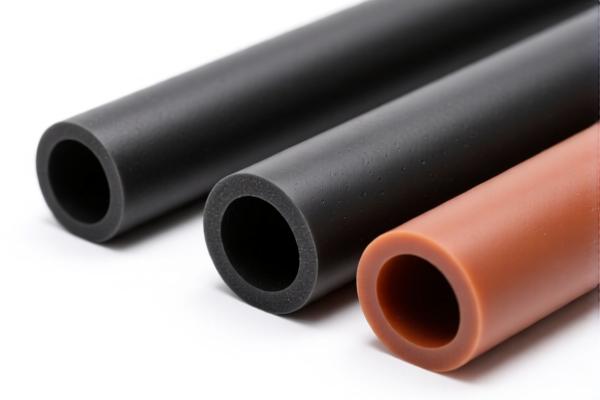
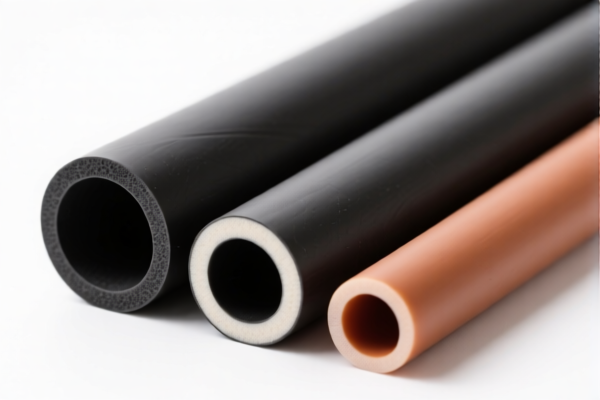
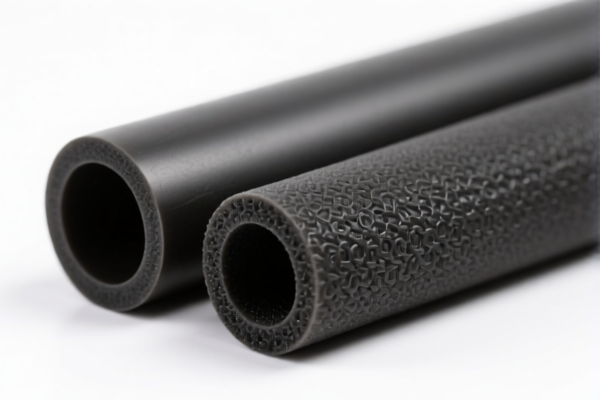
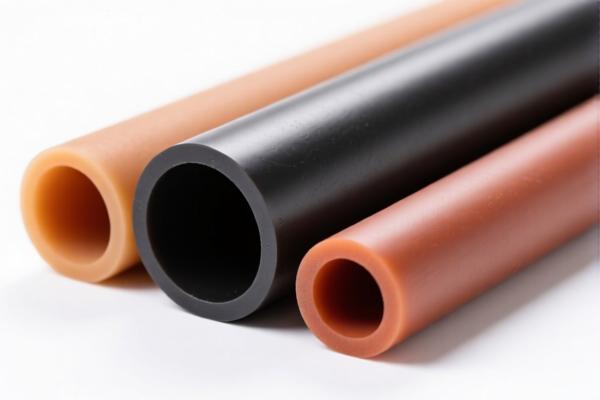
Product Images
AI Analysis
☁️ Natural Rubber Cellular Rubber Profiles (Elastomeric Seals & Gaskets)
🌐 HS Code Reference & Customs Clearance Guide | 2026 Latest Tariff Analysis | Professional Customs Strategy
📌 I. Product Definition & Classification: Do You Really Know “Cellular Rubber Profiles”?
Cellular Rubber Profiles are semi-finished or finished goods made from vulcanized rubber with a porous, foam-like structure. They are primarily used for sealing, cushioning, soundproofing, and vibration damping in various industries (construction, automotive, HVAC, etc.).
In international trade, they are strictly categorized based on their material nature and structure:
1. Cellular Rubber (Foam Rubber): * Characterized by open or closed cells, providing flexibility, insulation, and shock absorption. * Key Identifier: Low density, spongy texture. * HS Chapter: 4016 (Other articles of vulcanized rubber other than hard rubber).
2. Non-Cellular / Solid Rubber Profiles: * Solid density, used for high-wear or high-pressure applications. * HS Chapter: 4016.99 (Other articles...).
⚠️ Key Distinction Point:
- If the product is porous/foam-like → Classified under 4016.10.00.00 (Cellular Rubber).
- If the product is solid/dense → Classified under 4016.99.30.00 (Other Specific Goods, often vibration controls).
- Note: The provided data specifically addresses Cellular Rubber and specific Other Rubber goods.
📦 II. HS Code Classification Details (2026 Latest Tariff Authority Mapping)
Based on the provided data, here are the specific HS Codes and their corresponding tax implications for Natural Rubber Cellular Rubber Profiles:
| HS Code | Product Description | Application Scenario | Material Type |
|---|---|---|---|
4016.10.00.00 |
Other articles of vulcanized rubber other than hard rubber: Of cellular rubber | Weather seals, acoustic insulation, cushioning pads, foam gaskets | ✅ Cellular (Foam) |
4016.99.30.00 |
Other articles of vulcanized rubber other than hard rubber: Other: Other: Of natural rubber: Vibration control goods of a kind used in vehicles of headings 8701 through 8705 | Vehicle engine mounts, suspension bushings, automotive vibration isolators | ✅ Solid/Natural Rubber (Specific Automotive Use) |
🔍 Critical Note:
-4016.10.00.00is the standard classification for any cellular rubber product (profiles, sheets, cut shapes) regardless of the specific natural/synthetic blend, unless specified otherwise.
-4016.99.30.00is NOT cellular. It is for solid natural rubber articles specifically designed for vehicle vibration control (Headings 8701-8705). Do not confuse foam profiles with solid automotive mounts.
💰 III. 2026 Latest Tariff Rate Details (Including Surtaxes)
✅ Applicable Country: United States (US)
✅ Country of Origin: China (CN) (Implied by the surtax context in the source data)
✅ Effective Time: Ongoing (Subject to Trade Policy Updates)
🎯 1. 4016.10.00.00 —— Cellular Rubber Profiles
| Item | Content |
|---|---|
| Base Duty Rate | 0.0% (Free) |
| Surtax (Section 301) | +25.0% |
| Total Tax Rate | 25.0% |
| Tax Calculation | CIF Value × 25% |
| De Minimis Exemption | ❌ Not Applicable (Standard 301 tariffs apply regardless of value for most imports) |
| Legal Basis Path | HTSUS:4016.10.00.00 → USITC Footnote 9903.88.01 (Section 301 Surtax) |
📌 Explanation:
- Although the base duty for cellular rubber is 0%, the 25% Section 301 surtax is aggressively applied to rubber products from China.
- This is a fixed percentage of the customs value.
- Total Cost Impact: For every $10,000 of goods, you pay $2,500 in additional duties.
🎯 2. 4016.99.30.00 —— Vehicle Vibration Control (Natural Rubber)
| Item | Content |
|---|---|
| Base Duty Rate | 0.0% |
| Surtax (Section 301) | +25.0% |
| Total Tax Rate | 25.0% |
| Tax Calculation | CIF Value × 25% |
| De Minimis Exemption | ❌ Not Applicable |
| Legal Basis Path | HTSUS:4016.99.30.00 → USITC Footnote 9903.88.01 (Section 301 Surtax) |
📌 Note:
- This code applies only if the rubber profile is solid and specifically used for vibration control in vehicles (trucks, buses, construction equipment, etc.).
- If your product is cellular (foam), do not use this code. Misclassification can lead to audits and penalties.
🛠️ IV. Customs Clearance Practical Advice (Avoiding Pitfalls)
✅ 1. Preparation Checklist (Mandatory)
| Document | Required? | Description |
|---|---|---|
| ✅ Product Specification Sheet | ✔️ | Must clearly state: "Cellular" or "Foam" vs. "Solid". Include density (kg/m³). |
| ✅ Material Composition Statement | ✔️ | Confirm % of Natural Rubber vs. Synthetic. Affects sub-classification but not the 25% surtax. |
| ✅ Product Photos | ✔️ | Must clearly show the porous/foam structure for 4016.10. |
| ✅ Certificate of Origin (CO) | ✔️ | Essential for proving Chinese origin to apply correct surtax rules. |
| ✅ Commercial Invoice | ✔️ | Must accurately describe the good as "Vulcanized Cellular Rubber Profile". |
| ✅ Packing List | ✔️ | Detail weights and quantities. |
✅ 2. Declaration Tips (Key Mnemonics)
🔥 “Cellular is 4016.10, Solid Auto is 4016.99.30. Both pay 25%!”
| Scenario | Correct HS Code | Error to Avoid |
|---|---|---|
| Foam sealing strips for windows/doors | 4016.10.00.00 |
❌ Do not use 4016.99 |
| Sponge rubber gaskets for insulation | 4016.10.00.00 |
❌ Do not use 4016.99 |
| Solid rubber mounts for trucks | 4016.99.30.00 |
❌ Do not use 4016.10 |
| Solid rubber mats (general use) | 4016.99.90.90 (Other) |
❌ Ensure it’s not “Vibration Control” |
📌 Warning:
- The 25% surtax is non-negotiable for Chinese-origin rubber goods under Section 301.
- Even if the base duty is 0%, the effective tariff is 25%.
- Misclassifying cellular as solid (or vice versa) can trigger an audit, as the description and physical characteristics do not match the code.
✅ 3. Special Cases
| Case | Handling Advice |
|---|---|
| Hybrid Profiles (Foam + Solid Core) | Declare as Cellular (4016.10.00.00) if the foam structure is the primary characteristic. Provide cross-section photos. |
| Recycled Rubber Profiles | If made from recycled rubber, ensure it is vulcanized. Recycled rubber articles may have different codes, but 4016 often covers vulcanized recycled articles too. |
| Non-Chinese Origin | If sourced from Vietnam, Malaysia, or Thailand, the 25% surtax may not apply (check current FTAs/Trade Policies). |
🌍 V. Global Market Clearance Comparison (2026)
| Country/Region | Recommended HS Code | Tariff (China Origin) | Certification | Notes |
|---|---|---|---|---|
| 🇺🇸 USA | 4016.10.00.00 |
25% (Base 0% + Surtax) | None specific | High duty due to Section 301 |
| 🇨🇳 China | 4016.10.00.00 |
5% - 10% (Import Duty) | None | Lower entry cost |
| 🇪🇺 EU | 4016.10.00.00 |
0% (Most FTA Countries) | REACH (Chemical Safety) | Low duty, but strict REACH compliance |
| 🇬🇧 UK | 4016.10.00.00 |
0% - 5% | UKCA | Post-Brexit standards apply |
| 🇯🇵 Japan | 4016.10.00.00 |
0% - 3.5% | JIS | Low duty, high quality standards |
📌 Conclusion:
- USA is the most expensive market for Chinese rubber products due to the 25% surtax.
- EU and Japan offer much better tariff advantages, but compliance with chemical regulations (REACH/JIS) is critical.
📌 VI. Common Mistakes & Pitfalls (Blood & Tears)
❌ Mistake 1: Declaring Cellular Rubber as "Plastic Profiles"
👉 Consequence: Incorrect HS Code → Potential fraud allegation + higher duties or rejection.
❌ Mistake 2: Using 4016.99.30.00 for Foam Seals
👉 Consequence: Customs will reject because 4016.99.30.00 is for solid vibration controls. Misclassification leads to delays and fines.
❌ Mistake 3: Ignoring the 25% Surtax in Cost Calculation
👉 Consequence: Profit margin collapse. Many traders forget to include the 25% surtax in their FOB/CIF pricing for US-bound goods.
❌ Mistake 4: Incomplete Description on Invoice
👉 Consequence: Customs may hold goods for "Description Ambiguity". Always specify: "Vulcanized Cellular Rubber Profile, Natural Rubber, Porous Structure".
✅ Correct Practice:
“Natural Rubber Cellular Rubber Profile, Vulcanized, Open-Cell Structure, for Window Sealing, HS 4016.10.00.00”
🎯 VII. Conclusion: Precise Classification Saves Money!
🎯 Remember the Key Rules:
🔹 “Cellular = 4016.10.00.00”
🔹 “Solid Auto Vibration Control = 4016.99.30.00”
🔹 “Both Pay 25% Surtax for China Origin”🔹 “Base Duty 0% ≠ Total Duty 0%!”
📌 Pro Tip:
If you are exporting to the USA, consider:
1. Supply Chain Diversification: Source from non-China countries (e.g., Vietnam, Thailand) to potentially avoid the 25% surtax.
2. Advance Ruling: Request a Binding Ruling from US Customs if the product’s nature (cellular vs. solid) is borderline.
3. Accurate Description: Always include “Cellular” or “Foam” in the commercial invoice and packing list.
📣 Action Required:
📞 Verify your product’s density and structure.
📝 Confirm HS Code with your freight forwarder.
📉 Calculate the true landed cost including 25% surtax.
✨ Professional Customs Clearance Starts with Accurate Classification!
💼 Every dollar saved on classification is a dollar added to your profit!
Customer Reviews
About HS Code Classification
The Harmonized System (HS) is an internationally standardized nomenclature developed by the World Customs Organization (WCO) to classify traded products. Over 200 countries use the HS system as the basis for customs tariffs, trade statistics, and import/export regulations.
Each HS code follows a hierarchical structure:
- Chapter (2 digits) — Broad category of goods (e.g., Chapter 84: Machinery and Mechanical Appliances)
- Heading (4 digits) — More specific grouping within the chapter
- Subheading (6 digits) — Internationally standardized breakdown, used by all WCO member countries
- National subdivisions (8-10 digits) — Country-specific extensions for further classification, such as US HTSUS 10-digit codes
Correct HS code classification is essential for smooth customs clearance, accurate duty payment, and compliance with trade regulations. Misclassification can lead to customs delays, overpayment of duties, or penalties.
When importing from CN to US, the applicable tariff rates may include:
- Most-Favored-Nation (MFN) rate — The standard duty rate applied to WTO members
- General rate — Applied to countries without trade agreements
- Trade remedy duties — Additional tariffs such as Section 301 (anti-dumping), Section 232 (national security), or countervailing duties
The information provided on this page is for reference purposes only. For official classification, please consult with your local customs authority or a licensed customs broker.