Natural Rubber Cellular Rubber Rod
CN → US| HS Code | Tariff Rate | Origin | Destination | Doc |
|---|---|---|---|---|
| 4008111000 | 35.0% | CN | US | Official Doc |
| 4005910000 | 35.0% | CN | US | Official Doc |
| 4005990000 | 35.0% | CN | US | Official Doc |
| 4008115000 | 38.3% | CN | US | Official Doc |
| 4008111000 | 35.0% | CN | US | Official Doc |
Product Images
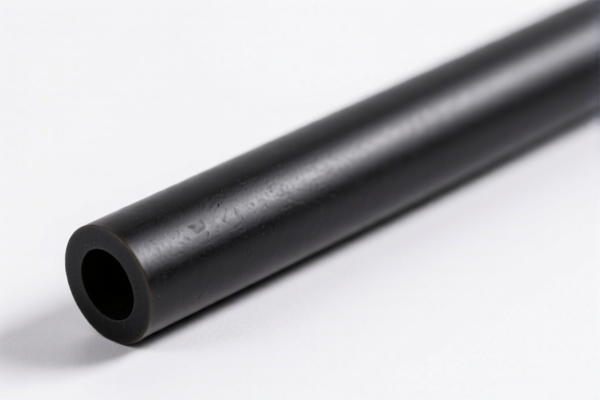
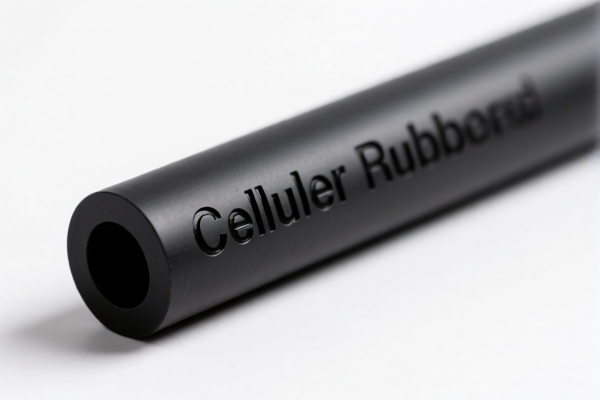
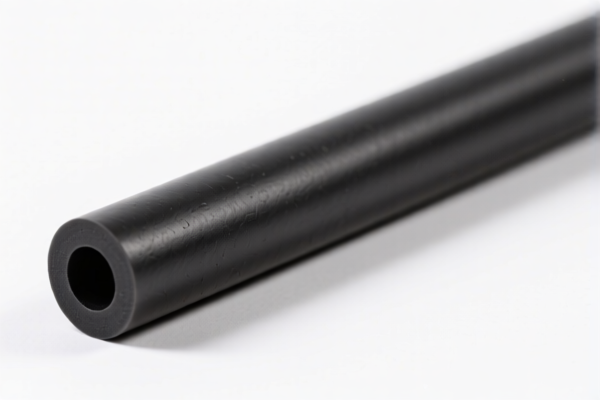
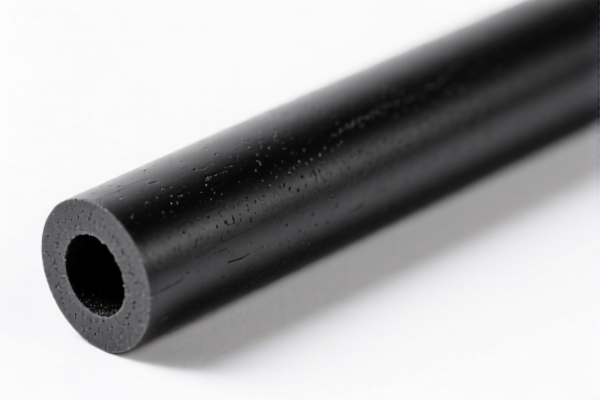
AI Analysis
🧱 Natural Rubber Cellular Rubber Rod
🌐 HS Code Reference & Customs Clearance Guide | 2026 Latest Tariff Analysis | Professional Tier-1 Clearance Strategy
📌 I. Product Definition & Classification: Do You Really Understand "Cellular Rubber Rods"?
Natural Rubber Cellular Rubber Rods are cylindrical products made from natural rubber that has been vulcanized or processed to create a porous, foam-like structure (cellular structure). Unlike solid rubber rods, these rods contain air pockets, making them lighter, more flexible, and often used for cushioning, sealing, or insulation.
In international trade, they are specifically classified under Heading 4008 ("Plates, sheets, strip, rods and profile shapes, of vulcanized rubber other than hard rubber"). The key distinction lies in whether the rubber is solid or cellular (foam/sponge).
⚠️ Critical Distinction Point: - If the product is a rod (cylindrical profile) made of natural rubber and has a cellular/foam structure → It falls under 4008.11. - If it were unvulcanized (raw mix) or sheet/plate format, it might fall under 4005, but rods are explicitly profile shapes under 4008. - Not solid hard rubber (Heading 4001/4003) nor plastic materials.
📦 II. HS Code Classification Details (2026 Latest Tariff Authority Comparison)
Based on the provided data for Natural Rubber Cellular Rubber Rods, here is the precise classification:
| HS Code | Product Description | Application Scenario | Structure Type |
|--------|--------------------------|--------------------------|
| 4008.11.10.00 | Natural rubber cellular rubber rods, material is natural rubber, form is rod, meets the classification of cellular rubber. | Rubber seals, shock absorbers, gaskets, sports equipment grips, flooring underlayment. | ✅ Cellular/Foam |
🔍 Key Clarification: - The provided data explicitly maps "Natural Rubber Cellular Rubber Rod" to
4008.11.10.00. - Although4008.11.50.00is listed for "Natural Rubber Foam Rubber Board," the rod form factor specifically aligns with.10in the provided dataset for cellular rubber products. - Do NOT confuse with4005.91.00.00(Unvulcanized sheets) or4005.99.00.00(Unvulcanized mixes), as rods are typically vulcanized or finished profiles.
💰 III. 2026 Latest Tariff Rate Breakdown (Including Additional Duties & Policy Surcharges)
✅ Applicable Country: United States (US)
✅ Origin: China (CN)
✅ Effective Date: 2025 November 10 onwards (including subsequent imports)
🎯 1. 4008.11.10.00 —— Natural Rubber Cellular Rubber Rods
| Item | Content |
|---|---|
| Base Tariff | 0.0% (ad valorem) |
| Section 301 Additional Duty | +25.0% |
| Section 122 Tariff | +10.0% |
| Total Tariff Rate | 35.0% |
| Tax Calculation | CIF Value × 35% |
| De Minimis Eligibility | ❌ Not Eligible (deny_de_minimis) |
| Legal Basis Path | USITC:4008.11.10.00 → Section 301: 25% → Section 122: 10% |
📌 Explanation: - "Base Tariff 0.0%": Natural rubber products under heading 4008 generally have a low base import duty. - "Section 301 Additional Duty +25%": This is the standard U.S. tariff on Chinese goods under the 301 investigation. - "Section 122 Tariff +10%": An additional surcharge applied to specific Chinese imports (often related to trade balance concerns or specific executive orders). - Total 35% is a high tariff burden. It applies to the total CIF value (Cost, Insurance, and Freight).
🛠️ IV. Customs Clearance Practical Advice (Real-World Pitfall Guide)
✅ 1. Required Documentation Checklist (Non-Negotiable)
| Document | Mandatory | Explanation |
|---|---|---|
| ✅ Product Specification Sheet | ✔️ | Must clearly state "Cellular Rubber," "Rod Shape," "Natural Rubber Content ≥ 100%," and dimensions. |
| ✅ Material Composition Statement | ✔️ | Proof that the material is Natural Rubber (not synthetic/SBR/BR). Synthetic rubber has different HS codes/taxes. |
| ✅ Product Photos (Clear & Labeled) | ✔️ | Must show the porous/cellular structure clearly. A macro shot of the cut surface is highly recommended. |
| ✅ Commercial Invoice | ✔️ | Must explicitly state: "Natural Rubber Cellular Rubber Rods, HS 4008.11.10.00, Made in China" |
| ✅ Packing List | ✔️ | Net/Gross weight, number of rods, and packaging type. |
| ✅ Certificate of Origin (CO) | ✔️ | Required to prove Chinese origin for accurate tariff application. |
✅ 2. Declaration Tips (Key Mnemonics)
🔥 “Rod is Profile, Cell is Foam, Natural Rubber Means 4008, 35% Tax is the Goal!”
| Situation | Correct Declaration Method | Wrong Practice |
|---|---|---|
| Cellular Foam Rods | 4008.11.10.00 |
Misdeclare as solid rubber rods (4008.19) → Risk of audit + higher potential rates |
| Synthetic Rubber Rods | Different HS (e.g., 4008.19.xx) | Claiming "Natural" when it’s SBR → Fraud risk + penalties |
| Unvulcanized Rubber Mix in Rod Form | 4005.99.00.00 (if applicable) |
Declare as finished cellular product → Incorrect classification |
| Mixed Natural/Synthetic | Check natural content % | Vague description "Rubber Rods" → Customs rejection |
✅ 3. Special Case Handling
| Situation | Handling Advice |
|---|---|
| Mixed Packaging (Rod + Sheet) | Declare each item separately by HS code. Do not lump them under one generic code. |
| Private Label/OEM | Provide end-user instructions or technical drawings to prove it’s a finished good, not raw material. |
| Small Samples | Even for samples, 35% duty applies. No de minimis exemption. Consider air freight cost vs. duty cost. |
| U.S. Customs Border Protection (CBP) Audit | Be ready to provide a lab test report proving "Natural Rubber" content. Synthetic substitutes face different rates. |
🌍 V. Global Market Comparison for Natural Rubber Cellular Rods (2026)
| Country/Region | Recommended HS Code | Tariff Rate | Certification | Notes |
|---|---|---|---|---|
| 🇺🇸 USA | 4008.11.10.00 |
35% (301+122) | None required generally | High duty; focus on CIF optimization |
| 🇨🇳 China | 4008.11.10.00 |
0% - 5% | None | Domestic trade or export |
| 🇪🇺 EU | 4008.11.00.00 |
0% - 2% | REACH Compliant | Low tariff, but strict chemical regulations |
| 🇯🇵 Japan | 4008.11.00.00 |
0% | JIS Standard | No major surcharges |
| 🇦🇺 Australia | 4008.11.00.00 |
5% | ACMA/Standards | Moderate duty |
📌 Conclusion: - The United States is the most expensive market due to the 35% combined tariff (25% Section 301 + 10% Section 122). - Other markets like the EU, Japan, and Australia offer significantly lower duty rates (0-5%). - For US-bound goods, consider supply chain diversification (e.g., producing in Vietnam or Thailand if possible) to avoid Section 301/122 tariffs.
📌 VI. Common Mistakes & Pitfall Guide (Blood & Tears Lessons)
❌ Mistake 1: Declaring "Rubber Rods" without specifying "Cellular/ Foam"
👉 Consequence: Customs may classify as solid rubber (4008.19), leading to different duty rates and potential penalties for misdeclaration.
❌ Mistake 2: Claiming "Synthetic Rubber" to avoid higher "Natural Rubber" scrutiny
👉 Consequence: If lab tests reveal natural rubber, you face fraud accusations, fines, and possible seizure.
❌ Mistake 3: Ignoring the "Section 122" tariff
👉 Consequence: Underpaying duty by 10% → Back taxes + interest + penalties.
❌ Mistake 4: Using generic terms like "Foam Rubber" without material specification
👉 Consequence: Delay in customs clearance as officers request clarification on natural vs. synthetic content.
✅ Correct Practice:
"Natural Rubber Cellular Rubber Rods, Vulcanized, Porous Structure, Diameter 50mm, Length 1m, 100% Natural Rubber Content, HS 4008.11.10.00, Made in China"
🎯 VII. Conclusion: Professional Declaration, Time-Saving, Cost-Effective!
🎯 Remember the Mnemonic:
🔹 “Rod is 4008, Cell is 11, Natural Rubber is 10, 35% Tax is True!”
🔹 “HS Code Defines Tax, 35% in US, Declare Accurately, Avoid Fine Rush!”
📌 Pro Tip:
If your Natural Rubber Cellular Rods are originally from Vietnam, Thailand, Malaysia, or India, they may be exempt from Section 301 (25%) and Section 122 (10%) tariffs.
Check for Free Trade Agreements (FTAs) or Country of Origin Rules to reduce duties to 0-5%.
Recommend Advance Ruling from CBP if you are unsure about the "cellular" classification.
📣 Immediate Action:
📞 Contact a licensed customs broker + Provide Product Photos + Apply for HS Code Advance Ruling
🚀 Let your rubber rods pass customs smoothly, reduce costs, and maximize profit!
✨ Professional Clearance Starts with Accurate Classification!
💼 Every cent of your cost deserves precise calculation!
Customer Reviews
About HS Code Classification
The Harmonized System (HS) is an internationally standardized nomenclature developed by the World Customs Organization (WCO) to classify traded products. Over 200 countries use the HS system as the basis for customs tariffs, trade statistics, and import/export regulations.
Each HS code follows a hierarchical structure:
- Chapter (2 digits) — Broad category of goods (e.g., Chapter 84: Machinery and Mechanical Appliances)
- Heading (4 digits) — More specific grouping within the chapter
- Subheading (6 digits) — Internationally standardized breakdown, used by all WCO member countries
- National subdivisions (8-10 digits) — Country-specific extensions for further classification, such as US HTSUS 10-digit codes
Correct HS code classification is essential for smooth customs clearance, accurate duty payment, and compliance with trade regulations. Misclassification can lead to customs delays, overpayment of duties, or penalties.
When importing from CN to US, the applicable tariff rates may include:
- Most-Favored-Nation (MFN) rate — The standard duty rate applied to WTO members
- General rate — Applied to countries without trade agreements
- Trade remedy duties — Additional tariffs such as Section 301 (anti-dumping), Section 232 (national security), or countervailing duties
The information provided on this page is for reference purposes only. For official classification, please consult with your local customs authority or a licensed customs broker.