Natural Rubber Cellular Rubber Roll
CN → US| HS Code | Tariff Rate | Origin | Destination | Doc |
|---|---|---|---|---|
| 4008111000 | 35.0% | CN | US | Official Doc |
| 4005910000 | 35.0% | CN | US | Official Doc |
| 4005990000 | 35.0% | CN | US | Official Doc |
| 4008115000 | 38.3% | CN | US | Official Doc |
| 4008111000 | 35.0% | CN | US | Official Doc |
Product Images
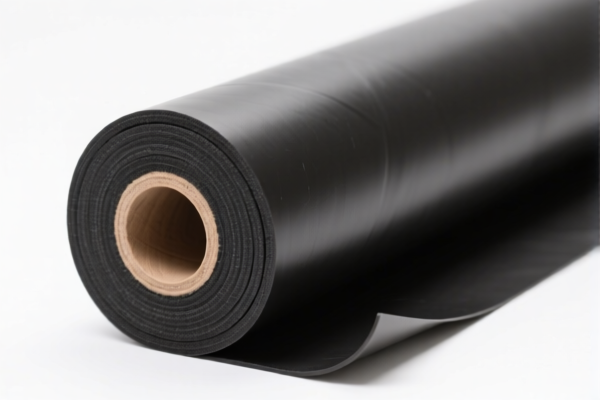
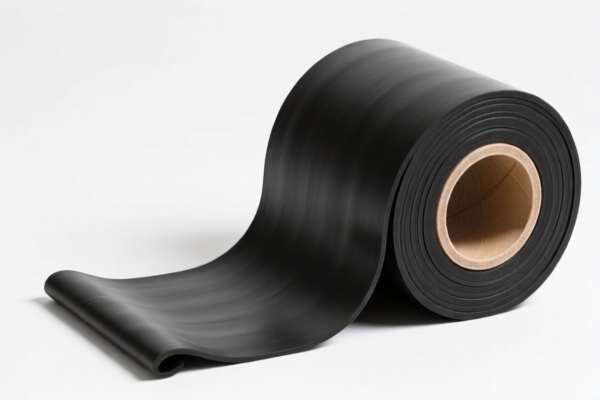
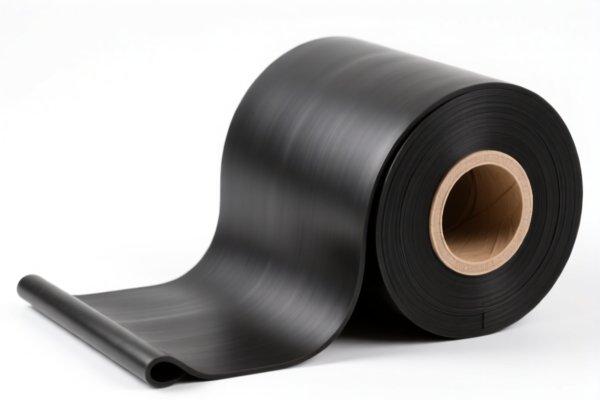
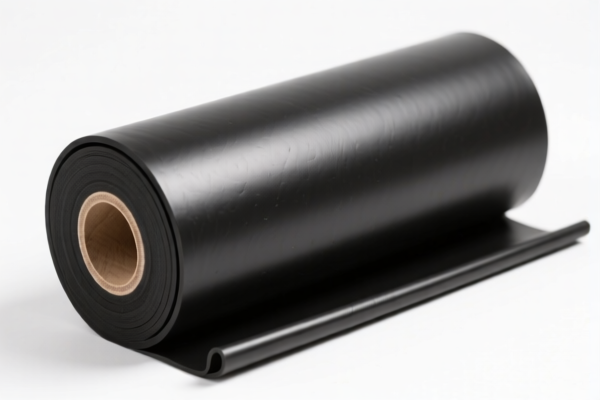
AI Analysis
🌪️ Natural Rubber Cellular Rubber Roll (Foam Rubber Sheets/Rolls)
🌐 HS Code Reference & Customs Clearance Guide | 2026 Latest Tariff Analysis | Professional Customs Strategy
📌 Part I: Product Definition & Classification: Do You Really Understand "Cellular Rubber"?
Natural Rubber Cellular Rubber (often referred to as Foam Rubber or Sponge Rubber) is a porous material made from natural rubber. In international trade, it is primarily classified based on its shape (Sheet/Board vs. Roll) and processing state (Vulcanized vs. Unvulcanized).
For "Rolls" that are intended to be cut into sheets or used as continuous foam material, customs authorities often look at the physical characteristics: * Vulcanized Foam/Sponge: If the rubber has been cured (vulcanized) to form a stable cellular structure, it typically falls under Chapter 40, Heading 4008. * Unvulcanized Semi-Finished Goods: If the material is essentially unvulcanized compound rubber sheets/rolls that are not yet foam, or specific unvulcanized foam precursors, they may fall under 4005.
⚠️ Key Distinction Point:
- If it is Vulcanized (cured) natural rubber foam/sponge in sheet or roll form → Look at 4008.11.10.00 / 4008.11.50.00.
- If it is Unvulcanized natural rubber composite or mixed rubber sheet/roll → Look at 4005.91.00.00 / 4005.99.00.00.
- Note: The provided data suggests these items are treated as "Planks/Sheets" (Ban) in classification logic, even if sold in rolls, due to the standardized tariff entry for "Sheets/Planks of Cellular Rubber".
📦 Part II: HS Code Classification Details (2026 Latest Tariff Authoritative Comparison)
Based on the provided <DATA>, here are the applicable HS Codes for Natural Rubber Cellular Rubber products:
| HS Code | Product Description | Classification Logic | Application Scenario |
|--------|--------------------------|--------------------------|
| 4008.11.10.00 | Natural Rubber Cellular Rubber Sheets/Rolls | Vulcanized Natural Rubber Foam. Specifically classified under "Cellular rubber; plates, sheets, strip and rods of cellular rubber, of natural rubber or compound." | Standard natural rubber sponge foam, shock-absorbing pads, gaskets, insulation mats. |
| 4008.11.50.00 | Natural Rubber Foam Rubber Sheets/Rolls | Vulcanized Natural Rubber Foam. Another sub-category for cellular rubber plates/sheets. Note: The data indicates a different tax rate for this code. | Often used for specific density or thickness variants of natural rubber foam. |
| 4005.91.00.00 | Unvulcanized Natural Rubber Composite Rubber Sheets | Unvulcanized Natural Rubber Sheets/Plates. Classified as "Other plates, sheets, strip and rods... not further processed than compounded." | Semi-finished rubber rolls ready for vulcanization. |
| 4005.99.00.00 | Unvulcanized Mixed Rubber Sheets (Other) | Unvulvanized Rubber - Catch-all. "Other plates, sheets, strip and rods... of other rubber." | Unvulcanized rubber sheets that do not fit other specific unvulcanized categories. |
🔍 Important Reminder:
- Even if the product is sold as a "Roll", if it meets the definition of "Plates, Sheets" (flat, continuous material), it is often declared under 4008 (for vulcanized foam) or 4005 (for unvulcanized sheets).
- Cellular structure is the key keyword for 4008. If it is dense and non-cellular, it might be classified elsewhere (e.g., 4002 or 4004), but the provided data strictly limits us to the four codes above.
- Do not confuse "Cellular Rubber" (Foam) with "Rubber Roll" (Solid Tape). Solid rubber rolls usually fall under different headings (like 4008.11.00 for non-cellular plates/sheets). The provided data explicitly links "Cellular/Foam" to 4008.11.
💰 Part III: 2026 Latest Tariff Rate Details (Including Additional Taxes & Policy Surcharges)
✅ Applicable Country: United States (US)
✅ Country of Origin: China (CN)
✅ Effective Date: November 10, 2025 (and subsequent imports)
🎯 1. 4008.11.10.00 —— Natural Rubber Cellular Rubber Sheets/Rolls
| Item | Content |
|---|---|
| Base Tariff Rate | 0.0% (ad valorem) |
| USITC Additional Tariff | +25.0% (Under USITC Footnote 9903.88.01, Section 301) |
| IEEPA Additional Tariff | +10.0% (Under IEEPA Section 122, targeting China/HK products) |
| Total Tax Rate | 35.0% |
| Tax Calculation | CIF Value × 35% |
| De Minimis Exemption? | ❌ No (deny_de_minimis) |
| Legal Path | IEEPA:122 → USITC:4008.11.10.00 → FOOTNOTE:301 |
📌 Explanation:
- "Base Tariff 0%": Natural rubber articles often have low base MFN rates.
- "301 Tariff 25%": Standard Section 301 surcharge on Chinese rubber goods.
- "IEEPA 10%": Additional surcharge under International Emergency Economic Powers Act.
- Total 35% is a significant cost driver. Must be factored into pricing.
🎯 2. 4005.91.00.00 —— Unvulcanized Natural Rubber Composite Sheets
| Item | Content |
|---|---|
| Base Tariff Rate | 0.0% |
| USITC Additional Tariff | +25.0% |
| IEEPA Additional Tariff | +10.0% |
| Total Tax Rate | 35.0% |
| Tax Calculation | CIF × 35% |
| De Minimis Exemption? | ❌ No |
| Legal Path | IEEPA:122 → USITC:4005.91.00.00 |
📌 Note:
- Same tax structure as 4008.11.10.00.
- Applies to unvulcanized composite rubber sheets.
- If your product is unvulcanized foam precursor, verify if it fits here or 4005.99.
🎯 3. 4005.99.00.00 —— Unvulcanized Mixed Rubber Sheets (Other)
| Item | Content |
|---|---|
| Base Tariff Rate | 0.0% |
| USITC Additional Tariff | +25.0% |
| IEEPA Additional Tariff | +10.0% |
| Total Tax Rate | 35.0% |
| Tax Calculation | CIF × 35% |
| De Minimis Exemption? | ❌ No |
| Legal Path | IEEPA:122 → USITC:4005.99.00.00 |
📌 Note:
- Catch-all category for unvulcanized rubber sheets not fitting 4005.91.
- High risk of customs scrutiny if product is actually cellular (foam). Misclassification can lead to penalties.
🎯 4. 4008.11.50.00 —— Natural Rubber Foam Rubber Sheets/Rolls
| Item | Content |
|---|---|
| Base Tariff Rate | 3.3% |
| USITC Additional Tariff | +25.0% |
| IEEPA Additional Tariff | +10.0% |
| Total Tax Rate | 38.3% |
| Tax Calculation | CIF × 38.3% |
| De Minimis Exemption? | ❌ No |
| Legal Path | IEEPA:122 → USITC:4008.11.50.00 |
📌 Critical Distinction:
- Higher Total Rate (38.3%): This code has a 3.3% Base Tariff, unlike the 0% base for4008.11.10.00.
- Why the difference?4008.11.10.00is often for specific types of natural rubber foam (e.g., sponges), while4008.11.50.00might cover other forms of cellular rubber plates/sheets with a base duty.
- Recommendation: Verify if your specific "Natural Rubber Cellular Rubber Roll" fits the technical definition of4008.11.10.00(often preferred due to 0% base) or4008.11.50.00. If it is standard natural rubber foam, 4008.11.10.00 is likely more cost-effective.
🛠️ Part IV: Customs Clearance Practical Advice (Pitfall Avoidance Guide)
✅ 1. Required Documentation Checklist
| Document | Required | Description |
|---|---|---|
| ✅ Product Specification Sheet | ✔️ | Must specify: Material (Natural Rubber), State (Vulcanized/Unvulcanized), Structure (Cellular/Foam/Solid), Density. |
| ✅ Technical Data Sheet (TDS) | ✔️ | To prove cellular structure if claiming 4008. |
| ✅ Commercial Invoice | ✔️ | Clearly state: "Natural Rubber Cellular Rubber Roll" or "Natural Rubber Foam Sheet". Avoid vague terms like "Rubber Material". |
| ✅ Packing List | ✔️ | Weight, dimensions, number of rolls/sheets. |
| ✅ Certificate of Origin (CO) | ✔️ | To prove Chinese origin (subject to tariffs). |
| ✅ Photos | ✔️ | Show cross-section to prove cellular/foam structure. |
✅ 2. Declaration Tips (Key Mantra)
🔥 “Foam is 4008, Unvulcanized is 4005, Check Base Rate, Save 3.3%!”
| Situation | Correct Declaration | Wrong Approach |
|---|---|---|
| Vulcanized Natural Rubber Foam | 4008.11.10.00 (Preferred) or 4008.11.50.00 |
Declare as "Rubber Sheet" → Risk of misclassification. |
| Unvulcanized Natural Rubber Sheet | 4005.91.00.00 |
Declare as "Foam" → Rejected/Seized. |
| Mixed Rubber Unvulcanized Sheet | 4005.99.00.00 |
Declare as "Natural Rubber" → Fine. |
| Rolls vs. Sheets | Declare as "Sheets/Plates" if flat/continuous | Declare as "Tape" or "Hose" → Wrong Code. |
✅ 3. Special Cases Handling
| Situation | Handling Advice |
|---|---|
| Natural Rubber vs. Synthetic | If it contains synthetic rubber (e.g., SBR), it may NOT qualify for 4008.11 (Natural Rubber). It would fall under 4008.19 or 4005.99. Verify composition! |
| Foam vs. Solid | Cellular structure is mandatory for 4008. If it is dense rubber, use 4008.11.00 (non-cellular plates/sheets) – Note: This code is NOT in the provided data, so assume the provided data implies all items are either cellular (4008.11) or unvulcanized (4005). |
| Composite Rubber | If mixed with other materials (e.g., fabric backing), it may be classified as composite material, potentially changing HS Code. |
🌍 Part V: Global Market Comparison (2026 Latest)
| Country/Region | Recommended HS Code | Tariff | Certification | Notes |
|---|---|---|---|---|
| 🇺🇸 USA | 4008.11.10.00 |
35% | None specific | High tariffs due to 301 & IEEPA. |
| 🇨🇳 China | 4008.11.10.00 |
~5-10% | CCC (if applicable) | Lower export/import duties within China. |
| 🇪🇺 EU | 4008.11.00 |
0-6.5% | REACH | Check for EPR packaging laws. |
| 🇬🇧 UK | 4008.11.00 |
0-6.5% | UKCA | Post-Brexit rules apply. |
📌 Conclusion:
- USA has the highest effective tax burden for Chinese-sourced natural rubber cellular rubber (35% or 38.3%).
- Cost Impact: This significantly reduces profit margins. Consider sourcing from Vietnam/Thailand if possible for IEEPA exemptions (if eligible).
📌 Part VI: Common Mistakes & Pitfalls (Blood Lessons)
❌ Mistake 1: Declaring Unvulcanized rubber as Vulcanized Foam
👉 Consequence: Customs may inspect and reject, leading to delays and penalties.
❌ Mistake 2: Using "Rubber Roll" without specifying "Cellular/Foam"
👉 Consequence: Ambiguity. Customs may assign a default higher tariff code or request additional proof.
❌ Mistake 3: Ignoring the 3.3% Base Tariff Difference between 4008.11.10.00 and 4008.11.50.00
👉 Consequence: Paying 38.3% instead of 35% unnecessarily. Always try to qualify for 4008.11.10.00 if the product is standard natural rubber foam.
❌ Mistake 4: Misidentifying Composite Rubber as Natural Rubber
👉 Consequence: If the rubber is compounded with synthetic polymers, it may not be "Natural Rubber" under HTSUS Chapter 40 headings requiring "Natural Rubber".
✅ Correct Practice:
"Natural Rubber, Vulcanized, Cellular Rubber, Roll Form, Density: 0.05 g/cm³, For Shock Absorption"
🎯 Part VII: Conclusion: Professional Declaration, Save Money, Avoid Risks
🎯 Remember the Mantra:
🔹 "Foam = 4008, Unvulcanized = 4005"
🔹 "Check Base Rate: 4008.11.10 is 0% Base, 4008.11.50 is 3.3% Base"
🔹 "Total Tax = 35% (for 10/50) or 38.3% (for 50)"
🔹 "Declare Cellular Structure Clearly!"
📌 Tip:
If your product is originated in Vietnam, Mexico, Thailand, or Malaysia, you may be eligible for IEEPA Exemption, reducing the tariff to 0%~5% base + 25% 301 (if applicable) or potentially lower.
Recommendation: Apply for an Advance Ruling from CBP before shipment to confirm the exact HS Code and tax rate.
📣 Immediate Action:
📞 Contact a licensed customs broker
📄 Provide detailed product specs (Vulcanization status, Density, Material Composition)
🚀 Get your clearance right, save your profit!
✨ Professional customs clearance starts with accurate classification!
💼 Every percentage point of tax matters!
Customer Reviews
About HS Code Classification
The Harmonized System (HS) is an internationally standardized nomenclature developed by the World Customs Organization (WCO) to classify traded products. Over 200 countries use the HS system as the basis for customs tariffs, trade statistics, and import/export regulations.
Each HS code follows a hierarchical structure:
- Chapter (2 digits) — Broad category of goods (e.g., Chapter 84: Machinery and Mechanical Appliances)
- Heading (4 digits) — More specific grouping within the chapter
- Subheading (6 digits) — Internationally standardized breakdown, used by all WCO member countries
- National subdivisions (8-10 digits) — Country-specific extensions for further classification, such as US HTSUS 10-digit codes
Correct HS code classification is essential for smooth customs clearance, accurate duty payment, and compliance with trade regulations. Misclassification can lead to customs delays, overpayment of duties, or penalties.
When importing from CN to US, the applicable tariff rates may include:
- Most-Favored-Nation (MFN) rate — The standard duty rate applied to WTO members
- General rate — Applied to countries without trade agreements
- Trade remedy duties — Additional tariffs such as Section 301 (anti-dumping), Section 232 (national security), or countervailing duties
The information provided on this page is for reference purposes only. For official classification, please consult with your local customs authority or a licensed customs broker.