Natural Rubber Cellular Rubber Strips
CN → US| HS Code | Tariff Rate | Origin | Destination | Doc |
|---|---|---|---|---|
| 4008111000 | 35.0% | CN | US | Official Doc |
| 4005910000 | 35.0% | CN | US | Official Doc |
| 4005990000 | 10.0% | CN | US | Official Doc |
| 4008115000 | 38.3% | CN | US | Official Doc |
| 6117809570 | 32.1% | CN | US | Official Doc |
Product Images
AI Analysis
🧪 Natural Rubber Cellular Rubber Strips | HS Code Guide & Tariff Strategy (2026)
🌐 HS Code Reference & Customs Clearance Guide | 2026 Updated Tariff Schedule | Professional Clearance Strategy
📌 I. Product Definition & Classification: Do You Know "Cellular Rubber"?
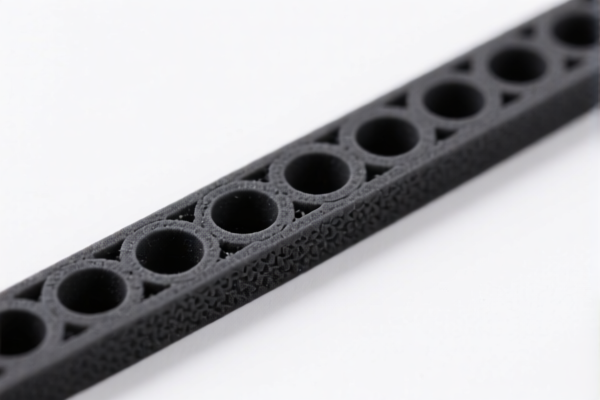
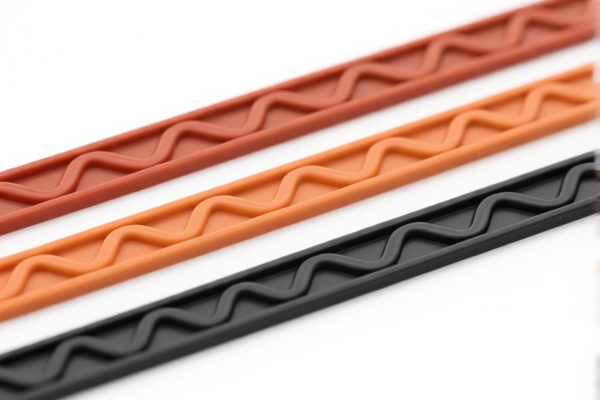
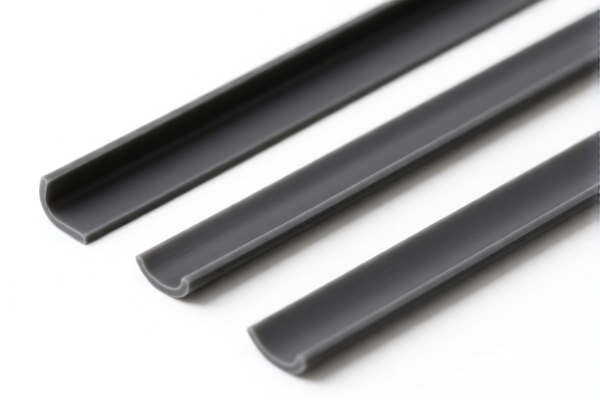
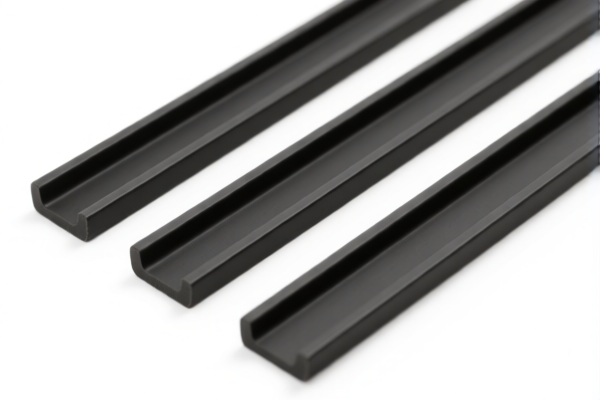
Natural Rubber Cellular Rubber Strips are spongy, open-cell or closed-cell rubber products made from natural rubber (hevea brasiliensis), processed into strips, sheets, or profiles. They are widely used for:
- Sealing & Gasketing (automotive, construction, HVAC)
- Vibration Isolation (machinery, electronics)
- Insulation & Soundproofing
- Padding & Cushioning
In international trade, these products fall under Chapter 40 (Rubber and Articles Thereof), with key distinctions between foamed rubber (cellular structure) and unvulcanized/compounded rubber sheets.
⚠️ Key Classification Criteria: - If the product has a cellular (foamed) structure →归类 to 4008.11 - If the product is unvulcanized compounded rubber in sheet form →归类 to 4005.91 or 4005.99 - If it's a general unvulcanized mix without specific form →归类 to 4005.99 (fallback category)
📦 II. HS Code Breakdown (2026 Tariff Authority Reference)
| HS Code | Product Description | Application Scenario | Key Features |
|---|---|---|---|
4008.11.10.00 |
Natural rubber cellular rubber sheets, foam rubber classification | Sealing strips, gaskets, vibration pads | ✅ Foamed/cellular structure |
4005.91.00.00 |
Natural rubber unvulcanized compounded rubber sheets, strip/sheet form | Unprocessed rubber strips for further manufacturing | ✅ Unvulcanized, sheet form |
4005.99.00.00 |
Natural rubber unvulcanized compounded rubber, other/dummy category | General unvulcanized rubber mix, unspecified form | ✅ Unvulcanized, fallback code |
4008.11.50.00 |
Natural rubber cellular rubber sheets, foam rubber classification (variant) | High-density foam strips, specialized sealing | ✅ Foamed, slight variation in structure |
6117.80.95.70 |
Natural sponge decorative items, apparel accessories (miscellaneous) | Sponge ornaments, non-industrial use | ✅ Apparel accessory, non-foam classification |
🔍 Critical Reminder: - Foamed/cellular products must be declared under 4008.11 series; - Unvulcanized compounded rubber in sheet/strip form goes to 4005.91 or 4005.99; - Non-industrial sponge items (e.g., decorations) may fall under 6117.80.95.70, but not for functional rubber strips.
💰 III. 2026 Tariff Rate Breakdown (Including Base, Additional, and Policy Surcharges)
✅ Applicable Country: United States (US)
✅ Country of Origin: China (CN)
✅ Effective Date: From November 10, 2025 (and ongoing)
🎯 1. 4008.11.10.00 — Natural Rubber Cellular Rubber Sheets (Foam Classification)
| Item | Details |
|---|---|
| Base Tariff | 0% (ad valorem) |
| Section 301 Additional Duty | +25% (USITC Footnote 9903.88.01) |
| 122-Clause Tariff (China-specific) | +10% (IEEPA-based, from Nov 10, 2025) |
| Total Tariff Rate | 35% |
| Tax Calculation Basis | CIF Value × 35% |
| De Minimis Exemption | ❌ Not Eligible |
| Legal Reference Path | IEEPA:9903.01.25 → USITC:4008.11.10.00 → FOOTNOTE:9903.88.01 |
📌 Explanation: - The 25% surcharge is under Section 301 of the U.S. Trade Act; - The 10% is a China-specific tariff under 122-Clause provisions; - Combined 35% is high, requiring pre-import tax planning.
🎯 2. 4005.91.00.00 — Natural Rubber Unvulcanized Compounded Sheets (Strip Form)
| Item | Details |
|---|---|
| Base Tariff | 0% |
| Section 301 Additional Duty | +25% |
| 122-Clause Tariff | +10% |
| Total Tariff Rate | 35% |
| Tax Calculation Basis | CIF × 35% |
| De Minimis Exemption | ❌ Not Eligible |
| Legal Reference Path | IEEPA:9903.01.25 → USITC:4005.91.00.00 → FOOTNOTE:9903.88.01 |
📌 Note: - Same tariff as foam category; - Applies to unvulcanized rubber sheets intended for further processing.
🎯 3. 4005.99.00.00 — Natural Rubber Unvulcanized Compounded Rubber (Other)
| Item | Details |
|---|---|
| Base Tariff | 0% |
| Section 301 Additional Duty | 0% |
| 122-Clause Tariff | +10% |
| Total Tariff Rate | 10% |
| Tax Calculation Basis | CIF × 10% |
| De Minimis Exemption | ❌ Not Eligible |
| Legal Reference Path | IEEPA:9903.01.25 → USITC:4005.99.00.00 |
📌 Note: - Lowest tariff among rubber categories; - Applies to general unvulcanized rubber mix, not foamed or sheet-specific; - Ideal for fallback classification if other codes don't apply.
🎯 4. 4008.11.50.00 — Natural Rubber Cellular Rubber Sheets (Variant)
| Item | Details |
|---|---|
| Base Tariff | 3.3% |
| Section 301 Additional Duty | +25% |
| 122-Clause Tariff | +10% |
| Total Tariff Rate | 38.3% |
| Tax Calculation Basis | CIF × 38.3% |
| De Minimis Exemption | ❌ Not Eligible |
| Legal Reference Path | IEEPA:9903.01.25 → USITC:4008.11.50.00 → FOOTNOTE:9903.88.01 |
📌 Note: - Slightly higher base tariff (3.3%) due to specific sub-classification; - Still subject to full 35% additional duties; - Total 38.3% — avoid unless no other option exists.
🎯 5. 6117.80.95.70 — Natural Sponge Decorative Items (Apparel Accessory)
| Item | Details |
|---|---|
| Base Tariff | 14.6% |
| Section 301 Additional Duty | +7.5% |
| 122-Clause Tariff | +10% |
| Total Tariff Rate | 32.1% |
| Tax Calculation Basis | CIF × 32.1% |
| De Minimis Exemption | ❌ Not Eligible |
| Legal Reference Path | IEEPA:9903.01.25 → USITC:6117.80.95.70 |
📌 Note: - Not applicable for functional rubber strips; - Only for decorative sponge items used in apparel/accessories; - Avoid unless item is clearly non-industrial.
🛠️ IV. Customs Clearance Practical Advice (Avoid Pitfalls)
✅ 1. Required Documentation Checklist
| Document | Must Provide | Purpose |
|---|---|---|
| ✅ Product Specification Sheet | ✔️ | Dimensions, density, cell structure, vulcanization status |
| ✅ Composition Analysis | ✔️ | Confirm natural rubber content vs. synthetic blends |
| ✅ Process Flow Diagram | ✔️ | Show foaming, curing, or compounding process |
| ✅ Product Photos (with labels) | ✔️ | Clear view of surface texture, edges, markings |
| ✅ Commercial Invoice | ✔️ | State HS Code, HS Description, Origin, CIF Value |
| ✅ Packing List | ✔️ | Show units, weight, dimensions, packaging type |
| ✅ Certificate of Origin (CO) | ✔️ | If origin is not China, may reduce tax burden |
| ✅ Third-Party Lab Report | ✔️ | ISO, REACH, RoHS compliance (if required) |
✅ 2. Declaration Tips (Golden Rules)
🔥 "Foam or Unvulcanized? Name it right, tax drops right!"
| Scenario | Correct Declaration | Wrong Approach |
|---|---|---|
| Foamed rubber strip | 4008.11.10.00 |
Misclassified as 4005.91 → 35% |
| Unvulcanized rubber sheet | 4005.91.00.00 |
Called "foam" → 35% vs. 35% (same) |
| General unvulcanized mix | 4005.99.00.00 |
Over-classified as foam → 35% vs. 10% |
| Decorative sponge item | 6117.80.95.70 |
Misclassified as industrial rubber → 32.1% vs. 35% |
✅ 3. Special Cases & Handling
| Situation | Recommendation |
|---|---|
| OEM Customized Strips | Provide customer order + design specs to justify classification |
| Mixed Rubber (Natural + Synthetic) | Must declare composition ratio; may shift to different HS |
| Rubber Used in Medical Devices | May qualify for "non-industrial" exemption if certified |
| Rubber for Military/Aerospace | Special purpose declaration may reduce tax, requires approval |
🌍 V. Global Market Comparison (2026 Updated)
| Country/Region | Recommended HS Code | Tariff | Certification | Notes |
|---|---|---|---|---|
| 🇺🇸 USA | 4008.11.10.00 |
35% (China) | FDA, RoHS | High tax for foam; 10% for unvulcanized |
| 🇨🇳 China | 4008.11.10.00 |
5% | CCC + RoHS | No 301/122 clauses |
| 🇪🇺 EU | 4008.11.10.00 |
0% (if CE) | CE + REACH | No surcharges |
| 🇯🇵 Japan | 4008.11.10.00 |
0% | PSE | No additional duties |
| 🇦🇺 Australia | 4008.11.10.00 |
5% | RCM | No 301 tax |
📌 Conclusion: - USA is the only market with high surcharges (35% total); - China, EU, Japan, Australia offer much lower rates; - Consider shifting production to Vietnam/Mexico for IEEPA exemption.
📌 VI. Common Errors & Pitfalls (Real Lessons)
❌ Mistake 1: Declaring foamed rubber as "unvulcanized compounded rubber"
👉 Consequence: 35% tax instead of 10% → Overpayment + fines
❌ Mistake 2: Calling functional rubber strips "decorative sponge"
👉 Consequence: 32.1% tax instead of 35% (minor) but risk of audit
❌ Mistake 3: Not providing vulcanization status in docs
👉 Consequence: Customs delays or reclassification
❌ Mistake 4: Using generic name "rubber strip" without detail
👉 Consequence: Customs discretion → higher tax or rejection
✅ Best Practice:
"Natural Rubber Cellular Rubber Strips, Closed-Cell Foam, Density 0.6 g/cm³, Vulcanized, 10mm x 50mm x 1m, ASTM D1055 Compliant, Model XYZ, Cert: RoHS/REACH"
🎯 VII. Final Thoughts: Precision Classification Saves Money!
🎯 Remember the Rules:
🔹 "Foam = 4008.11, Unvulcanized = 4005.91/99, Fallback = 4005.99"
🔹 "USA Tax: 35% (foam), 10% (unvulcanized), 32.1% (decorative)"
🔹 "One mistake in classification = thousands in extra cost!"
📌 Quick Tip:
If your rubber product is originating from Vietnam, Mexico, Thailand, Malaysia, apply for IEEPA Exemption to reduce tax to 0%–5%.
Request a Binding Tariff Information (BTI) or Advance Ruling before shipping.
📣 Take Action Now:
📞 Contact a licensed customs broker + submit product specs + apply for HS Code Pre-Ruling
🚀 Get your Natural Rubber Cellular Rubber Strips cleared fast, cost-effectively, and profitably!
✨ Professional Customs Clearance Starts with Accurate Classification!
💼 Every dollar of your tax burden is worth calculating precisely!
Customer Reviews
About HS Code Classification
The Harmonized System (HS) is an internationally standardized nomenclature developed by the World Customs Organization (WCO) to classify traded products. Over 200 countries use the HS system as the basis for customs tariffs, trade statistics, and import/export regulations.
Each HS code follows a hierarchical structure:
- Chapter (2 digits) — Broad category of goods (e.g., Chapter 84: Machinery and Mechanical Appliances)
- Heading (4 digits) — More specific grouping within the chapter
- Subheading (6 digits) — Internationally standardized breakdown, used by all WCO member countries
- National subdivisions (8-10 digits) — Country-specific extensions for further classification, such as US HTSUS 10-digit codes
Correct HS code classification is essential for smooth customs clearance, accurate duty payment, and compliance with trade regulations. Misclassification can lead to customs delays, overpayment of duties, or penalties.
When importing from CN to US, the applicable tariff rates may include:
- Most-Favored-Nation (MFN) rate — The standard duty rate applied to WTO members
- General rate — Applied to countries without trade agreements
- Trade remedy duties — Additional tariffs such as Section 301 (anti-dumping), Section 232 (national security), or countervailing duties
The information provided on this page is for reference purposes only. For official classification, please consult with your local customs authority or a licensed customs broker.