Natural Rubber Connector
CN → US| HS Code | Tariff Rate | Origin | Destination | Doc |
|---|---|---|---|---|
| 4009120020 | 20.0% | CN | US | Official Doc |
| 4009120050 | 20.0% | CN | US | Official Doc |
| 4017000000 | 37.7% | CN | US | Official Doc |
| 4016993550 | 35.0% | CN | US | Official Doc |
| 4016993000 | 35.0% | CN | US | Official Doc |
Product Images
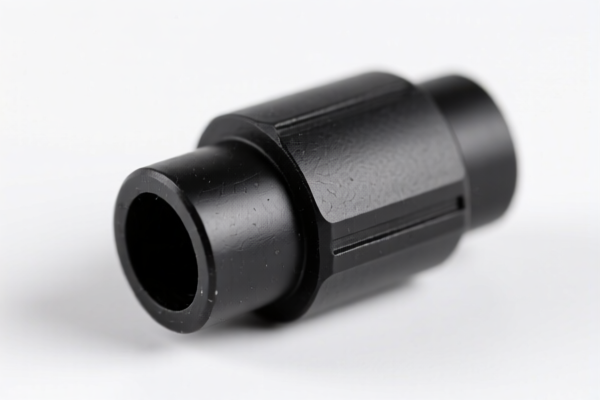
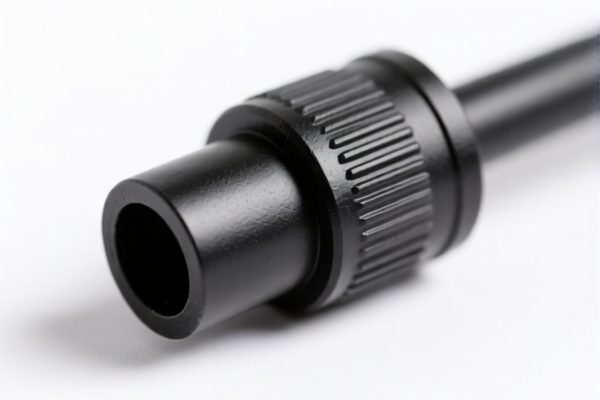
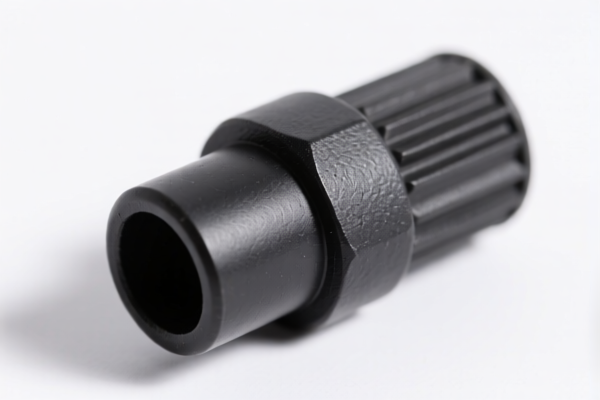
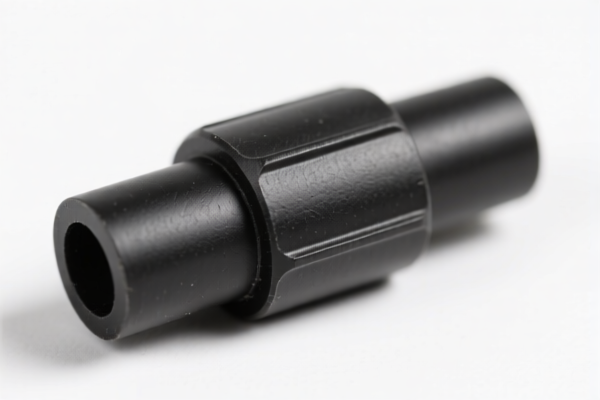
AI Analysis
🔌 Natural Rubber Connectors & Cable Accessories (Gum Rubber Products)
🌐 HS Code Reference & Customs Clearance Guide | 2026 Latest Tariff Analysis | Specialized Clearance Strategy 📌 I. Product Definition & Classification: Do You Really Understand "Natural Rubber Connectors"?
Natural Rubber Connectors are critical components in electrical, industrial, and telecommunications infrastructure. In international trade, they are classified under Chapter 40: Rubber and articles thereof. The classification depends heavily on the shape, function, and degree of processing of the rubber product.
They are generally divided into two categories:
1. Tubing & Hose Fittings (HS 4009 Series): Rubber hoses or tubes with fittings attached, used for conveying fluids or gases. These are considered "pipes, tubes, and hoses with fittings." * Key Characteristic: Has a specific tubular shape or is an integral part of a hose assembly.
2. General Rubber Accessories/Parts (HS 4016 or 4017 Series): Solid rubber parts, seals, gaskets, or specialized cable accessories that do not fit the "hose/tube" definition. These fall under "other articles of rubber." * Key Characteristic: Solid shape, sealing function, or specific electrical insulation properties (hard rubber).
⚠️ Critical Distinction Point: - If the product is a hose/tube with an integrated connector → Chapter 4009 - If the product is a solid cable accessory (gland, seal, insulator) → Chapter 4016 or 4017
📦 II. HS Code Classification Details (2026 Latest Tariff Authority Comparison)
| HS Code | Product Description | Application Scenario | Classification Logic |
|---|---|---|---|
4009.12.00.20 |
Rubber tube connectors, material: rubber, form: connector, accessory for piping systems | Hydraulic hoses, pneumatic tube fittings, fluid transfer accessories | ✅ Tubing/Hose Fitting |
4009.12.00.50 |
Rubber tube connectors, material: rubber, accessory/joint for pipes, vulcanized rubber category | General industrial rubber hose joints, flexible pipe connectors | ✅ Tubing/Hose Fitting |
4017.00.00.00 |
Natural rubber cable accessories, material: natural rubber, purpose: cable accessory, hard rubber & articles thereof | Electrical cable glands, hard rubber insulators, specialized cable seals | ✅ Hard Rubber Articles |
4016.99.35.50 |
Natural rubber cable accessories, material: natural rubber, purpose: cable accessory, residual catch-all | General rubber cable seals, grommets, non-specific shape accessories | ✅ Other Rubber Articles |
4016.99.30.00 |
Natural rubber cable accessories, material: natural rubber, form: accessory, electrical field, other articles logic | Standard rubber cable boots, seals, and protective covers | ✅ Other Rubber Articles |
🔍 Key Reminder: - 4009 is for tubular components or hoses with fittings. - 4016/4017 is for solid rubber parts or accessories. - Misclassification leads to significant tax discrepancies (e.g., confusing 20% with 37%).
💰 III. 2026 Latest Tariff Rate Breakdown (Including Surtaxes & Policy Add-ons)
✅ Applicable Country: United States (US) ✅ Origin: China (CN) ✅ Effective Date: From Nov 10, 2025 (including subsequent imports)
🎯 1. 4009.12.00.20 & 4009.12.00.50 —— Rubber Tube Connectors
These items are classified under Chapter 4009 (Pipes, tubes, and hoses, with fittings).
| Item | Content |
|---|---|
| Base Rate | 2.5% (ad valorem) |
| Section 301 Surtax | +7.5% (Additional US duties on Chinese goods) |
| Section 122 Tariff | +10% (Trade Act of 1962, specific surtax) |
| Total Tax Rate | 20.0% |
| Tax Calculation | CIF Value × 20% |
| De Minimis Exemption | ❌ Not Eligible (Standard import rules apply) |
| Legal Basis Path | HTSUS:4009.12.00.20 → Section 301: 9903.88.01 → Section 122: 19 CFR 122 |
📌 Explanation: - The 2.5% is the standard MFN (Most Favored Nation) tariff for rubber hoses/fittings. - The 7.5% is the additional tariff imposed under Section 301 of the Trade Act of 1974. - The 10% is the additional tariff under Section 122 of the Trade Act of 1962. - Total: 20%. This is a moderate-to-high tariff for rubber components.
🎯 2. 4017.00.00.00 —— Hard Rubber Cable Accessories
These items are classified under Chapter 4017 (Hard rubber and articles thereof).
| Item | Content |
|---|---|
| Base Rate | 2.7% (ad valorem) |
| Section 301 Surtax | +25.0% (High-level additional US duties) |
| Section 122 Tariff | +10% (Trade Act of 1962, specific surtax) |
| Total Tax Rate | 37.7% |
| Tax Calculation | CIF Value × 37.7% |
| De Minimis Exemption | ❌ Not Eligible |
| Legal Basis Path | HTSUS:4017.00.00.00 → Section 301: 9903.88.01 → Section 122: 19 CFR 122 |
📌 Explanation: - Hard rubber (vulcanized rubber with sulfur content > 10%) attracts higher scrutiny and tariffs. - The 25% surtax under Section 301 is significantly higher than for other rubber articles. - Total: 37.7%. This is a very high tariff, potentially making this classification costly for US importers.
🎯 3. 4016.99.35.50 & 4016.99.30.00 —— Other Rubber Cable Accessories
These items are classified under Chapter 4016 (Other articles of vulcanized rubber).
| Item | Content |
|---|---|
| Base Rate | 0.0% (Free or low base duty for certain rubber articles) |
| Section 301 Surtax | +25.0% (High-level additional US duties) |
| Section 122 Tariff | +10% (Trade Act of 1962, specific surtax) |
| Total Tax Rate | 35.0% |
| Tax Calculation | CIF Value × 35.0% |
| De Minimis Exemption | ❌ Not Eligible |
| Legal Basis Path | HTSUS:4016.99.35.50 / 4016.99.30.00 → Section 301: 9903.88.01 → Section 122: 19 CFR 122 |
📌 Explanation: - While the base rate is 0%, the 25% Section 301 surtax remains applicable. - Total: 35.0%. Still high, but slightly lower than hard rubber (37.7%). - Note: Even though the base duty is 0%, the surtaxes make it expensive.
🛠️ IV. Customs Clearance Practical Advice (Real-World Pitfall Avoidance Guide)
✅ 1. Preparation Checklist (Non-negotiable)
| Document | Required | Description |
|---|---|---|
| ✅ Product Specification Sheet | ✔️ | Must detail material composition (natural vs. synthetic), hardness (Shore A/D), and dimensions. |
| ✅ Technical Drawings | ✔️ | Crucial to distinguish between "Hose Fitting" (4009) and "Solid Accessory" (4016/4017). |
| ✅ Product Photos (Clear) | ✔️ | Show shape, connection method, and any markings. |
| ✅ Commercial Invoice | ✔️ | Must clearly state "Natural Rubber Connector" or "Rubber Cable Accessory." Avoid vague terms like "Part." |
| ✅ Material Safety Data Sheet (MSDS) | ✔️ | Helps customs verify material composition (e.g., sulfur content for hard rubber). |
| ✅ Packing List | ✔️ | Separate line items if mixing different HS codes. |
✅ 2. Declaration Tips (Key Mantras)
🔥 “Shape Determines Code, Base Rate is Zero, Surtax is the Killer!”
| Scenario | Correct Declaration | Wrong Practice |
|---|---|---|
| Hose with Fitting | 4009.12.00.20/50 |
Misdeclare as "Rubber Part" → Risk of 35-37% instead of 20% |
| Solid Cable Seal/Gland | 4016.99.30.00 or 4016.99.35.50 |
Misdeclare as "Hose Fitting" → Risk of 20% (lower, but incorrect) |
| Hard Rubber Insulator | 4017.00.00.00 |
Misdeclare as "Other Rubber" → Risk of 35% instead of 37.7% (slightly lower) |
| Mixed Container | Separate HS Codes | Combine all as "Rubber Goods" → Audit Flagged! |
✅ 3. Special Handling for "Natural Rubber"
| Scenario | Handling Advice |
|---|---|
| Natural vs. Synthetic | If the product is natural rubber, it may qualify for different phytosanitary or anti-dumping checks. Ensure documentation specifies "Natural Rubber" (NR). |
| Hard Rubber (>10% Sulfur) | If the sulfur content is high, it falls under 4017 (Hard Rubber). If not, it falls under 4016. Provide lab test reports if challenged. |
| Cable Accessories | If used for electrical insulation, provide UL/CE certification copies to prove end-use and material safety. |
🌍 V. Global Market Clearance Comparison (2026 Latest)
| Country/Region | Recommended HS Code | Tariff | Certification Requirements | Notes |
|---|---|---|---|---|
| 🇺🇸 USA | 4009.12.00.20 / 4016.99.30.00 |
20% - 37.7% | None Specific (But Section 301/122 Apply) | High Surtaxes make US imports expensive. |
| 🇨🇳 China | 4009.12.00.20 / 4016.99.30.00 |
5% - 10% | CCC (if electrical) | No additional surtaxes. |
| 🇪🇺 EU | 4009.12.00 / 4016.99 |
0% - 4% | CE, REACH Compliance | Generally low tariffs. |
| 🇦🇺 Australia | 4009.12.00 / 4016.99 |
5% | RCM (if electrical) | Moderate tariffs. |
| 🇯🇵 Japan | 4009.12.00 / 4016.99 |
0% - 3% | PSE (if electrical) | Low tariffs, strict safety checks. |
📌 Conclusion: - The US market is the most costly due to Section 301 (25% or 7.5%) and Section 122 (10%) surtaxes. - EU and Japan offer significantly lower tariff barriers (0-4%). - If exporting to the US, accurate classification is vital to avoid overpaying or underpaying (which leads to penalties).
📌 VI. Common Errors & Pitfall Guide (Lessons from Tears)
❌ Error 1: Declaring Hose Fittings as General Rubber Parts 👉 Consequence: Under-declaration of tax (20% vs 35%). Penalty + Back Taxes!
❌ Error 2: Declaring Solid Cable Seals as Hose Fittings 👉 Consequence: Over-declaration of tax (35% vs 20%). Unnecessary Cost!
❌ Error 3: Ignoring Section 122 👉 Consequence: Many importers forget the 10% Section 122 surtax. Unexpected Bill at Customs!
❌ Error 4: Vague Product Name ("Rubber Part") 👉 Consequence: Customs assigns a default high-rate code. Delay + Higher Tax!
✅ Correct Practice:
"Natural Rubber Hose Connector, Vulcanized, Used for Hydraulic Systems, Model RC-100" OR "Natural Rubber Cable Gland, Solid, Electrical Insulation, Model CG-200"
🎯 VII. Conclusion: Precise Classification, Time & Cost Saving!
🎯 Remember the Mantra:
🔹 "Hose Fitting: 20%. Solid Accessory: 35-37%. Surtax is 10-25%. Know Your Shape!" 🔹 "HS Code Determines Tax, Wrong Code Costs Money. Declare Accurately, Ship Faster!"
📌 Pro Tip: If your product is originating from Vietnam, Mexico, or Thailand, you may be eligible for Section 301 exemptions. 👉 Action: Apply for a Section 301 Exclusion or Advance Ruling before shipping.
📣 Immediate Action:
📞 Contact your Customs Broker + Provide Product Photos + Confirm Material Composition (Natural vs. Synthetic) 🚀 Ensure Smooth Customs Clearance, Minimize Taxes, Maximize Profit!
✨ Professional Clearance Starts with Precise Classification! 💼 Every Penny Saved is Profit Earned!
Customer Reviews
About HS Code Classification
The Harmonized System (HS) is an internationally standardized nomenclature developed by the World Customs Organization (WCO) to classify traded products. Over 200 countries use the HS system as the basis for customs tariffs, trade statistics, and import/export regulations.
Each HS code follows a hierarchical structure:
- Chapter (2 digits) — Broad category of goods (e.g., Chapter 84: Machinery and Mechanical Appliances)
- Heading (4 digits) — More specific grouping within the chapter
- Subheading (6 digits) — Internationally standardized breakdown, used by all WCO member countries
- National subdivisions (8-10 digits) — Country-specific extensions for further classification, such as US HTSUS 10-digit codes
Correct HS code classification is essential for smooth customs clearance, accurate duty payment, and compliance with trade regulations. Misclassification can lead to customs delays, overpayment of duties, or penalties.
When importing from CN to US, the applicable tariff rates may include:
- Most-Favored-Nation (MFN) rate — The standard duty rate applied to WTO members
- General rate — Applied to countries without trade agreements
- Trade remedy duties — Additional tariffs such as Section 301 (anti-dumping), Section 232 (national security), or countervailing duties
The information provided on this page is for reference purposes only. For official classification, please consult with your local customs authority or a licensed customs broker.