Natural Rubber Corrugated Pipe
CN → US| HS Code | Tariff Rate | Origin | Destination | Doc |
|---|---|---|---|---|
| 4009110000 | 37.5% | CN | US | Official Doc |
| 4009310000 | 37.5% | CN | US | Official Doc |
Product Images
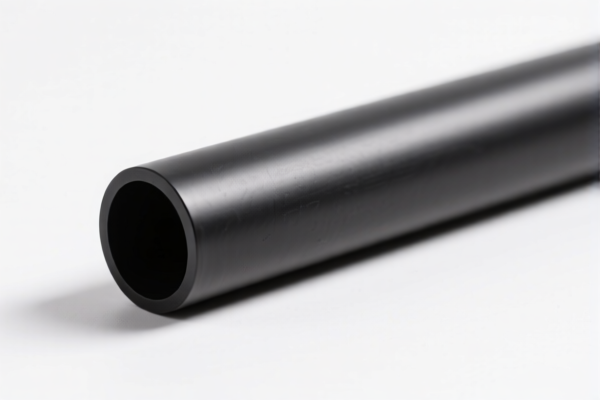
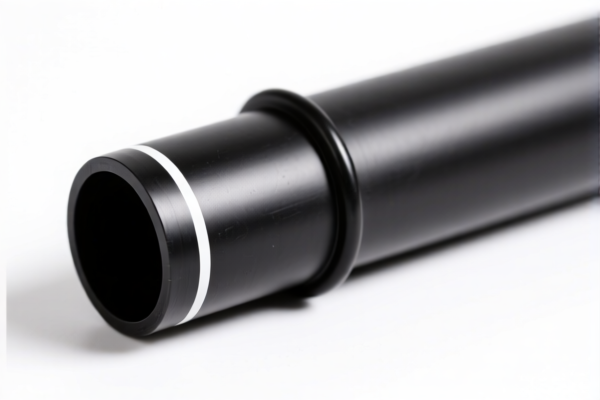
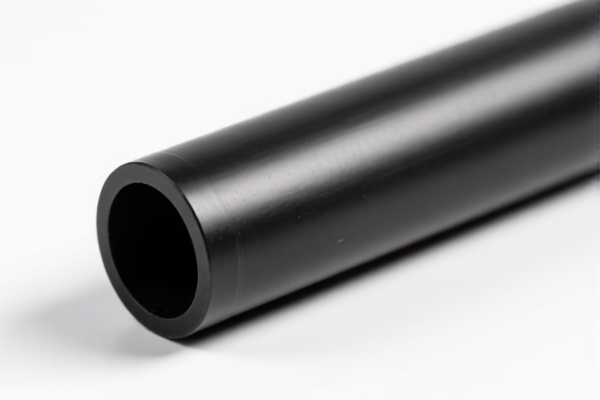
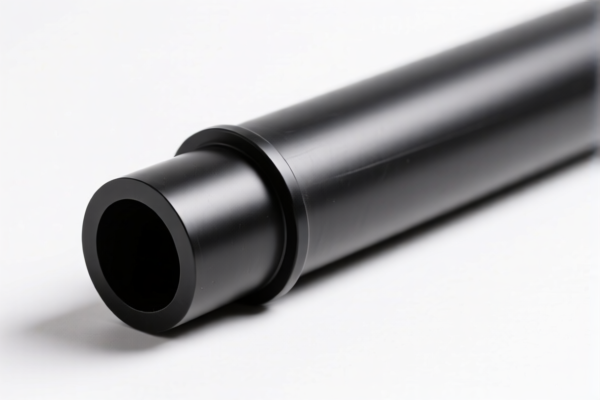
AI Analysis
🛢️ Natural Rubber Corrugated Pipe (Tubes, Pipes, and Hoses)
🌐 HS Code Reference & Customs Clearance Guide | 2026 Latest Tariff Analysis | Professional Clearance Strategy
📌 I. Product Definition & Classification: Do You Really Understand "Rubber Pipes"?
Natural Rubber Corrugated Pipes fall under the broader category of "Tubes, pipes, and hoses, of vulcanized rubber other than hard rubber." In international trade, precise classification depends on material reinforcement and fittings.
Key Distinction Points:
1. No Reinforcement: Pure rubber/vulcanized rubber without textile or metal reinforcement.
* ✅ HS Code: 4009.11.00.00
2. Textile Reinforced: Rubber combined with textile materials for strength (common in automotive or industrial hoses).
* ✅ HS Code: 4009.31.00.00
⚠️ Critical Note:
- If the pipe is unreinforced (simple wall), it goes to 4009.11.
- If it has textile layers (braided or woven inside), it goes to 4009.31.
- Fittings: The descriptions below assume NO fittings (joints, elbows, flanges) are included. If fittings are present, the code may change to4009.21or4009.41.
📦 II. HS Code Classification Details (2026 Latest Tariff Authority)
| HS Code | Product Description | Applicable Scenario | Reinforcement Status |
|---|---|---|---|
4009.11.00.00 |
Tubes, pipes, hoses: Not reinforced or combined with other materials; Without fittings | Pure rubber corrugated pipes, non-pressure applications | ❌ No Reinforcement |
4009.31.00.00 |
Tubes, pipes, hoses: Reinforced only with textile materials; Without fittings | Automotive hoses, industrial suction/discharge hoses with textile weave | ✅ Textile Reinforced |
🔍 Focus Reminder:
- Both codes above exclude fittings. If your corrugated pipe comes with connectors, elbows, or flanges, you must use different codes (4009.21or4009.41), which may have different tax implications.
- "Corrugated" itself does not change the HS code; it is the reinforcement and fittings that determine the final subheading.
💰 III. 2026 Latest Tariff Rate Breakdown (Including Surcharges & Policy Add-ons)
✅ Applicable Country: United States (US)
✅ Country of Origin: China (CN)
✅ Effective Date: From November 10, 2025 (including subsequent imports)
🎯 1. 4009.11.00.00 —— Unreinforced Rubber Pipes (Without Fittings)
| Item | Detail |
|---|---|
| Base Tariff Rate | 2.5% (ad valorem) |
| Section 301 Surcharge | +25.0% (USITC Footnote) |
| Total Tariff Rate | 27.5% |
| Tax Calculation | CIF Value × 27.5% |
| De Minimis Exemption | ❌ Not Eligible (High tax rate prevents 8 U.S.C. § 1321 exemption) |
| Legal Basis Path | USITC:4009.11.00.00 → Section 301: 25% surcharge |
📌 Explanation:
- The 2.5% is the standard Most Favored Nation (MFN) duty.
- The 25% is the additional tariff imposed under Section 301 of the Trade Act of 1974 on Chinese goods.
- Total: 27.5%. This is a moderate-to-high duty, so cost calculation must include this.
🎯 2. 4009.31.00.00 —— Textile-Reinforced Rubber Pipes (Without Fittings)
| Item | Detail |
|---|---|
| Base Tariff Rate | 2.5% (ad valorem) |
| Section 301 Surcharge | +25.0% (USITC Footnote) |
| Total Tariff Rate | 27.5% |
| Tax Calculation | CIF Value × 27.5% |
| De Minimis Exemption | ❌ Not Eligible |
| Legal Basis Path | USITC:4009.31.00.00 → Section 301: 25% surcharge |
📌 Note:
- Identical tax structure to unreinforced pipes.
- Even if the rubber is natural or synthetic, as long as it’s textile-reinforced and fittings-free, the rate remains 27.5%.
🛠️ IV. Customs Clearance Practical Advice (Pitfall Avoidance Guide)
✅ 1. Required Documentation Checklist (No Exceptions)
| Document | Must Provide | Description |
|---|---|---|
| ✅ Product Specification Sheet | ✔️ | Include material (natural/synthetic rubber), wall thickness, corrugation type, pressure rating |
| ✅ Material Composition Proof | ✔️ | Declare if textile reinforcement is present (e.g., "Polyester braided inner layer") |
| ✅ Product Photos (Clear) | ✔️ | Show cross-section if possible to prove reinforcement status |
| ✅ Commercial Invoice | ✔️ | Clearly state "Rubber Pipe, Corrugated, Without Fittings" |
| ✅ Packing List | ✔️ | Ensure no loose fittings are included unless declared separately |
✅ 2. Declaration Tips (Key Mantra)
🔥 "Reinforcement Determines Code, Fittings Change Everything!"
| Scenario | Correct Declaration | Wrong Practice |
|---|---|---|
| Pure rubber corrugated pipe | 4009.11.00.00 |
Misreporting as textile-reinforced → Same tax, but risk of audit |
| Textile-braided rubber hose | 4009.31.00.00 |
Reporting as unreinforced → Misclassification |
| Pipe + Connectors/Elbows | Cannot use above codes | Must use 4009.21 or 4009.41 |
| Hard Rubber Pipe | Not applicable | Hard rubber falls under 4008 or 4016, not 4009 |
✅ 3. Special Case Handling
| Situation | Handling Advice |
|---|---|
| With Fittings | If the pipe includes elbows, flanges, or couplings, you must use HS Code 4009.21 (Unreinforced with fittings) or 4009.41 (Textile-reinforced with fittings). These may have different tax treatments. |
| Hybrid Reinforcement | If reinforced with metal (not textile), it falls under 4009.11 (if not combined) or 4009.21 (with fittings). Metal reinforcement does not trigger the "textile" category (4009.3x). |
| Partial Fittings | If the shipment includes both pipes and separate fittings, declare them separately if they are distinct articles. |
| Natural vs. Synthetic | Both natural and vulcanized synthetic rubber fall under 4009. The distinction matters only for country-specific origin rules, not HS classification here. |
🌍 V. Global Market Clearance Comparison (2026 Latest)
| Country/Region | Recommended HS Code | Tariff (China Origin) | Certification Requirements | Notes |
|---|---|---|---|---|
| 🇺🇸 USA | 4009.11.00.00 / 4009.31.00.00 |
27.5% (2.5% Base + 25% Section 301) | None specific | High tariff due to Section 301 |
| 🇨🇳 China | 4009.11.00.00 / 4009.31.00.00 |
~7-10% | CCC (if applicable) | Lower base duty |
| 🇪🇺 EU | 4009.11 / 4009.31 |
0-6.5% | REACH, RoHS | No Section 301 equivalent |
| 🇦🇺 Australia | 4009.11 / 4009.31 |
5% | TAA | Moderate duty |
| 🇯🇵 Japan | 4009.11 / 4009.31 |
0-3.6% | PSE (if electrical) | Low duty |
📌 Conclusion:
- USA imposes the highest effective tariff (27.5%) due to Section 301.
- EU, Japan, Australia have significantly lower duties.
- For US imports, cost optimization is critical due to the 25% surcharge.
📌 VI. Common Mistakes & Pitfall Guide (Lessons Learned)
❌ Mistake 1: Including fittings but declaring as "Without Fittings"
👉 Consequence: Misclassification → Potential fines, delays, or re-evaluation at 4009.21/41.
❌ Mistake 2: Confusing "Hard Rubber" with "Vulcanized Rubber"
👉 Consequence: Hard rubber is not covered under 4009. It falls under 4008 or 4016. Misclassification leads to rejection.
❌ Mistake 3: Ignoring Textile Reinforcement
👉 Consequence: If textile-reinforced pipes are declared as unreinforced (4009.11), customs may require proof or reclassify, causing delays.
❌ Mistake 4: Assuming "Corrugated" Changes HS Code
👉 Consequence: Corrugation is a shape, not a classification criterion. Reinforcement and fittings are key.
✅ Correct Practice:
"Natural Rubber Corrugated Hose, Textile-Reinforced, Without Fittings, Industrial Use, Model XYZ"
🎯 VII. Conclusion: Precision in Classification, Savings in Clearance
🎯 Remember the Mantra:
🔹 "No Reinforcement = 4009.11"
🔹 "Textile Reinforcement = 4009.31"
🔹 "With Fittings? Use 4009.21 or 4009.41"
🔹 "Total Tax = 2.5% + 25% = 27.5%"
📌 Pro Tip:
If your rubber pipes are originating from Vietnam, Mexico, or Thailand, you may avoid the 25% Section 301 surcharge due to USMCA or other FTAs.
Recommendation: Apply for a Pre-Ruling from US Customs if the reinforcement status is unclear.
📣 Immediate Action:
📞 Contact a licensed customs broker + Provide product photos + Verify reinforcement type
🚀 Ensure smooth clearance, avoid delays, and manage your 27.5% tax burden effectively!
✨ Professional Customs Clearance Starts with Accurate Classification!
💼 Every Percent in Tax Matters – Get It Right the First Time!
Customer Reviews
About HS Code Classification
The Harmonized System (HS) is an internationally standardized nomenclature developed by the World Customs Organization (WCO) to classify traded products. Over 200 countries use the HS system as the basis for customs tariffs, trade statistics, and import/export regulations.
Each HS code follows a hierarchical structure:
- Chapter (2 digits) — Broad category of goods (e.g., Chapter 84: Machinery and Mechanical Appliances)
- Heading (4 digits) — More specific grouping within the chapter
- Subheading (6 digits) — Internationally standardized breakdown, used by all WCO member countries
- National subdivisions (8-10 digits) — Country-specific extensions for further classification, such as US HTSUS 10-digit codes
Correct HS code classification is essential for smooth customs clearance, accurate duty payment, and compliance with trade regulations. Misclassification can lead to customs delays, overpayment of duties, or penalties.
When importing from CN to US, the applicable tariff rates may include:
- Most-Favored-Nation (MFN) rate — The standard duty rate applied to WTO members
- General rate — Applied to countries without trade agreements
- Trade remedy duties — Additional tariffs such as Section 301 (anti-dumping), Section 232 (national security), or countervailing duties
The information provided on this page is for reference purposes only. For official classification, please consult with your local customs authority or a licensed customs broker.