Natural Rubber Foam Rubber Building Profile
CN → US| HS Code | Tariff Rate | Origin | Destination | Doc |
|---|---|---|---|---|
| 4008115000 | 38.3% | CN | US | Official Doc |
| 4008111000 | 35.0% | CN | US | Official Doc |
| 4005990000 | 35.0% | CN | US | Official Doc |
| 4005910000 | 35.0% | CN | US | Official Doc |
| 4008196000 | 38.3% | CN | US | Official Doc |
Product Images
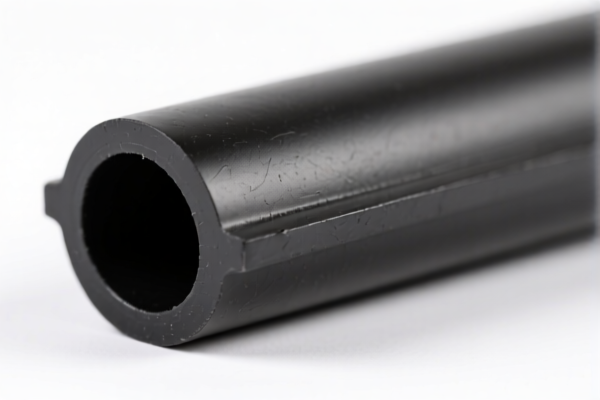
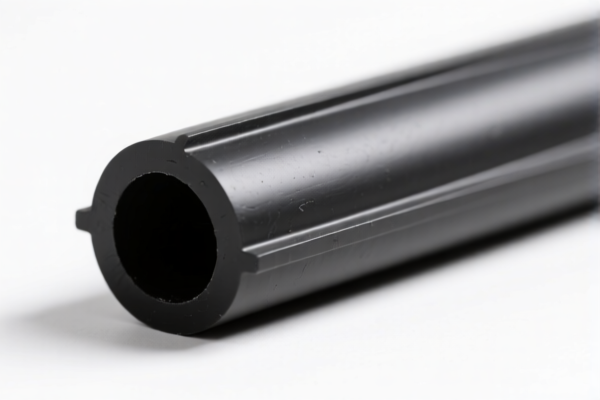
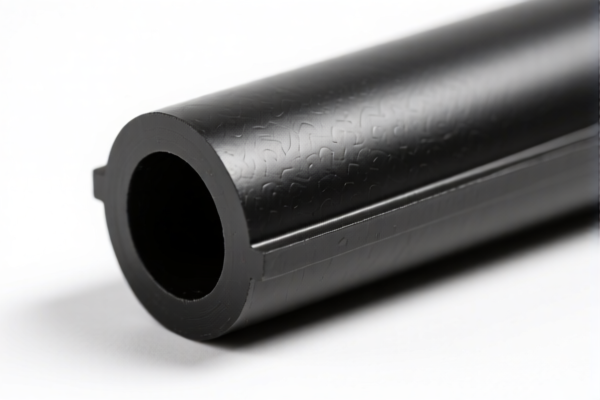
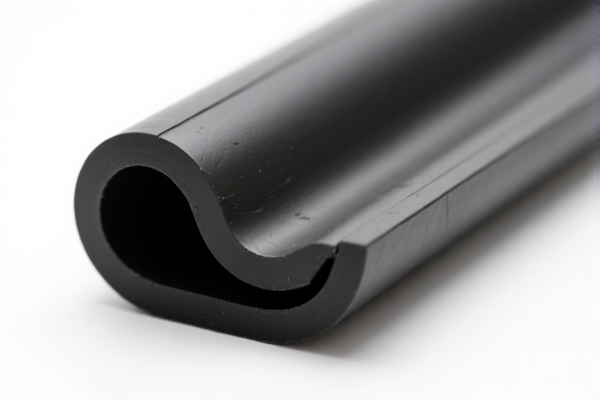
AI Analysis
🏗️ Natural Rubber Foam Rubber Building Profile (Raw Rubber Articles)
🌐 HS Code Reference & Customs Clearance Guide | 2026 Latest Tariff Analysis | Professional Entry Strategy for US Imports from China
📌 Part I: Product Definition & Classification: Do You Really Understand "Raw Rubber Articles"?
"Natural Rubber Foam Rubber Building Profile" refers to unfinished or semi-finished rubber profiles made from natural rubber, used in construction for sealing, insulation, or vibration damping. In international trade, these are not considered finished construction materials (like vinyl siding) but rather raw rubber articles or semi-finished rubber products.
Key Classification Logic: * Material: Must be Natural Rubber (not synthetic SBR/EPDM). * State: Foamed (cellular structure) or Unvulcanized/Mixed. * Form: Profiles, sheets, or blocks.
⚠️ Critical Distinction:
- If the product is foamed (cellular structure) → Falls under Chapter 40, Heading 40.08.
- If the product is unvulcanized mixed rubber (sheets/blocs) → Falls under Chapter 40, Heading 40.05.
- Misclassification Risk: Declaring as "Construction Material" (Chapter 39/70) will result in immediate rejection by US Customs (CBP) because rubber articles have specific headings.
📦 Part II: HS Code Classification Details (2026 Latest Tariff Authority)
Based on the provided data, the product falls into two main categories depending on the specific physical form (foamed vs. unvulcanized mix) and sub-heading.
| HS Code | Product Description | Physical Form | Application |
|---|---|---|---|
4008.11.50.00 |
Natural rubber foam rubber articles | Foamed rubber profiles | Sealing strips, insulation profiles |
4008.11.10.00 |
Natural rubber foam rubber articles | Foamed rubber profiles | Alternative foamed product classification |
4005.99.00.00 |
Unvulcanized natural rubber compounds | Other forms (mixed rubber) | Raw rubber sheets/blocks for further processing |
4005.91.00.00 |
Unvulcanized natural rubber compounds | Sheets, strips, or shapes | Unvulcanized profile blanks |
4008.19.60.00 |
Natural rubber profiles | Profiles (non-foamed or other) | Structural rubber profiles |
🔍 Key Insight:
- Foamed rubber articles are classified under 4008.11 or 4008.19.
- Unvulcanized mixed rubber is classified under 4005.
- The term "Building Profile" implies a shape, but the material state (foamed vs. unvulcanized) dictates the HS Code.
💰 Part III: 2026 Latest Tariff Rate Breakdown (Including Surtaxes & Policy Add-ons)
✅ Applicable Country: United States (US)
✅ Origin: China (CN)
✅ Effective Date: From November 10, 2025 (and subsequent imports)
🎯 1. 4008.11.50.00 & 4008.19.60.00 — Natural Rubber Foam/Profiles
| Item | Content |
|---|---|
| Base Tariff | 3.3% (Ad Valorem) |
| USITC Surtax (Section 301) | +25.0% |
| IEEPA Surtax (China-specific) | +10.0% |
| Total Effective Rate | 38.3% |
| Tax Calculation | CIF Value × 38.3% |
| De Minimis Exemption | ❌ Not Available (deny_de_minimis) |
| Legal Basis Path | IEEPA:9903.01.25 → IEEPA:9903.01.24 → USITC:4008.11.50.00 / 4008.19.60.00 → FOOTNOTE:9903.88.01 |
📌 Explanation:
- The 3.3% is the standard MFN base duty.
- The +25% is the Section 301 tariff on Chinese rubber articles.
- The +10% is the IEEPA tariff applied to Chinese-origin goods (including rubber).
- Total: 38.3%. This is a high-cost category.
🎯 2. 4008.11.10.00, 4005.99.00.00, 4005.91.00.00 — Other Natural Rubber Articles
| Item | Content |
|---|---|
| Base Tariff | 0.0% |
| USITC Surtax (Section 301) | +25.0% |
| IEEPA Surtax (China-specific) | +10.0% |
| Total Effective Rate | 35.0% |
| Tax Calculation | CIF Value × 35.0% |
| De Minimis Exemption | ❌ Not Available (deny_de_minimis) |
| Legal Basis Path | IEEPA:9901.25 → IEEPA:9903.01.24 → USITC:4005.99.00.00 / 4008.11.10.00 → FOOTNOTE:9903.88.01 |
📌 Note:
- Although the base duty is 0%, the 25% + 10% surtaxes make the total 35.0%.
- These codes apply to unvulcanized rubber or specific foamed sub-categories.
- No preferential treatment applies to Chinese-origin natural rubber articles.
🛠️ Part IV: Customs Clearance Practical Advice (Real-World Pitfall Guide)
✅ 1. Required Documentation Checklist (All Mandatory)
| Document | Must Provide | Description |
|---|---|---|
| ✅ Product Specification Sheet | ✔️ | Must specify: Natural Rubber content %, Density (for foam), Shore Hardness, Cross-section dimensions |
| ✅ Material Safety Data Sheet (MSDS) | ✔️ | Proves composition (natural vs. synthetic) |
| ✅ Commercial Invoice | ✔️ | Must explicitly state: "Natural Rubber Foam Profile" or "Unvulcanized Natural Rubber Compound" |
| ✅ Certificate of Origin (CO) | ✔️ | Essential to prove Chinese origin (triggers surtaxes) |
| ✅ Packing List | ✔️ | Detail weight, volume, and number of profiles/sheets |
| ✅ Import Security Filing (ISF) | ✔️ | Must be filed 24 hours before vessel loading |
✅ 2. Declaration Tips (Key Mantras)
🔥 “Don’t Call It ‘Building Material’! Use ‘Raw Rubber Article’!”
| Scenario | Correct Declaration | Incorrect Practice |
|---|---|---|
| Foamed rubber profile | HS 4008.11.50.00 | Declare as "Construction Sealant" → Rejection |
| Unvulcanized rubber sheet | HS 4005.91.00.00 | Declare as "Rubber Mat" → Wrong classification |
| Mixed rubber compound | HS 4005.99.00.00 | Declare as "Finished Rubber Part" → High Risk |
✅ 3. Special Cases Handling
| Situation | Handling Advice |
|---|---|
| OEM Custom Profiles | Provide technical drawings showing cross-section. CBP may request a Pre- Ruling. |
| Mixed Rubber (Natural + Synthetic) | If natural rubber content >50%, use 4008. If <50%, check 4005 or 4008.99. |
| Foamed vs. Solid | Foam has visible cells. Solid is dense. Do not confuse – different HS codes, similar tax rate but different legal basis. |
| Used/Recycled Rubber | Prohibited or highly restricted. Ensure product is new. |
🌍 Part V: Global Market Comparison (2026 Latest)
| Country/Region | Recommended HS Code | Tariff Rate | Certification Requirements | Notes |
|---|---|---|---|---|
| 🇺🇸 USA | 4008.11.50.00 / 4005.91.00.00 |
35.0% - 38.3% | None specific | Highest cost due to 301 + IEEPA taxes |
| 🇨🇳 China | 4008.11.50.00 |
10% - 15% | CCC (if applicable) | Lower base duty, no surtaxes for domestic |
| 🇪🇺 EU | 4008.11.00.00 |
0% (if GSP eligible) | REACH, RoHS | No Section 301 equivalent |
| 🇲🇽 Mexico | 4008.11.00.00 |
0% (USMCA) | None | Best alternative if produced in Mexico |
| 🇻🇳 Vietnam | 4008.11.00.00 |
0% (EVFTA) | None | Best alternative if produced in Vietnam |
📌 Conclusion:
- USA imposes the highest tariffs on Chinese natural rubber profiles.
- No duty-free entry under current policies.
- Consider supply chain relocation to Mexico or Vietnam to avoid 35-38% tariffs.
📌 Part VI: Common Errors & Pitfall Guide (Lessons Learned)
❌ Error 1: Declaring as "Building Sealant" (Chapter 39)
👉 Consequence: CBP Rejects. Rubber articles must be in Chapter 40. Fine + Penalty.
❌ Error 2: Claiming "De Minimis" for small shipments
👉 Consequence: Denied. Rubber articles from China are not eligible for $800 de minimis exemption under IEEPA. Full duty applies.
❌ Error 3: Misclassifying "Foam" as "Solid Rubber"
👉 Consequence: If actual product is foam but declared as solid, CBP may reclassify and apply higher scrutiny.
❌ Error 4: Ignoring IEEPA 10% Surtax
👉 Consequence: Underpayment by 10%. Back taxes + Interest + Penalties.
✅ Correct Declaration Example:
"Natural Rubber Foam Profile, Cross-section 20mm x 10mm, Used for Window Sealing, HS Code 4008.11.50.00, Origin: China"
🎯 Part VII: Conclusion: Professional Declaration Saves Money!
🎯 Remember Mantras:
🔹 "Natural Rubber = Chapter 40. No De Minimis. 35-38% Total Tax."
🔹 "Foam vs. Solid Matters. Declare Accurately. Avoid CBP Holds."
📌 Tips:
- If your product is imported in small quantities, remember de minimis does NOT apply.
- Consider pre-classification ruling from CBP if unsure about "Foamed" vs. "Unvulcanized".
- Explore supply chain diversification to Mexico/Vietnam for tariff avoidance.
📣 Immediate Action:
📞 Contact your customs broker + Provide product specs + Verify HS Code with CBP
🚀 Ensure smooth clearance, avoid delays, optimize costs.
✨ Professional Customs Clearance Starts with Accurate Classification!
💼 Every Percent Counts – Get It Right the First Time!
Customer Reviews
About HS Code Classification
The Harmonized System (HS) is an internationally standardized nomenclature developed by the World Customs Organization (WCO) to classify traded products. Over 200 countries use the HS system as the basis for customs tariffs, trade statistics, and import/export regulations.
Each HS code follows a hierarchical structure:
- Chapter (2 digits) — Broad category of goods (e.g., Chapter 84: Machinery and Mechanical Appliances)
- Heading (4 digits) — More specific grouping within the chapter
- Subheading (6 digits) — Internationally standardized breakdown, used by all WCO member countries
- National subdivisions (8-10 digits) — Country-specific extensions for further classification, such as US HTSUS 10-digit codes
Correct HS code classification is essential for smooth customs clearance, accurate duty payment, and compliance with trade regulations. Misclassification can lead to customs delays, overpayment of duties, or penalties.
When importing from CN to US, the applicable tariff rates may include:
- Most-Favored-Nation (MFN) rate — The standard duty rate applied to WTO members
- General rate — Applied to countries without trade agreements
- Trade remedy duties — Additional tariffs such as Section 301 (anti-dumping), Section 232 (national security), or countervailing duties
The information provided on this page is for reference purposes only. For official classification, please consult with your local customs authority or a licensed customs broker.