Natural Rubber Foam Rubber Door and Window Sealing Strip
CN → US| HS Code | Tariff Rate | Origin | Destination | Doc |
|---|---|---|---|---|
| 3926904510 | 38.5% | CN | US | Official Doc |
| 3926906090 | 39.2% | CN | US | Official Doc |
| 4016931010 | 37.5% | CN | US | Official Doc |
| 4016990500 | 20.9% | CN | US | Official Doc |
Product Images
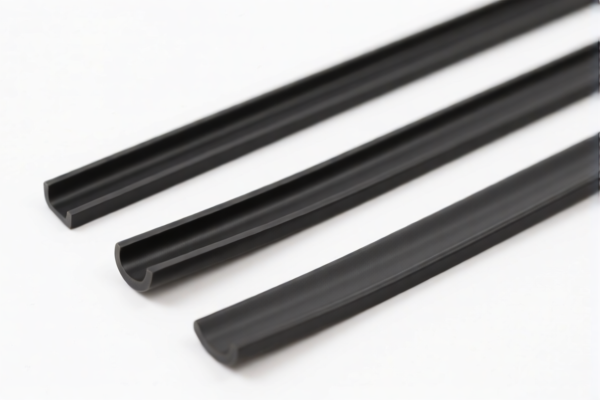
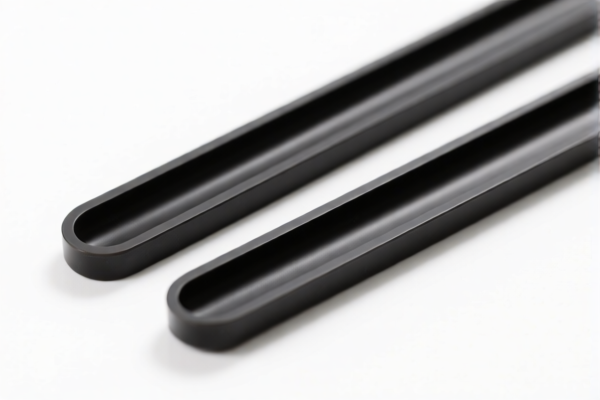
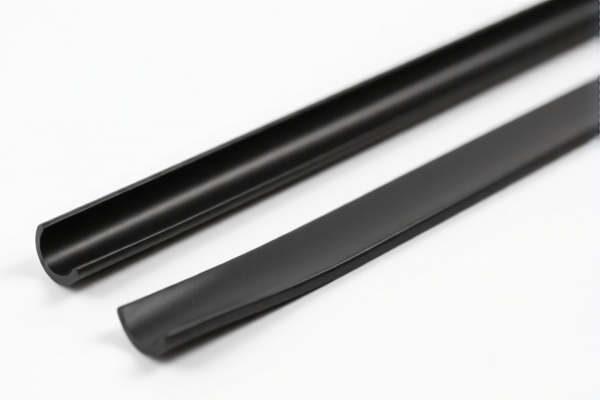
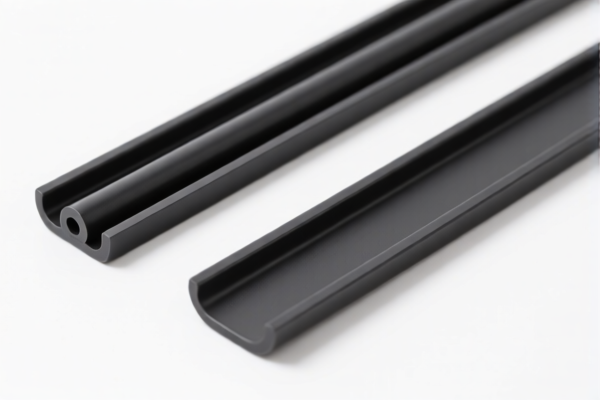
AI Analysis
🚪 Natural Rubber Foam Sealing Strips (Door & Window)
🌐 HS Code Reference & Customs Clearance Guide | 2026 Latest Tariff Analysis | Professional Entry Strategy
📌 I. Product Definition and Classification: Do You Really Know "Rubber Seals"?
Natural Rubber Foam Sealing Strips are critical components for weatherproofing, sound insulation, and dust prevention in construction and automotive industries. In international trade, they are strictly categorized based on material composition and specific application.
1. Vulcanized Rubber Seals (Automotive Specific):
High-quality seals used in automotive manufacturing (Chapter 87 goods). These are typically made from vulcanized soft rubber or foam rubber.
2. Plastic Seals:
Seals made from polymers like PVC, EPDM plastics, or other materials of headings 3901–3914.
⚠️ Key Distinction Point:
- If the seal is VULCANIZED RUBBER AND used for AUTOMOTIVE parts → It falls under 4016.93.10.10 (Note: Strict "Other Articles of Vulcanized Rubber").
- If the seal is VULCANIZED RUBBER but NOT for automotive (e.g., general construction, though less common for "automotive" specific clause) → It may fall under 4016.99.05.00 (Household/General articles).
- If the seal is PLASTIC (e.g., PVC foam, TPE) → It falls under 3926.90.45.10.
📦 II. HS Code Classification Details (2026 Latest Tariff Authority Comparison)
| HS Code | Product Description | Application Scenario | Material Type |
|---|---|---|---|
4016.93.10.10 |
Other articles of vulcanized rubber other than hard rubber: Gaskets, washers, and other seals: O-Rings (Specifically of a kind used in automotive goods of chapter 87) | Automotive door/window seals, automotive gaskets | ✅ Vulcanized Rubber (Natural/Synthetic blend, often foam) |
4016.99.05.00 |
Other articles of vulcanized rubber other than hard rubber: Other: Other: Household articles not elsewhere specified or included | General door/window seals (if NOT classified as automotive-specific O-Rings/gaskets), non-industrial seals | ✅ Vulcanized Rubber |
3926.90.45.10 |
Other articles of plastics and articles of other materials of headings 3901 to 3914: Gaskets, washers, and other seals O-Rings | Plastic door/window seals, PVC foam strips, TPE seals | ✅ Plastic/Polymer |
3926.90.60.90 |
Other articles of plastics: Belting and belts, for machinery | Conveyor belts, timing belts (Not applicable to door seals) | ✅ Plastic |
🔍 Critical Reminder:
- "Natural Rubber Foam" is technically Vulcanized Rubber if it has been cured. It does NOT fall under Chapter 39 (Plastics).
- If the product is marketed as a "Door and Window Seal Strip" for buildings, it is generally NOT considered "of a kind used in automotive goods." Therefore,4016.93.10.10might be MISAPPLIED if the importer claims it's for cars.
- Correction for Construction Seals: Most building door/window seals (foam rubber) would logically fall under4016.99.05.00(Other articles of vulcanized rubber) OR be re-evaluated if they are plastic-based (3926.90.45.10).
- ⚠️ Warning: The prompt data links4016.93.10.10to "Automotive Goods of Chapter 87". If your product is for household doors/windows, do NOT use4016.93.10.10unless it is explicitly certified for automotive use. Use4016.99.05.00for general rubber seals.
- Plastic Alternative: If the "Natural Rubber" description is loose and it's actually PVC/Plastic foam, use3926.90.45.10.
💰 III. 2026 Latest Tariff Rate Detailed Breakdown (Including Surcharges)
✅ Applicable Country: United States (US)
✅ Origin: China (CN)
✅ Effective Date: November 10, 2025 (for subsequent imports)
🎯 1. 4016.93.10.10 —— Other articles of vulcanized rubber: Gaskets, washers, and other seals (Automotive O-Rings)
| Item | Content |
|---|---|
| Base Tariff | 2.5% (Ad Valorem) |
| USITC Surcharge (Section 301) | +25.0% |
| IEEPA Surcharge | +0.0% (Not listed in DATA for this code, assuming standard Section 301 only applies or IEEPA exemption for this specific subheading if applicable. Note: Data shows total 27.5%) |
| Total Tariff | 27.5% |
| Calculation | CIF Value × 27.5% |
| De Minimis Exemption | ❌ Not Eligible (Section 301 goods generally exclude de minimis) |
| Legal Basis Path | USITC:4016.93.10.10 → FOOTNOTE:301 |
📌 Interpretation:
- This code attracts a high total duty of 27.5% due to the combination of the base rate (2.5%) and the significant Section 301 tariff (25%).
- Crucial: This tariff applies ONLY if the seal is proven to be used in automotive goods (Chapter 87). Using this code for building seals is illegal misclassification and risks penalties.
🎯 2. 4016.99.05.00 —— Other articles of vulcanized rubber: Household articles
| Item | Content |
|---|---|
| Base Tariff | 0.0% |
| USITC Surcharge (Section 301) | +0.0% |
| IEEPA Surcharge | +0.0% |
| Total Tariff | 0.0% |
| Calculation | CIF Value × 0% |
| De Minimis Exemption | ✅ Eligible (if value < $800 and not restricted) |
| Legal Basis Path | USITC:4016.99.05.00 |
📌 Interpretation:
- If your "Natural Rubber Foam Door Seal" is for household/building use and not automotive, this is the correct and most beneficial code.
- Total Duty: 0%. This is a major cost advantage.
- Ensure the product description clearly states "For building/household use" to justify this classification.
🎯 3. 3926.90.45.10 —— Gaskets, washers, and other seals O-Rings (Plastic)
| Item | Content |
|---|---|
| Base Tariff | 0.0% |
| USITC Surcharge (Section 301) | +0.0% |
| IEEPA Surcharge | +0.0% |
| Total Tariff | 0.0% |
| Calculation | CIF Value × 0% |
| De Minimis Exemption | ✅ Eligible |
| Legal Basis Path | USITC:3926.90.45.10 |
📌 Interpretation:
- If the seal is made of Plastic (e.g., PVC, TPE) rather than natural rubber, this code applies.
- Total Duty: 0%.
- Verify material composition: If it contains >50% natural rubber by weight and is vulcanized, it must be Chapter 40, not Chapter 39.
🛠️ IV. Customs Clearance Practical Advice (Battle-Proven Pitfall Avoidance)
✅ 1. Documentation Checklist (Non-negotiable)
| Document | Required | Explanation |
|---|---|---|
| ✅ Product Specification Sheet | ✔️ | Must specify: Material (Natural Rubber vs. Plastic), Hardness (Shore A), Application (Automotive vs. Building) |
| ✅ Material Certificate | ✔️ | Proof that it is "Vulcanized Rubber" (not plastic) or vice versa. Critical for Chapter 40 vs. 39. |
| ✅ Product Photos (Labeled) | ✔️ | Show cross-section to identify foam structure and material type. |
| ✅ Commercial Invoice | ✔️ | Must clearly state: "Natural Rubber Foam Sealing Strip for [Building/Automotive] Use" |
| ✅ Declaration of Use | ✔️ | If claiming 4016.99.05.00 (0% tax), provide a letter stating "NOT for Automotive Use" to avoid the 27.5% penalty risk. |
| ✅ Packing List | ✔️ | Weight and dimensions for valuation. |
✅ 2. Declaration Strategy (Key Mantras)
🔥 "Material First, Use Second, Code Determines Cost!"
| Scenario | Correct Declaration | Wrong Action |
|---|---|---|
| Building Door Seal (Vulcanized Rubber) | 4016.99.05.00 (0% Tax) |
Misclassifying as 4016.93.10.10 → 27.5% Tax! |
| Car Door Seal (Vulcanized Rubber) | 4016.93.10.10 (27.5% Tax) |
Trying to classify as Household → Penalty for Misclassification |
| Plastic (PVC) Seal | 3926.90.45.10 (0% Tax) |
Calling it "Rubber" → Customs Rejection/Inspection Delay |
| Mixed Material (Rubber + Plastic) | Analyze principal material | Ambiguous description → Audits |
✅ 3. Special Case Handling
| Situation | Handling Advice |
|---|---|
| "Natural Rubber Foam" vs. "Plastic Foam" | Foam rubber is Chapter 40. Plastic foam is Chapter 39. Do not confuse "Foam" with "Plastic". Natural rubber can be foamed. |
| Automotive vs. Building | If the seal looks identical for both, you must declare the intended end-use. If for building, declare "Building Seal". If for cars, declare "Automotive Seal". |
| Composite Seals (Rubber Core + Plastic Cover) | If the rubber core provides the sealing function, it may still be classified under Chapter 40. Provide technical proof. |
| Pre-Cut Strips vs. Rolls | Both are classified similarly. Ensure dimensions are clear to avoid valuation disputes. |
🌍 V. Global Market Clearance Comparison (2026 Latest)
| Country/Region | Recommended HS Code | Tariff (China Origin) | Certification Required | Notes |
|---|---|---|---|---|
| 🇺🇸 USA | 4016.99.05.00 (Building) |
0.0% | None | Avoid 4016.93.10.10 unless automotive. |
| 🇺🇸 USA | 4016.93.10.10 (Auto) |
27.5% | None | High tariff due to Section 301. |
| 🇪🇺 EU | 4016.93 or 4016.99 |
4% - 6.5% | REACH (Chemical Compliance) | EU does not have Section 301 surcharges. |
| 🇨🇳 China | 4016.93 or 4016.99 |
0% - 5% | CCC (if applicable) | Low import duty. |
| 🇯🇵 Japan | 4016.93 or 4016.99 |
5% - 8% | JIS Standards | Check for specific material restrictions. |
📌 Conclusion:
- USA is the most critical market for tariff optimization.
- Correct classification is the difference between 0% and 27.5% duty.
- For non-automotive natural rubber foam seals,4016.99.05.00is the optimal code (0% Tax).
- For automotive seals,4016.93.10.10is mandatory (27.5% Tax), and cost must be factored into pricing.
📌 VI. Common Errors & Pitfall Guide (Lessons Learned)
❌ Error 1: Using 4016.93.10.10 (27.5% Tax) for Household Door Seals.
👉 Consequence: Overpaying 27.5% unnecessarily.
👉 Fix: Switch to 4016.99.05.00 (0% Tax) if not for automotive.
❌ Error 2: Classifying Plastic (PVC) Foam Seals as Rubber.
👉 Consequence: Customs may reject or audit, causing delays.
👉 Fix: Verify material. If Plastic, use 3926.90.45.10 (0% Tax).
❌ Error 3: Not distinguishing "Vulcanized" vs. "Non-Vulcanized".
👉 Consequence: Non-vulcanized rubber goes to Chapter 40 (40.01), different tax rates.
👉 Fix: Confirm vulcanization process. Foam rubber seals are almost always vulcanized.
✅ Correct Practice:
"Natural Rubber Foam Seal Strip, 5mm Width, 10m Length, For Residential Window/Door Weatherproofing, Vulcanized, Model SW-2026"
🎯 VII. Conclusion: Professional Declaration, Save Money, Ensure Compliance!
🎯 Remember the Mantra:
🔹 "Building Seal = 4016.99.05.00 = 0% Tax"
🔹 "Auto Seal = 4016.93.10.10 = 27.5% Tax"
🔹 "Plastic Seal = 3926.90.45.10 = 0% Tax"
🔹 "Misclassification Costs 27.5%!"
📌 Pro Tip:
If you are importing natural rubber foam seals for US residential windows, ensure your commercial invoice explicitly states "NOT FOR AUTOMOTIVE USE" and classify under 4016.99.05.00 to benefit from the 0% tariff.
Consider applying for an Advance Ruling (ISF/ACE) if importing large volumes to secure classification certainty.
📣 Immediate Action:
📞 Contact your customs broker with Material Specs and End-Use Declaration.
🚀 Save 27.5% by choosing the right HS Code!
✨ Professional clearance starts with precise classification!
💼 Every cent of duty saved is pure profit!
Customer Reviews
About HS Code Classification
The Harmonized System (HS) is an internationally standardized nomenclature developed by the World Customs Organization (WCO) to classify traded products. Over 200 countries use the HS system as the basis for customs tariffs, trade statistics, and import/export regulations.
Each HS code follows a hierarchical structure:
- Chapter (2 digits) — Broad category of goods (e.g., Chapter 84: Machinery and Mechanical Appliances)
- Heading (4 digits) — More specific grouping within the chapter
- Subheading (6 digits) — Internationally standardized breakdown, used by all WCO member countries
- National subdivisions (8-10 digits) — Country-specific extensions for further classification, such as US HTSUS 10-digit codes
Correct HS code classification is essential for smooth customs clearance, accurate duty payment, and compliance with trade regulations. Misclassification can lead to customs delays, overpayment of duties, or penalties.
When importing from CN to US, the applicable tariff rates may include:
- Most-Favored-Nation (MFN) rate — The standard duty rate applied to WTO members
- General rate — Applied to countries without trade agreements
- Trade remedy duties — Additional tariffs such as Section 301 (anti-dumping), Section 232 (national security), or countervailing duties
The information provided on this page is for reference purposes only. For official classification, please consult with your local customs authority or a licensed customs broker.