Natural Rubber Foam Rubber Roll
CN → US| HS Code | Tariff Rate | Origin | Destination | Doc |
|---|---|---|---|---|
| 3921190090 | 41.5% | CN | US | Official Doc |
| 3921190010 | 41.5% | CN | US | Official Doc |
| 4008111000 | 35.0% | CN | US | Official Doc |
| 4008192000 | 35.0% | CN | US | Official Doc |
| 4016100000 | 35.0% | CN | US | Official Doc |
| 4016993000 | 35.0% | CN | US | Official Doc |
Product Images
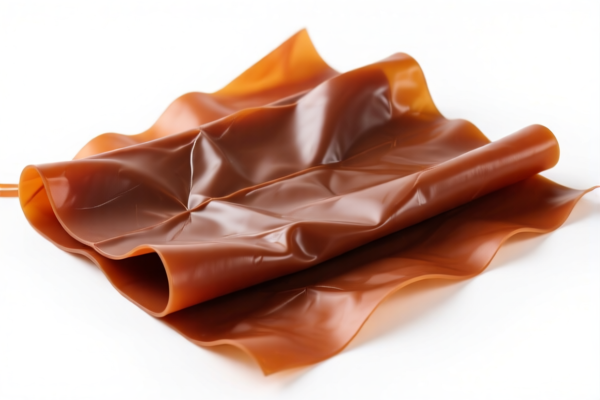
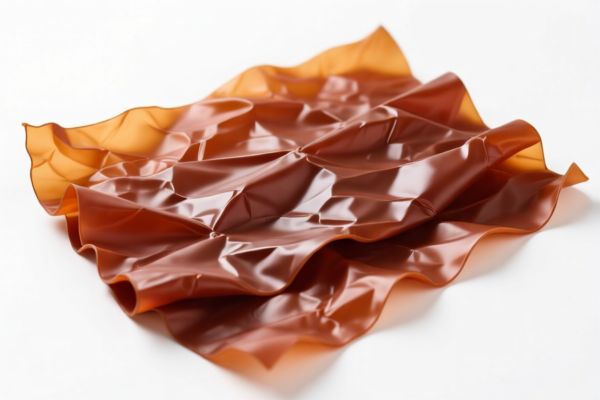
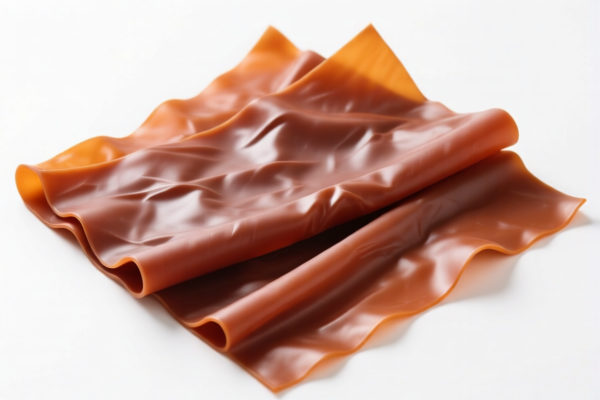
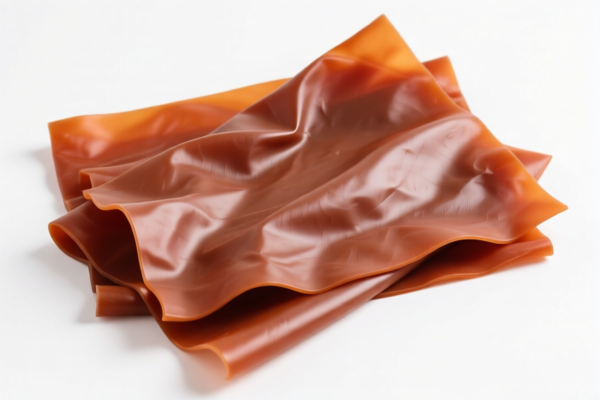
AI Analysis
🛢️ Natural Rubber Foam Rubber Roll (Cellular Rubber Articles)
🌐 HS Code Reference & Customs Clearance Guide | 2026 Latest Tariff Analysis | Professional Clearance Strategy
📌 I. Product Definition & Classification: What Exactly is "Natural Rubber Foam"?
"Natural Rubber Foam Rubber Roll" refers to vulcanized rubber products with an open or closed cellular structure, manufactured primarily from natural rubber. In international trade, the classification depends heavily on the form (sheet, strip, profile) and the specific application (e.g., vibration control in vehicles). These products fall under Chapter 40 (Rubber and Articles Thereof).
Key Distinctions: * Raw Material: Must be Natural Rubber (not SBR, NBR, or EPDM) to qualify for the specific subheadings listed below. * Structure: Must be Cellular (foam/porous). Solid rubber rolls are classified differently (e.g., 4008.11.00 or 4008.19.00 without the "cellular" distinction). * Form Factor: Is it a simple sheet/strip? Or is it a complex profile/vibration control part?
⚠️ Critical Classification Point:
- If it is a simple plate, sheet, or strip of cellular natural rubber → 4008.11.10.00 or 4008.19.20.00
- If it is a finished article (like a mat or gasket) made of cellular rubber → 4016.10.00.00
- If it is specifically a vibration control good for vehicles → 4016.99.30.00
📦 II. HS Code Classification Details (2026 Latest Tariff Authoritative Comparison)
| HS Code | Product Description | Application Scenario | Key Criteria |
|---|---|---|---|
4008.11.10.00 |
Plates, sheets, strip, rods, profile shapes of vulcanized rubber other than hard rubber: Of cellular rubber: Plates, sheets and strip: Of natural rubber | Raw foam sheets, rubber flooring rolls, basic sealing strips | ✅ Cellular, ✅ Natural Rubber, ✅ Sheet/Strip Form |
4008.19.20.00 |
Plates, sheets, strip, rods, profile shapes of vulcanized rubber other than hard rubber: Of cellular rubber: Other: Of natural rubber: Profile shapes | Custom extruded foam profiles, U-channels, specialized seals | ✅ Cellular, ✅ Natural Rubber, ✅ Profile Shape |
4016.10.00.00 |
Other articles of vulcanized rubber other than hard rubber: Of cellular rubber | Rubber mats, gaskets, washers, padding, non-vehicle specific parts | ✅ Cellular, ✅ Finished Article (not just sheet/strip) |
4016.99.30.00 |
Other articles of vulcanized rubber other than hard rubber: Other: Other: Other: Of natural rubber: Vibration control goods of a kind used in the vehicles of headings 8701 through 8705 | Engine mounts, chassis bushings, suspension components for trucks/trains | ✅ Cellular, ✅ Natural Rubber, ✅ Vehicle Vibration Control |
🔍 Important Reminder:
- Material Matters: All codes above require Natural Rubber. If the roll is made of Synthetic Rubber (e.g., SBR foam), these codes do NOT apply. You would need to check headings like 4008.31 or 4016.99.90. - Form Matters: A "roll" of foam is typically considered a "sheet/strip" (4008 series) if it is raw material for further manufacturing. If it is cut into specific shapes (like mats), it becomes an "article" (4016 series).
💰 III. 2026 Latest Tariff Rate Breakdown (Including Surtaxes, Policy Add-ons)
✅ Applicable Country: United States (US)
✅ Origin: China (CN)
✅ Effective Date: Post-November 2025 (Current High-Tariff Regime)
🎯 1. 4008.11.10.00 – Cellular Rubber Plates, Sheets, and Strip (Natural Rubber)
| Item | Details |
|---|---|
| Base Tariff Rate | 0% (ad valorem) |
| USITC Surcharge | +25% (Section 301 Tariffs) |
| Total Tariff Rate | 25.0% |
| Tax Calculation | CIF Value × 25% |
| De Minimis Exemption? | ❌ NO (deny_de_minimis) |
| Legal Basis Path | USITC:4008.11.10.00 → FOOTNOTE:301.88 |
📌 Explanation:
- Although the base tariff is 0%, the 25% Section 301 surcharge applies to all rubber articles of Chinese origin. - This is a standard high-tariff item. No IEEPA 10% add-on is listed in the provided data, so the total remains 25%.
🎯 2. 4008.19.20.00 – Cellular Rubber Profile Shapes (Natural Rubber)
| Item | Details |
|---|---|
| Base Tariff Rate | 0% (ad valorem) |
| USITC Surcharge | +25% (Section 301 Tariffs) |
| Total Tariff Rate | 25.0% |
| Tax Calculation | CIF Value × 25% |
| De Minimis Exemption? | ❌ NO (deny_de_minimis) |
| Legal Basis Path | USITC:4008.19.20.00 → FOOTNOTE:301.88 |
📌 Note:
- Profile shapes (extruded foam) are treated similarly to sheets in terms of tariff burden. - Ensure the declaration specifies "Profile Shapes" to avoid being miscategorized as general "Other Articles" which might have different duty structures (though still 25% here).
🎯 3. 4016.10.00.00 – Other Articles of Cellular Rubber (Natural Rubber)
| Item | Details |
|---|---|
| Base Tariff Rate | 0% (ad valorem) |
| USITC Surcharge | +25% (Section 301 Tariffs) |
| Total Tariff Rate | 25.0% |
| Tax Calculation | CIF Value × 25% |
| De Minimis Exemption? | ❌ NO (deny_de_minimis) |
| Legal Basis Path | USITC:4016.10.00.00 → FOOTNOTE:301.88 |
📌 Key Distinction:
- Use this code for finished goods made from foam rubber, such as rubber mats, foam padding for furniture, or non-vehicle gaskets. - Do NOT use this for vehicle vibration parts (see Code 4 below).
🎯 4. 4016.99.30.00 – Vibration Control Goods for Vehicles (Natural Rubber)
| Item | Details |
|---|---|
| Base Tariff Rate | 0% (ad valorem) |
| USITC Surcharge | +25% (Section 301 Tariffs) |
| Total Tariff Rate | 25.0% |
| Tax Calculation | CIF Value × 25% |
| De Minimis Exemption? | ❌ NO (deny_de_minimis) |
| Legal Basis Path | USITC:4016.99.30.00 → FOOTNOTE:301.88 |
📌 Specific Use Case:
- This code is strictly for vibration control goods used in vehicles of headings 8701–8705 (tractors, locomotives, motor vehicles for transport of persons/goods). - Examples: Engine mounts, suspension bushings, chassis isolators made of natural rubber foam.
📦 Bonus: Plastic Cellular Sheets (For Comparison)
⚠️ Warning: If your "roll" is actually Plastic (e.g., PVC foam, Polyethylene foam) and NOT rubber, the tax is 0%.
🎯 5 & 6. 3921.19.00.90 & 3921.19.00.10 – Cellular Plastic Sheets
| HS Code | Product Description | Total Tax |
|---|---|---|
3921.19.00.90 |
Other plates, sheets, film, foil and strip, of plastics: Cellular: Of other plastics Other | 0.0% |
3921.19.00.10 |
Other plates, sheets, film, foil and strip, of plastics: Cellular: Of other plastics Microporous sheets of polyethylene or polypropylene film | 0.0% |
📌 Clarification:
- The user input specified "Natural Rubber". Therefore, Plastic codes (3921) are NOT applicable unless the product is mislabeled. - Do not use 3921 codes for Rubber products. Doing so will lead to customs penalties and re-classification.
🛠️ IV. Customs Clearance Practical Advice (Combat Pitfall Guide)
✅ 1. Document Checklist (Non-negotiable)
| Document | Required? | Purpose |
|---|---|---|
| ✅ Material Composition Statement | ✔️ | Must explicitly state "100% Natural Rubber" and "Cellular/Foam Structure". Synthetic rubber blends may change the HS code. |
| ✅ Technical Data Sheet | ✔️ | Confirm density, hardness, and whether it is open-cell or closed-cell. |
| ✅ Product Photos | ✔️ | Show cross-section to prove cellular structure. Show final form (roll vs. cut shape). |
| ✅ Commercial Invoice | ✔️ | Clearly describe: "Natural Rubber Cellular Foam Roll, Vulcanized". Avoid vague terms like "Rubber Sheet". |
| ✅ Origin Certificate | ✔️ | Proof of Chinese origin triggers the 25% surcharge. |
✅ 2. Declaration Tips (Key Mantra)
🔥 "Material First, Form Second, Application Specific!"
| Situation | Correct Declaration | Wrong Action |
|---|---|---|
| Raw foam roll for cutting | 4008.11.10.00 (Sheet/Strip) |
Declaring as "Article" (4016) → Risk of rejection |
| Cut rubber mats | 4016.10.00.00 (Article) |
Declaring as "Sheet" (4008) → May be accepted but less precise |
| Vehicle engine mounts | 4016.99.30.00 (Vibration Control) |
Declaring as general "Article" → May miss specific trade remedy nuances |
| Plastic foam roll | 3921.19.00.90 |
Declaring as "Rubber" → SMUGGLING FRAUD |
✅ 3. Special Considerations
| Scenario | Handling Advice |
|---|---|
| Blended Rubber (Natural + Synthetic) | If >50% natural rubber, it may still qualify for natural rubber codes, but check specific country rules. If <50%, it becomes synthetic rubber article (higher tax/different code). |
| Imported for Further Processing | If you import foam rolls to cut into vehicle parts, classify as raw material (4008 series) initially. |
| De Minimis Shipment | NOT ELIGIBLE. Any value subject to the 25% tariff cannot use the $800 de minimis exemption for China-origin goods. |
🌍 V. Global Market Clearance Comparison (2026 Latest)
| Country/Region | Recommended HS Code | Tariff (China Origin) | Certification | Remarks |
|---|---|---|---|---|
| 🇺🇸 USA | 4008.11.10.00 / 4016.10.00.00 |
25% (Section 301) | None specific | High tariff burden. Verify "Natural Rubber". |
| 🇨🇳 China | 4008.11.10.00 |
5-10% | CCC (if applicable) | Lower tariffs. Export from China to elsewhere. |
| 🇪🇺 EU | 4008.11 / 4016.10 |
0-6.5% | REACH | No Section 301 equivalent. Favorable for EU market. |
| 🇬🇧 UK | 4008.11 / 4016.10 |
0-6.5% | UKCA | Post-Brexit, similar to EU. |
📌 Conclusion:
- USA is the most expensive market due to the flat 25% surcharge on rubber articles. - EU/UK offer significantly better tariff advantages (often 0-6.5%), making them more attractive for natural rubber foam products if supply chains allow.
📌 VI. Common Errors & Pitfalls (Lessons Learned)
❌ Error 1: Calling "Natural Rubber Foam" a "Plastic Sheet" to get 0% tax.
👉 Consequence: Customs will test the material, find it’s rubber, and impose 25% tax + fines + retroactive duties.
❌ Error 2: Mixing up "Cellular" (Foam) and "Non-Cellular" (Solid).
👉 Consequence: Solid rubber has different duty structures. Misdeclaration leads to audit flags.
❌ Error 3: Assuming all rubber rolls are "Articles" (4016).
👉 Consequence: Raw rolls should often be "Sheets/Strips" (4008). While tax might be similar (25%), incorrect classification slows down customs clearance.
✅ Correct Practice:
"Natural Rubber, Vulcanized, Cellular Structure, in Roll Form, for Industrial Use, 100% Natural Rubber Content"
🎯 VII. Conclusion: Precise Classification Saves Money!
🎯 Remember the Mantra:
🔹 "Natural Rubber + Foam = 25% (US)"
🔹 "Plastic Foam = 0% (US)"
🔹 "Application Dictates Subheading: Sheet vs. Article vs. Vibration Part"
📌 Pro Tip:
If your product is NOT from China, the 25% surcharge does NOT apply.
- If sourced from Vietnam, Thailand, or Malaysia, the total tax may be 0% (for rubber articles).
- Action: Check your Certificate of Origin. A non-China origin could save you 25% on every dollar!
📣 Immediate Action:
📞 Verify Material Composition: Is it 100% Natural Rubber?
📞 Check Origin: Is it China? If yes, budget 25%. If no, you may pay 0%.
🚀 Clear Customs Smoothly: Accurate HS Code = No Delays = Faster Cash Flow.
✨ Professional Clearance Starts with Accurate Classification!
💼 Your Cost Structure Depends on These 25% Digits!
Customer Reviews
About HS Code Classification
The Harmonized System (HS) is an internationally standardized nomenclature developed by the World Customs Organization (WCO) to classify traded products. Over 200 countries use the HS system as the basis for customs tariffs, trade statistics, and import/export regulations.
Each HS code follows a hierarchical structure:
- Chapter (2 digits) — Broad category of goods (e.g., Chapter 84: Machinery and Mechanical Appliances)
- Heading (4 digits) — More specific grouping within the chapter
- Subheading (6 digits) — Internationally standardized breakdown, used by all WCO member countries
- National subdivisions (8-10 digits) — Country-specific extensions for further classification, such as US HTSUS 10-digit codes
Correct HS code classification is essential for smooth customs clearance, accurate duty payment, and compliance with trade regulations. Misclassification can lead to customs delays, overpayment of duties, or penalties.
When importing from CN to US, the applicable tariff rates may include:
- Most-Favored-Nation (MFN) rate — The standard duty rate applied to WTO members
- General rate — Applied to countries without trade agreements
- Trade remedy duties — Additional tariffs such as Section 301 (anti-dumping), Section 232 (national security), or countervailing duties
The information provided on this page is for reference purposes only. For official classification, please consult with your local customs authority or a licensed customs broker.