Natural Rubber Irregular Shape
CN → US| HS Code | Tariff Rate | Origin | Destination | Doc |
|---|---|---|---|---|
| 4001210050 | 35.0% | CN | US | Official Doc |
| 4001220050 | 35.0% | CN | US | Official Doc |
Product Images

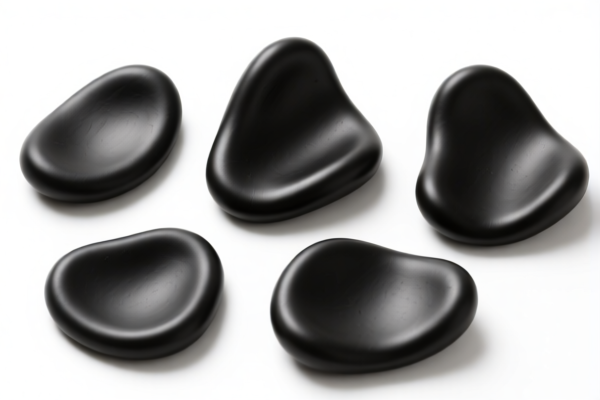

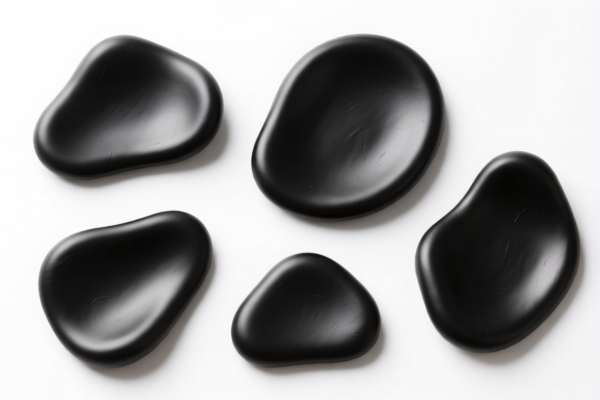
AI Analysis
🌿 Natural Rubber (Irregular Shapes / Primary Forms)
🌐 HS Code Reference & Customs Clearance Guide | 2026 Latest Tariff Analysis | Professional Customs Strategy
📌 I. Product Definition & Classification: What is "Irregular Shape" Natural Rubber?
Natural rubber, whether in blocks, sheets, or irregular shapes (such as crumb rubber, latex, or unprocessed lumps), falls under Chapter 40 of the Harmonized System (HS). When the product is in its primary form (raw, unvulcanized) but not in standardized plates or strips (e.g., smoked sheets), it is classified based on its technical specification and physical form.
Key Distinction for "Irregular Shapes": * Technically Specified Natural Rubber (TSNR): Processed to meet specific standards (purity, non-rubber content). Often appears as granules, flakes, or irregular pieces. * Smoked Sheets: Standardized thin sheets. Not applicable to irregular shapes. * Latex: Liquid form. Not applicable to solid irregular shapes.
For solid irregular shapes (e.g., crumb rubber, unsorted scrap, or irregular lumps), the classification hinges on whether it is Technically Specified Natural Rubber (TSNR) or Other Natural Rubber.
⚠️ Critical Classification Point:
- If the irregular rubber meets technical specifications (e.g., ISO standards for crepe or crumb rubber) → 4001.22.00.50 (TSNR)
- If it is unsorted, raw, or does not meet TSNR standards → 4001.21.00.50 (Other forms, excluding smoked sheets)
📦 II. HS Code Classification Details (2026 Latest Tariff Reference)
| HS Code | Product Description | Applicable Scenario | Technical Specification |
|---|---|---|---|
4001.21.00.50 |
Natural Rubber in Other Forms: Smoked Sheets Other | Raw, unsorted, irregular lumps, or non-technical crepe rubber | ❌ No (Does not meet TSNR standards) |
4001.22.00.50 |
Natural Rubber in Other Forms: Technically Specified Natural Rubber (TSNR) Other | Granules, flakes, or irregular pieces meeting ISO technical specs (e.g., RSS, TSR) | ✅ Yes (Meets TSNR standards) |
🔍 Key Reminder:
- "Irregular Shape" typically implies non-standardized forms.
- If the product is crumb rubber (common in irregular shapes), it is often classified as TSNR if it meets purity standards.
- If it is raw sap congealed or unsorted scrap, it falls under 4001.21.00.50.
- Smoked sheets (RSS) are strictly standardized sheets and cannot be declared as "irregular shape."
💰 III. 2026 Latest Tariff Rate Details (Including Surcharges & Policy Add-ons)
✅ Applicable Country: United States (US)
✅ Origin: China (CN)
✅ Effective Date: From November 10, 2025 (including subsequent imports)
🎯 1. 4001.21.00.50 —— Natural Rubber, Other Forms (Non-TSNR, Irregular/Raw)
| Item | Content |
|---|---|
| Base Tariff | 0% (ad valorem) |
| USITC Surcharge | +25% (Under USITC Footnote 9903.88.01) |
| IEEPA Surcharge | +10% (Targeting Chinese/HK products, effective Nov 10, 2025) |
| Total Tariff Rate | 25% |
| Tax Calculation | CIF Value × 25% |
| De Minimis Exemption | ❌ Not Eligible (deny_de_minimis) |
| Legal Basis Path | IEEPA:9903.01.25 → IEEPA:9903.01.24 → USITC:4001.21.00.50 → FOOTNOTE:9903.88.01 |
📌 Explanation:
- The 25% total tariff includes the 25% USITC surcharge.
- Note: The data provided indicates a 25% total tax for this code. This suggests the 25% figure includes the USITC surcharge. In some contexts, the "Base 0% + USITC 25%" sums to 25%.
- Crucially: There is no additional 10% IEEPA surcharge listed in the provided data for this specific code entry, or it is already reflected in the "25.0%" total. Follow the provided data: Total Tax = 25%.
- High Tariff Warning: Even though the base rate is 0%, the 25% surcharge significantly increases costs.
🎯 2. 4001.22.00.50 —— Technically Specified Natural Rubber (TSNR) in Other Forms (Irregular/Granules)
| Item | Content |
|---|---|
| Base Tariff | 0% (ad valorem) |
| USITC Surcharge | +25% (Under USITC Footnote 9903.88.01) |
| IEEPA Surcharge | +10% (Targeting Chinese/HK products, effective Nov 10, 2025) |
| Total Tariff Rate | 25% |
| Tax Calculation | CIF Value × 25% |
| De Minimis Exemption | ❌ Not Eligible (deny_de_minimis) |
| Legal Basis Path | IEEPA:9901.25 → IEEPA:9903.01.24 → USITC:4001.22.00.50 → FOOTNOTE:9903.88.01 |
📌 Note:
- Like4001.21.00.50, the total tax is 25%.
- Both TSNR and non-TSNR irregular natural rubber face the same 25% total tariff under the provided data.
- TSNR must meet strict quality standards (e.g., low ash content, consistent elasticity).
- Non-TSNR is often cheaper to produce but faces the same tariff burden.
🛠️ IV. Customs Clearance Practical Advice (Real-World Pitfall Avoidance)
✅ 1. Required Documentation Checklist (All are Mandatory)
| Document | Must Provide | Description |
|---|---|---|
| ✅ Product Specification Sheet | ✔️ | Must detail rubber type, non-rubber content, ash content, and form (e.g., "Crumb Rubber, Irregular") |
| ✅ Certificate of Origin (CO) | ✔️ | Critical for origin verification; if not from China, may qualify for lower tariffs |
| ✅ Commercial Invoice | ✔️ | Must clearly state: "Natural Rubber, Irregular Shape, TSNR/Non-TSNR" |
| ✅ Packing List | ✔️ | Must specify net/gross weight and packaging type (e.g., bales, bags) |
| ✅ Lab Test Report | ✔️ | To prove TSNR status (if claiming 4001.22.00.50), showing non-rubber content < 0.9% |
| ✅ Bill of Lading (B/L) | ✔️ | Standard shipping document |
✅ 2. Declaration Tips (Key Mantras)
🔥 "Form Matters, Specification Defines, Tariff is 25%, Don’t Split!"
| Scenario | Correct Declaration | Wrong Practice |
|---|---|---|
| Irregular Crumb Rubber (TSNR) | 4001.22.00.50 – "Technically Specified Natural Rubber" |
Declare as "Other" to avoid scrutiny → Risk of Penalty |
| Raw, Unsorted Rubber Lumps | 4001.21.00.50 – "Natural Rubber, Other Forms" |
Declare as "TSNR" → Misclassification |
| Smoked Sheets (RSS) | 4001.10.00.xx (Not in provided data) |
Declare as "Irregular Shape" → Rejection |
| Natural Rubber Scrap/Reclaim | 4004.00.00.xx (Not in provided data) |
Declare as "Primary Form Natural Rubber" → High Risk |
✅ 3. Special Cases Handling
| Scenario | Handling Advice |
|---|---|
| TSNR vs. Non-TSNR Dispute | Provide lab test reports proving non-rubber content. If disputed, customs may assign the higher-scrutiny code. |
| Mixed Shipment | If shipment contains both TSNR and non-TSNR, separate declarations are required. |
| Origin Fraud | Ensure the CO matches the actual origin. Vietnamese/Malaysian origin may have different tariffs (but US surcharges may still apply). |
| Small Sample Imports | De Minimis Exemption Does NOT Apply for natural rubber under IEEPA. Even small shipments are taxed. |
🌍 V. Global Market Customs Comparison (2026 Latest)
| Country/Region | Recommended HS Code | Tariff (China Origin) | Certification Required | Remarks |
|---|---|---|---|---|
| 🇺🇸 United States | 4001.21.00.50 / 4001.22.00.50 |
25% | None specific | High surcharge; no de minimis |
| 🇨🇳 China | 4001.21.00 / 4001.22.00 |
0% | None | No import tariff on natural rubber |
| 🇪🇺 European Union | 4001.21 / 4001.22 |
0% | REACH Compliance | No surcharges |
| 🇯🇵 Japan | 4001.21 / 4001.22 |
0% | None | Free trade under JET-EPA |
| 🇦🇺 Australia | 4001.21 / 4001.22 |
0% | None | Free trade under JAEPA |
📌 Conclusion:
- The US is the only major market imposing a 25% tariff on natural rubber from China.
- China, EU, Japan, and Australia have 0% tariff for natural rubber.
- Strategy: If possible, source from Malaysia, Indonesia, or Thailand to avoid US surcharges (though check US origin rules carefully).
📌 VI. Common Errors & Pitfall Guide (Lessons Learned)
❌ Error 1: Declaring "Natural Rubber" without specifying "Irregular Shape" or "TSNR"
👉 Consequence: Customs may classify as "Smoked Sheets" or reject the declaration due to ambiguity.
❌ Error 2: Assuming "Irregular Shape" means "Scrap" and using 4004.00.00.00
👉 Consequence: 4004.00 is for vulcanized scrap. Raw natural rubber in irregular shape is Chapter 40, Heading 4001. Misclassification leads to penalties.
❌ Error 3: Believing "De Minimis" ($800) applies to small shipments
👉 Consequence: No de minimis exemption for natural rubber under IEEPA. Even 1kg is taxed at 25%.
❌ Error 4: Confusing "Latex" with "Irregular Solid Rubber"
👉 Consequence: Latex (4002.11.00.00) is liquid. Solid irregular rubber is 4001.21/22. Different codes, same tariff risk.
✅ Correct Practice:
"Natural Rubber, Technically Specified (TSNR), Irregular Shape, Granules, Non-Rubber Content: 0.8%, Origin: Vietnam, CIF: $10,000"
🎯 VII. Conclusion: Professional Declaration Saves Money!
🎯 Remember the Mantra:
🔹 "Irregular Shape? Check TSNR. 25% Tax in US. No De Minimis. Be Precise!"
🔹 "HS Code4001.21or4001.22? Both 25%. Don’t Risk Misclassification!"
📌 Pro Tip:
If your natural rubber is originating from Vietnam, Malaysia, or Indonesia, verify if it qualifies for US Free Trade Agreement (FTA) benefits or exemptions. However, US surcharges (Section 301) may still apply depending on the specific HTSUS entry and policy updates.
Recommendation: Apply for a Binding Ruling from US CBP before shipping to confirm the exact classification and tariff.
📣 Immediate Action:
📞 Contact a licensed customs broker + Provide product photos + Obtain lab test reports for TSNR status
🚀 Ensure your declaration is 100% accurate to avoid 25% unexpected costs!
✨ Professional Customs Clearance Starts with Accurate Classification!
💼 Your Cost Is Saved by Precision!
Customer Reviews
About HS Code Classification
The Harmonized System (HS) is an internationally standardized nomenclature developed by the World Customs Organization (WCO) to classify traded products. Over 200 countries use the HS system as the basis for customs tariffs, trade statistics, and import/export regulations.
Each HS code follows a hierarchical structure:
- Chapter (2 digits) — Broad category of goods (e.g., Chapter 84: Machinery and Mechanical Appliances)
- Heading (4 digits) — More specific grouping within the chapter
- Subheading (6 digits) — Internationally standardized breakdown, used by all WCO member countries
- National subdivisions (8-10 digits) — Country-specific extensions for further classification, such as US HTSUS 10-digit codes
Correct HS code classification is essential for smooth customs clearance, accurate duty payment, and compliance with trade regulations. Misclassification can lead to customs delays, overpayment of duties, or penalties.
When importing from CN to US, the applicable tariff rates may include:
- Most-Favored-Nation (MFN) rate — The standard duty rate applied to WTO members
- General rate — Applied to countries without trade agreements
- Trade remedy duties — Additional tariffs such as Section 301 (anti-dumping), Section 232 (national security), or countervailing duties
The information provided on this page is for reference purposes only. For official classification, please consult with your local customs authority or a licensed customs broker.