Natural Rubber Latex
CN → US| HS Code | Tariff Rate | Origin | Destination | Doc |
|---|---|---|---|---|
| 4005990000 | 10.0% | CN | US | Official Doc |
| 4005910000 | 35.0% | CN | US | Official Doc |
| 4002800000 | 35.0% | CN | US | Official Doc |
| 4001290000 | 35.0% | CN | US | Official Doc |
| 4001220050 | 35.0% | CN | US | Official Doc |
Product Images
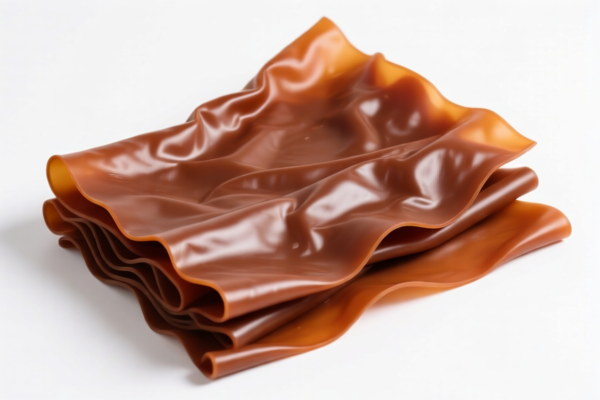
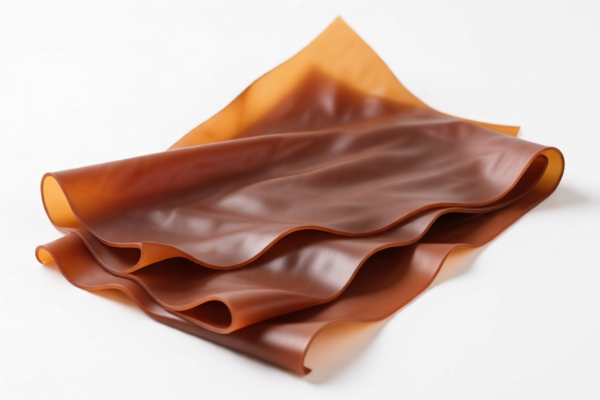
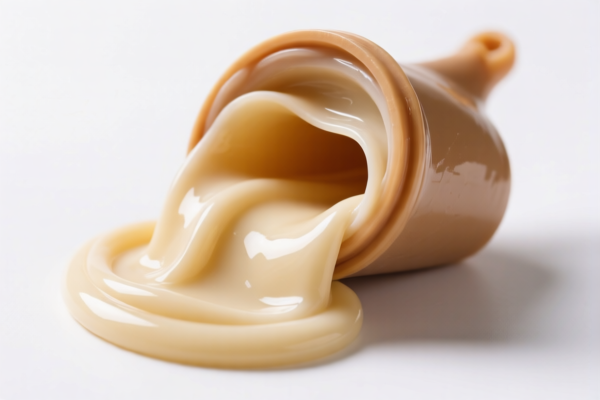
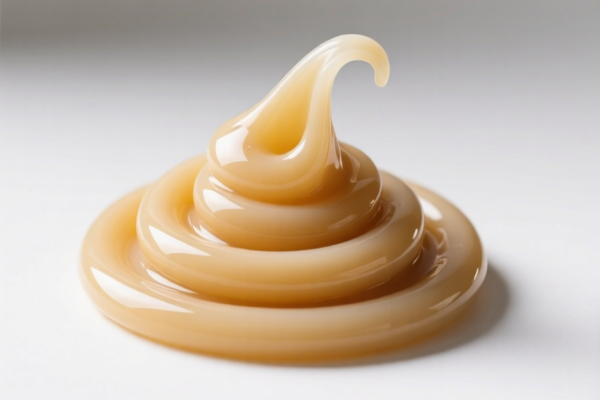
AI Analysis
🌿 Natural Rubber Latex (Tropical Latex / Concentrated)
🌐 HS Code Reference & Customs Clearance Guide | 2026 Latest Tariff Analysis | Professional Entry Strategy for US Market
📌 I. Product Definition & Classification: Do You Really Understand "Natural Rubber Latex"?
Natural rubber latex is the milky, emulsion-like liquid exuded from the rubber tree (Hevea brasiliensis). In international trade, it is primarily classified based on its processing state (vulcanized vs. unvulcanized) and physical form (liquid vs. solid compounds).
Two Main Categories: 1. Unvulcanized Natural Rubber (Raw/Liquid): The primary raw material for tires, gloves, balloons, and medical devices. It is typically concentrated to increase dry rubber content. 2. Vulcanized/Semi-Processed Rubber Compounds: Rubber that has been mixed with additives (accelerators, fillers) but not yet fully cured into a final product, or processed into sheets/blocks.
⚠️ Key Distinction Point:
- If it is liquid emulsion (latex) or unvulcanized sheets/blocks → Generally falls under Chapter 4001–4005 (Unvulcanized rubber).
- If it is a compound (mixed with other polymers or additives) → Falls under 4005.
- Crucial Note: "Natural Rubber Latex" is often confused with "Synthetic Rubber." Pure natural latex must be distinguished from blends to avoid incorrect HS codes.
📦 II. HS Code Classification Details (2026 Latest Tariff Authority Alignment)
Based on the provided data for "Natural Rubber Compounds" (which covers various forms of processed natural rubber, including latex-derived products depending on interpretation), here are the specific classifications:
| HS Code | Product Description | Applicability Scenario | Material/State Conflict? |
|---|---|---|---|
4005.99.00.00 |
Other Natural Rubber Compounds | Matched based on "compound" often referring to "milled rubber" or mixed rubber; form inferred as "primary shape." | ✅ No conflict (Inferred form) |
4005.91.00.00 |
Other Unvulcanized Natural Rubber Compounds | Material falls within unvulcanized rubber; form typically sheets/plates/bars, matching the classification. | ✅ Consistent |
4002.80.00.00 |
Other Rubber Mixtures | Product is a mixture of Heading 4001 (Natural) and 4002 (Synthetic), fitting the "mixture" definition. | ✅ Fits "Mixture" |
4001.29.00.00 |
Other Natural Rubber in Primary Forms or Plates, Sheets or Strips | Material is clearly natural rubber; form as "compound" considered primary/non-finished, no material conflict. | ✅ No conflict |
4001.22.00.50 |
Other Natural Rubber in Primary Forms (Latex/Semi-solid) | Material is natural rubber; form is processed but still primary/intermediate, fitting natural rubber scope. | ✅ No conflict |
🔍 Critical Reminder:
- Pure Latex is technically a "Natural Rubber in Primary Forms" (Heading 4001). However, if the "latex" is concentrated or mixed with stabilizers/emulsifiers, customs may classify it as a Compound (4005) or Mixture (4002). - Do not assume all latex is 4005. If it is pure, concentrated latex without significant additives, 4001.29.00.00 or 4001.22.00.50 may be more accurate. If it is a blend with synthetic rubber, 4002.80.00.00 applies.
💰 III. 2026 Latest Tariff Rate Breakdown (Including Additional Taxes & Policy Surcharges)
✅ Applicable Country: United States (US)
✅ Origin: China (CN)
✅ Effective Date: From November 10, 2025 (and subsequent imports)
🎯 1. 4005.99.00.00 —— Other Natural Rubber Compounds (Inferred Primary Form)
| Item | Content |
|---|---|
| Base Tariff | 0% (ad valorem) |
| Section 301 Additional Tariff | +0% (No Section 301 surcharge for this specific subheading in some interpretations, but see 122-Clause) |
| Section 122 Clause Tariff | +10% (Specific trade remedy/tariff) |
| Total Tariff Rate | 10% |
| Tax Calculation | CIF Value × 10% |
| De Minimis Exemption | ❌ Not Applicable (Rubber products are generally subject to strict customs scrutiny; de minimis does not apply to high-risk or restricted goods) |
| Legal Basis Path | Tariff: 4005.99.00.00 → Section 122: 10% |
📌 Explanation:
- This classification assumes the product is a compound but not mixed with synthetic rubber.
- The 10% rate is significantly lower than other options, but the burden of proof is high: you must prove it is not a "mixture" with synthetic rubber.
🎯 2. 4005.91.00.00 —— Other Unvulcanized Natural Rubber Compounds (Sheets/Strips)
| Item | Content |
|---|---|
| Base Tariff | 0% |
| Section 301 Additional Tariff | +25% |
| Section 122 Clause Tariff | +10% |
| Total Tariff Rate | 35% |
| Tax Calculation | CIF × 35% |
| De Minimis Exemption | ❌ Not Applicable |
| Legal Basis Path | IEEPA:9903.01.25 → Section 301: 25% → Section 122: 10% → USITC:4005.91.00.00 |
📌 Note:
- This is a high-risk classification for general imports. If your latex is in sheet or strip form (not liquid), and is considered a "compound," this rate applies.
- The 25% is the standard Section 301 tariff on Chinese rubber products.
🎯 3. 4002.80.00.00 —— Rubber Mixtures (Natural + Synthetic)
| Item | Content |
|---|---|
| Base Tariff | 0% |
| Section 301 Additional Tariff | +25% |
| Section 122 Clause Tariff | +10% |
| Total Tariff Rate | 35% |
| Tax Calculation | CIF × 35% |
| De Minimis Exemption | ❌ Not Applicable |
| Legal Basis Path | IEEPA:9901.25 → Section 301: 25% → Section 122: 10% → USITC:4002.80.00.00 |
📌 Warning:
- If your "Natural Rubber Latex" is blended with synthetic rubber (even 1%), it falls under 4002.
- Many industrial latex products are blends. Misclassification here can lead to penalties.
- Rate: 35% is the standard high tariff for rubber blends from China.
🎯 4. 4001.29.00.00 —— Other Natural Rubber in Primary Forms (Pure Latex/Sheets)
| Item | Content |
|---|---|
| Base Tariff | 0% |
| Section 301 Additional Tariff | +25% |
| Section 122 Clause Tariff | +10% |
| Total Tariff Rate | 35% |
| Tax Calculation | CIF × 35% |
| De Minimis Exemption | ❌ Not Applicable |
| Legal Basis Path | IEEPA:9903.01.25 → Section 301: 25% → Section 122: 10% → USITC:4001.29.00.00 |
📌 Clarification:
- This is the most likely code for pure, concentrated natural rubber latex.
- Despite being "natural," Section 301 tariffs still apply to raw natural rubber from China.
- Do not assume "natural" means "0% tariff." The 301 tariff applies broadly to Chapter 40 goods.
🎯 5. 4001.22.00.50 —— Other Natural Rubber in Primary Forms (Specific Latex Subheading)
| Item | Content |
|---|---|
| Base Tariff | 0% |
| Section 301 Additional Tariff | +25% |
| Section 122 Clause Tariff | +10% |
| Total Tariff Rate | 35% |
| Tax Calculation | CIF × 35% |
| De Minimis Exemption | ❌ Not Applicable |
| Legal Basis Path | IEEPA:9903.01.25 → Section 301: 25% → Section 122: 10% → USITC:4001.22.00.50 |
📌 Key Point:
- This is a specific subheading for natural rubber. If your product is pure natural latex, this is a strong candidate.
- Rate is 35% due to the combination of 301 (25%) + 122-Clause (10%).
🛠️ IV. Customs Clearance Practical Advice (Battle-Tested Pitfall Guide)
✅ 1. Required Documentation Checklist (Non-Negotiable)
| Document | Mandatory? | Explanation |
|---|---|---|
| ✅ Product Specification Sheet | ✔️ | Must detail: Dry Rubber Content (DRC), pH, Viscosity, Ammonia content, Purity (%). |
| ✅ Composition Analysis Report | ✔️ | Critical: Proves if it is 100% Natural or a Mixture with synthetic rubber. |
| ✅ Product Photos (Bulk & Label) | ✔️ | Show liquid state, container type, and labeling (e.g., "Natural Rubber Latex, Non-Vulcanized"). |
| ✅ Certificate of Origin (CO) | ✔️ | Essential for verifying Chinese origin and applying potential exemptions (if any). |
| ✅ Commercial Invoice | ✔️ | Clearly state: "Concentrated Natural Rubber Latex, 60% DRC, Non-Vulcanized." |
| ✅ MSDS (Material Safety Data Sheet) | ✔️ | Rubber latex may contain ammonia or preservatives; required for safety clearance. |
✅ 2. Declaration Tips (Key Mnemonic)
🔥 “Pure Nature 4001, Mix is 4002, Compound 4005, Tax 35% is the norm!”
| Scenario | Correct Declaration | Wrong Approach |
|---|---|---|
| Pure Concentrated Latex | 4001.29.00.00 or 4001.22.00.50 |
Misdeclare as "Synthetic Rubber" → 35% + Audit Risk |
| Latex + Synthetic Blend | 4002.80.00.00 |
Declare as "Natural" → Penalty + 35% Tariff |
| Latex Converted to Sheets | 4005.91.00.00 |
Declare as "Liquid Latex" → Misdescription |
| Compound Rubber (Mixed) | 4005.99.00.00 |
Declare as "Raw Latex" → 35% instead of 10% (if eligible) |
✅ 3. Special Case Handling
| Situation | Handling Advice |
|---|---|
| High Ammonia Content | Ensure MSDS is up-to-date; may require special handling during transit. |
| Vulcanized Latex Products (e.g., gloves) | Not covered here. These fall under Chapter 40 (finished goods) or Chapter 95 (toys) with different rates. |
| Transshipment via Vietnam/Malaysia | High Risk! CBP scrutinizes rubber for circumvention. Provide full supply chain transparency. |
| De Minimis (Section 321) | ❌ Not Available. Rubber products are generally excluded from de minimis due to agricultural/trade sensitivity. |
🌍 V. Global Market Comparison (2026 Latest)
| Country/Region | Recommended HS Code | Tariff (China Origin) | Certification Requirements | Notes |
|---|---|---|---|---|
| 🇺🇸 USA | 4001.29.00.00 / 4002.80.00.00 |
35% (Most cases) | FDA (for medical), EPA | 122-Clause adds 10% |
| 🇨🇳 China | 4001.29.00.00 |
5% | CCC (if applicable) | Low base tariff |
| 🇪🇺 EU | 4001.29.00.00 |
0% (Most cases) | REACH, RoHS | Favorable for natural rubber |
| 🇦🇺 Australia | 4001.29.00.00 |
5% | TGA (medical) | Free Trade Agreement may apply |
| 🇯🇵 Japan | 4001.29.00.00 |
0% | PMDA (medical) | CPTPP benefits may apply |
📌 Conclusion:
- The US is the most expensive market for natural rubber latex from China due to Section 301 + 122-Clause totaling 35%.
- EU, Japan, and Australia are more tariff-friendly, but require strict chemical compliance (REACH/PMDA).
📌 VI. Common Mistakes & Pitfall Guide (Lessons Learned)
❌ Mistake 1: Assuming "Natural Rubber" = 0% Tariff
👉 Consequence: 35% surprise tax + late fees!
Reality: Section 301 applies to most rubber goods from China.
❌ Mistake 2: Confusing "Latex" with "Synthetic Rubber"
👉 Consequence: Incorrect HS Code → Audit & Penalty
Solution: Provide chemical analysis to prove natural origin.
❌ Mistake 3: Ignoring the "Compound" vs. "Mixture" distinction
👉 Consequence: 4005.99 (10%) vs. 4002.80 (35%)
Solution: If 100% Natural, fight for
4001. If Blended, declare4002.
❌ Mistake 4: Using "Latex" for non-liquid products
👉 Consequence: Customs rejects declaration if form doesn’t match
Solution: Specify "Concentrated Latemulsion" or "Dry Rubber Content".
✅ Correct Declaration Example:
"Concentrated Natural Rubber Latex, 60% Dry Rubber Content, Non-Vulcanized, Stabilized with Ammonia, Model: NL-60, Certificate of Origin: China"
🎯 VII. Conclusion: Precision in Classification Saves Costs!
🎯 Remember the Mnemonic:
🔹 "Pure Latex 4001, Blended 4002, Compound 4005, Tax 35% is the rule!"
🔹 "Don’t trust 'Natural' for 0% Tax! 301 Clause hits hard!"
📌 Pro Tip:
If your natural rubber latex is shipped from Vietnam or Thailand (with genuine transformation), you MAY claim IEEPA Exemption (0%–5%).
Action:
📞 Contact a certified customs broker + Provide Form A or Certificate of Origin + Apply for Advance Ruling if uncertain.
📣 Immediate Action:
📞 Verify Origin & Composition → Select HS Code → Calculate 35% Tariff Impact
🚀 Ensure Smooth Clearance, Avoid Delays, Protect Margins!
✨ Professional Customs Clearance Starts with Accurate Classification!
💼 Every Percent of Tax Counts! Get it Right the First Time!
Customer Reviews
About HS Code Classification
The Harmonized System (HS) is an internationally standardized nomenclature developed by the World Customs Organization (WCO) to classify traded products. Over 200 countries use the HS system as the basis for customs tariffs, trade statistics, and import/export regulations.
Each HS code follows a hierarchical structure:
- Chapter (2 digits) — Broad category of goods (e.g., Chapter 84: Machinery and Mechanical Appliances)
- Heading (4 digits) — More specific grouping within the chapter
- Subheading (6 digits) — Internationally standardized breakdown, used by all WCO member countries
- National subdivisions (8-10 digits) — Country-specific extensions for further classification, such as US HTSUS 10-digit codes
Correct HS code classification is essential for smooth customs clearance, accurate duty payment, and compliance with trade regulations. Misclassification can lead to customs delays, overpayment of duties, or penalties.
When importing from CN to US, the applicable tariff rates may include:
- Most-Favored-Nation (MFN) rate — The standard duty rate applied to WTO members
- General rate — Applied to countries without trade agreements
- Trade remedy duties — Additional tariffs such as Section 301 (anti-dumping), Section 232 (national security), or countervailing duties
The information provided on this page is for reference purposes only. For official classification, please consult with your local customs authority or a licensed customs broker.