Natural Rubber Mat
CN → US| HS Code | Tariff Rate | Origin | Destination | Doc |
|---|---|---|---|---|
| 4016910000 | 37.7% | CN | US | Official Doc |
| 4016990300 | 38.0% | CN | US | Official Doc |
| 8708295160 | 0.0% | CN | US | Official Doc |
| 8708995500 | 37.5% | CN | US | Official Doc |
| 4602123500 | 35.0% | CN | US | Official Doc |
Product Images
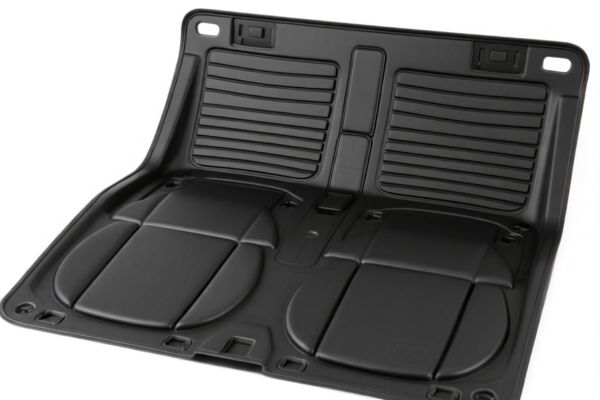
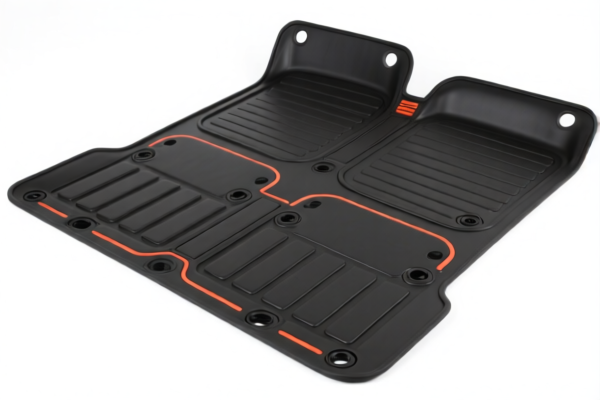
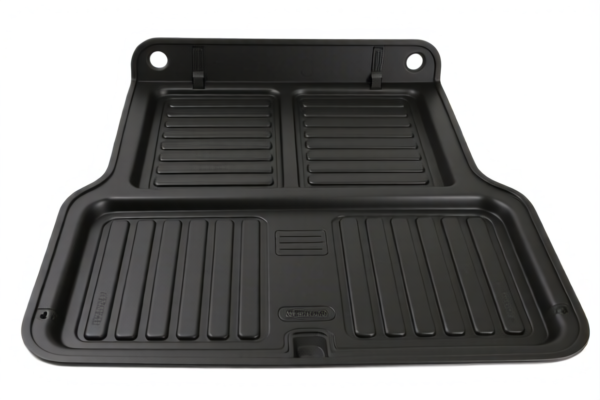
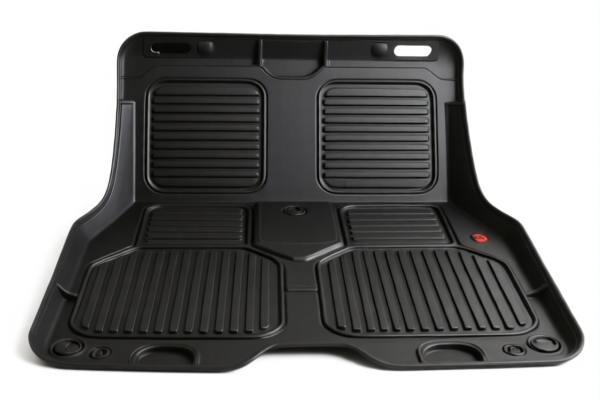
AI Analysis
🚗 Natural Rubber Car Floor Mats (天然橡胶汽车脚垫)
🌐 HS Code Reference & Customs Clearance Guide | 2026 Latest Tariff Analysis | Professional Clearance Strategy 📌 I. Product Definition & Classification: What Exactly is a "Natural Rubber Mat"?
In international trade, "Natural Rubber Mats" for automotive use are highly sensitive to specific application and material composition. While they are made of rubber, their classification hinges on whether they are viewed as general rubber articles, vehicle parts, or even floor coverings.
Misclassification is the #1 cause of customs delays and unexpected tariff shocks (up to 85%+).
⚠️ Critical Distinction:
- If it is a general floor mat (not specific to a car model) → Chapter 40 or 46
- If it is a specific car accessory (footwell liner) → Chapter 87
- Note: Even if made of natural rubber, if it is a part of the car, it may fall under auto parts duties, which are often higher due to trade wars.
📦 II. HS Code Classification Matrix (2026 Latest Tariff Data)
| HS Code | Product Description | Scenario | Tax Rate (Total) | Key Risk Factor |
|---|---|---|---|---|
4016.91.00.00 |
Floor mats & runners of vulcanized rubber other than hard rubber | General rubber floor mats, non-auto specific | 37.7% | High due to 122 & 301 clauses |
4016.99.03.00 |
Other articles of vulcanized rubber other than hard rubber | Generic rubber products, no specific auto intent | 38.0% | Slightly higher base duty |
8708.29.51.60 |
Body work (including cabs), parts & accessories of motor vehicles | Specific car floor mats, trim parts | 2.5% +85.0% | ⚠️ EXTREME: Steel/Alu/Copper surcharge may apply if reinforced |
8708.99.55.00 |
Other parts & accessories of motor vehicles | General auto parts,减震/vehicle parts | 37.5% | Standard auto parts surcharge |
4602.12.35.00 |
Woven materials of vegetable materials (Rattan/Tape) | ⚠️ MISCLASSIFICATION ALERT: If confused with "Rattan Mats" | 35.0% | Do NOT use this for Rubber! |
🔍 Key Insight:
- Chapter 87 (Auto Parts) often triggers higher total tariffs (up to 85%) if the product is deemed a "body accessory" with metallic reinforcements (studs/clips).
- Chapter 40 (Rubber Articles) offers a slightly lower but still high effective rate (~37-38%).
- Chapter 46 is for Rattan/Woven Vegetable materials, NOT rubber. Using this for rubber is smuggling-level misclassification.
💰 III. 2026 Tariff Rate Breakdown (Including Surtaxes & Policies)
✅ Applicable Country: United States (US)
✅ Origin: China (CN)
✅ Effective Date: 2025–2026 (Post-Trade War Environment)
🎯 1. 4016.91.00.00 – Rubber Floor Mats (General)
| Item | Details |
|---|---|
| Base Duty | 2.7% |
| Section 301 Surtax | +25.0% |
| Section 122 Surtax | +10.0% |
| Total Rate | 37.7% |
| Calculation | CIF Value × 37.7% |
| De Minimis Exemption | ❌ Denied (Not eligible for $800 de minimis) |
| Legal Basis | USITC:4016.91.00.00 → FOOTNOTE:9903.88.01 (Section 301) + IEEPA:9903.01.24 (Section 122) |
📌 Explanation:
- The 25% Section 301 tariff applies to rubber articles from China.
- The 10% Section 122 tariff is a national security surcharge on certain goods.
- Total: 37.7% is significant but stable.
🎯 2. 8708.29.51.60 – Car Floor Mats as Body Accessories
| Item | Details |
|---|---|
| Base Duty | 2.5% |
| Section 301 Surtax | +25.0% |
| Section 122 Surtax | +10.0% |
| Steel/Alu/Copper Surtax | +50.0% (If applicable) |
| Total Rate | 2.5% + 85.0% (Up to 85%!) |
| Calculation | CIF × (2.5% + 25% + 10% + 50%) |
| De Minimis Exemption | ❌ Denied |
| Legal Basis | USITC:8708.29.51.60 → IEEPA:9903.01.25 (Steel/Alu/Copper) + USITC:8524.11.10.00 fallback |
📌 Warning:
- If your floor mats have metal studs, clips, or anchors, US Customs may classify them under steel/aluminum surcharge rules.
- This pushes the total tax to 85%, making it unprofitable for low-value items.
- Strategy: Avoid metallic components if possible, or declare as pure rubber (4016.91) to avoid the 50% surcharge.
🎯 3. 8708.99.55.00 – General Auto Parts
| Item | Details |
|---|---|
| Base Duty | 2.5% |
| Section 301 Surtax | +25.0% |
| Section 122 Surtax | +10.0% |
| Total Rate | 37.5% |
| Calculation | CIF × 37.5% |
| De Minimis Exemption | ❌ Denied |
📌 Note:
- This is a "catch-all" for auto parts.
- Rate is similar to Chapter 40, but risk of reclassification is higher.
🛠️ IV. Customs Clearance Practical Advice (Avoiding Pitfalls)
✅ 1. Documentation Checklist (Non-Negotiable)
| Document | Required? | Notes |
|---|---|---|
| ✅ Product Specification Sheet | ✔️ | Must state: Material = 100% Natural Rubber, No Metal Parts |
| ✅ Product Photos | ✔️ | Show no metal clips/studs. Show branding/model fitment |
| ✅ Commercial Invoice | ✔️ | Describe as "Natural Rubber Floor Mats, Automotive Accessory" |
| ✅ Origin Certificate (CO) | ✔️ | If not China-origin, may reduce tariffs |
| ✅ HS Code Pre-Ruling | ✔️ | Highly Recommended |
✅ 2. Declaration Strategy (Key Tactics)
🔥 "Pure Rubber, No Metal, General Use, Lower Tax!"
| Scenario | Recommended HS Code | Why? |
|---|---|---|
| No metal clips/studs | 4016.91.00.00 |
Avoids 8708 auto parts classification; avoids 50% steel surcharge |
| Has metal clips | 8708.29.51.60 |
Inevitable, but expect 85% tax |
| Generic mat (not car-specific) | 4016.91.00.00 |
Harder to prove it's an "auto part" |
| Rattan/Woven Mat | 4602.12.35.00 |
ONLY if made of rattan, NOT rubber |
✅ 3. Special Handling
| Situation | Action |
|---|---|
| OEM Car Mats | Provide OEM contract to prove "auto part" status, but warn of 85% risk if metal exists |
| Universal Fit Mats | Declare as 4016.91.00.00 to avoid auto parts surcharge |
| Mixed Materials | If >50% rubber, declare as rubber. If metal parts are dominant, expect 85% |
| De Minimis | Do NOT use $800 de minimis for these HS codes; customs will seize |
🌍 V. Global Market Comparison (2026)
| Country | Recommended HS Code | Total Tariff | Certification | Note |
|---|---|---|---|---|
| 🇺🇸 USA | 4016.91.00.00 |
37.7% | None | Avoid 8708 if possible due to 85% risk |
| 🇨🇳 China | 4016.91.00.00 |
5–10% | CCC (if applicable) | Low import duty, but export restrictions may apply |
| 🇪🇺 EU | 4016.91.00.00 |
0–4% | REACH, RoHS | No surtaxes; much easier |
| 🇬🇧 UK | 4016.91.00.00 |
0–4% | UKCA | Post-Brexit, similar to EU |
| 🇦🇺 Australia | 4016.91.00.00 |
5% | RCM | Low tariff |
📌 Conclusion:
- USA is the most challenging market due to Section 301 & 122 tariffs.
- EU/UK/Australia are far more favorable for rubber mats.
- Consider diversifying supply chain to Vietnam/Mexico for US-bound goods to avoid surtaxes.
📌 VI. Common Mistakes & Pitfalls (Lessons Learned)
❌ Mistake 1: Using 8708 for mats with no metal parts
👉 Result: Customs may reclassify to 8708 anyway if it’s clearly for a car, leading to 85% tax.
✅ Fix: Use 4016.91.00.00 and emphasize "general rubber article."
❌ Mistake 2: Declaring rubber mats as 4602 (Rattan)
👉 Result: Customs rejection, penalties, and back taxes.
✅ Fix: Only use 4602 for actual rattan/woven vegetable fiber products.
❌ Mistake 3: Ignoring metal clips/studs
👉 Result: If metal is detected, 50% surcharge applies → 85% total tax.
✅ Fix: Design mats with plastic or no clips to stay in Chapter 40.
❌ Mistake 4: Using de minimis ($800) for these items
👉 Result: Seizure of goods.
✅ Fix: Declare correctly; do not rely on de minimis for rubber/auto parts from China.
🎯 VII. Conclusion: Smart Classification Saves Money
🎯 Key Takeaway:
🔹 "Rubber Mats: Chapter 40 is safer than Chapter 87."
🔹 "No Metal, No Steel Surtax."
🔹 "Avoid 85% tax by declaring as general rubber article."
📌 Pro Tip:
If your product is 100% natural rubber with no metal components, declare it as 4016.91.00.00 (37.7% tax) rather than 8708 (up to 85% tax). This simple change can save hundreds of dollars per container.
📣 Immediate Action:
📞 Apply for a Binding Ruling from US Customs (CBP) to confirm
4016.91.00.00eligibility.
🚀 Redesign mats to eliminate metal clips if possible.
💡 Consider shipping from non-China origins to avoid surtaxes.
✨ Precision in Classification = Profit in Your Pocket!
💼 Don’t let 85% tariffs eat your margin!
Customer Reviews
About HS Code Classification
The Harmonized System (HS) is an internationally standardized nomenclature developed by the World Customs Organization (WCO) to classify traded products. Over 200 countries use the HS system as the basis for customs tariffs, trade statistics, and import/export regulations.
Each HS code follows a hierarchical structure:
- Chapter (2 digits) — Broad category of goods (e.g., Chapter 84: Machinery and Mechanical Appliances)
- Heading (4 digits) — More specific grouping within the chapter
- Subheading (6 digits) — Internationally standardized breakdown, used by all WCO member countries
- National subdivisions (8-10 digits) — Country-specific extensions for further classification, such as US HTSUS 10-digit codes
Correct HS code classification is essential for smooth customs clearance, accurate duty payment, and compliance with trade regulations. Misclassification can lead to customs delays, overpayment of duties, or penalties.
When importing from CN to US, the applicable tariff rates may include:
- Most-Favored-Nation (MFN) rate — The standard duty rate applied to WTO members
- General rate — Applied to countries without trade agreements
- Trade remedy duties — Additional tariffs such as Section 301 (anti-dumping), Section 232 (national security), or countervailing duties
The information provided on this page is for reference purposes only. For official classification, please consult with your local customs authority or a licensed customs broker.