Natural Rubber Modified Liquid Adhesive
CN → US| HS Code | Tariff Rate | Origin | Destination | Doc |
|---|---|---|---|---|
| 4005200000 | 35.0% | CN | US | Official Doc |
| 4001290000 | 35.0% | CN | US | Official Doc |
| 4001220050 | 35.0% | CN | US | Official Doc |
| 4005100000 | 35.0% | CN | US | Official Doc |
| 4002990000 | 35.0% | CN | US | Official Doc |
Product Images
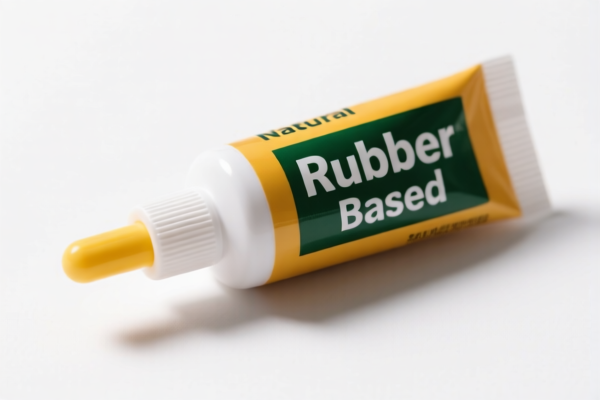
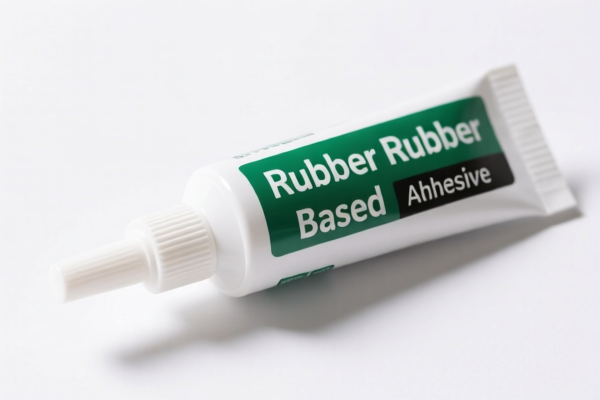
AI Analysis
🧪 Natural Rubber Modified Liquid Adhesive
Natural Rubber Modified Liquid Adhesive
🌐 HS Code Reference & Customs Clearance Guide | 2026 Latest Tariff Analysis | Professional Level通关 Strategy
📌 Part 1: Product Definition & Classification: Do You Really Understand “Natural Rubber Modified Liquid Adhesive”?
Natural rubber modified liquid adhesive is a high-performance bonding material. In international trade, its classification is critical because it can fall into several different HS codes depending on its physical state (liquid vs. solid) and degree of modification (unvulcanized compounded rubber vs. simple natural rubber).
Key Distinction Points: * If it is a "Compounded Unvulcanized Rubber" (e.g., rubber milk, latex, or rubber cement paste): It falls under Heading 4005. * If it is "Simple Natural Rubber" in liquid form (e.g., Latex): It falls under Heading 4001. * If it is a "Synthetic Rubber" product: It falls under Heading 4002.
⚠️ Critical Alert:
- If the product is described as "Modified" and contains other substances (plasticizers, stabilizers) making it a compound, it is likely 4005 (Unvulcanized Compounded Rubber).
- If it is merely "Natural Rubber" in a liquid state (latex) without significant compounding, it is 4001 or 4002.
- Misclassification Risk: Declaring a compounded rubber cement as "Latex" (4001) to avoid higher scrutiny or different duty structures can lead to severe penalties.
📦 Part 2: HS Code Classification Details (2026 Latest Tariff Authority Comparison)
Based on the provided data, here are the 5 matched HS Codes for "Natural Rubber Modified Liquid Adhesive":
| HS Code | Product Description | Summary/Reason for Match | Total Tax Rate | Tax Breakdown |
|---|---|---|---|---|
| 4005.20.00.00 | Unvulcanized compounded rubber other than sheets and strips | Matches natural rubber material and modified material attributes; fits the category of unvulcanized compounded rubber. | 35.0% | Base: 0.0%, Section 301: 25.0%, Section 122: 10% |
| 4001.29.00.00 | Other natural rubber, primary or in primary forms; other | Matches natural rubber material and primary/intermediate form; fits the category of natural rubber and similar gums. | 35.0% | Base: 0.0%, Section 301: 25.0%, Section 122: 10% |
| 4001.22.00.50 | Natural rubber, primary or in primary forms; other | Matches natural rubber material; inferred as primary or semi-finished form; fits the category of other forms of natural rubber. | 35.0% | Base: 0.0%, Section 301: 25.0%, Section 122: 10% |
| 4005.10.00.00 | Unvulcanized compounded rubber in primary forms or in plates, sheets or strip | Matches natural rubber material and modified material attributes; fits the category of unvulcanized compounded rubber. | 35.0% | Base: 0.0%, Section 301: 25.0%, Section 122: 10% |
| 4002.99.00.00 | Synthetic rubber and factsamite, primary or in primary forms; other | Matches rubber composition and modified material attributes; fits the category of synthetic rubber and related rubber products in primary forms. | 35.0% | Base: 0.0%, Section 301: 25.0%, Section 122: 10% |
🔍 Key Reminder:
- All listed HS Codes share the same total tariff rate of 35.0%.
- The difference lies in the technical description: Is it pure natural rubber (4001), compounded rubber (4005), or synthetic rubber (4002)?
- Section 122 Tariff (10%) and Section 301 Tariff (25%) are applied on top of the 0% base duty for all these codes when originating from China.
💰 Part 3: 2026 Latest Tariff Rate Details (Including Additional Taxes & Policy Surcharges)
✅ Applicable Country: United States (US)
✅ Origin: China (CN)
✅ Effective Date: 2025/2026 (Current Trade Policy)
🎯 1. 4005.20.00.00 & 4005.10.00.00 – Unvulcanized Compounded Rubber
| Item | Content |
|---|---|
| Base Rate | 0% (ad valorem) |
| Section 301 Surcharge | +25% (Additional duties under US Trade Act Section 301) |
| Section 122 Surcharge | +10% (Tariffs under Section 122 of the Trade Expansion Act) |
| Total Rate | 35.0% |
| Tax Calculation | CIF Value × 35% |
| De Minimis Exemption | ❌ Not Applicable |
| Legal Basis Path | USITC:4005.x0.00.00 → Section 301: +25% → Section 122: +10% |
📌 Explanation:
- These codes cover compounded rubber (rubber mixed with other substances). If your "adhesive" is a rubber cement or latex with additives that make it a "compound," this is the most likely classification.
- The 35% total tax is high and must be factored into your cost structure.
🎯 2. 4001.29.00.00 & 4001.22.00.50 – Natural Rubber (Primary Forms)
| Item | Content |
|---|---|
| Base Rate | 0% |
| Section 301 Surcharge | +25% |
| Section 122 Surcharge | +10% |
| Total Rate | 35.0% |
| Tax Calculation | CIF × 35% |
| De Minimis Exemption | ❌ Not Applicable |
| Legal Basis Path | USITC:4001.xx.xx.xx → Section 301: +25% → Section 122: +10% |
📌 Note:
- If your product is pure natural rubber latex (without complex compounding), it falls here.
- Even though the tax rate is the same as 4005, the customs declaration requirements differ. You must prove it is "natural rubber" and not a synthetic compound.
🎯 3. 4002.99.00.00 – Synthetic Rubber (Primary Forms)
| Item | Content |
|---|---|
| Base Rate | 0% |
| Section 301 Surcharge | +25% |
| Section 122 Surcharge | +10% |
| Total Rate | 35.0% |
| Tax Calculation | CIF × 35% |
| De Minimis Exemption | ❌ Not Applicable |
| Legal Basis Path | USITC:4002.99.00.00 → Section 301: +25% → Section 122: +10% |
📌 Note:
- If the "modified" part implies the use of synthetic rubber (e.g., SBR, BR) instead of natural rubber, this code applies.
- Ensure your MSDS and technical data sheets clearly state the rubber type.
🛠️ Part 4: Customs Clearance Practical Advice (Pitfall Avoidance Guide)
✅ 1. Documentation Checklist (All are Mandatory)
| Document | Required | Explanation |
|---|---|---|
| ✅ Technical Data Sheet (TDS) | ✔️ | Must specify if the rubber is Natural or Synthetic, and if it is Compounded or Raw. |
| ✅ MSDS (Material Safety Data Sheet) | ✔️ | Critical for liquid adhesives to verify chemical composition and hazards. |
| ✅ Composition Statement | ✔️ | Explicitly state the percentage of natural rubber, synthetic rubber, and other additives. |
| ✅ Product Photos | ✔️ | Show the liquid state, packaging, and label. |
| ✅ Commercial Invoice | ✔️ | Clearly describe the product as "Natural Rubber Modified Liquid Adhesive" and specify the HS Code. |
| ✅ Bill of Lading | ✔️ | Ensure weight and volume match the invoice. |
✅ 2. Declaration Tips (Key Mantra)
🔥 “Identify Rubber Type, Declare Form, Avoid ‘Adhesive’ Ambiguity!”
| Scenario | Correct Declaration | Wrong Practice |
|---|---|---|
| Rubber Cement/Compounded Latex | 4005.x0.00.00 (Unvulcanized Compounded Rubber) |
Calling it "Adhesive" without specifying rubber type → Risk of reclassification. |
| Pure Natural Rubber Latex | 4001.x9.xx.xx (Natural Rubber) |
Calling it "Synthetic Rubber" → Penalty for misdeclaration. |
| Synthetic Rubber Latex | 4002.99.00.00 (Synthetic Rubber) |
Calling it "Natural Rubber" → Major violation. |
| Liquid Adhesive with Non-Rubber Binders | Check Chapter 35 or 39 | Assuming it’s always rubber → If rubber content is low, it may not fall under Chapter 40. |
✅ 3. Special Situations
| Situation | Handling Advice |
|---|---|
| High Rubber Content (>50%) | Likely falls under Chapter 40. Ensure TDS confirms this. |
| Low Rubber Content (<50%) | May be classified as an adhesive in Chapter 35 (Albuminoidal substances) or Chapter 39 (Plastics). Do not force Chapter 40. |
| Hazardous Liquid | Must declare proper shipping name, UN number, and class for IMDG/IATA if applicable. |
| Origin Marking | Ensure all products are marked "Made in China" to trigger Section 301/122 duties. |
🌍 Part 5: Global Market Comparison (2026 Latest)
| Country/Region | Recommended HS Code | Tariff | Certification | Notes |
|---|---|---|---|---|
| 🇺🇸 USA | 4005.x0.00.00 or 4001.xx.xx.xx |
35% (China) | None specific for rubber, but MSDS required | High tariff due to Section 301 & 122. |
| 🇨🇳 China | 4005.x0.00.00 or 4001.xx.xx.xx |
0% (Base) | CCC (if applicable) | No additional tariffs for domestic trade. |
| 🇪🇺 EU | 4005.x0.00.00 or 4001.xx.xx.xx |
0% (Base) | REACH (Chemical Registration) | REACH compliance is critical for adhesives. |
| 🇬🇧 UK | 4005.x0.00.00 or 4001.xx.xx.xx |
0% (Base) | UK REACH | Similar to EU, but post-Brexit rules apply. |
| 🇯🇵 Japan | 4005.x0.00.00 or 4001.xx.xx.xx |
0-3.9% | FSC (Food Sanitation Law if food contact) | Generally low tariffs. |
📌 Conclusion:
- USA is the only major market with 35% combined tariffs on these rubber products from China.
- EU/UK require strict REACH registration for chemical substances (adhesives).
- Japan has favorable tariffs but strict safety standards.
📌 Part 6: Common Errors & Pitfall Guide (Lessons Learned)
❌ Error 1: Declaring "Compounded Rubber" as "Raw Natural Rubber" (4001 instead of 4005)
👉 Consequence: Customs may reclassify, apply different inspection rules, or impose penalties for misdeclaration.
❌ Error 2: Ignoring the "Modified" Aspect
👉 Consequence: If the product is a synthetic rubber compound but declared as natural rubber, it is a serious violation of trade laws.
❌ Error 3: Failing to Provide MSDS for Liquid Adhesives
👉 Consequence: Hold at Customs or Return. Liquid chemicals require safety documentation.
❌ Error 4: Not Checking Rubber Content Percentage
👉 Consequence: If rubber content is low, the product might be classified as an adhesive (Chapter 35/39) with different tariffs. Do not assume Chapter 40 automatically.
✅ Correct Approach:
"Unvulcanized Compounded Rubber in Liquid Form (Natural Rubber Modified), HS Code 4005.20.00.00, MSDS Attached, REACH Compliant (if EU)."
🎯 Part 7: Conclusion: Professional Declaration, Cost Control, Efficiency!
🎯 Remember the Mantra:
🔹 “Rubber Type First, Form Second, Tariff Third.”
🔹 “35% is the Key Number for USA, Prepare in Advance.”
🔹 “MSDS is Mandatory for Liquids, Avoid Delays.”
📌 Pro Tip:
If your product is not primarily rubber (e.g., water-based adhesive with <50% rubber), consider Chapter 35 or 39 for potentially lower tariffs or different regulatory requirements.
Apply for a Binding Tariff Information (BTI) or Advance Ruling before shipment to ensure correct classification.
📣 Immediate Action:
📞 Contact a professional customs broker + Provide TDS/MSDS + Apply for HS Code Pre-ruling
🚀 Let your adhesive clear smoothly, save costs, and boost profits!
✨ Professional Customs Clearance Starts with Accurate Classification!
💼 Every cent of your cost deserves precise calculation!
Customer Reviews
About HS Code Classification
The Harmonized System (HS) is an internationally standardized nomenclature developed by the World Customs Organization (WCO) to classify traded products. Over 200 countries use the HS system as the basis for customs tariffs, trade statistics, and import/export regulations.
Each HS code follows a hierarchical structure:
- Chapter (2 digits) — Broad category of goods (e.g., Chapter 84: Machinery and Mechanical Appliances)
- Heading (4 digits) — More specific grouping within the chapter
- Subheading (6 digits) — Internationally standardized breakdown, used by all WCO member countries
- National subdivisions (8-10 digits) — Country-specific extensions for further classification, such as US HTSUS 10-digit codes
Correct HS code classification is essential for smooth customs clearance, accurate duty payment, and compliance with trade regulations. Misclassification can lead to customs delays, overpayment of duties, or penalties.
When importing from CN to US, the applicable tariff rates may include:
- Most-Favored-Nation (MFN) rate — The standard duty rate applied to WTO members
- General rate — Applied to countries without trade agreements
- Trade remedy duties — Additional tariffs such as Section 301 (anti-dumping), Section 232 (national security), or countervailing duties
The information provided on this page is for reference purposes only. For official classification, please consult with your local customs authority or a licensed customs broker.