Natural Rubber Molding Products
CN → US| HS Code | Tariff Rate | Origin | Destination | Doc |
|---|---|---|---|---|
| 4011908050 | 38.4% | CN | US | Official Doc |
| 4015900010 | 39.0% | CN | US | Official Doc |
| 4015900050 | 39.0% | CN | US | Official Doc |
| 4011908010 | 38.4% | CN | US | Official Doc |
| 4016993000 | 35.0% | CN | US | Official Doc |
Product Images
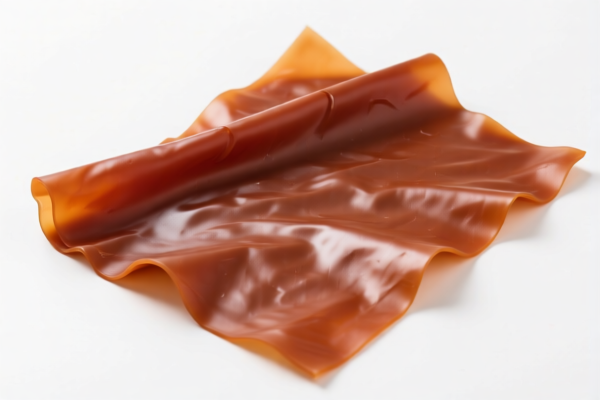

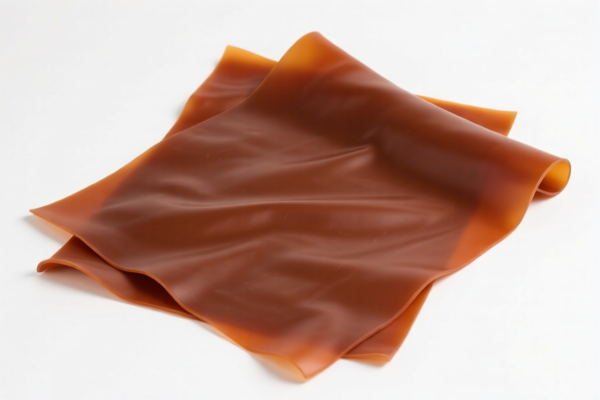

AI Analysis
🛢️ Natural Rubber Molding Products
🌐 HS Code Reference & Customs Clearance Guide | 2026 Latest Tariff Analysis | Professional Clearance Strategy
📌 I. Product Definition & Classification: Do You Truly Understand "Natural Rubber Molding"?
Natural Rubber Molding Products refer to goods made from natural rubber (specifically vulcanized or hard rubber) that have been shaped into specific forms. In international trade, these products are categorized based on their application (e.g., tires, tubes, medical devices) and physical state (e.g., sheets, rods, custom shapes).
Key Distinction Points: - Tires & Inner Tubes: If the product is specifically shaped for use as a tire or inner tube, it falls under Chapter 40 Heading 40.11 or 40.13. - Other Technical/Industrial Articles: If the product is a general-purpose molded item (e.g., gaskets, seals, bumpers, soles) not specified elsewhere, it typically falls under Heading 40.15 or 40.16. - Material State: Must be vulcanized (cross-linked) natural rubber. Raw rubber or unvulcanized products are classified differently (e.g., Chapter 40 Heading 40.01/40.02).
⚠️ Critical Classification Logic:
- If the product is a tire → Check Heading 40.11.
- If the product is a medical or hygienic article (e.g., gloves, catheters) → Check Heading 40.14 (not in current data set, but keep in mind).
- If the product is a general technical molded item (e.g., shock absorbers, seals) → Typically 40.15 or 40.16.
- Note on Current Data: The provided focuses heavily on 40.11 (Tires/Parts) and 40.15 (Other Technical Articles).
📦 II. HS Code Classification Details (2026 Latest Tariff Authority Comparison)
| HS Code | Product Description | Applicable Scenario | Tax Rate (China Origin) |
|---|---|---|---|
4011.90.80.50 |
Natural rubber molded products, natural rubber material, molded shape, classified under "Other" | General rubber molded items not specified elsewhere in 40.11 | 38.4% |
4015.90.00.10 |
Natural rubber molded products, natural rubber material (within vulcanized rubber scope), molded shape, no specific purpose conflict | General technical molded items, industrial parts, seals | 39.0% |
4015.90.00.50 |
Natural rubber molded products, natural rubber material (vulcanized), molded shape, classified under "Other" | General rubber molded items, fall under "Other" in 40.15 | 39.0% |
4011.90.80.10 |
Natural rubber molded products, natural rubber material, meets core requirements for rubber tires/articles, classified under "Other" | Specific molded rubber articles resembling tire parts or core rubber goods | 38.4% |
4016.99.30.00 |
Natural rubber molded products, natural rubber material, molded shape, classified as vulcanized rubber articles, "Other" | Broader category of vulcanized rubber goods, often includes complex shapes | 35.0% |
🔍 Key Insights:
- 40.11 vs. 40.15 vs. 40.16:
- 40.11 is primarily for tires and their parts. If your molded product is a tire component (e.g., tire sidewall, tread), it may fall here.
- 40.15 covers other technical articles of vulcanized rubber (e.g., clothing, gloves, medical items, industrial parts).
- 40.16 covers other articles of vulcanized rubber (e.g., sheets, plates, rods, gaskets).
- Tax Variance: The difference between 35.0% (4016.99.30.00) and 39.0% (4015.90.00.10) is significant. Misclassification can lead to overpayment or underpayment penalties.
💰 III. 2026 Latest Tariff Rate Breakdown (Including Surcharges & Policy Add-ons)
✅ Applicable Country: United States (US)
✅ Origin: China (CN)
✅ Effective Time: 2025-11-10 onwards (including subsequent imports)
🎯 1. 4011.90.80.50 —— Natural Rubber Molded Products (Other)
| Item | Content |
|---|---|
| Base Tariff | 3.4% (ad valorem) |
| Section 301 Surcharge | +25.0% |
| Section 122 Surcharge | +10.0% |
| Total Tariff Rate | 38.4% |
| Tax Calculation | CIF Value × 38.4% |
| De Minimis Exemption | ❌ Not Eligible (deny_de_minimis) |
| Legal Basis Path | 301:4011.90.80.50 → 122:4011.90.80.50 |
📌 Explanation:
- Base Tariff (3.4%): Standard Most Favored Nation (MFN) rate for rubber tires/articles.
- Section 301 (25%): US Trade Act of 1974, Section 301, targeting Chinese imports.
- Section 122 (10%): Additional surcharge under specific US trade provisions for rubber products.
- Total 38.4%: High tariff burden, must be accounted for in pricing strategies.
🎯 2. 4015.90.00.10 & 4015.90.00.50 —— Other Technical Rubber Articles
| Item | Content |
|---|---|
| Base Tariff | 4.0% (ad valorem) |
| Section 301 Surcharge | +25.0% |
| Section 122 Surcharge | +10.0% |
| Total Tariff Rate | 39.0% |
| Tax Calculation | CIF Value × 39.0% |
| De Minimis Exemption | ❌ Not Eligible (deny_de_minimis) |
| Legal Basis Path | 301:4015.90.00.10 → 122:4015.90.00.10 |
📌 Note:
- The base rate is slightly higher (4.0%) than4011.90.80.50, leading to a total of 39.0%.
- These HS codes are for technical articles (e.g., seals, gaskets, industrial molds).
- No difference in surcharges between.10and.50in the current data set, both at 39.0%.
🎯 3. 4011.90.80.10 —— Natural Rubber Molded Products (Core Requirements)
| Item | Content |
|---|---|
| Base Tariff | 3.4% |
| Section 301 Surcharge | +25.0% |
| Section 122 Surcharge | +10.0% |
| Total Tariff Rate | 38.4% |
| Tax Calculation | CIF Value × 38.4% |
| De Minimis Exemption | ❌ Not Eligible (deny_de_minimis) |
| Legal Basis Path | 301:4011.90.80.10 → 122:4011.90.80.10 |
📌 Explanation:
- Same tax structure as4011.90.80.50but different sub-category description.
- Likely used for products that meet core requirements for rubber tires/articles but are classified under "Other."
🎯 4. 4016.99.30.00 —— Other Vulcanized Rubber Articles
| Item | Content |
|---|---|
| Base Tariff | 0.0% |
| Section 301 Surcharge | +25.0% |
| Section 122 Surcharge | +10.0% |
| Total Tariff Rate | 35.0% |
| Tax Calculation | CIF Value × 35.0% |
| De Minimis Exemption | ❌ Not Eligible (deny_de_minimis) |
| Legal Basis Path | 301:4016.99.30.00 → 122:4016.99.30.00 |
📌 Advantage:
- Lowest total rate at 35.0% due to 0.0% base tariff.
- This HS code is for other articles of vulcanized rubber, which may include items like sheets, plates, or non-specific molded goods.
- Recommendation: If your product can be classified here, it offers the lowest tariff burden.
🛠️ IV. Customs Clearance Practical Advice (Battle-Tested Pitfall Guide)
✅ 1. Required Documentation Checklist (All Mandatory)
| Document | Required | Description |
|---|---|---|
| ✅ Product Specification Sheet | ✔️ | Material composition (natural rubber %), vulcanization process, hardness, density |
| ✅ Technical Drawing / CAD | ✔️ | To determine if the product is a "tire," "technical article," or "other article" |
| ✅ Product Photos (with Label) | ✔️ | Clear view of model number, brand, input/output parameters |
| ✅ Third-Party Test Report | ✔️ | ASTM, ISO, or other relevant standards for rubber durability, tensile strength |
| ✅ Commercial Invoice | ✔️ | Clearly state "Natural Rubber Molded Product" and HS Code |
| ✅ Certificate of Origin (CO) | ✔️ | For China origin, to confirm applicability of US tariffs |
| ✅ Packing List | ✔️ | Detailing weight, dimensions, and packaging to avoid misclassification |
✅ 2. Declaration Tips (Key Mnemonics)
🔥 “Shape Defines Code, Rubber Defines Tax!”
| Scenario | Correct Declaration | Incorrect Practice |
|---|---|---|
| Product is a tire or tire part | 4011.90.80.50 / 4011.90.80.10 |
Misdeclare as "rubber gasket" → 35% vs 38.4% risk |
| Product is an industrial seal/gasket | 4015.90.00.10 / 4015.90.00.50 |
Misdeclare as "other article" → 39% vs 35% risk |
| Product is a sheet/plate/rod | 4016.99.30.00 |
Misdeclare as "molded article" → 35% vs 39% risk |
| Vulcanization Status | Must state "Vulcanized" | Not stating vulcanization → Unclear classification |
✅ 3. Special Case Handling
| Scenario | Handling Advice |
|---|---|
| OEM Custom Molded Parts | Provide client order + design drawings to prove intended use |
| Mixed Material Products | If >50% natural rubber by weight, classify under natural rubber rules |
| Used/Reconditioned Rubber | May face additional restrictions; ensure it meets US safety standards |
| Sample Shipments | Still subject to full tariffs; no de minimis exemption for China origin |
🌍 V. Global Market Comparison (2026 Latest)
| Country/Region | Recommended HS Code | Tariff | Certification | Notes |
|---|---|---|---|---|
| 🇺🇸 USA | 4016.99.30.00 |
35.0% | ASTM, ISO | Highest complexity due to Section 301 & 122 |
| 🇨🇳 China | 4016.99.30.00 |
5.0% | CCC (if applicable) | Lower tariffs, no surcharges |
| 🇪🇺 EU | 4016.99.30.00 |
0% (if CE) | CE, REACH | No surcharges, but strict environmental laws |
| 🇦🇺 Australia | 4016.99.30.00 |
5.0% | RCM | No surcharges |
| 🇯🇵 Japan | 4016.99.30.00 |
0% | PSE | No surcharges |
📌 Conclusion:
- USA is the most challenging market due to Section 301 (25%) and Section 122 (10%) surcharges.
- China origin rubber products face a 35%-39% effective tariff rate in the US.
- Strategic Recommendation: Consider supply chain diversification (e.g., Vietnam, Thailand) to avoid US surcharges, or negotiate cost-sharing with buyers.
📌 VI. Common Mistakes & Pitfall Guide (Lessons Learned)
❌ Mistake 1: Declaring "Rubber Gasket" as 4016.99.30.00 when it is technically a tire component
👉 Consequence: Underpayment of tariff (35% vs 38.4%) → Back taxes + penalties!
❌ Mistake 2: Not specifying vulcanization status
👉 Consequence: Customs may classify as unvulcanized rubber (Chapter 40 Heading 40.01) → Different tariff rate + delays.
❌ Mistake 3: Assuming de minimis exemption applies
👉 Consequence: Never exempt for China-origin rubber products → Full tariff applied.
❌ Mistake 4: Using vague descriptions like "Rubber Parts"
👉 Consequence: Customs may assign highest possible rate or require manual review → Delays.
✅ Correct Practice:
“Natural Rubber Molded Gasket, Vulcanized, 100% Natural Rubber, ASTM D2000 Compliant, Model G-100, For Automotive Use”
🎯 VII. Conclusion: Precise Classification Saves Money!
🎯 Remember the Mnemonic:
🔹 “Tire goes to 40.11, Technical goes to 40.15, Other goes to 40.16!”
🔹 “Base Tariff + 25% + 10% = Final Rate, No Exemption!”
📌 Pro Tip:
If your product can be classified under 4016.99.30.00, take advantage of the 35.0% total rate (lowest in the data set).
For tire components, use 4011.90.80.50 or 4011.90.80.10 at 38.4%.
For technical articles, use 4015.90.00.10 or 4015.90.00.50 at 39.0%.
📢 Take Action Now:
📞 Contact a professional customs broker + Provide product specs + Apply for Advance Ruling if unsure.
🚀 Ensure smooth clearance, minimize costs, and maximize profit!
✨ Professional clearance starts with accurate classification!
💼 Every cent counts in international trade!
Customer Reviews
About HS Code Classification
The Harmonized System (HS) is an internationally standardized nomenclature developed by the World Customs Organization (WCO) to classify traded products. Over 200 countries use the HS system as the basis for customs tariffs, trade statistics, and import/export regulations.
Each HS code follows a hierarchical structure:
- Chapter (2 digits) — Broad category of goods (e.g., Chapter 84: Machinery and Mechanical Appliances)
- Heading (4 digits) — More specific grouping within the chapter
- Subheading (6 digits) — Internationally standardized breakdown, used by all WCO member countries
- National subdivisions (8-10 digits) — Country-specific extensions for further classification, such as US HTSUS 10-digit codes
Correct HS code classification is essential for smooth customs clearance, accurate duty payment, and compliance with trade regulations. Misclassification can lead to customs delays, overpayment of duties, or penalties.
When importing from CN to US, the applicable tariff rates may include:
- Most-Favored-Nation (MFN) rate — The standard duty rate applied to WTO members
- General rate — Applied to countries without trade agreements
- Trade remedy duties — Additional tariffs such as Section 301 (anti-dumping), Section 232 (national security), or countervailing duties
The information provided on this page is for reference purposes only. For official classification, please consult with your local customs authority or a licensed customs broker.