Natural Rubber Non slip Mat
CN → US| HS Code | Tariff Rate | Origin | Destination | Doc |
|---|---|---|---|---|
| 4008111000 | 35.0% | CN | US | Official Doc |
| 4016996050 | 37.5% | CN | US | Official Doc |
| 4016990500 | 20.9% | CN | US | Official Doc |
| 3926904510 | 38.5% | CN | US | Official Doc |
| 4008210000 | 35.0% | CN | US | Official Doc |
Product Images
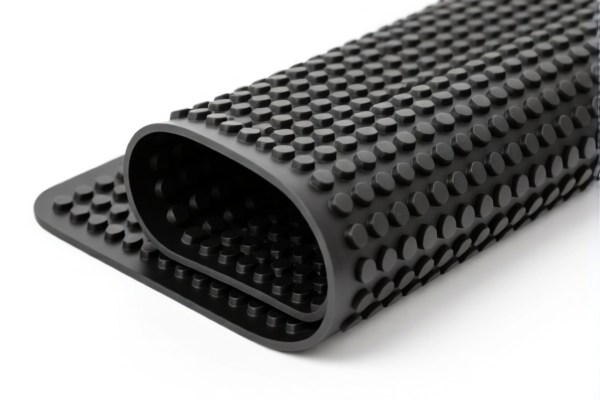
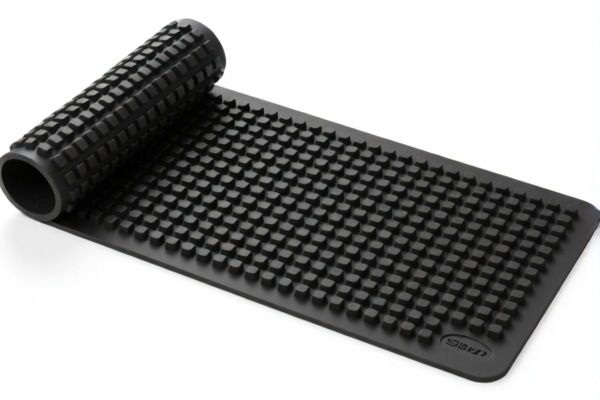
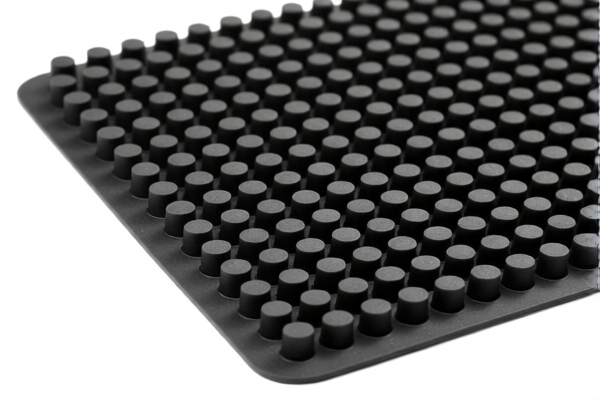
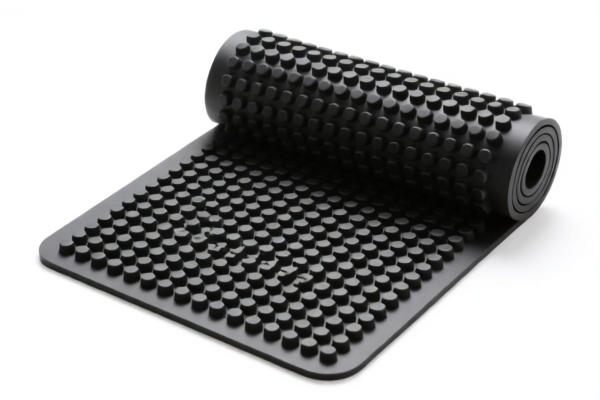
AI Analysis
🖥️ Natural Rubber Non-Slip Mat (天然橡胶防滑垫)
🌐 HS Code Reference & Clearance Guide | 2026 Latest Tariff Analysis | Professional Clearance Strategy
📌 I. Product Definition & Classification: Do You Really Understand "Non-Slip Mats"?
Natural rubber non-slip mats are versatile products used in households, kitchens, bathrooms, and industrial settings to provide traction and prevent sliding. In international trade, the classification depends heavily on form (sheet/roll vs. finished article) and material composition (natural rubber vs. synthetic/vulcanized).
Natural Rubber Sheets/Blocks: Raw or simply processed natural rubber in flat, sheet, or strip form. Vulcanized Rubber Articles: Finished goods where the rubber has been chemically hardened (vulcanized) for specific shapes or functions.
⚠️ Key Distinction Point:
- If the product is sold as a raw or semi-processed sheet/strip of natural rubber, intended for further manufacturing → Classified under 4008.
- If the product is a finished, vulcanized item with a specific non-slip texture/shape → Classified under 4016 or 3926.
- Crucial Check: Is it pure natural rubber or a composite? Pure natural rubber mats go to 4008; vulcanized finished mats go to 4016.
📦 II. HS Code Classification Details (2026 Latest Tariff Authority Comparison)
| HS Code | Product Description | Application Scenario | Material/Form |
|---|---|---|---|
4008.11.10.00 |
Natural Rubber Mats, in the form of sheets, strips, etc. | Raw/semi-processed natural rubber sheets; industrial backing mats | ✅ Natural Rubber |
4016.99.60.50 |
Vulcanized Rubber Mats, not elsewhere specified | Finished vulcanized rubber mats; generic non-slip utility mats | ✅ Vulcanized |
4016.99.05.00 |
Vulcanized Rubber Mats, other household or general-use articles | Household bathroom mats, kitchen rugs (vulcanized) | ✅ Vulcanized |
3926.90.45.10 |
Rubber Mats, classified as gaskets, washers, or other seals | Rubber pads used as seals/gaskets in machinery or furniture | ❌ Specific Use (Seal) |
4008.21.00.00 |
Non-foamed Rubber Mats, in the form of sheets, strips, etc. | Solid (non-foam) natural rubber sheets; high-density rubber mats | ✅ Natural Rubber |
🔍 Key Reminder:
-4008codes apply to natural rubber in sheet/strip form. Even if "non-slip," if it's raw material form, it goes here.
-4016codes apply to vulcanized finished rubber goods. The "non-slip" texture implies a finished good, often falling here.
-3926is a fallback for specific uses like sealing; ensure the mat isn't primarily a gasket.
💰 III. 2026 Latest Tariff Rate Breakdown (Including Additional Taxes & Policy Add-ons)
✅ Applicable Country: United States (US)
✅ Country of Origin: China (CN)
✅ Effective Date: November 10, 2025 onwards (including subsequent imports)
🎯 1. 4008.11.10.00 —— Natural Rubber Mats (Sheets/Strips)
| Item | Detail |
|---|---|
| Base Tariff | 0.0% (ad valorem) |
| USITC Additional Tariff | +25.0% (Under USITC Footnote related to Section 301) |
| IEEPA Additional Tariff | +10.0% (For Chinese/HK products, effective Nov 10, 2025) |
| Total Tax Rate | 35.0% |
| Tax Calculation | CIF Value × 35.0% |
| De Minimis Eligibility | ❌ No (deny_de_minimis) |
| Legal Basis Path | IEEPA:9903.01.25 → IEEPA:9903.01.24 → USITC:4008.11.10.00 → FOOTNOTE:301 |
📌 Explanation:
- Although the base rate is 0%, the 25% Section 301 tariff and 10% IEEPA tariff apply.
- Total 35% is significant for natural rubber products.
- This code applies if the mat is considered "natural rubber in sheet form," even if intended for non-slip use.
🎯 2. 4016.99.60.50 —— Vulcanized Rubber Mats (General Purpose)
| Item | Detail |
|---|---|
| Base Tariff | 2.5% |
| USITC Additional Tariff | +25.0% |
| IEEPA Additional Tariff | +10.0% |
| Total Tax Rate | 37.5% |
| Tax Calculation | CIF Value × 37.5% |
| De Minimis Eligibility | ❌ No |
| Legal Basis Path | IEEPA:9901.25 → IEEPA:9903.01.24 → USITC:4016.99.60.50 → FOOTNOTE:301 |
📌 Note:
- This is for vulcanized rubber mats that are not specifically household items.
- Higher base rate (2.5%) + same附加 taxes = 37.5%.
- Common for industrial or generic utility non-slip mats.
🎯 3. 4016.99.05.00 —— Vulcanized Rubber Mats (Household/General Use)
| Item | Detail |
|---|---|
| Base Tariff | 3.4% |
| USITC Additional Tariff | +7.5% |
| IEEPA Additional Tariff | +10.0% |
| Total Tax Rate | 20.9% |
| Tax Calculation | CIF Value × 20.9% |
| De Minimis Eligibility | ❌ No |
| Legal Basis Path | IEEPA:9901.25 → IEEPA:9903.01.24 → USITC:4016.99.05.00 → FOOTNOTE:7.5 |
📌 Critical Insight:
- Lowest Total Rate!
- Applies to household or general-use vulcanized rubber items (e.g., bathroom mats, kitchen mats).
- Why? The additional Section 301 rate is only 7.5%, not 25%.
- Strategy: If your non-slip mat is for home use, aim for this classification to save ~16.6% in taxes compared to industrial mats.
🎯 4. 3926.90.45.10 —— Rubber Mats (Gaskets/Washers/Seals)
| Item | Detail |
|---|---|
| Base Tariff | 3.5% |
| USITC Additional Tariff | +25.0% |
| IEEPA Additional Tariff | +10.0% |
| Total Tax Rate | 38.5% |
| Tax Calculation | CIF Value × 38.5% |
| De Minimis Eligibility | ❌ No |
| Legal Basis Path | IEEPA:9901.25 → IEEPA:9903.01.24 → USITC:3926.90.45.10 → FOOTNOTE:301 |
📌 Warning:
- Only use if the mat functions as a gasket, washer, or seal.
- Highest total rate (38.5%) among the options.
- Misclassification risk: High if it's a standard floor mat.
🎯 5. 4008.21.00.00 —— Non-Foamed Rubber Mats (Sheets/Strips)
| Item | Detail |
|---|---|
| Base Tariff | 0.0% |
| USITC Additional Tariff | +25.0% |
| IEEPA Additional Tariff | +10.0% |
| Total Tax Rate | 35.0% |
| Tax Calculation | CIF Value × 35.0% |
| De Minimis Eligibility | ❌ No |
| Legal Basis Path | IEEPA:9901.25 → IEEPA:9903.01.24 → USITC:4008.21.00.00 → FOOTNOTE:301 |
📌 Note:
- Similar to4008.11.10.00but for non-foamed natural rubber.
- Total rate 35%.
- Use if the mat is solid rubber sheeting, not foam-based.
🛠️ IV. Clearance Practical Advice (Real-World Pitfall Avoidance)
✅ 1. Document Checklist (Mandatory)
| Document | Required | Notes |
|---|---|---|
| ✅ Product Specification Sheet | ✔️ | Must specify: Material (Natural Rubber vs. Vulcanized), Thickness, Dimensions, Use (Household/Industrial). |
| ✅ Material Composition Certificate | ✔️ | Prove it is Natural Rubber (for 4008) or Vulcanized Rubber (for 4016). |
| ✅ Product Photos | ✔️ | Clear images showing texture, edges, and any labels. |
| ✅ Commercial Invoice | ✔️ | Describe as "Natural Rubber Non-Slip Mat" or "Vulcanized Rubber Household Mat." Avoid vague terms like "Rubber Pad." |
| ✅ Packaging List | ✔️ | Show if sold as rolls or cut mats. |
✅ 2. Classification Strategy (Key Mnemonics)
🔥 "Household Gets 7.5%, Industrial Gets 25%, Natural Base is 0%!"
| Scenario | Recommended HS Code | Total Tax | Why? |
|---|---|---|---|
| Household Bathroom/Kitchen Mat | 4016.99.05.00 |
20.9% | Lowest additional tax (7.5%) for household vulcanized goods. |
| Industrial/Workshop Mat | 4016.99.60.50 |
37.5% | General use, higher base rate + 25% additional tax. |
| Raw Natural Rubber Sheet | 4008.11.10.00 |
35.0% | Base rate 0%, but 35% total due to附加 taxes. |
| Rubber Gasket/Seal | 3926.90.45.10 |
38.5% | Highest tax; only if it's a seal component. |
✅ 3. Special Cases & Handling
| Scenario | Handling Advice |
|---|---|
| OEM Custom Mats | Provide design specs. If it's a "household" shape, argue for 4016.99.05.00. |
| Foam vs. Solid | If it's foam rubber, it might fall under different codes (not in this dataset). Ensure it's solid/vulcanized for the listed codes. |
| Composite Materials | If it has a non-rubber backing (e.g., fabric), classification may change. Stick to 100% rubber for these codes. |
| Misdeclaration Risk | Do not label "Vulcanized Mat" as "Natural Rubber Sheet" to save tax. CBP will check material composition. |
🌍 V. Global Market Clearance Comparison (2026 Latest)
| Country/Region | Recommended HS Code | Tariff (China Origin) | Certification | Notes |
|---|---|---|---|---|
| 🇺🇸 USA | 4016.99.05.00 |
20.9% | None Specific | Lowest rate for household mats. |
| 🇨🇳 China | 4016.99.05.00 |
~5-10% | CCC (if applicable) | Lower baseline tariffs. |
| 🇪🇺 EU | 4016.99.05.00 |
0% (if FTA) | REACH + RoHS | No Section 301 tariffs. |
| 🇬🇧 UK | 4016.99.05.00 |
0-5% | UKCA | Post-Brexit rules may vary. |
📌 Conclusion:
- USA is the most challenging market due to high附加 taxes.
- Target4016.99.05.00for household mats to minimize cost.
- Avoid3926unless truly a seal/gasket.
📌 VI. Common Errors & Pitfalls (Lessons Learned)
❌ Error 1: Classifying a household mat as 4016.99.60.50 (Industrial)
👉 Consequence: Pay 37.5% instead of 20.9%. Waste of $16.6 per $100!
❌ Error 2: Labeling a vulcanized mat as 4008 (Natural Rubber Sheet)
👉 Consequence: Customs may reject for misdeclaration. Material test required. Risk of penalties.
❌ Error 3: Ignoring Material Composition
👉 Consequence: If it's synthetic rubber, 4008 is invalid. Must use different 4016 subheadings.
❌ Error 4: Using "Rubber Pad" without context
👉 Consequence: Customs cannot determine if it's a seal (3926) or a mat (4016). Delay in clearance.
✅ Correct Approach:
"Vulcanized Natural Rubber Non-Slip Mat, Household Use, 3mm Thick, Bathroom/Kitchen, No Foam, HS Code: 4016.99.05.00"
🎯 VII. Conclusion: Smart Classification, Cost Savings!
🎯 Remember the Mantra:
🔹 "Household is King: 20.9% Total."
🔹 "Industrial is Heavy: 37.5% Total."
🔹 "Raw Rubber Base 0%, but Add 35%."
🔹 "Seal is Most Expensive: 38.5%."
📌 Pro Tip:
- If your mats are 100% natural rubber and sold as sheets, use 4008.11.10.00 (35%).
- If they are finished household items, use 4016.99.05.00 (20.9%).
- Always verify material composition with a lab test if unsure.
📣 Immediate Action:
📞 Contact a customs broker + Provide product photos + Apply for Pre-Ruling if possible.
🚀 Save money, clear goods smoothly, and maximize profits!
✨ Professional clearance starts with precise classification!
💼 Every percentage point counts!
Customer Reviews
About HS Code Classification
The Harmonized System (HS) is an internationally standardized nomenclature developed by the World Customs Organization (WCO) to classify traded products. Over 200 countries use the HS system as the basis for customs tariffs, trade statistics, and import/export regulations.
Each HS code follows a hierarchical structure:
- Chapter (2 digits) — Broad category of goods (e.g., Chapter 84: Machinery and Mechanical Appliances)
- Heading (4 digits) — More specific grouping within the chapter
- Subheading (6 digits) — Internationally standardized breakdown, used by all WCO member countries
- National subdivisions (8-10 digits) — Country-specific extensions for further classification, such as US HTSUS 10-digit codes
Correct HS code classification is essential for smooth customs clearance, accurate duty payment, and compliance with trade regulations. Misclassification can lead to customs delays, overpayment of duties, or penalties.
When importing from CN to US, the applicable tariff rates may include:
- Most-Favored-Nation (MFN) rate — The standard duty rate applied to WTO members
- General rate — Applied to countries without trade agreements
- Trade remedy duties — Additional tariffs such as Section 301 (anti-dumping), Section 232 (national security), or countervailing duties
The information provided on this page is for reference purposes only. For official classification, please consult with your local customs authority or a licensed customs broker.