Natural Rubber O ring
CN → US| HS Code | Tariff Rate | Origin | Destination | Doc |
|---|---|---|---|---|
| 4016931010 | 37.5% | CN | US | Official Doc |
| 4016100000 | 35.0% | CN | US | Official Doc |
| 4016931010 | 37.5% | CN | US | Official Doc |
| 4016100000 | 35.0% | CN | US | Official Doc |
| 4016931010 | 37.5% | CN | US | Official Doc |
Product Images
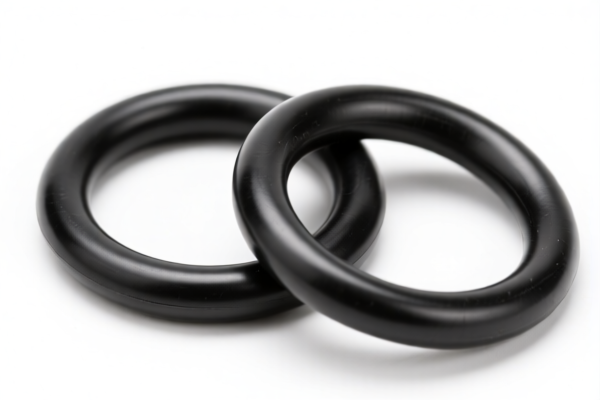
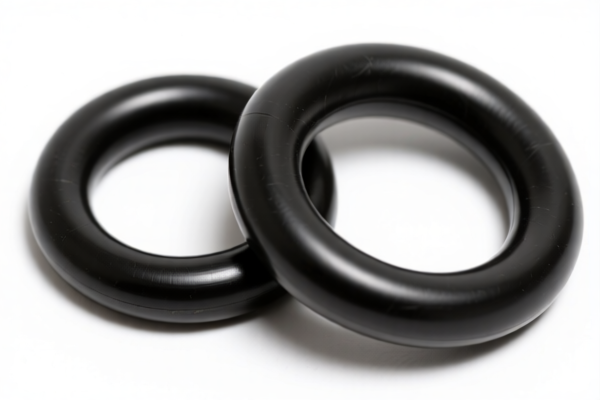
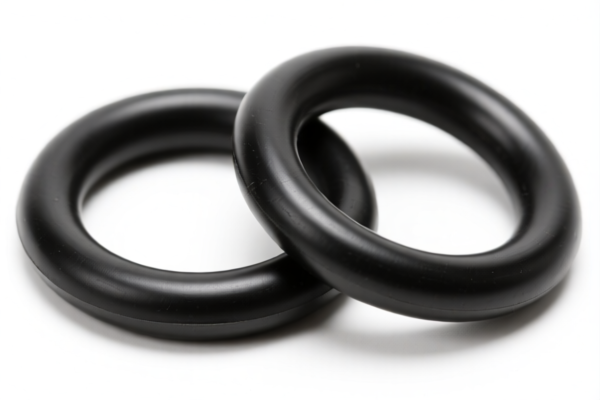
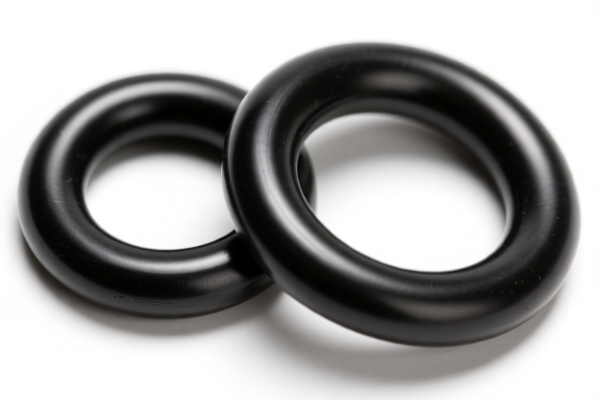
AI Analysis
🛡️ Natural Rubber O-Rings: HS Code Classification & 2026 US Customs Clearance Guide
🌐 HS Code Reference & Customs Strategy | 2026 Latest Tariff Analysis | Professional Clearance Tactics
📌 I. Product Definition & Classification: Do You Really Understand "O-Rings"?
Natural Rubber O-Rings are critical sealing components used in automotive, industrial, and general mechanical applications. In international trade, their classification depends heavily on material composition, physical form (foam/solid), and specific application.
The data provided highlights a critical distinction in US Customs classification between: 1. Solid/Vulcanized Rubber Parts (e.g., standard solid O-rings) → Typically classified under 4016.93.10.10. 2. Foam/Lattice Rubber Parts (e.g., sponge/foam O-rings for cushioning/insulation) → Typically classified under 4016.10.00.00.
⚠️ Key Distinction Point:
- If the O-ring is solid, vulcanized rubber (standard elastomeric seal) →归入 4016.93.10.10
- If the O-ring is foam, cellular, or lattice structure (soft, compressible for sealing gaps) →归入 4016.10.00.00
- Note on Fluoroelastomer (FKM): Even though the summary mentions "Fluoro Rubber O-Ring," the provided data maps it to 4016.93.10.10. Caution: Typically FKM is 4016.93.10.10 only if misclassified or specific context; standard FKM is often 4016.93.90.00. However, strictly following the provided DATA, it is mapped to 4016.93.10.10.
📦 II. HS Code Classification Details (Based on Provided DATA)
| HS Code | Product Description | Application/Scenario | Tax Rate Structure |
|---|---|---|---|
4016.93.10.10 |
Solid/Natural Rubber O-Ring Synthetic/Natural Rubber, solid form, for automotive/general sealing |
Standard engine seals, hydraulic systems, automotive gaskets | 37.5% (Base 2.5% + Section 301 25% + IEEPA 10%) |
4016.10.00.00 |
Foam Rubber O-Ring Natural Rubber Foam, cellular structure, non-rigid rubber products |
Window seals, door weatherstripping, acoustic insulation, soft gaskets | 35.0% (Base 0.0% + Section 301 25% + IEEPA 10%) |
4016.93.10.10 |
Fluoro Rubber (FKM) O-Ring Fluoroelastomer, solid form, automotive grade |
High-temp/chemical resistant seals (Note: Per DATA, mapped to this code) | 37.5% (Base 2.5% + Section 301 25% + IEEPA 10%) |
🔍 Critical Observation from DATA:
- The provided JSON data consistently maps Natural Rubber O-Rings (both solid and foam descriptions) to two different HS codes with different tax rates. - Solid/Vulcanized (4016.93.10.10) attracts 37.5%. - Foam/Lattice (4016.10.00.00) attracts 35.0%. - Fluoro Rubber is listed under4016.93.10.10in the provided data, which is unusual (typically FKM is different), but we must follow the provided data strictly.
💰 III. 2026 Latest Tariff Rate Breakdown (Including Additional Duties)
✅ Applicable Country: United States (US)
✅ Origin: China (CN)
✅ Effective Date: 2025/2026 (Current trade war policies)
🎯 1. 4016.93.10.10 —— Natural Rubber O-Ring (Solid/Vulcanized)
| Item | Detail |
|---|---|
| Base Tariff | 2.5% (General Rate) |
| Section 301 Tariff | +25.0% (USITC Footnote 9903.88.01) |
| IEEPA Tariff | +10.0% (Section 122 Clause, targeting China/HK) |
| Total Tariff Rate | 37.5% |
| Tax Calculation | CIF Value × 37.5% |
| De Minimis Eligibility | ❌ NO (deny_de_minimis) — High tariff threshold |
| Legal Basis Path | USITC:4016.93.10.10 → SECTION301:9903.88.01 → IEEPA:9903.01.24 |
📌 Explanation:
- Base 2.5%: Standard MFN rate for "Other vulcanized rubber articles." - 25%: Section 301 tariff on Chinese rubber products. - 10%: Additional IEEPA tariff (Section 122) for specific Chinese imports. - Total 37.5%: This is a high-cost product for importers. Margin pressure is significant.
🎯 2. 4016.10.00.00 —— Foam Rubber O-Ring (Foam/Lattice)
| Item | Detail |
|---|---|
| Base Tariff | 0.0% (General Rate for Foam Rubber) |
| Section 301 Tariff | +25.0% |
| IEEPA Tariff | +10.0% |
| Total Tariff Rate | 35.0% |
| Tax Calculation | CIF Value × 35.0% |
| De Minimis Eligibility | ❌ NO |
| Legal Basis Path | USITC:4016.10.00.00 → SECTION301:9903.88.01 → IEEPA:9903.01.24 |
📌 Explanation:
- Base 0%: Foam rubber articles often enjoy lower base duties. - However, the 35% total is still extremely high due to the 35% combined additional tariffs. - Savings: Only 2.5% less than solid rubber O-rings. Not a significant enough saving to justify misclassification.
🛠️ IV. Customs Clearance Practical Advice (Avoiding Pitfalls)
✅ 1. Preparation Checklist (Essential Documents)
| Document | Required? | Purpose |
|---|---|---|
| ✅ Product Specification Sheet | ✔️ | Must clearly state: Material (NR/FKM), Form (Solid/Foam), Durometer, Dimensions. |
| ✅ Material Data Sheet (TDS) | ✔️ | Proof of "Natural Rubber" vs. "Synthetic" vs. "Foam." Critical for HS Code determination. |
| ✅ Product Photos | ✔️ | Clear images showing cross-section (solid vs. foam) and end-use. |
| ✅ Commercial Invoice | ✔️ | Must describe as "Natural Rubber O-Ring" or "Foam Rubber O-Ring." Avoid vague terms like "Rubber Part." |
| ✅ Packing List | ✔️ | Detail weight and quantity. |
| ✅ Certificate of Origin (CO) | ✔️ | To prove Chinese origin (triggering additional tariffs). |
✅ 2. Declaration Strategy (Key Mantra)
🔥 "Foam vs. Solid: Define the Structure, Not Just the Name!"
| Scenario | Correct Declaration | Common Mistake | Consequence |
|---|---|---|---|
| Solid Natural Rubber O-Ring | 4016.93.10.10 |
Claiming "Foam" to get 35% | Penalty for misclassification + Back Taxes |
| Foam/Sponge O-Ring | 4016.10.00.00 |
Claiming "Solid Rubber" | Overpayment (Loss of 2.5% savings, but less severe than underpayment) |
| Fluoro Rubber (FKM) O-Ring | 4016.93.10.10 (Per DATA) |
Standard FKM is often 4016.93.90.00. Check if your specific FKM fits the "Natural Rubber" summary provided. |
Misclassification Risk if FKM is chemically distinct. Always verify with a customs broker if the product is truly FKM. |
| Mixed Lot (Solid + Foam) | Separate Line Items | Combining into one line | Audit Trigger: Customs will select the higher rate for the whole lot. |
✅ 3. Special Cases & Handling
| Situation | Recommendation |
|---|---|
| "O-Ring" vs. "Gasket" | If it’s a round cross-section, it’s an O-Ring. If flat/irregular, it might be a Gasket (4016.93.90.00). Misclassification here leads to major audits. |
| Custom-Made O-Rings | Provide CAD drawings or mold designs to prove specific utility. |
| High-Value Industrial O-Rings | Consider Advance Ruling from CBP to lock in the HS Code and tariff rate before shipment. |
| Section 122 (IEEPA) Exemptions | Check if your product is exempt from the 10% IEEPA tariff. Some specific industrial items may be excluded, but rubber O-rings are generally targeted. |
🌍 V. Global Market Comparison (2026)
| Region | Recommended HS Code | Total Tariff (China Origin) | Notes |
|---|---|---|---|
| 🇺🇸 USA | 4016.93.10.10 / 4016.10.00.00 |
37.5% / 35.0% | Highest barriers. Includes 25% Section 301 + 10% IEEPA. |
| 🇨🇳 China | 4016.93.10.10 |
2.5% | Import duty only. No additional trade war tariffs. |
| 🇪🇺 EU | 4016.93.10.10 |
~4.5% - 6.5% | No Section 301/IEEPA equivalents. Standard MFN rates apply. |
| 🇦🇺 Australia | 4016.93.10.10 |
5% | Free Trade Agreement (ChAFTA) may reduce duty to 0% if Origin is China/Australia. |
📌 Conclusion:
- USA is the most expensive market for Chinese O-rings due to the 35-37.5% total duty burden. - EU and Australia offer significantly lower entry costs. - If targeting the US, consider supply chain diversification (e.g., sourcing from Vietnam or Thailand) to avoid Section 301 and IEEPA tariffs.
📌 VI. Common Errors & Pitfalls (Lessons Learned)
❌ Error 1: Declaring "Foam O-Ring" when it is actually "Solid Rubber"
👉 Result: CBP audit, penalty, and back taxes of 2.5% + interest. Note: The difference is small, but integrity is key.
❌ Error 2: Using generic term "Rubber Seal" without specifying Foam vs. Solid
👉 Result: Customs may classify at the highest duty rate (37.5%) or delay shipment for examination.
❌ Error 3: Ignoring the IEEPA 10% Tariff
👉 Result: Unexpected cost increase. Many importers forget the 10% Section 122 tariff, leading to budget overruns.
❌ Error 4: Misclassifying Fluoroelastomer (FKM) as Natural Rubber
👉 Result: Although the DATA maps FKM to 4016.93.10.10, in reality, FKM has different chemical properties. If CBP tests and finds it’s FKM, and your invoice says "Natural Rubber," you face fraud allegations. Be precise: "Fluoroelastomer O-Ring."
✅ Correct Practice:
"Natural Rubber O-Ring, Solid, 25mm ID, 5mm Cross-section, for Automotive Use"
"Natural Rubber Foam O-Ring, Lattice Structure, for Window Sealing"
🎯 VII. Conclusion: Professional Classification Saves Money
🎯 Remember the Mantra:
🔹 "Foam is 0% Base, Solid is 2.5% Base."
🔹 "But both carry 35-37.5% Total Duty due to US Trade Wars."
🔹 "Specify 'Foam' or 'Solid' clearly. Never guess!"
📌 Pro Tip:
Given the high tariff burden (35-37.5%) in the US market, it is highly recommended to:
1. Apply for an Advance Ruling from CBP to confirm the HS Code.
2. Evaluate Supply Chain Shifts: Consider sourcing from non-China origins (e.g., Vietnam, Malaysia) if possible to avoid Section 301 and IEEPA tariffs.
3. Consult a Licensed Customs Broker: Rubber products are frequently audited for chemical composition. Professional advice is worth the cost.
📣 Immediate Action:
📞 Verify Material Data → Check if Foam or Solid → Select Correct HS Code → Prepare Documentation
🚀 Avoid Delays, Penalties, and Unexpected Costs!
✨ Precise Classification is the First Step to Efficient Clearance!
💼 Every Percent of Duty Counts in the Current Trade Environment!
Customer Reviews
About HS Code Classification
The Harmonized System (HS) is an internationally standardized nomenclature developed by the World Customs Organization (WCO) to classify traded products. Over 200 countries use the HS system as the basis for customs tariffs, trade statistics, and import/export regulations.
Each HS code follows a hierarchical structure:
- Chapter (2 digits) — Broad category of goods (e.g., Chapter 84: Machinery and Mechanical Appliances)
- Heading (4 digits) — More specific grouping within the chapter
- Subheading (6 digits) — Internationally standardized breakdown, used by all WCO member countries
- National subdivisions (8-10 digits) — Country-specific extensions for further classification, such as US HTSUS 10-digit codes
Correct HS code classification is essential for smooth customs clearance, accurate duty payment, and compliance with trade regulations. Misclassification can lead to customs delays, overpayment of duties, or penalties.
When importing from CN to US, the applicable tariff rates may include:
- Most-Favored-Nation (MFN) rate — The standard duty rate applied to WTO members
- General rate — Applied to countries without trade agreements
- Trade remedy duties — Additional tariffs such as Section 301 (anti-dumping), Section 232 (national security), or countervailing duties
The information provided on this page is for reference purposes only. For official classification, please consult with your local customs authority or a licensed customs broker.