Natural Rubber Plates
CN → US| HS Code | Tariff Rate | Origin | Destination | Doc |
|---|---|---|---|---|
| 4001210050 | 35.0% | CN | US | Official Doc |
| 4008210000 | 35.0% | CN | US | Official Doc |
| 4008111000 | 35.0% | CN | US | Official Doc |
| 4001290000 | 35.0% | CN | US | Official Doc |
| 4016995500 | 37.5% | CN | US | Official Doc |
Product Images
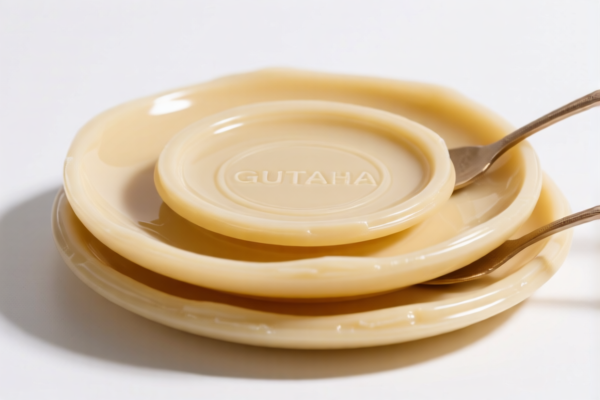
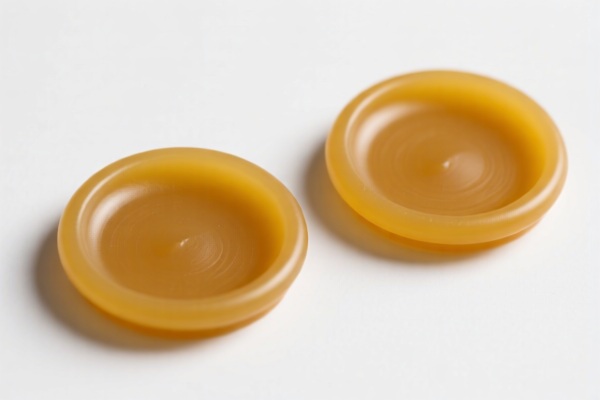
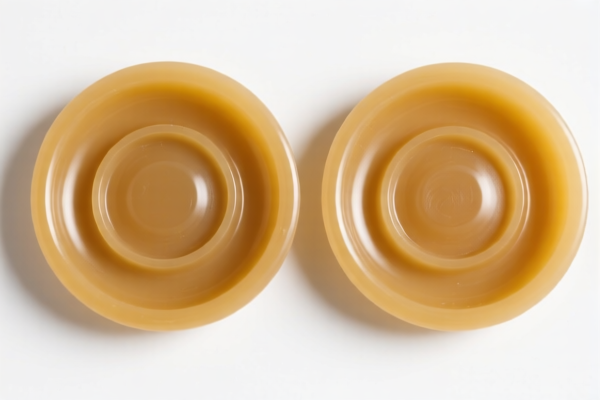
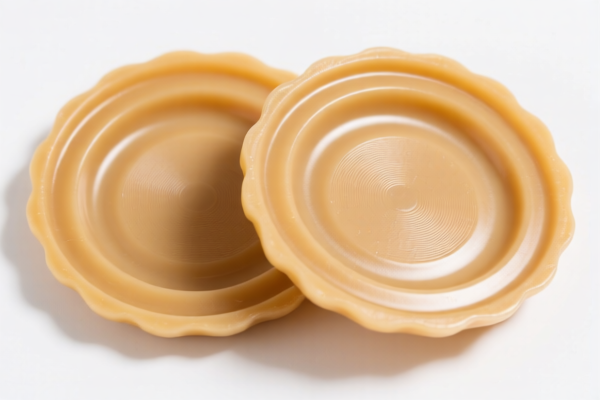
AI Analysis
🌿 Natural Rubber Plates & Sheets | 4001-4008 Series
🌐 HS Code Reference & Customs Clearance Guide | 2026 Latest Tariff Analysis | Professional Clearance Strategy for Natural Rubber Products
📌 I. Product Definition & Classification: Do You Know "Natural Rubber Plates"?
Natural rubber plates (or sheets/belts/blobs) are primary processed forms of natural latex. In international trade, they are primarily classified under Chapter 40 (Rubber and Articles Thereof). The specific HS Code depends heavily on two factors: 1. State of Vulcanization: Are they Raw (unvulcanized) or Vulcanized (hardened)? 2. Form/Shape: Are they simple plates/sheets, or specialized items like buffer pads (shock absorption)?
⚠️ Critical Distinction:
- Raw Natural Rubber Plates/Sheets: Unvulcanized, raw material for further manufacturing. → HS 4001.xx
- Vulcanized Natural Rubber Plates/Sheets: Processed, hardened sheets. → HS 4008.xx
- Natural Rubber Buffer Pads: Specialized shock-absorbing components. → HS 4016.99
📦 II. HS Code Classification Details (2026 Latest Tariff Reference)
Based on the provided data, here is the breakdown for Natural Rubber Plates/Sheets:
| HS Code | Product Description | Key Characteristics | Form/Shape |
|---|---|---|---|
4001.21.00.50 |
Natural Rubber Plates/Sheets | Raw natural rubber, in slab/sheet form | Plates, Sheets, Strips |
4008.21.00.00 |
Vulcanized Natural Rubber Sheets | Vulcanized natural rubber | Plates, Sheets, Belts |
4008.11.10.00 |
Vulcanized Natural Rubber Sheets | Vulcanized natural rubber | Plates, Sheets, Belts |
4001.29.00.00 |
Other Natural Rubber Plates | Raw natural rubber (other than 4001.21) | Plates, Sheets, Strips |
4016.99.55.00 |
Natural Rubber Buffer Pads | Vulcanized, specialized for shock absorption | Buffer Pads / Shock Control |
🔍 Key Reminder:
- Raw vs. Vulcanized: This is the biggest pitfall.4001codes are for raw rubber.4008codes are for vulcanized (hardened) rubber. Misclassifying raw as vulcanized (or vice versa) leads to severe customs delays.
- Buffer Pads: If the product is specifically designed for shock absorption/vibration control (e.g., machine mounts, vibration dampers), it may fall under4016.99.55.00, which has a different tax structure (37.5% vs 35%).
💰 III. 2026 Latest Tariff Rate Breakdown (Including Surtaxes)
✅ Applicable Country: USA (US)
✅ Origin: China (CN)
✅ Effective Date: Post-November 2025 (Current Policy)
🎯 1. 4001.21.00.50 & 4001.29.00.00 — Raw Natural Rubber Plates/Sheets
| Item | Detail |
|---|---|
| Base Duty Rate | 0.0% (Most natural rubber raw materials have low base tariffs) |
| Section 301 Surtax | +25.0% (Applied to Chinese goods under Trade Act Section 301) |
| 122-Clause Surtax | +10.0% (Specific surcharge under Section 122 of the Trade Act) |
| Total Tariff Rate | 35.0% |
| Tax Calculation | CIF Value × 35% |
| De Minimis Eligibility | ❌ No (Generally excluded for Chinese rubber products) |
| Legal Basis | Base Rate: 0% + Section 301: 25% + Section 122: 10% |
📌 Explanation:
- Although the base duty is 0%, the combined surtaxes amount to 35%.
- The "122-Clause" surtax is a specific additional levy that must be explicitly stated in the tax detail.
- This rate applies to raw natural rubber plates (4001).
🎯 2. 4008.21.00.00 & 4008.11.10.00 — Vulcanized Natural Rubber Sheets
| Item | Detail |
|---|---|
| Base Duty Rate | 0.0% |
| Section 301 Surtax | +25.0% |
| 122-Clause Surtax | +10.0% |
| Total Tariff Rate | 35.0% |
| Tax Calculation | CIF Value × 35% |
| De Minimis Eligibility | ❌ No |
| Legal Basis | Base Rate: 0% + Section 301: 25% + Section 122: 10% |
📌 Note:
- Even though these are vulcanized (4008), the tax rate remains 35% if they are simple sheets/plates.
- Ensure the description clearly states "Vulcanized" to distinguish from raw rubber.
🎯 3. 4016.99.55.00 — Natural Rubber Buffer Pads (Shock Absorption)
| Item | Detail |
|---|---|
| Base Duty Rate | +2.5% |
| Section 301 Surtax | +25.0% |
| 122-Clause Surtax | +10.0% |
| Total Tariff Rate | 37.5% |
| Tax Calculation | CIF Value × 37.5% |
| De Minimis Eligibility | ❌ No |
| Legal Basis | Base Rate: 2.5% + Section 301: 25% + Section 122: 10% |
📌 Important:
- This code is for specialized buffer pads used for shock/vibration control.
- It has a higher base rate (2.5%) compared to simple sheets (0%), resulting in a 37.5% total tariff.
- Do not use this code for simple rubber sheets! It is only for functional shock-absorbing components.
🛠️ IV. Customs Clearance Practical Advice (Pitfall Avoidance Guide)
✅ 1. Required Documentation Checklist
| Document | Must Provide? | Explanation |
|---|---|---|
| ✅ Product Specification Sheet | ✔️ | Must specify: Material (Natural Rubber), State (Raw/Vulcanized), Thickness, Dimensions. |
| ✅ Commercial Invoice | ✔️ | Clearly state "Natural Rubber Plate/Sheet" and HS Code. Avoid vague terms like "Rubber Parts". |
| ✅ Certificate of Origin (CO) | ✔️ | Proof of Chinese origin triggers the 301+122 surtaxes. |
| ✅ Vulcanization Status Proof | ✔️ | If 4008, provide evidence of vulcanization (e.g., lab test report, product photo showing hardened texture). |
| ✅ Packing List | ✔️ | Detail weight and dimensions. |
✅ 2. Declaration Tips (Key Mnemonic)
🔥 "Raw is 4001, Vulcanized is 4008, Buffer is 4016. Misclassification costs 35%!"
| Scenario | Correct HS Code | Incorrect Action | Consequence |
|---|---|---|---|
| Raw natural rubber sheets | 4001.21.00.50 |
Declare as 4008 (Vulcanized) |
Potential reclassification & penalty |
| Vulcanized rubber sheets | 4008.21.00.00 |
Declare as 4001 (Raw) |
Higher scrutiny, potential delay |
| Shock-absorbing pads | 4016.99.55.00 |
Declare as 4008 (Sheets) |
Base tax error (2.5% vs 0%) → underpayment |
| Rubber blocks/blobs | 4001.29.00.00 |
Not listed in 4001.21 |
Correctly use 4001.29 for other raw forms |
✅ 3. Special Case Handling
| Situation | Recommendation |
|---|---|
| Mixed Raw & Vulcanized | Declare separately! Do not mix 4001 and 4008 in one line item. |
| Buffer Pads vs. Sheets | If the product is flat but used for shock absorption, consider if it fits 4016.99.55.00 (37.5%) or 4008 (35%). Usually, if it's a simple sheet, use 4008. If it's a shaped pad, use 4016. |
| Origin Transshipment | If shipped from Vietnam/Malaysia, check for Rules of Origin. If not sufficiently processed, US customs may still apply Chinese surtaxes. |
🌍 V. Global Market Comparison (2026)
| Country/Region | Recommended HS Code | Tariff (China Origin) | Certification | Notes |
|---|---|---|---|---|
| 🇺🇸 USA | 4001.21 / 4008.21 / 4016.99 |
35% - 37.5% | None specific | High surtaxes apply |
| 🇨🇳 China | 4001 / 4008 |
0% - 5% | None | Low import duty |
| 🇪🇺 EU | 4001 / 4008 |
0% - 6.5% | REACH | No Section 301 surtax |
| 🇯🇵 Japan | 4001 / 4008 |
0% - 3.5% | JIS | Competitive rates |
| 🇦🇺 Australia | 4001 / 4008 |
0% - 5% | None | FTAs may apply |
📌 Conclusion:
- USA is the most expensive market for Chinese natural rubber products due to Section 301 (25%) + Section 122 (10%) surtaxes.
- Total tariff ranges from 35% to 37.5%.
- EU, Japan, and Australia have significantly lower tariffs, making them more competitive if supply chain allows.
📌 VI. Common Mistakes & Pitfalls (Lessons Learned)
❌ Mistake 1: Confusing Raw (4001) with Vulcanized (4008)
👉 Consequence: Customs may reclassify, leading to delays, penalties, and retroactive tax adjustments.
✅ Fix: Clearly state "Vulcanized" or "Unvulcanized" in the commercial invoice.
❌ Mistake 2: Declaring Buffer Pads as Sheets (4008 instead of 4016)
👉 Consequence: Incorrect base duty (0% vs 2.5%). While the surtax is the same, the base tax difference accumulates. More importantly, if the product is clearly a "pad," using 4008 may trigger a "misdescription" flag.
✅ Fix: If the product is a shaped pad for shock absorption, use 4016.99.55.00.
❌ Mistake 3: Ignoring the 122-Clause Surtax
👉 Consequence: Underpayment by 10%. US Customs requires explicit mention of this surtax.
✅ Fix: Ensure your tariff calculation includes +10% for 122-Clause.
🎯 VII. Conclusion: Professional Declaration, Cost Control, Efficiency!
🎯 Remember the Mnemonic:
🔹 "Raw is 4001, Vulcanized is 4008, Buffer is 4016. Base 0%, Surtax 35%! Don't mix them up!"
🔹 "HS Code determines destiny. A 1% base difference or 10% surtax can change the game!"
📌 Pro Tip:
If your natural rubber plates are originating from Vietnam, Malaysia, or Thailand, check if they qualify for IEEPA Exemptions or FTAs. If they are sufficiently transformed, the 301+122 surtaxes may be avoided, reducing the tariff to 0%~2.5%.
Recommendation: Apply for an Advance Ruling from US Customs if the product form is ambiguous (e.g., semi-vulcanized or composite materials).
📣 Immediate Action:
📞 Contact a professional customs broker + Provide product photos + Apply for HS Code Advance Ruling
🚀 Ensure your natural rubber plates clear customs smoothly, control costs, and maximize profits!
✨ Professional Clearance Starts with Accurate Classification!
💼 Every cent of your cost deserves precise calculation!
Customer Reviews
About HS Code Classification
The Harmonized System (HS) is an internationally standardized nomenclature developed by the World Customs Organization (WCO) to classify traded products. Over 200 countries use the HS system as the basis for customs tariffs, trade statistics, and import/export regulations.
Each HS code follows a hierarchical structure:
- Chapter (2 digits) — Broad category of goods (e.g., Chapter 84: Machinery and Mechanical Appliances)
- Heading (4 digits) — More specific grouping within the chapter
- Subheading (6 digits) — Internationally standardized breakdown, used by all WCO member countries
- National subdivisions (8-10 digits) — Country-specific extensions for further classification, such as US HTSUS 10-digit codes
Correct HS code classification is essential for smooth customs clearance, accurate duty payment, and compliance with trade regulations. Misclassification can lead to customs delays, overpayment of duties, or penalties.
When importing from CN to US, the applicable tariff rates may include:
- Most-Favored-Nation (MFN) rate — The standard duty rate applied to WTO members
- General rate — Applied to countries without trade agreements
- Trade remedy duties — Additional tariffs such as Section 301 (anti-dumping), Section 232 (national security), or countervailing duties
The information provided on this page is for reference purposes only. For official classification, please consult with your local customs authority or a licensed customs broker.